
Put the mala where the phone used to be.
जहाँ फ़ोन रहता था, वहाँ माला रख दो।
On the hours the phone eats, which are the very hours sadhana would fit into. His answer is substitution rather than willpower, and he warns the first week will be uncomfortable.
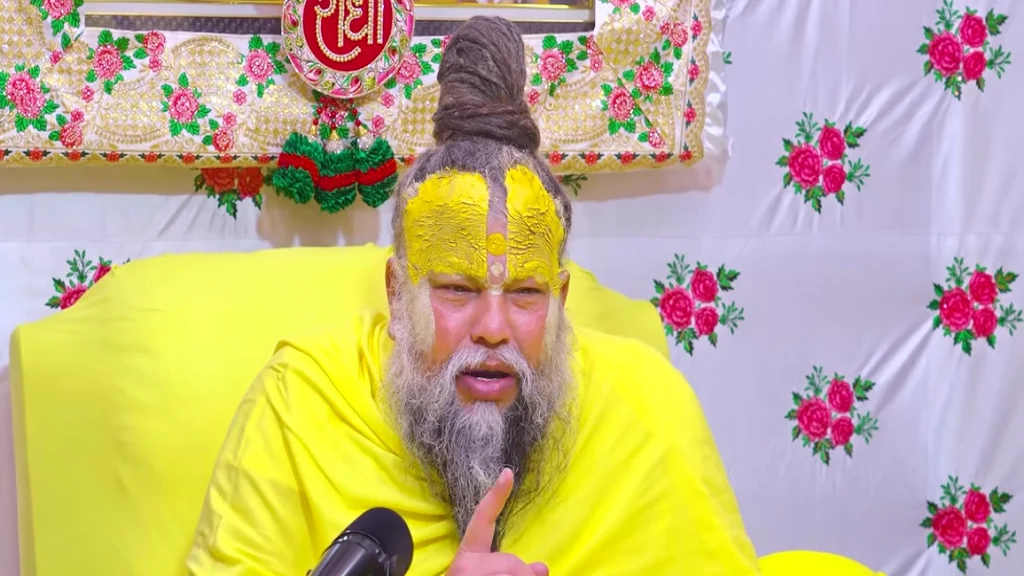
Put the mala where the phone used to be
He has added this recently and it lands with devotees faster than almost anything else he says, because everyone recognises the gesture. The hand reaches, without a decision being made, for the object that is always there. He is not asking for the reaching to stop. He is asking that something else be within reach when it happens.
His interest in the phone is not moral. He does not lecture about content or call the modern world degenerate, and he is not interested in whether what people watch is respectable. What concerns him is what the habit does with the gaps: the two minutes in a queue, the wait for a kettle, the moment before sleep. Those gaps used to be where a mind rested, and they have all been filled.
The consequence he points to is precise. A practice that depends on finding a free half hour will never begin, because there are no free half hours left. But the naam was never designed to need one. It fits in exactly the intervals the phone is currently occupying, which means the material for a full practice is already present in your day and is simply being spent elsewhere.
Living with this saying
He treats the reaching itself as useful information rather than as a failing. The hand goes out several dozen times a day without any deliberation, which tells you that the habit is running below decision, and that arguing with it will not work. What works is substitution at the level the habit operates on: keep the mala where the hand already goes, and let some proportion of the reaches land on it instead.
He is realistic about the proportion, and he does not ask for the phone to be given up. Most reaches will still find the phone, particularly at first, and that is fine. He is not proposing a rule to be kept or broken, which would only add another failure to feel bad about. He is proposing that a few of the gaps in every day change hands, and that the number rises slowly on its own.
What it asks of you is one physical arrangement rather than a resolution. Put the mala on the table beside the bed, in the pocket you keep the phone in, next to where you sit in the evening. Do not promise anything about how often you will use it. The point is that when the hand goes out with nobody having decided anything, there is now something else there.
A saying, not a certified transcription: a short statement of a position he has taken consistently in public satsang.
Questions about this saying
What does Premanand Ji Maharaj mean by “Put the mala where the phone used to be”?
On the hours the phone eats, which are the very hours sadhana would fit into. His answer is substitution rather than willpower, and he warns the first week will be uncomfortable.
What is this saying in Hindi?
जहाँ फ़ोन रहता था, वहाँ माला रख दो।
Is this an exact quotation?
No. It is a short statement of a position he has taken consistently in public satsang, not a certified transcription of one recording.
Where can I hear him speak about this?
His satsang is recorded and published on the official channels. This site is an independent devotee site and is not connected to the ashram.