
God is not a judge waiting to punish you.
भगवान डराने वाला न्यायाधीश नहीं है।
Prem marg in one sentence. His argument is practical rather than sentimental: devotion built on fear survives a crisis and collapses when life is comfortable, because the motive disappears with the threat. Love has no such off switch.
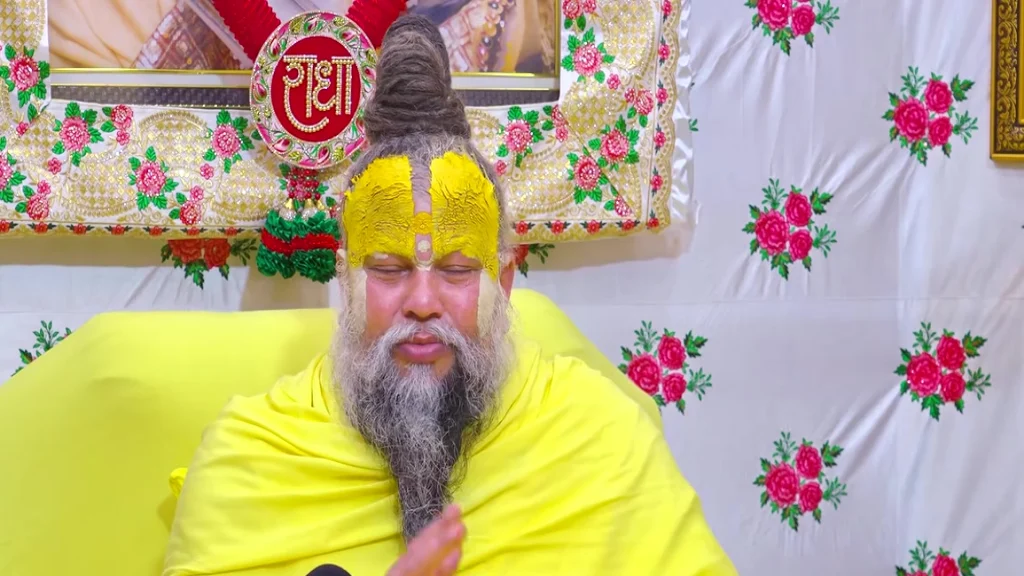
Why he refuses to teach a God who is waiting to punish you
Most people arrive at satsang carrying a version of God assembled out of childhood warnings, and in that version somebody is keeping a ledger. He dismantles it early, and not gently. A devotion whose engine is fear, he argues, is not devotion at all; it is insurance, and it behaves exactly the way insurance behaves.
The argument he makes is practical rather than sentimental, which is what makes it hard to wave away. Fear works only while the threat is visible. A person frightened into daily prayer prays hardest during the diagnosis, the court date, the month the money runs out, and then, when the crisis clears, quietly stops. Nothing has failed in them. The motive simply expired along with the danger, because that is what fear is for.
Love has no equivalent shut-off. He points out that nobody has to be reminded to think about someone they love, and nobody needs a threat to keep doing it. This is what prem marg means in his usage: not an emotional style of worship, but a devotion whose fuel does not run out when life becomes comfortable. That is the whole claim, and he keeps it that narrow on purpose.
Living with this saying
The objection that follows is predictable, and he takes it seriously. If God is not going to punish me, why behave well at all? His answer is that the fear model has never actually produced good conduct anyway, only concealment. It makes people careful about being caught rather than careful about what they do. Someone genuinely attached to Shri Radha does not stop cheating because a punishment is coming; the appetite for it thins out, which is a far more durable arrangement than surveillance.
He is equally firm about what this does not license. Removing the punishing judge does not remove consequence. Actions still land, debts still fall due, and a person who hurts their family will still live in the house they damaged. What he removes is the picture of a being who enjoys the punishing, because devotees who hold that picture spend their practice negotiating with it instead of doing anything.
What it asks of you is a change in why, not in what. Keep the same routine, take the same name, and stop performing it at somebody you are afraid of. He tells people to notice, honestly, what the last thought before their practice actually is. If it is closer to please do not let anything go wrong than to anything else, that is the thing to work on, and the work is simply continuing while the reason slowly changes underneath.
A saying, not a certified transcription: a short statement of a position he has taken consistently in public satsang.
Questions about this saying
What does Premanand Ji Maharaj mean by “God is not a judge waiting to punish you”?
Prem marg in one sentence. His argument is practical rather than sentimental: devotion built on fear survives a crisis and collapses when life is comfortable, because the motive disappears with the threat. Love has no such off switch.
What is this saying in Hindi?
भगवान डराने वाला न्यायाधीश नहीं है।
Is this an exact quotation?
No. It is a short statement of a position he has taken consistently in public satsang, not a certified transcription of one recording.
Where can I hear him speak about this?
His satsang is recorded and published on the official channels. This site is an independent devotee site and is not connected to the ashram.