
Earn honestly, spend without cruelty, give quietly.
ईमानदारी से कमाओ, बिना क्रूरता के खर्च करो, चुपचाप दो।
He does not romanticise poverty and does not ask householders to give away what their family depends on. What he warns against is money becoming the measure of a life.
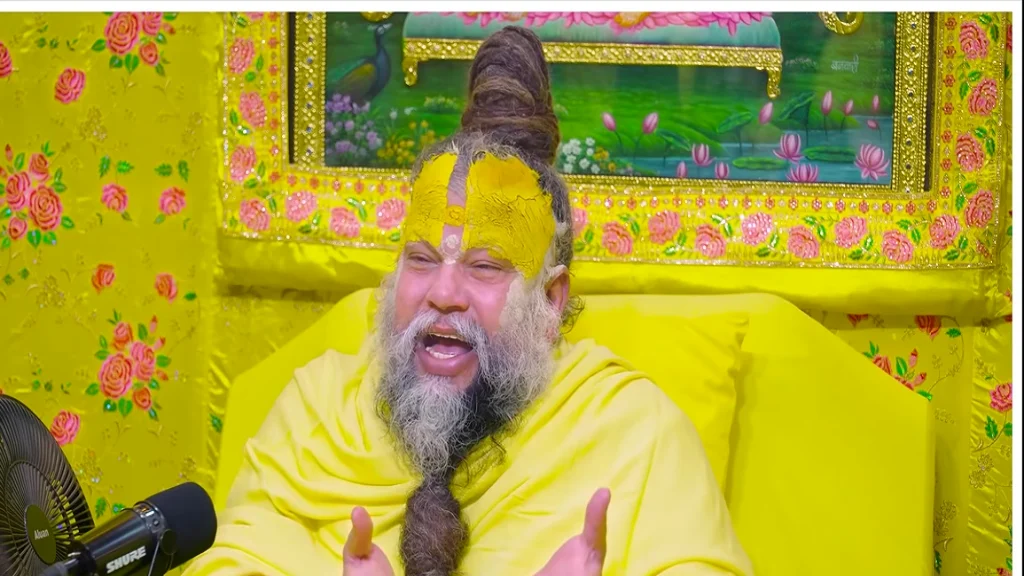
Earn honestly, spend without cruelty, give quietly
He is asked about money constantly and he does not treat it as a spiritually awkward subject. Nothing in what he teaches suggests that poverty is holy or that wealth is an obstacle. A householder is supposed to earn, and earning well while looking after the people who depend on you is the ordinary form of the duty rather than a compromise with it.
The first condition is where he is strict. The money has to be clean. He does not accept the argument that everybody in a particular trade does the same thing, or that the amounts are small, or that it will be corrected once the business is established. His view is that the practice and the earning happen in the same person, and that a man taking the name in the morning and cheating in the afternoon is not running two separate lives.
The second condition concerns what the spending does to other people. Not modesty for its own sake and not a rule against comfort, but a limit on what your consumption is allowed to cost somebody else: the employee paid late, the supplier squeezed because he cannot afford to lose you, the household staff whose wage has not moved in four years while everything else has.
Living with this saying
The third is the one he returns to most often, and it is the same principle as his teaching on seva. Give without it being visible. A donation that is announced has already been paid for, in reputation, and the transaction is complete; nothing further should be expected from it. He is not saying such giving is worthless to the person receiving. He is saying it is not what it is being counted as.
There is a warning underneath all three about what money does to attention. It expands to fill the day, occupies the night hours, and generates the exact kind of rehearsal that practice is meant to displace. He points out that people rarely lie awake over the amount they have; they lie awake over the amount they have decided they need, which is a demand rather than a figure.
What it asks of you is three specific checks rather than a general attitude. Look at how the money actually arrives and stop the part you would not want described plainly. Look at who is absorbing the cost of your comfort and correct it. And take one thing you give and remove the visibility from it entirely, so that it stands without anybody knowing.
A saying, not a certified transcription: a short statement of a position he has taken consistently in public satsang.
Questions about this saying
What does Premanand Ji Maharaj mean by “Earn honestly, spend without cruelty, give quietly”?
He does not romanticise poverty and does not ask householders to give away what their family depends on. What he warns against is money becoming the measure of a life.
What is this saying in Hindi?
ईमानदारी से कमाओ, बिना क्रूरता के खर्च करो, चुपचाप दो।
Is this an exact quotation?
No. It is a short statement of a position he has taken consistently in public satsang, not a certified transcription of one recording.
Where can I hear him speak about this?
His satsang is recorded and published on the official channels. This site is an independent devotee site and is not connected to the ashram.