
Devotion that creates conflict at home has misunderstood itself.
भक्ति जो घर में कलह बनाए, उसने खुद को नहीं समझा।
To devotees whose families object. Chant quietly, serve them better than before, and let the change in behaviour make the case. Argument hardens people; conduct does not.
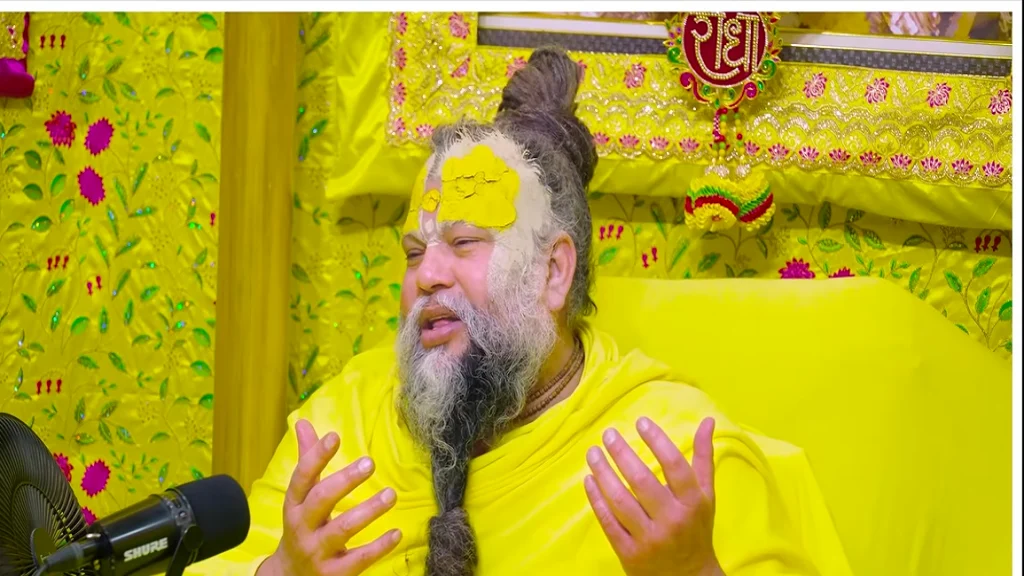
Devotion that makes the house harder has gone wrong
A recognisable thing happens when someone becomes serious about practice, and he addresses it directly because it arrives at satsang so often. The devotee grows strict, the household grows tense, meals move, duties are neglected for sadhana, and family members who did not sign up for any of this begin to resent the whole subject. He treats this as a fault in the devotee, not in the family.
The test he gives is external and cannot be argued with from inside. Ask the people you live with whether you have become easier or harder to live with since you started. Their answer is the assessment. A practice that has made you rigid, superior or unavailable has misunderstood itself, whatever it is producing in your interior.
The reasoning goes back to what the household is for. If the home is the field where devotion is actually tested, then damaging the field in order to practise is self-defeating in a fairly obvious way. Skipping an obligation to a parent in order to complete a count has not advanced anything; it has swapped the substance of the teaching for its accounting.
Living with this saying
He is also alert to what strictness is often doing. Rules are visible, and visible seriousness is satisfying in a way that quiet steadiness is not. A devotee who has become difficult about food, timings and purity has acquired a great many things to be seen doing, and he treats this with the same suspicion he applies to seva performed in front of an audience.
There is a particular version he calls out: using practice as an exit. Retreating into long sessions because the marriage is cold or the house is unhappy is not devotion, it is absence with a better name, and the household usually understands this before the devotee does. He points out that the difficulty you are withdrawing from is precisely the material you were meant to be working with.
What it asks of you is to fit the practice underneath your duties rather than on top of them. Take the name during work that has to happen anyway, keep the daily amount small enough that nobody in the house has to absorb the cost of it, and if something has to give on a particular day, let it be the count rather than the obligation. He is clear that nothing is lost by that trade.
A saying, not a certified transcription: a short statement of a position he has taken consistently in public satsang.
Questions about this saying
What does Premanand Ji Maharaj mean by “Devotion that creates conflict at home has misunderstood itself”?
To devotees whose families object. Chant quietly, serve them better than before, and let the change in behaviour make the case. Argument hardens people; conduct does not.
What is this saying in Hindi?
भक्ति जो घर में कलह बनाए, उसने खुद को नहीं समझा।
Is this an exact quotation?
No. It is a short statement of a position he has taken consistently in public satsang, not a certified transcription of one recording.
Where can I hear him speak about this?
His satsang is recorded and published on the official channels. This site is an independent devotee site and is not connected to the ashram.