
The one who wronged you moved on. You are the one still paying rent.
जिसने दुख दिया वह आगे बढ़ गया, किराया तुम भर रहे हो।
On forgiveness. He separates forgiving from approving: it is not saying the thing was acceptable, it is refusing to carry it any further.
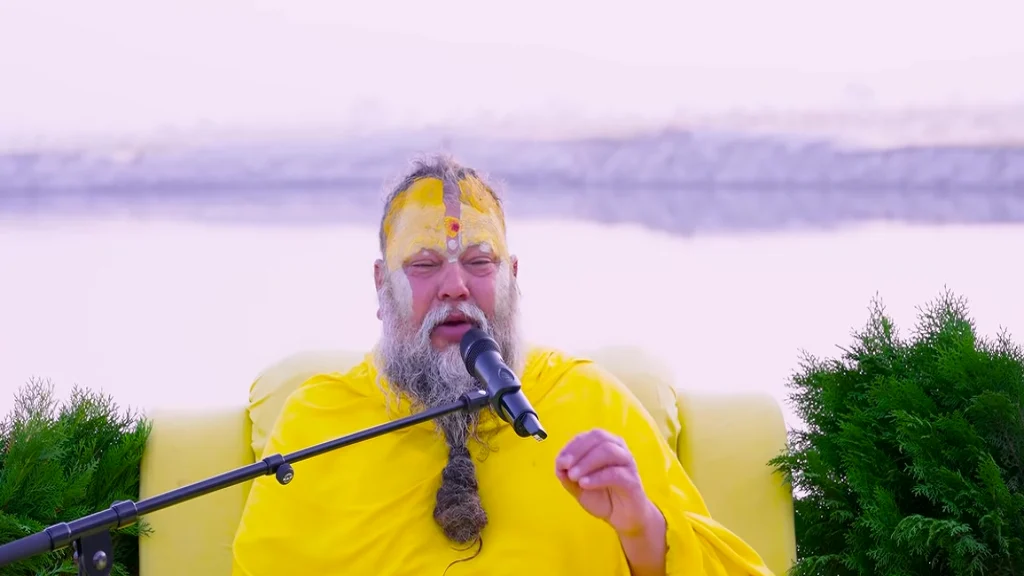
The one who wronged you moved on. You are still paying
He puts this more sharply than most of what he says, and devotees find it uncomfortable, which is the intention. The person who hurt you is, in all likelihood, not thinking about it. They have had dinner, slept, had a reasonable week. The grievance is being maintained at some cost, and the cost is being paid entirely by one household, which is not theirs.
He is not saying the wrong did not happen, and he does not ask anybody to pretend otherwise. Some things done to people are genuinely serious, and he does not minimise them or hurry anyone toward a reconciliation. What he is examining is a separate question: who is currently carrying the weight, and what continuing to carry it is actually achieving.
The answer to the second question is usually nothing. Resentment held for years does not reach its target, does not extract an apology and does not restore what was lost. It occupies your attention at the times attention is least defended, which are the small hours and the quiet gaps, and the person occupying them is not the one who did the harm.
Living with this saying
He is careful to distinguish this from the version people fear he is teaching. Letting the grievance go is not the same as trusting the person again, resuming the relationship, or agreeing that what happened was acceptable. Prudence stays. Boundaries stay. What is set down is the rehearsal, the internal case being prepared for a hearing that will never be scheduled.
The mechanism he offers is the same one he offers for everything, and he is not embarrassed by the repetition. You do not argue yourself out of resentment, because the argument requires reviewing the injury and the review is what keeps it alive. You replace the material. Each time the case comes back, and it will come back, the name goes there instead, and the case gets a little less rehearsed.
What it asks of you is a decision about your own hours rather than about the other person. Nothing is required of them, no conversation has to be had, and no forgiveness has to be announced or even felt. You are only deciding to stop lending them the two in the morning, and to keep making that decision each time the mind brings the file back out.
A saying, not a certified transcription: a short statement of a position he has taken consistently in public satsang.
Questions about this saying
What does Premanand Ji Maharaj mean by “The one who wronged you moved on. You are the one still paying rent”?
On forgiveness. He separates forgiving from approving: it is not saying the thing was acceptable, it is refusing to carry it any further.
What is this saying in Hindi?
जिसने दुख दिया वह आगे बढ़ गया, किराया तुम भर रहे हो।
Is this an exact quotation?
No. It is a short statement of a position he has taken consistently in public satsang, not a certified transcription of one recording.
Where can I hear him speak about this?
His satsang is recorded and published on the official channels. This site is an independent devotee site and is not connected to the ashram.