
Do not give anger a second thought.
क्रोध को दूसरा विचार मत दो।
His practical instruction on anger. Catch it before the sentence leaves your mouth and put the naam there instead. Anger that is not fed burns out in seconds; anger that is argued with grows.
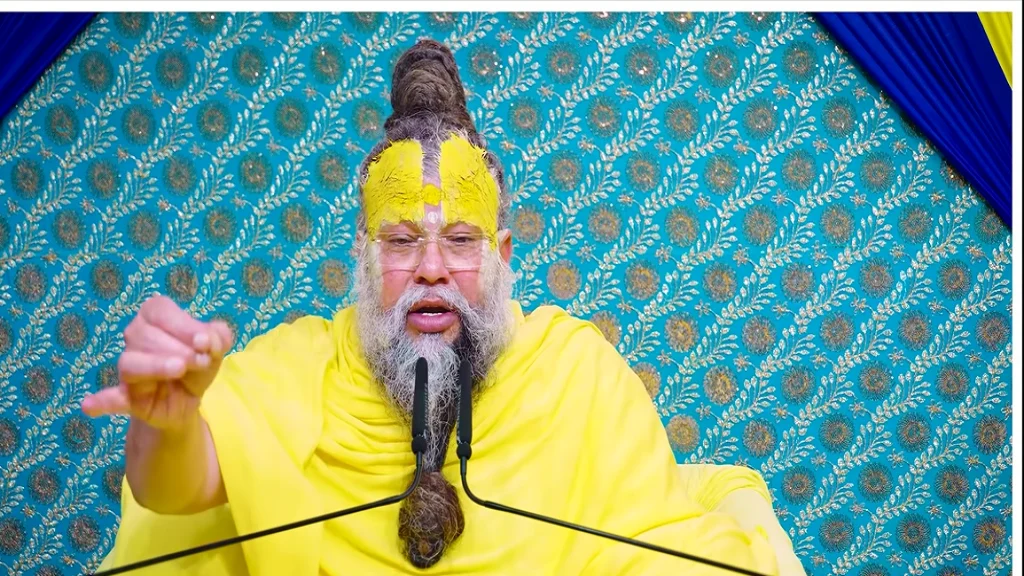
Anger, and the two seconds you actually have
His instruction on anger is unusually specific, and it is not the one people expect. He does not tell devotees to be calm, to understand the other person, or to look for the fault in themselves. He tells them to catch the thing before the sentence leaves the mouth, and to put the name in that gap instead.
The reasoning rests on an observation anyone can check. Anger that is not fed burns out fast, within seconds, because it has no fuel of its own. What extends it is the second thought: the justification, the recollection of the last time, the reply being drafted while the other person is still talking. Every one of those is a fresh supply, and the fire runs exactly as long as the supply lasts.
This is why he does not ask you to decide whether the anger was justified. That question is itself a second thought, and by the time you have answered it you have been feeding the fire for a minute. Whether you were right is a separate matter that can be examined later, in a cooler hour, with better judgement than you have available while your pulse is up.
Living with this saying
He is not teaching suppression, and he says so plainly. Swallowing anger and carrying it around is worse, not better; it comes out later, at somebody unrelated, usually at home. The instruction is to interrupt the loop at the point where it is still cheap to interrupt, which is before speech, not after it. Once the words are out the situation has changed and you are managing damage rather than anger.
The commonest report from devotees who try it is that they miss the window repeatedly at first and only catch it afterwards, sometimes an hour afterwards. He treats that as normal progress rather than failure. Noticing late is the same skill as noticing early, arriving slowly, and the interval shortens on its own with practice. Nobody catches it on the first day.
What it asks of you is one substitution, held for two seconds. When the heat rises, do not compose the reply and do not weigh the injustice. Take the name, let the two seconds pass, and speak afterwards if there is still something worth saying. Most of the time there is considerably less than there was.
A saying, not a certified transcription: a short statement of a position he has taken consistently in public satsang.
Questions about this saying
What does Premanand Ji Maharaj mean by “Do not give anger a second thought”?
His practical instruction on anger. Catch it before the sentence leaves your mouth and put the naam there instead. Anger that is not fed burns out in seconds; anger that is argued with grows.
What is this saying in Hindi?
क्रोध को दूसरा विचार मत दो।
Is this an exact quotation?
No. It is a short statement of a position he has taken consistently in public satsang, not a certified transcription of one recording.
Where can I hear him speak about this?
His satsang is recorded and published on the official channels. This site is an independent devotee site and is not connected to the ashram.