
You do not need to leave home. Do your sadhana inside it.
घर छोड़ने की ज़रूरत नहीं, घर में ही साधना करो।
He renounced at thirteen and spends much of his satsang telling householders not to. Family, job and duty are the field where the practice is tested. A page that reads his life as an invitation to renounce has misread him.
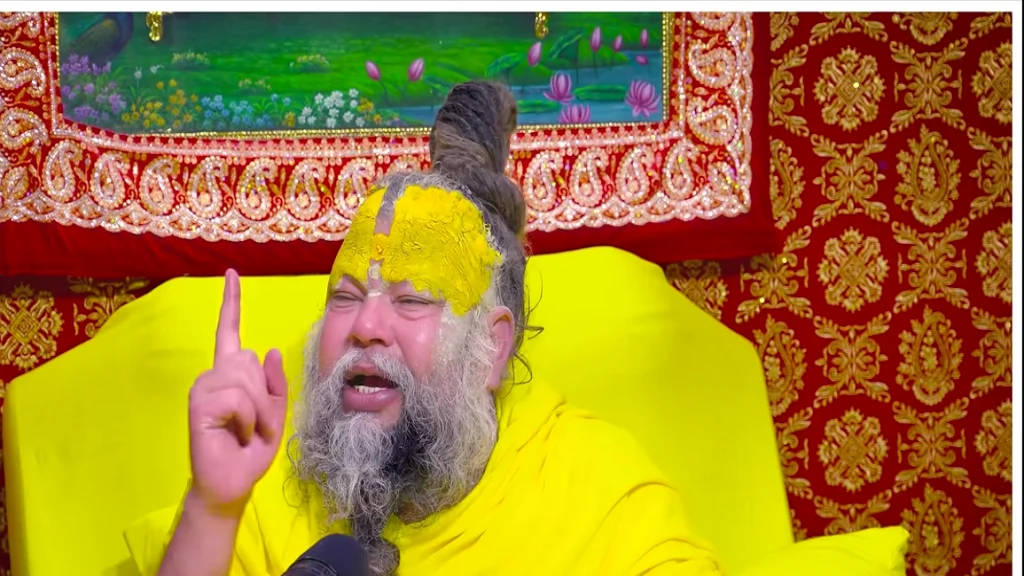
Why he tells almost nobody to renounce
He walked out of his family home at thirteen and spent the following years living on the ghats at Varanasi, and a considerable part of what he says from the asan is aimed at stopping other people doing anything of the kind. This is not modesty about his own history. It is a settled position, and he holds it firmly enough to argue with young devotees who raise the idea.
The argument he makes is about where practice is actually tested. A household supplies, every single day, the exact conditions that devotion is supposed to work on: irritation, obligation, tiredness, people whose needs arrive at inconvenient hours, and the requirement to be decent to someone who has just been unreasonable. Remove all of that and you have not advanced. You have withdrawn the examination.
He treats the impulse to renounce with open suspicion when it surfaces in conversation, and he says what he suspects. Very often the wish to leave is a wish to leave something particular, a marriage that has gone cold, a job that humiliates, a house where nobody listens, dressed up in religious clothing. A person escaping their circumstances takes the circumstances with them, and Vrindavan is full of evidence for this.
Living with this saying
The claim he makes in place of renunciation is a large one, and he does not hedge it. Nothing available to a renunciate is unavailable to a householder. The naam requires no seclusion, no fixed hour and no particular clothing. There is no ceiling above which a person with a family and a job cannot rise, and he is explicit that the grihastha is not running a lesser version of the practice.
He is careful about the one thing this could be twisted into. Staying at home is not the same as staying comfortable. Grihastha dharma in his usage is demanding: earn honestly, look after the people who depend on you properly, do not make your household pay for your devotion, and keep the practice running underneath all of it. That is harder than leaving, not easier.
What it asks of you is a redirection rather than a departure. Stop treating your ordinary life as the obstacle between you and a practice, and start treating it as the place the practice happens. Take the name during the commute, during the cooking, during the hour you would otherwise spend rehearsing an argument. Nothing about your address needs to change.
A saying, not a certified transcription: a short statement of a position he has taken consistently in public satsang.
Questions about this saying
What does Premanand Ji Maharaj mean by “You do not need to leave home. Do your sadhana inside it”?
He renounced at thirteen and spends much of his satsang telling householders not to. Family, job and duty are the field where the practice is tested. A page that reads his life as an invitation to renounce has misread him.
What is this saying in Hindi?
घर छोड़ने की ज़रूरत नहीं, घर में ही साधना करो।
Is this an exact quotation?
No. It is a short statement of a position he has taken consistently in public satsang, not a certified transcription of one recording.
Where can I hear him speak about this?
His satsang is recorded and published on the official channels. This site is an independent devotee site and is not connected to the ashram.