
The gap between what happens and how you react is the first real result.
घटना और प्रतिक्रिया के बीच जो जगह बनती है, वही पहला फल है।
What he describes as the actual change from japa: slower and more structural than calm. People around you usually notice it before you do.
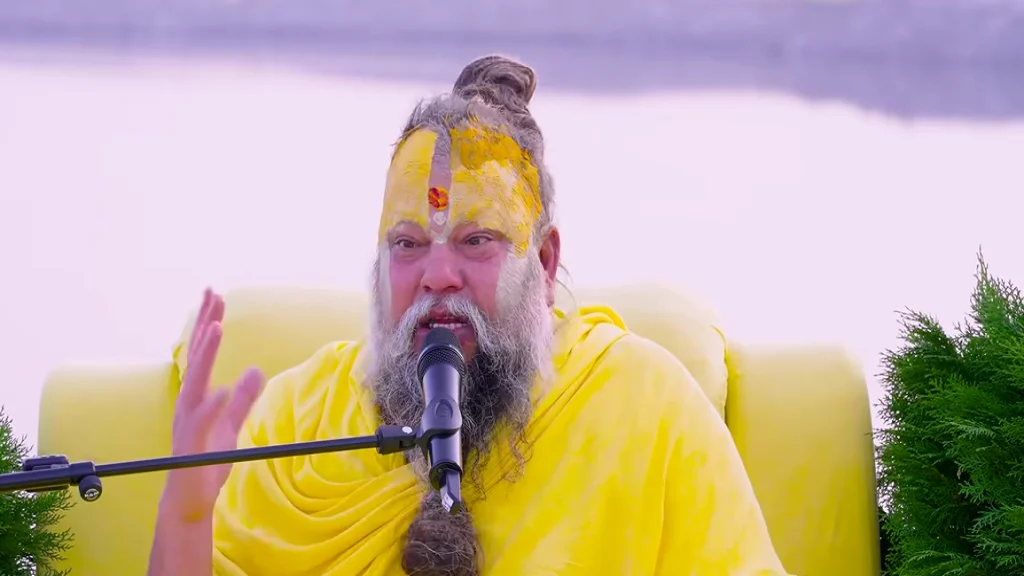
The pause between what happens and how you react
When devotees ask what to look for as evidence that the practice is doing anything, this is what he points to. Not visions, not warmth, not any experience during the chanting itself. A gap: something goes wrong, and a fraction of a second passes before you respond, where previously there was none. That interval is the first real result and it is the one most people miss.
He explains why it appears in that order. Reaction runs on stored material, the grievances rehearsed, the replies drafted in advance, the case already assembled about this person and this situation. A mind occupied by the name has less of that on hand at the moment of provocation, so the response arrives fractionally later and considerably smaller. Nothing mystical is being described.
The interval is small at first, and he does not oversell it. It is not composure, it is not detachment, and it does not mean the anger did not come. It means the anger arrived and something happened before the mouth opened. Everything he teaches about anger depends on that gap existing, because the two seconds before speech are the only place the instruction can be applied.
Living with this saying
He notes that it is almost always noticed by other people first, which is a useful check on self-assessment. The devotee experiences a normal week and reports no progress. The household notices that arguments end earlier, that the tone at the end of a bad day is different, that certain subjects no longer detonate. They are describing the same gap from outside.
He also warns against turning it into a target. A person watching for the pause during an argument has added an observer to the situation and will usually find the pause absent precisely when they are looking for it. The instruction remains what it always was: keep the practice running, and let the interval widen on its own. It is a by-product, and by-products do not respond to being pursued.
What it asks of you is to change what you count as evidence. Stop grading the chanting session and start noticing the ordinary moments afterwards: the message you did not send, the sentence that stayed unsaid, the two seconds that were not there last year. Those are small enough to overlook every single time, and they are what the practice is actually producing.
A saying, not a certified transcription: a short statement of a position he has taken consistently in public satsang.
Questions about this saying
What does Premanand Ji Maharaj mean by “The gap between what happens and how you react is the first real result”?
What he describes as the actual change from japa: slower and more structural than calm. People around you usually notice it before you do.
What is this saying in Hindi?
घटना और प्रतिक्रिया के बीच जो जगह बनती है, वही पहला फल है।
Is this an exact quotation?
No. It is a short statement of a position he has taken consistently in public satsang, not a certified transcription of one recording.
Where can I hear him speak about this?
His satsang is recorded and published on the official channels. This site is an independent devotee site and is not connected to the ashram.