
Shri Radha Sudha Nidhi, shloka 32
Verse 32 of the Shri Radha Sudha Nidhi, the Sanskrit hymn to Shri Radha by Shri Hit Harivansh Mahaprabhu, founder of the Radhavallabh Sampradaya. Below: the verse in Devanagari, in English letters, and what it says.
The verse in full
दूरादपास्य स्वजनान्सुखमर्थकोटिं
सर्वेषु साधनवरेषु चिरं निराशः ।
वर्षन्तमेव सहजाद्भुतसौख्यधारां
श्रीराधिकाचरणरेणुमहं स्मरामि ॥ ३२ ॥
In Roman letters
dooraadapaasya svajanaansukhamarthakotim
sarveshu saadhanavareshu chiram niraashah
varshantameva sahajaadbhutasaukhyadhaaraam
shreeraadhikaacharanarenumaham smaraami
What it means
Having left family, comfort and wealth far behind, and long despairing of every other spiritual means, I remember the dust of Shri Radhika's feet, which rains a natural, wondrous joy.
Things devotees often ask about

Radha Kripa Kataksh Stotra, Arth Sahit
A small paath book with the stotra and its Hindi meaning, easy to keep on the home altar.

Tulsi Japa Mala, 108 Beads
A plain tulsi mala with 7 mm beads, the size most people find comfortable for daily japa.
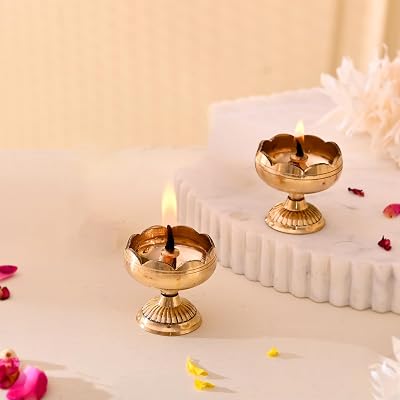
Brass Lotus Diya, Set of 2
Two small lotus-shaped brass diyas for the home mandir, for daily aarti or deep daan.
As an Amazon Associate we earn from qualifying purchases; your price does not change. None of this is needed for the practice, and none of it is connected with Maharaj Ji or the ashram. See all items
Questions about shloka 32
What does Radha Sudha Nidhi shloka 32 mean?
Having left family, comfort and wealth far behind, and long despairing of every other spiritual means, I remember the dust of Shri Radhika's feet, which rains a natural, wondrous joy. The full meaning is given above, under the verse.
How is shloka 32 pronounced?
In English letters: dooraadapaasya svajanaansukhamarthakotim / sarveshu saadhanavareshu chiram niraashah / varshantameva sahajaadbhutasaukhyadhaaraam / shreeraadhikaacharanarenumaham smaraami
Who wrote the Radha Sudha Nidhi?
Shri Hit Harivansh Mahaprabhu, founder of the Radhavallabh Sampradaya, the tradition into which Premanand Ji Maharaj took diksha. It is a Sanskrit stotra of about 270 verses addressed to Shri Radha.
Where is this text taken from?
We typeset it ourselves and checked every verse against a 1950 Radhavallabh edition in the public domain. Where copies differ, that edition's reading is used.