
Shri Yamunashtakam: lyrics with meaning
नमामि यमुनामहं: the hymn to Shri Yamuna Ji by Shri Vallabhacharya, sung every morning in Braj. All nine verses are below in Sanskrit, in English letters, and with their meaning in plain words. We typeset the text ourselves and checked every verse against independent copies.
Last updated 30 October 2026यमुनाष्टकम्, verse by verse
Each verse in Devanagari, then in English letters for those who do not read Devanagari, then its sense in plain words. The meanings are our own renderings, not a word-for-word translation.
नमामि यमुनामहं सकलसिद्धिहेतुं मुदा
मुरारिपदपङ्कजस्फुरदमन्दरेणूत्कटाम् ।
तटस्थनवकाननप्रकटमोदपुष्पाम्बुना
सुरासुरसुपूजितस्मरपितुः श्रियं बिभ्रतीम् ॥ १॥
namaami yamunaamaham sakalasiddhihetum mudaa
muraaripadapankajasphuradamandarenootkataam
tatasthanavakaananaprakatamodapushpaambunaa
suraasurasupoojitasmarapituh shriyam bibhrateem
With joy I bow to Shri Yamuna, the cause of every spiritual attainment. Her waters are thick with the shining dust of Krishna's lotus feet, fragrant with flowers from the fresh groves on her banks, and she carries the dark beauty of Krishna, whom gods and demons alike worship.
कलिन्दगिरिमस्तके पतदमन्दपूरोज्ज्वला
विलासगमनोल्लसत्प्रकटगण्डशैलोन्नता ।
सघोषगतिदन्तुरा समधिरूढदोलोत्तमा
मुकुन्दरतिवर्धिनी जयति पद्मबन्धोः सुता ॥ २॥
kalindagirimastake patadamandapoorojjvalaa
vilaasagamanollasatprakatagandashailonnataa
saghoshagatidanturaa samadhiroodhadolottamaa
mukundarativardhinee jayati padmabandhoh sutaa
Glory to the daughter of the sun. She shines as her great stream falls from the peak of Mount Kalinda, rises high as she plays over the boulders, and runs rippling and murmuring as if seated on a fine swing. She makes love for Mukunda grow.
भुवं भुवनपावनीमधिगतामनेकस्वनैः
प्रियाभिरिव सेवितां शुकमयूरहंसादिभिः ।
तरङ्गभुजकङ्कणप्रकटमुक्तिकावालुका-
नितम्बतटसुन्दरीं नमत कृष्णतुर्यप्रियाम् ॥ ३॥
bhuvam bhuvanapaavaneemadhigataamanekasvanaih
priyaabhiriva sevitaam shukamayoorahamsaadibhih
tarangabhujakankanaprakatamuktikaavaalukaa-
nitambatatasundareem namata krishnaturyapriyaam
Bow to her, the fourth beloved queen of Krishna. She came down to earth to make the worlds pure, and parrots, peacocks and swans attend her with their many calls, like dear companions. Her waves are arms wearing bracelets, her sands are like pearls, and her banks are lovely.
अनन्तगुणभूषिते शिवविरञ्चिदेवस्तुते
घनाघननिभे सदा ध्रुवपराशराभीष्टदे ।
विशुद्धमथुरातटे सकलगोपगोपीवृते
कृपाजलधिसंश्रिते मम मनःसुखं भावय ॥ ४॥
anantagunabhooshite shivaviranchidevastute
ghanaaghananibhe sadaa dhruvaparaasharaabheeshtade
vishuddhamathuraatate sakalagopagopeevrite
kripaajaladhisamshrite mama manahsukham bhaavaya
You are adorned with endless qualities and praised by Shiva, Brahma and the gods. Dark as a heavy rain cloud, you granted the wishes of Dhruva and Parashara. Pure Mathura stands on your bank, the gopas and gopis surround you, and Krishna, the ocean of mercy, shelters you. Fill my mind with happiness.
यया चरणपद्मजा मुररिपोः प्रियम्भावुका
समागमनतोऽभवत् सकलसिद्धिदा सेवताम् ।
तया सदृशतामियात्कमलजा सपत्नीव य-
द्धरिप्रियकलिन्दया मनसि मे सदा स्थीयताम् ॥ ५॥
yayaa charanapadmajaa muraripoh priyambhaavukaa
samaagamanato'bhavat sakalasiddhidaa sevataam
tayaa sadrishataamiyaatkamalajaa sapatneeva ya-
ddharipriyakalindayaa manasi me sadaa stheeyataam
By meeting her, the Ganga, born from Hari's lotus feet, became dear to Krishna and able to grant every attainment to those who serve her. Only Lakshmi could equal Yamuna, and only as a co-wife. May Kalindi, beloved of Hari, live in my mind always.
नमोऽस्तु यमुने सदा तव चरित्रमत्यद्भुतं
न जातु यमयातना भवति ते पयःपानतः ।
यमोऽपि भगिनीसुतान्कथमु हन्ति दुष्टानपि
प्रियो भवति सेवनात्तव हरेर्यथा गोपिकाः ॥ ६॥
namo'stu yamune sadaa tava charitramatyadbhutam
na jaatu yamayaatanaa bhavati te payahpaanatah
yamo'pi bhagineesutaankathamu hanti dushtaanapi
priyo bhavati sevanaattava hareryathaa gopikaah
Salutations to you, Yamuna, always: your story is full of wonder. No torment of Yama comes to those who drink your water, for how could Yama strike his own sister's children, even wayward ones? Serving you, a person becomes as dear to Hari as the gopis.
ममास्तु तव सन्निधौ तनुनवत्वमेतावता
न दुर्लभतमा रतिर्मुररिपौ मुकुन्दप्रिये ।
अतोऽस्तु तव लालना सुरधुनी परं सङ्गमा-
त्तवैव भुवि कीर्तिता न तु कदापि पुष्टिस्थितैः ॥ ७॥
mamaastu tava sannidhau tanunavatvametaavataa
na durlabhatamaa ratirmuraripau mukundapriye
ato'stu tava laalanaa suradhunee param sangamaa-
ttavaiva bhuvi keertitaa na tu kadaapi pushtisthitaih
Let me have a new body near you; with that alone, love for Krishna is no longer hard to find, O beloved of Mukunda. So may you always be cherished. Even the Ganga is praised on earth because she joins you, and those on the path of grace never praise her apart from you.
स्तुतिं तव करोति कः कमलजासपत्नि प्रिये
हरेर्यदनुसेवया भवति सौख्यमामोक्षतः ।
इयं तव कथाधिका सकलगोपिकासङ्गम-
स्मरश्रमजलाणुभिः सकलगात्रजैः सङ्गमः ॥ ८॥
stutim tava karoti kah kamalajaasapatni priye
hareryadanusevayaa bhavati saukhyamaamokshatah
iyam tava kathaadhikaa sakalagopikaasangama-
smarashramajalaanubhih sakalagaatrajaih sangamah
Who can praise you, beloved co-wife of Lakshmi? Serving Hari brings every happiness up to liberation, but your glory is greater still: you are mingled with the drops of love's weariness that fell from the limbs of all the gopis.
तवाष्टकमिदं मुदा पठति सूरसूते सदा
समस्तदुरितक्षयो भवति वै मुकुन्दे रतिः ।
तया सकलसिद्धयो मुररिपुश्च सन्तुष्यति
स्वभावविजयो भवेद्वदति वल्लभः श्रीहरेः ॥ ९॥
tavaashtakamidam mudaa pathati soorasoote sadaa
samastaduritakshayo bhavati vai mukunde ratih
tayaa sakalasiddhayo muraripushcha santushyati
svabhaavavijayo bhavedvadati vallabhah shreehareh
O daughter of the sun, whoever recites this ashtak of yours with joy has every sin destroyed and gains love for Mukunda. Through that love come all attainments, and Krishna is pleased; even one's own nature is conquered. So says Vallabha, servant of Shri Hari.
इति श्रीवल्लभाचार्यविरचितं श्रीयमुनाष्टकं सम्पूर्णम् ।
Thus ends the Shri Yamunashtakam composed by Shri Vallabhacharya.
Yamuna in Braj, and this hymn to her
Who composed it
Shri Vallabhacharya, the teacher who founded the Pushti Marg, the path of grace, in the late fifteenth and early sixteenth centuries. The Yamunashtakam opens his Shodasha Granth, sixteen short works, and it is sung daily in Pushti Marg homes and temples.
Who Yamuna Ji is
Kalindi, daughter of the sun and sister of Yama, the river on whose banks Krishna grew up. In Braj she is not only a river but a devotee and a beloved of Krishna, which is why the hymn speaks of her as his queen and asks for love of Krishna through her.
How it is recited
In the morning, ideally on the bank of the Yamuna in Vrindavan, Mathura or Gokul, or facing water at home. Read the meaning once so you know what you are asking for, then recite it aloud. No initiation is needed and nothing has to be paid to anyone.
Two hymns with one name
Adi Shankaracharya also wrote a Yamunashtakam, beginning मुरारिकायकालिमा. It is a different hymn. The one on this page is Vallabhacharya's, beginning नमामि यमुनामहं.
For the hymn to Shri Radha recited across Vrindavan, see the Radha Kripa Kataksh Stotra, and for the eighty four pads of the Radhavallabh tradition, the Shri Hit Chaurasi.
Things devotees often ask about
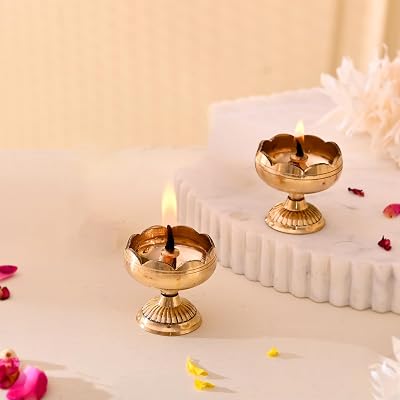
Brass Lotus Diya, Set of 2
Two small lotus-shaped brass diyas for the home mandir, for daily aarti or deep daan.
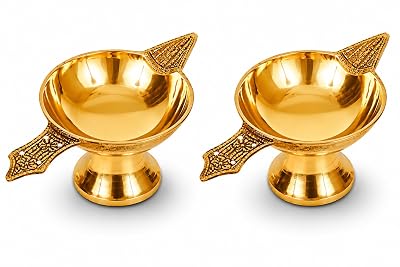
Brass Akhand Diya
A brass diya with a deep oil well, made to burn long, for the evening lamp of Kartik.

Tulsi Japa Mala, 108 Beads
A plain tulsi mala with 7 mm beads, the size most people find comfortable for daily japa.
As an Amazon Associate we earn from qualifying purchases; your price does not change. None of this is needed for the practice, and none of it is connected with Maharaj Ji or the ashram. See all items
What people ask about the Yamunashtakam
Short answers about the stotra, its author and how it is recited.
Who wrote the Yamunashtakam that begins Namami Yamunam Aham?
Shri Vallabhacharya, the fifteenth and sixteenth century teacher who founded the Pushti Marg. It is the first work in his Shodasha Granth, a collection of sixteen short texts.
How many verses does the Yamunashtakam have?
Nine. Eight verses of praise, which give it the name ashtak, and a ninth, the phalashruti, describing what the recitation brings.
What does Namami Yamunam Aham mean?
I bow to Yamuna. The full first line reads: with joy I bow to Yamuna, the cause of every spiritual attainment.
Why does the stotra mention Yama, the god of death?
Yamuna is the daughter of the sun and the sister of Yama. Verse six plays on this: Yama will not harm his own sister's children, so those who drink her water have nothing to fear from him.
Is this the same as Shankaracharya's Yamunashtakam?
No. Adi Shankaracharya's Yamunashtakam is a different hymn, beginning Murari kaya kalima. This page gives Vallabhacharya's, the one most sung in Braj and in Pushti Marg homes.
When should the Yamunashtakam be recited?
In the morning is traditional, and on the bank of the Yamuna if you are in Vrindavan, Mathura or Gokul. It is recited daily in Pushti Marg homes. No initiation is needed.
More texts from Braj
The stotras and pads recited in Vrindavan, set in clean Devanagari and free to read.