
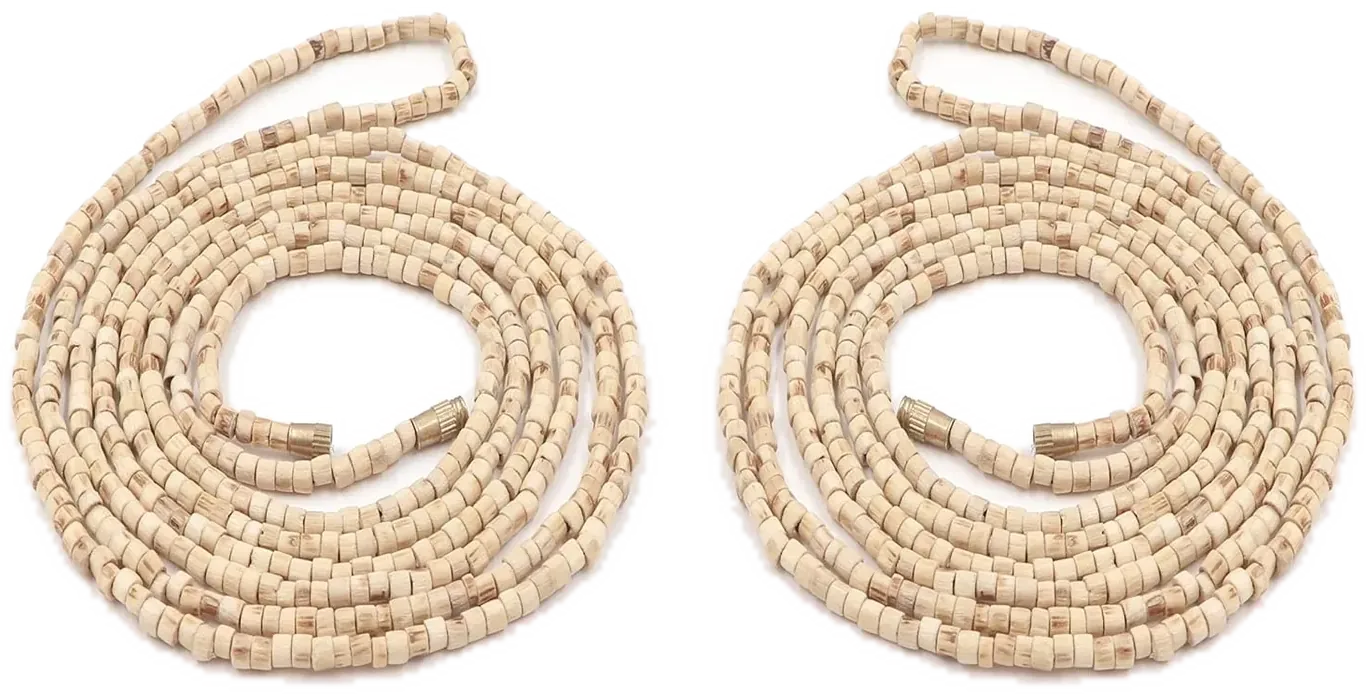
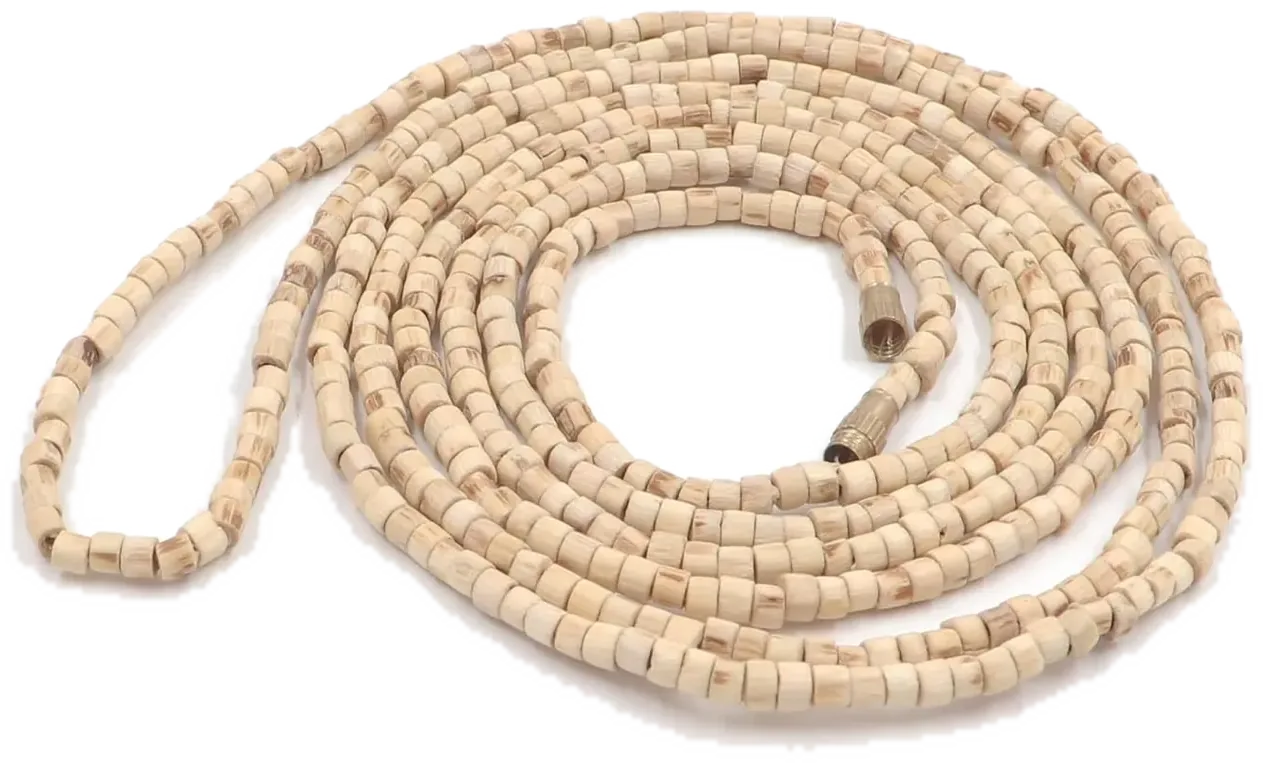
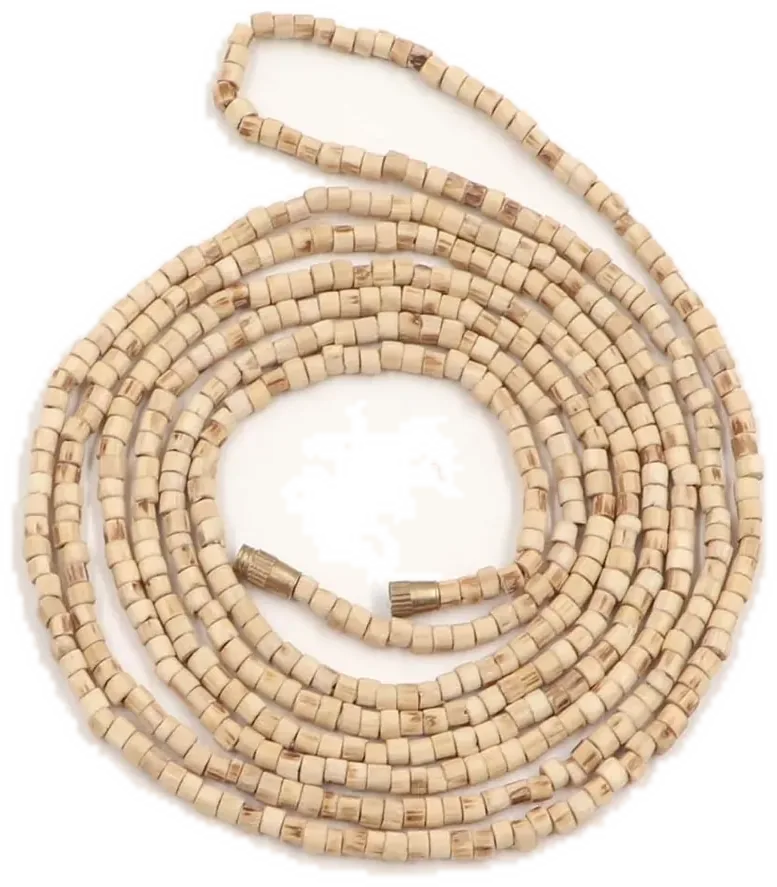
Tulsi kanthi mala, 48 inch, set of two
तुलसी कंठी माला, 48 इंच, दो का सेट
A longer kanthi at 48 inches, in slightly larger 3 mm beads, sold as a pair so there is a spare when the first thread gives way.
- Length
- 48 inches
- Bead size
- 3 mm
- Material
- Tulsi stem beads
- Supplied
- Two malas
About this kanthi mala
The same thing as a three round kanthi, cut longer. At 48 inches it wraps three times and still sits loose, which suits anyone who finds a close mala uncomfortable in a Braj summer or under a collar.
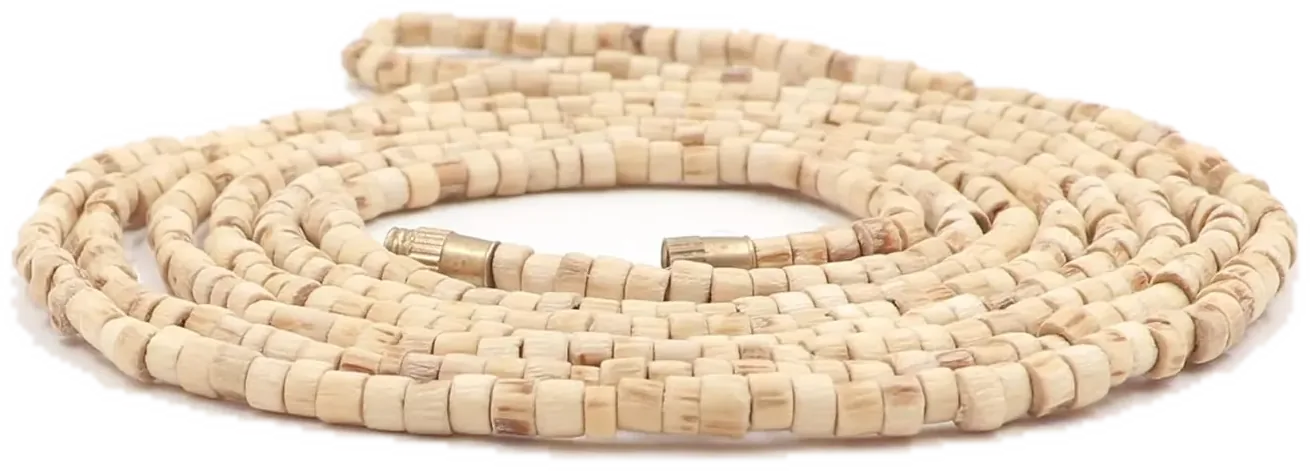
The beads here are 3 mm rather than the smaller 2 mm usually strung for kanthi, so the mala reads more clearly against the skin and is easier to restring at home. Being cut from tulsi stem rather than turned from a block, each bead is slightly different, and a strand where every bead matches exactly is worth a second look.
It comes as a pair, which is more useful than it sounds. Thread is the part that fails, not the wood, and having the second mala already in the house is the difference between restringing at leisure and going without.
The choice between a close kanthi and a long one is entirely practical and nobody in Braj treats it as a matter of correctness. People who work outdoors or in heat often prefer the longer strand because it does not sit against a sweating throat all day; people who want the reminder pressed against the skin prefer the shorter.
Both are worn for the same reason, which has nothing to do with the mala itself. In the Radhavallabh tradition the attention belongs on Shri Radha, and Maharaj Ji redirects it there whenever a devotee starts asking about articles and rules. Tulsi at the throat is a small standing reminder of that, and a reminder is all it claims to be.
What to look for before buying
Length against neck size. Forty eight inches wraps three times on most adults and sits loose. On a smaller neck it wraps four and starts to bunch; on a larger one it may sit closer than you want. If you already own a kanthi, measure it end to end before ordering rather than judging by the number of rounds.
Three millimetre beads. These are larger than the beads usually strung for kanthi, which are closer to two millimetres. Bigger beads read more clearly against the skin and are far easier to restring at home when the thread goes, because the holes are wider and take an ordinary needle.
Cut from stem, not turned. Genuine tulsi kanthi beads are sawn from stem, so each is slightly different in length and the grain runs along the bead rather than around it. A strand where every bead is identical has been turned from a block of some other wood, and it will not take colour from wear the way tulsi does.
Keeping it, and where it sits
Because it is longer, this one sits away from the skin more than a close kanthi does and picks up less oil, so it darkens more slowly. That also means it moves about more under clothing, which some people like and others find distracting; it is worth wearing for a week before deciding which you are.
The pair matters more than it sounds. Thread is what fails, not wood, and having the second mala already in the house is the difference between restringing at leisure and going without for a fortnight while you find a shop. Keep the spare somewhere dry and away from the sun rather than in a pocket.
Restringing at home is straightforward at this bead size. Use a strong cotton or silk thread rather than nylon, which stretches and then cuts, and knot between every few beads so that a break loses three beads and not the whole strand. Any bead shop in Braj will also do it in minutes.
None of it is a requirement. The practice Maharaj Ji teaches needs no article at all, and he says so plainly in satsang. A longer kanthi is a matter of comfort, not of merit, and nobody should be told they need a particular length of anything.
A longer kanthi also changes what happens when it breaks. A short strand parts and the beads stay in your collar; a forty eight inch one parts and they go across the floor. Tie a knot at both ends of the thread rather than relying on the join alone, and if you restring it yourself, knot between every few beads. Three beads lost is an annoyance; a hundred and fifty on a station platform is the end of the mala.
None of this is required. What Maharaj Ji actually asks for is set out on the teachings page, the sayings he repeats most are on the quotes page, and the stotras are free to download as PDFs. If you are planning to visit Vrindavan, read how to meet Maharaj Ji first.
Questions about buying this
How many rounds does 48 inches make?
Three on most adults, four on a smaller neck. If you want it to sit close at the throat, a shorter kanthi of about 24 to 30 inches is the usual choice.
Why does it come as a pair?
Because thread fails long before the beads do. A spare in the house means a parted thread is an inconvenience rather than a fortnight without.
Is 3 mm too large for kanthi?
Not at all, though it is larger than the usual 2 mm. It reads more clearly, is easier to restring at home, and is a matter of preference rather than correctness.
Can I restring it myself?
Yes, and at this bead size it is easy. Use strong cotton or silk rather than nylon, and knot between every few beads so a break does not scatter the strand.
Will it darken like a smaller kanthi?
Yes, but more slowly, because a longer mala sits away from the skin and picks up less oil. Several years of daily wear will still change the colour noticeably.
Do I need to wear a kanthi at all?
No. Wearing tulsi marks a practice rather than qualifying anybody for one, and the teaching itself needs no article at all. Length is a question of comfort, not of merit.
Why is a longer kanthi sometimes easier to wear?
It sits away from the skin rather than against the throat, which suits hot weather and anybody who finds a close mala uncomfortable under a collar. It is a matter of comfort rather than of correctness.
Is this connected with Maharaj Ji or the ashram?
No. It is not supplied by, authorised by or endorsed by Maharaj Ji or Shri Hit Radha Keli Kunj. It is an ordinary devotional item sold by other people on Amazon, listed here because a devotee might want one.
Do you sell it?
No. The button on this page takes you to Amazon. Amazon takes the payment, ships the order and handles returns and warranty. We hold no stock, never see your payment details, and cannot change or cancel an order.
Is the price on this page current?
It is the price we last saw on Amazon, with the date beside it. Amazon changes prices whenever it likes, so treat the figure here as a guide and the price on the Amazon page as the real one.
Do you make money if I buy it?
Yes. As an Amazon Associate we earn from qualifying purchases. Your price is exactly the same whether you use our link or not; Amazon pays the commission out of its own margin, and that commission is what keeps this site free to read.
Do I need this to follow the teachings?
No. Maharaj Ji asks for the Radha naam and nothing else, with no initiation, no fee and no equipment. Anything on this page is convenience, never a requirement, and he is explicit about that in satsang.
Also worn and carried
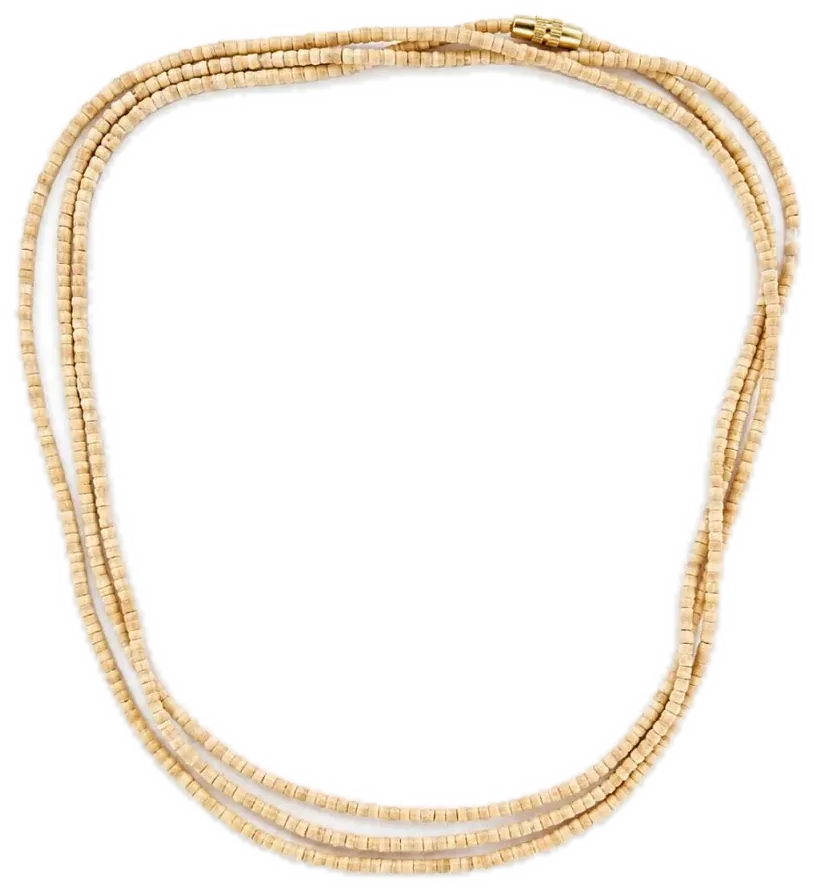
Tulsi kanthi mala, 3 round
तुलसी कंठी माला, 3 लड़
₹222
Three rounds of tulsi beads worn at the throat, the mark of a Vaishnava.
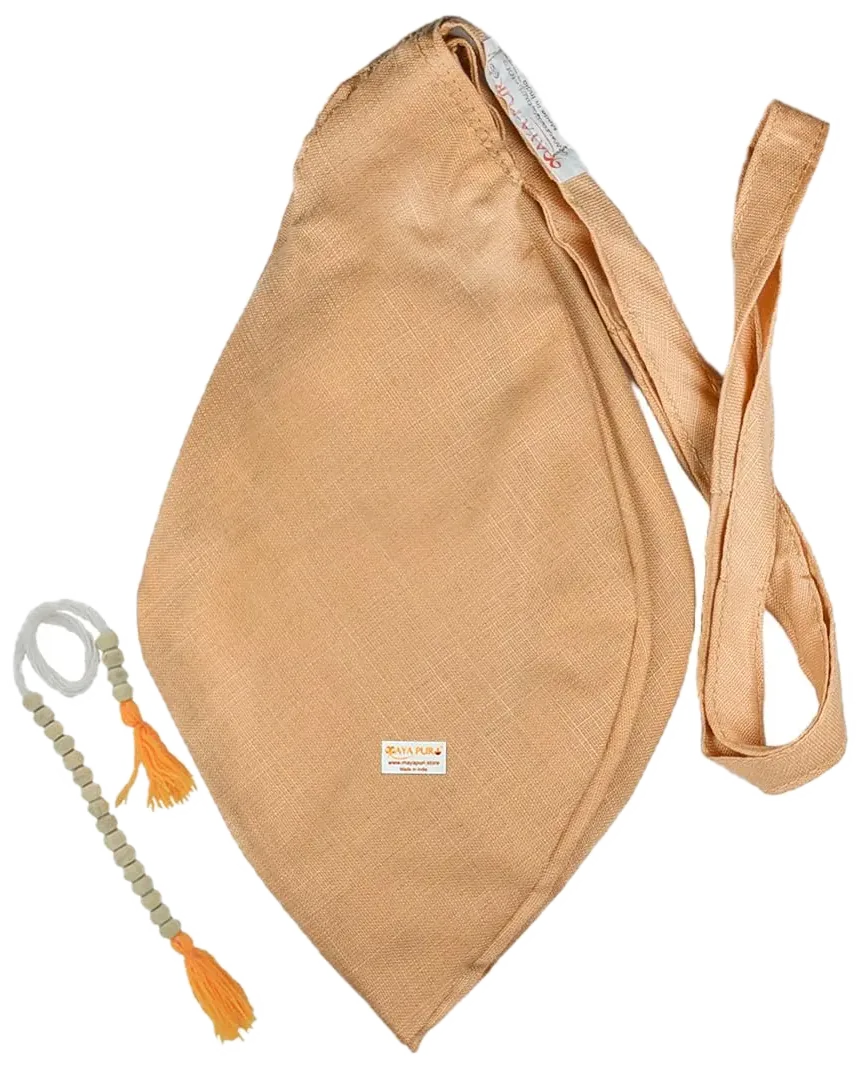
Gomukhi japa bag with counter
गोमुखी जप थैली, काउंटर सहित
₹269
A cotton bag that keeps the mala clean and lets you chant without taking it out.
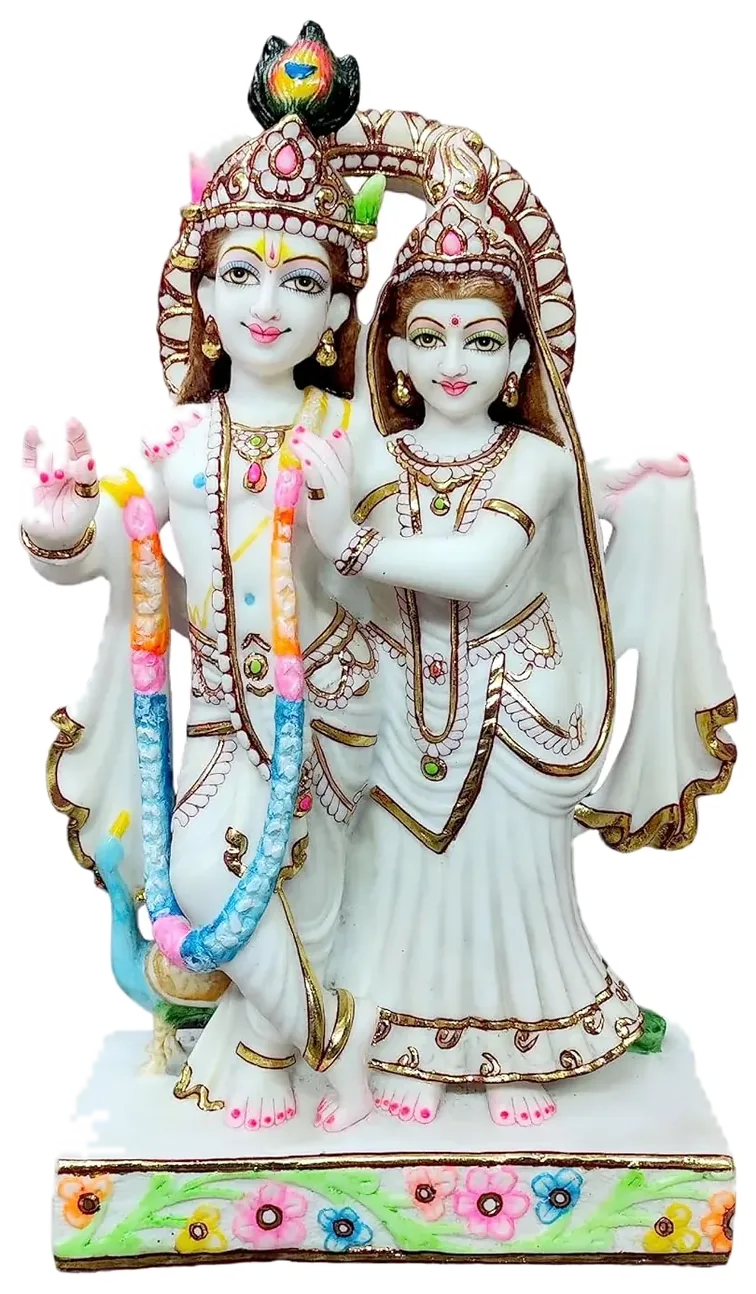
Radha Krishna marble statue, 15 inch
राधा कृष्ण संगमरमर मूर्ति, 15 इंच
₹8,000
A hand carved white marble Radha Krishna, fifteen inches, for a home shrine.