

Tulsi kanthi mala, 3 round
तुलसी कंठी माला, 3 लड़
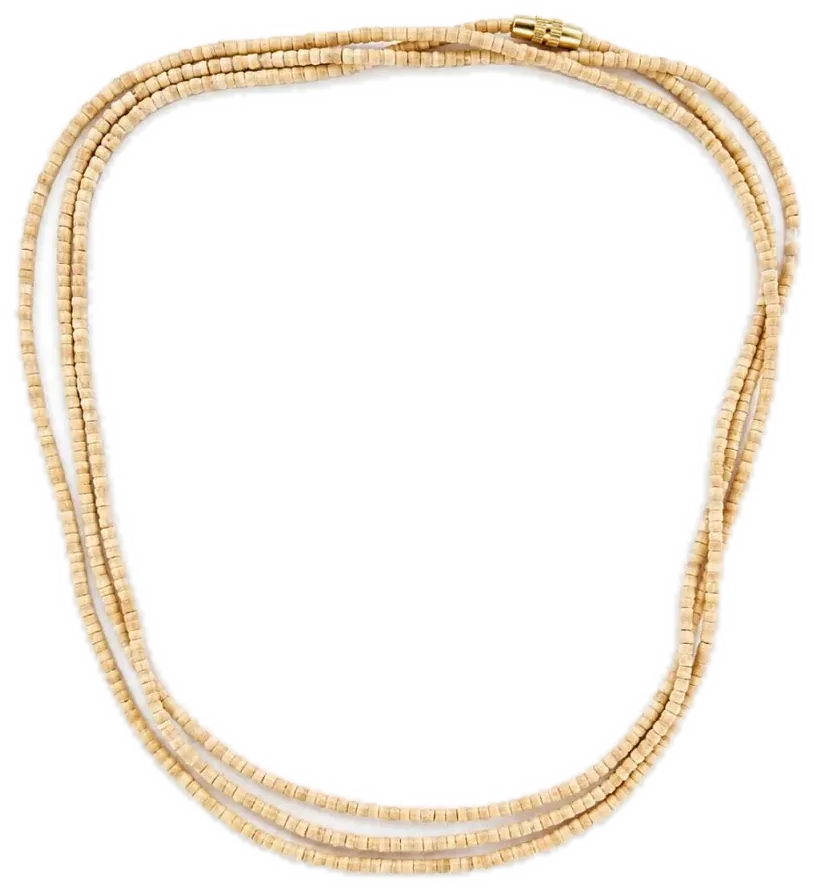
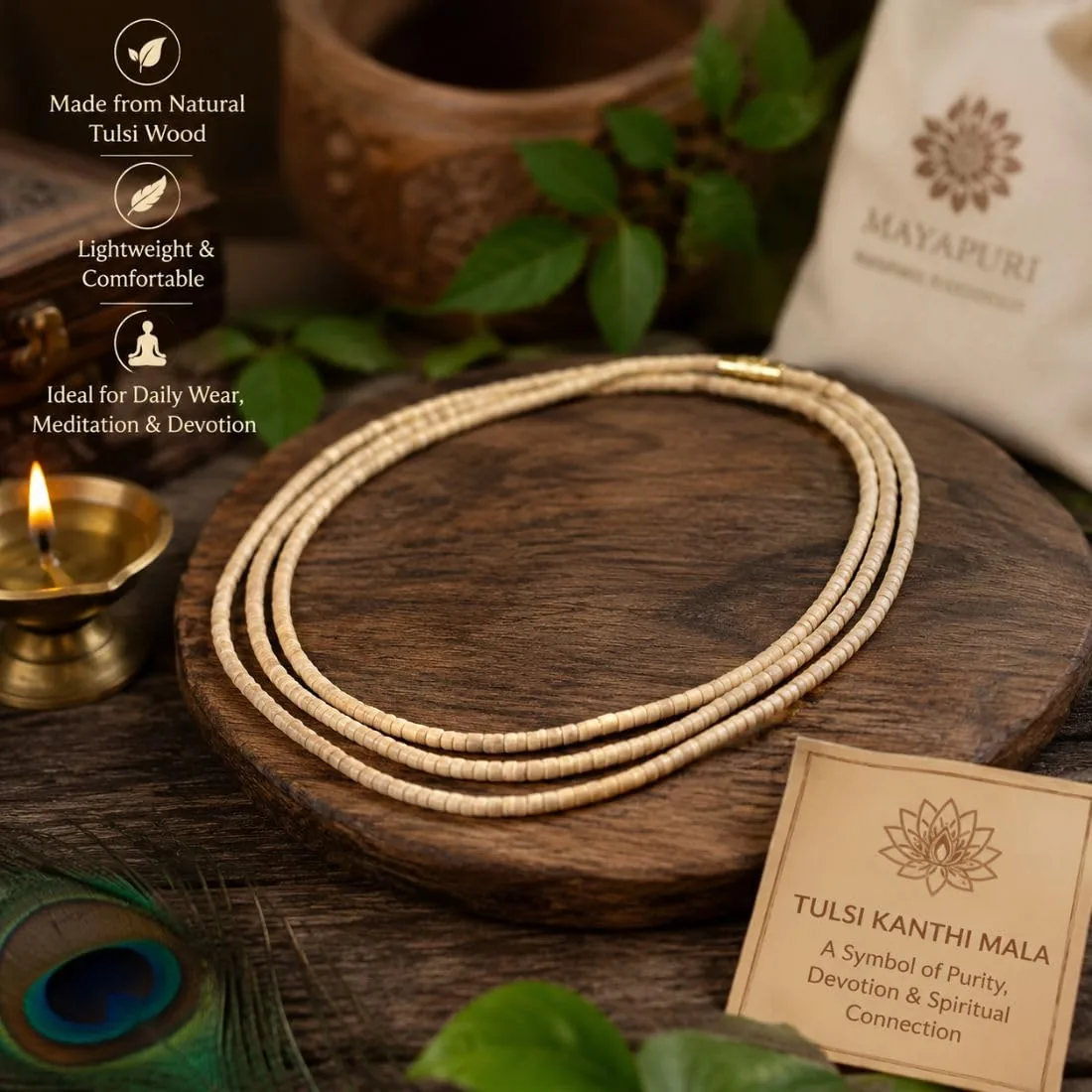
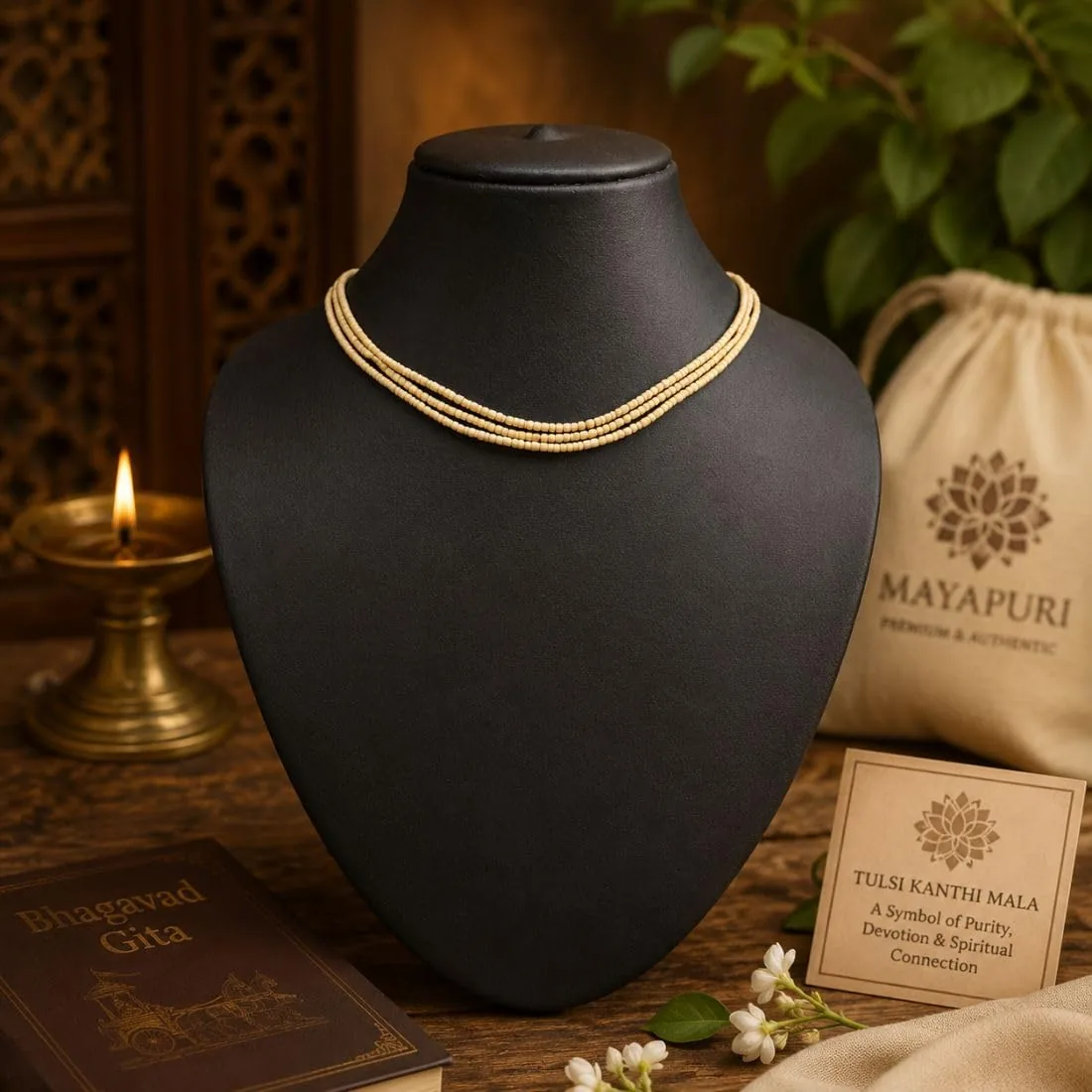
The neck mala Vaishnavas wear rather than count on: three rounds of small tulsi beads, light enough to keep on all day and through the night.
- Rounds
- Three
- Material
- Tulsi wood
- Bead size
- About 2.5 mm
- Worn
- At the throat, not counted on
About this kanthi mala
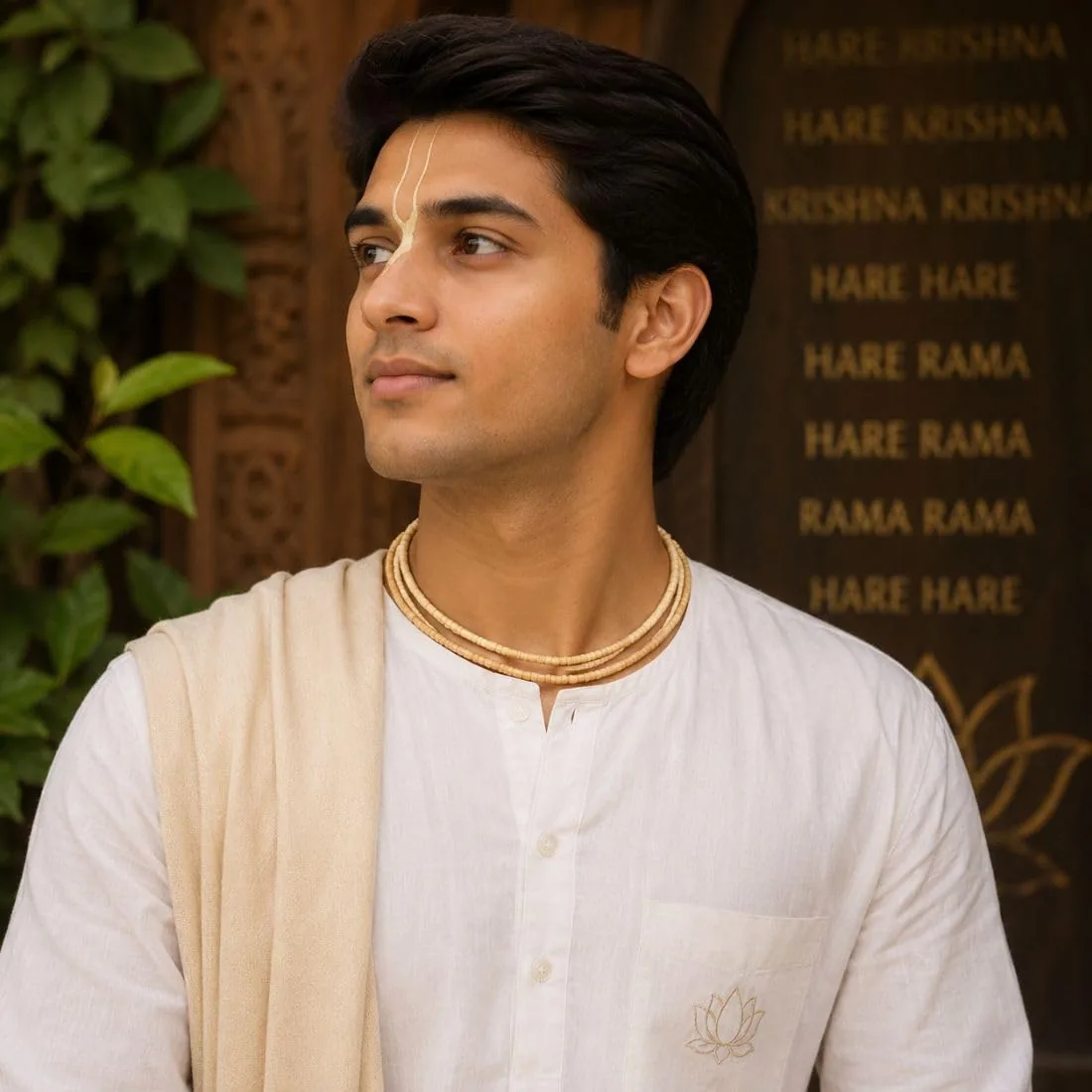
Kanthi is not a counting mala. It is worn at the throat and stays there, and in the Vaishnava traditions of Braj it is the plainest outward sign that somebody has taken the practice on. Three rounds of small tulsi beads sit close to the neck, light enough that most people forget they are wearing it within a day.
Tulsi is used rather than any other wood because of what the plant is held to be in these traditions, not because of anything the wood does. Real tulsi beads are small, pale and slightly uneven, and they darken with skin contact over months rather than staying the colour they arrived in. Beads that are perfectly matched and stay bright are usually dyed sandal sold under the tulsi name.
It is not washed and not taken off casually. Most devotees keep it on through bathing and sleep, and have it restrung when the thread wears rather than replacing the beads. Nothing about wearing one is required: Maharaj Ji asks for the Radha naam and nothing else, with no initiation, no fee and no article of any kind.
The habit is older than any of the sampradayas now practising it and is shared across the Vaishnava traditions of north India. Wearing tulsi at the throat marks somebody as belonging to a practice rather than merely being interested in one, which is why it is usually put on at a moment the wearer chooses rather than handed out at a ceremony.
In the Radhavallabh tradition that Maharaj Ji belongs to, the weight sits on Shri Radha rather than on any outward mark, and he is consistent about that from the asan. A kanthi does not make anyone a devotee and its absence does not make anyone less of one. What it does, practically, is put a small reminder against the skin at every hour of the day, which is the same reasoning that puts a mala in the hand.
What to look for before buying
Real tulsi, not dyed sandal. Tulsi beads are small, pale and slightly irregular, because they are cut from stem rather than turned from a block. They sit light in the hand and feel warm rather than cool. A strand where every bead matches exactly, stays bright white and feels dense is usually dyed sandal or pressed wood sold under the tulsi name, and it will never darken with wear the way tulsi does.
Three rounds, and the length. Kanthi is worn in two or three rounds close to the throat, and three is the usual count in Braj. Check the total length before buying rather than the round count alone. Too short and it presses on the windpipe when you look down, too long and it slides out over a collar, and neither is easy to correct once a mala is strung.
The thread, not the beads. Thread is the part that fails. Look for a strand finished with a knot rather than a crimped metal joiner, because a joiner rubs against the beads either side of it and cuts through within months. A mala knotted between beads also holds its shape and loses one bead rather than scattering all of them if the thread does part.
Keeping it, and where it sits
A kanthi is not taken off the way a chain is. Most devotees keep it on through bathing and through sleep, which is rather the point of it: it marks the practice as something carried rather than something visited at a fixed hour. It is not washed with soap, and it is not lent or shared, because it is a personal article rather than an ornament.
It darkens over months. Skin oil and constant contact turn pale tulsi a deeper honey colour, and a mala five years old looks nothing like the one that arrived in the packet. That is normal and is not dirt. If it picks up something sticky, rub it dry with a cotton cloth rather than rinsing it; water swells the wood, and swollen beads loosen the thread from the inside.
When the thread wears, the beads are restrung rather than thrown away. Any bead shop in Vrindavan will do it in a few minutes for very little, and most devotees keep the same beads for years through several threads. Buying a second mala at the same time is the simplest insurance, because the day a thread parts is never a convenient one.
Nothing about wearing one is required. Maharaj Ji asks for the Radha naam and says plainly that it needs no initiation, no fee, no fixed hour and no article of any kind. A kanthi is a mark rather than a qualification, and anybody who tells you it is a condition of the practice has added something the teaching does not contain.
None of this is required. What Maharaj Ji actually asks for is set out on the teachings page, the sayings he repeats most are on the quotes page, and the stotras are free to download as PDFs. If you are planning to visit Vrindavan, read how to meet Maharaj Ji first.
Questions about buying this
Who can wear a tulsi kanthi mala?
Anyone. No initiation, ceremony or permission is needed, and Maharaj Ji is explicit that the naam itself requires none either. Most devotees simply begin wearing one at a point they decide for themselves.
Should it be taken off for bathing or sleeping?
Most people keep it on. It is not an ornament that gets put away at night. Take it off for anything that would damage it, and keep it dry rather than soaping it.
How long does a kanthi last?
The beads last years. The thread lasts somewhere between a few months and a year depending on wear, and is restrung rather than replaced. Having a second mala in the house means it is not a crisis when the first parts.
How do I know the beads are real tulsi?
Real tulsi is light, slightly irregular, warm to hold and darkens with wear. Beads that are heavy, perfectly uniform and stay bright white are usually dyed sandal or pressed wood.
Is a kanthi the same as a japa mala?
No. A japa mala carries 108 beads and is counted on. A kanthi is worn at the throat and never counted on. Many devotees keep both, and they are not interchangeable.
Do I need this to follow the teachings?
No. Maharaj Ji asks for the Radha naam and nothing else, with no fee, no initiation and no article of any kind. This is a mark, not a requirement.
Is this connected with Maharaj Ji or the ashram?
No. It is not supplied by, authorised by or endorsed by Maharaj Ji or Shri Hit Radha Keli Kunj. It is an ordinary devotional item sold by other people on Amazon, listed here because a devotee might want one.
Do you sell it?
No. The button on this page takes you to Amazon. Amazon takes the payment, ships the order and handles returns and warranty. We hold no stock, never see your payment details, and cannot change or cancel an order.
Is the price on this page current?
It is the price we last saw on Amazon, with the date beside it. Amazon changes prices whenever it likes, so treat the figure here as a guide and the price on the Amazon page as the real one.
Do you make money if I buy it?
Yes. As an Amazon Associate we earn from qualifying purchases. Your price is exactly the same whether you use our link or not; Amazon pays the commission out of its own margin, and that commission is what keeps this site free to read.
Also worn and carried
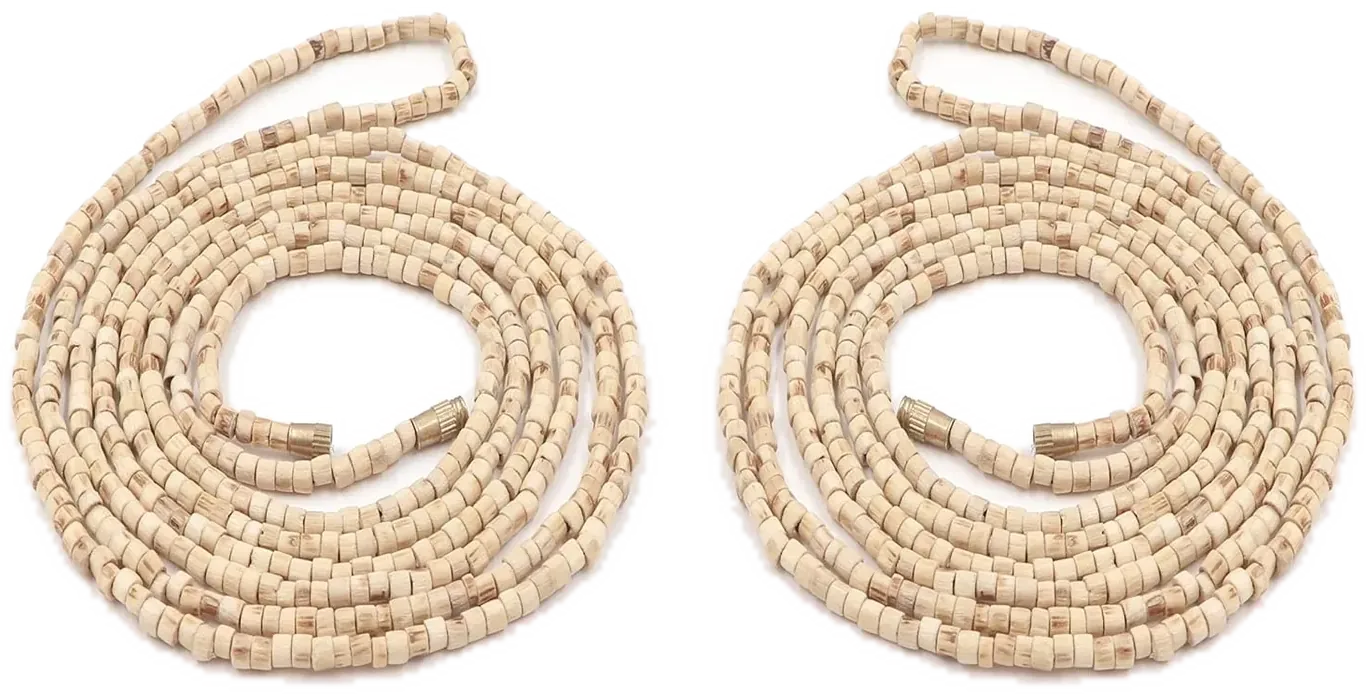
Tulsi kanthi mala, 48 inch, set of two
तुलसी कंठी माला, 48 इंच, दो का सेट
₹499
A longer 48 inch kanthi in 3 mm tulsi beads, supplied as a pair.
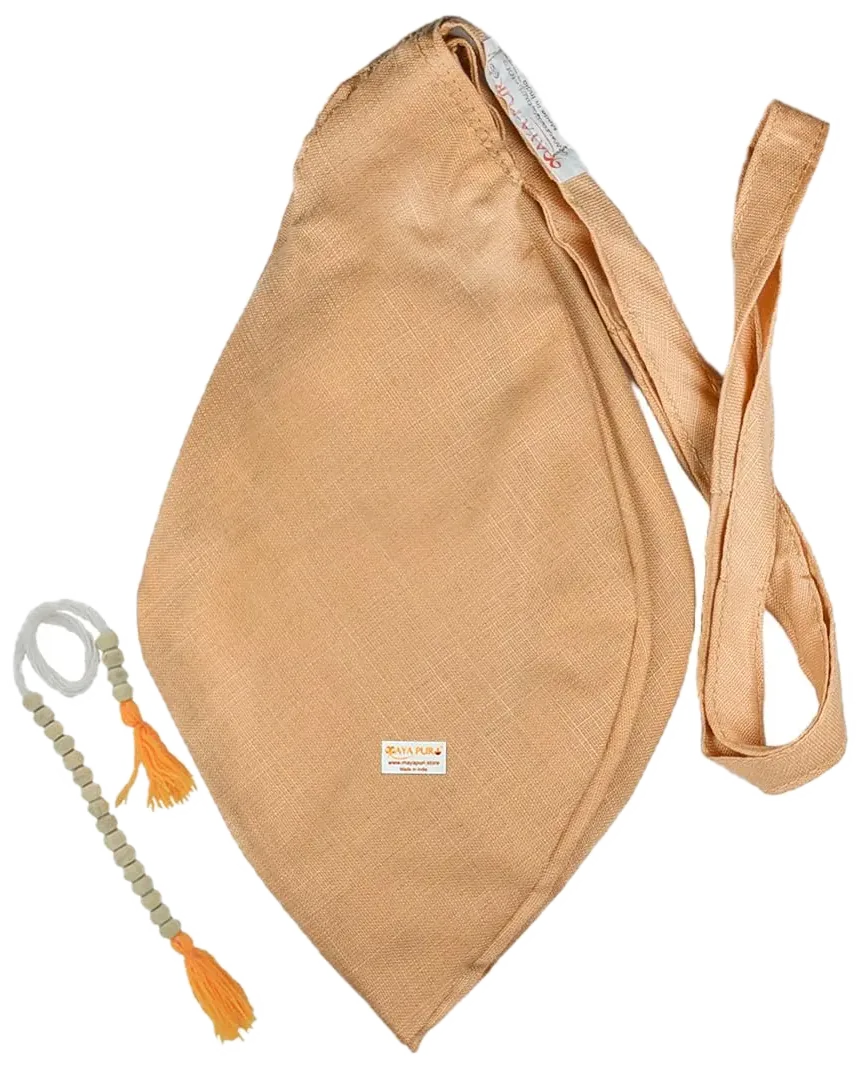
Gomukhi japa bag with counter
गोमुखी जप थैली, काउंटर सहित
₹269
A cotton bag that keeps the mala clean and lets you chant without taking it out.
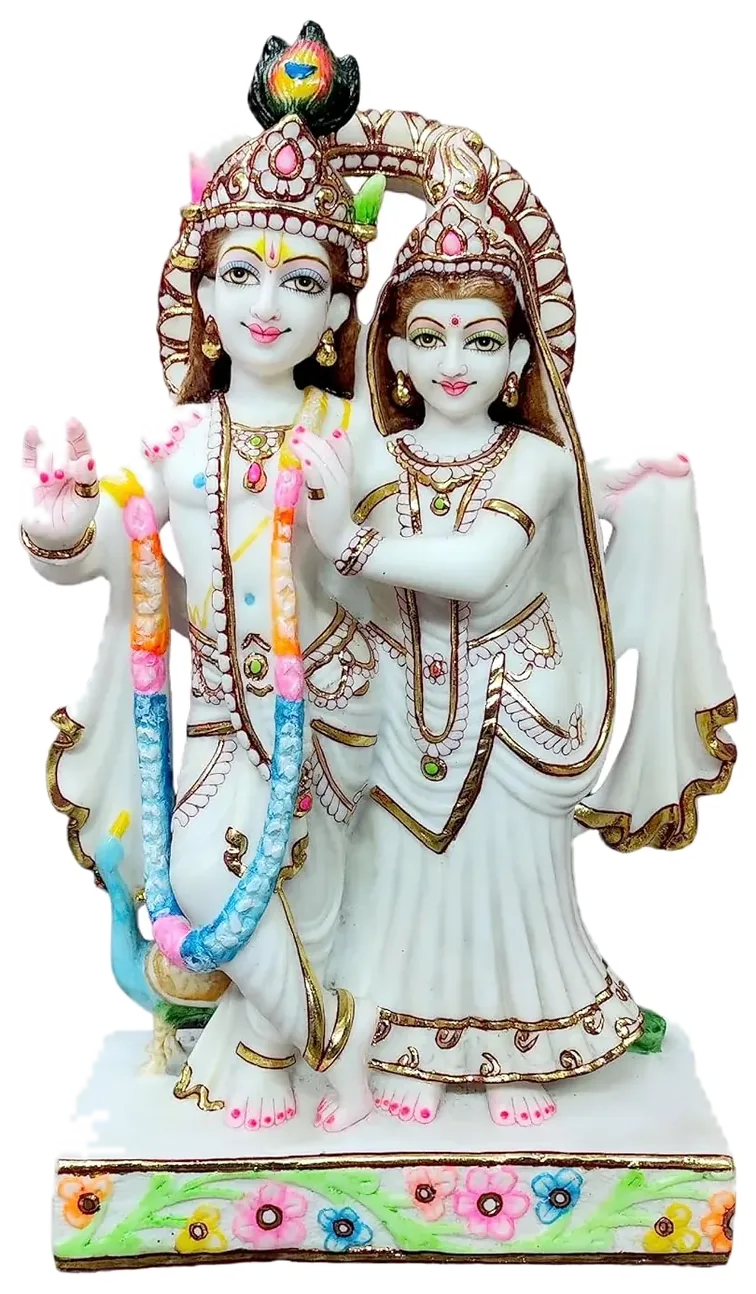
Radha Krishna marble statue, 15 inch
राधा कृष्ण संगमरमर मूर्ति, 15 इंच
₹8,000
A hand carved white marble Radha Krishna, fifteen inches, for a home shrine.