
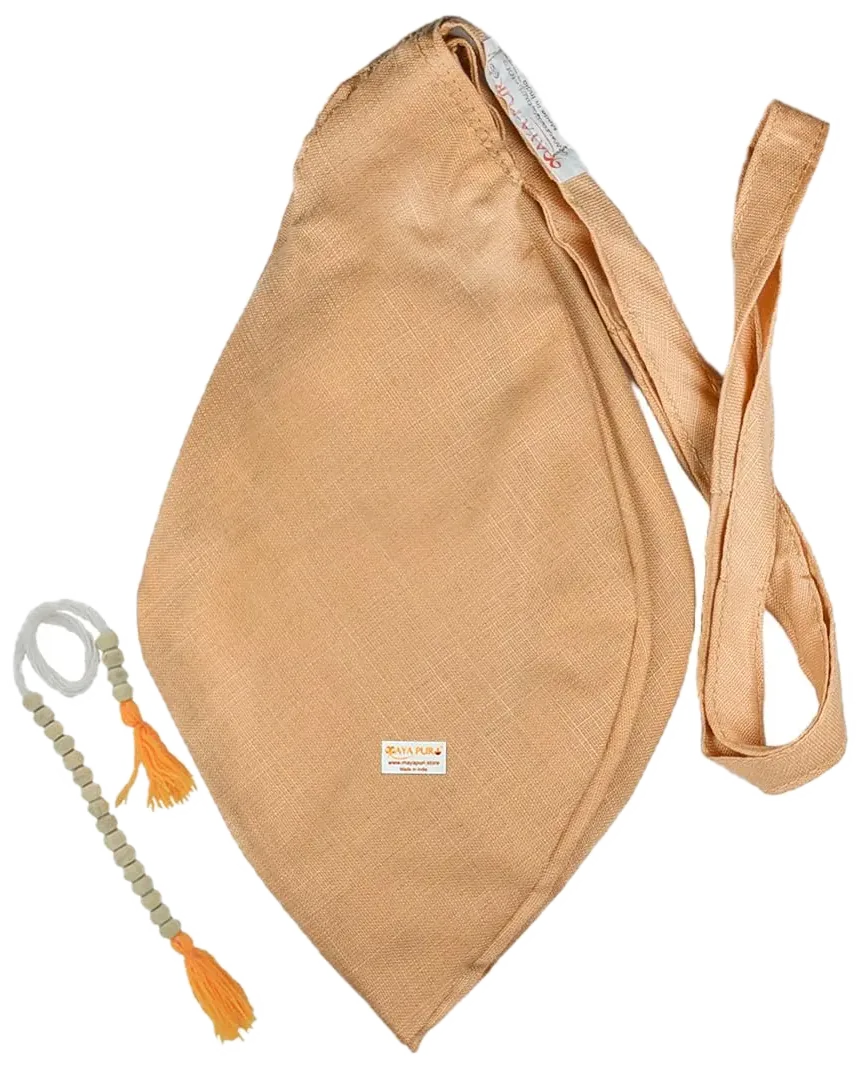
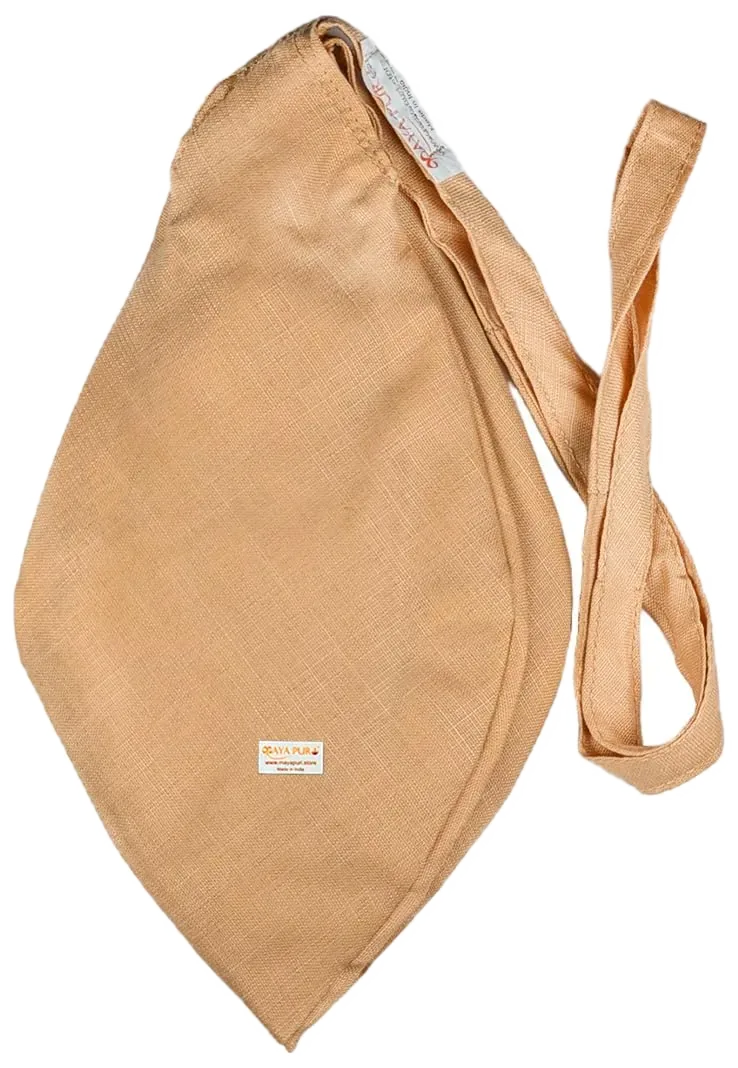
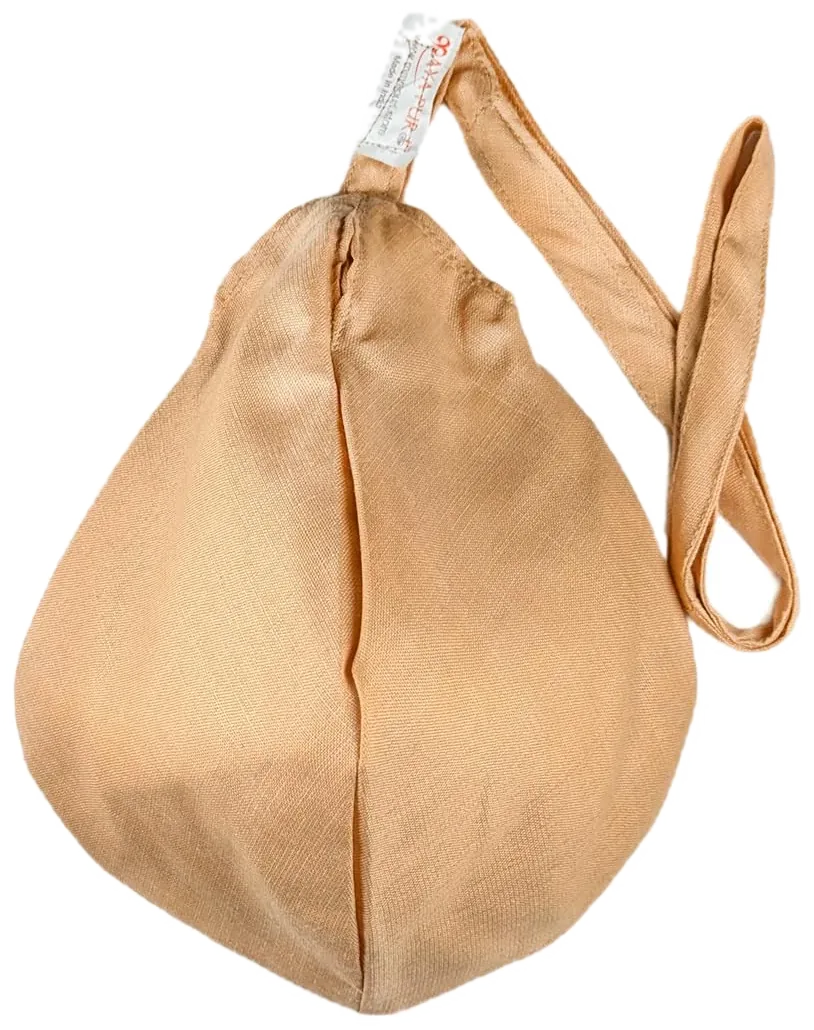
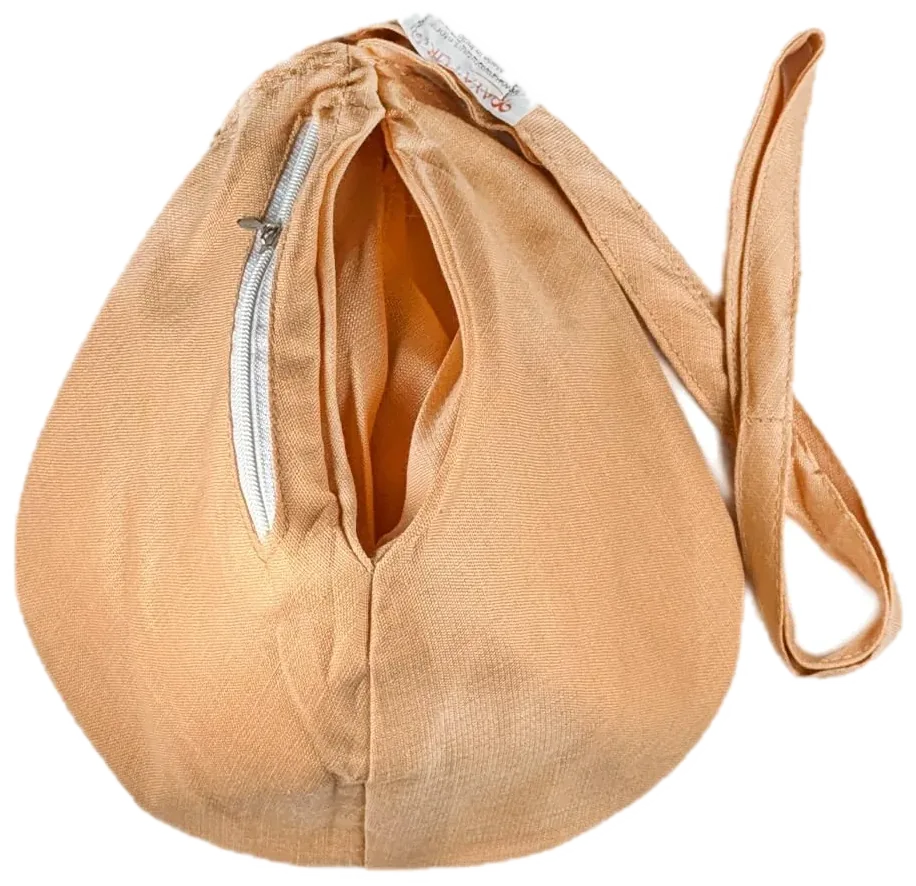
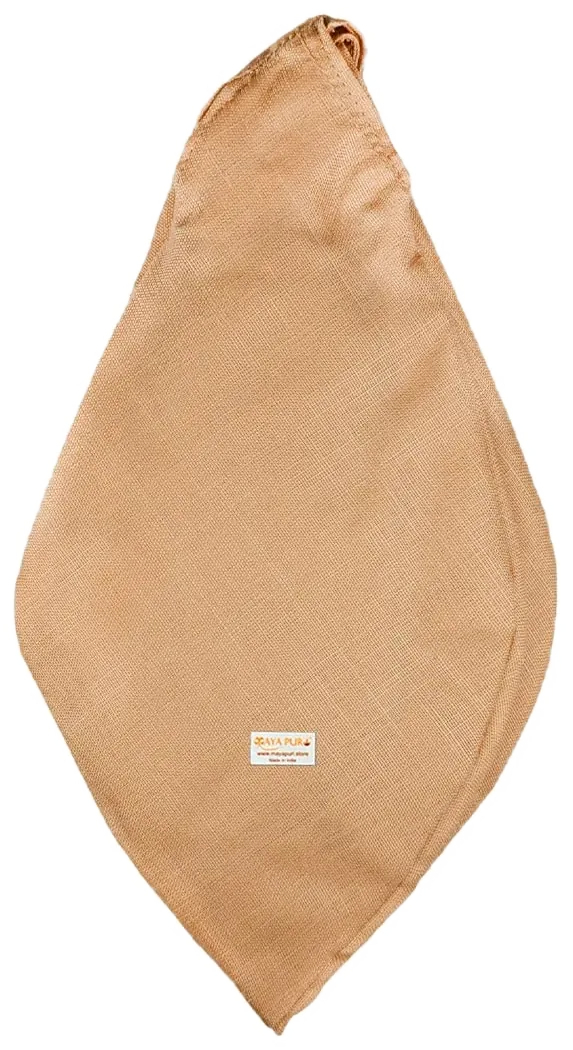
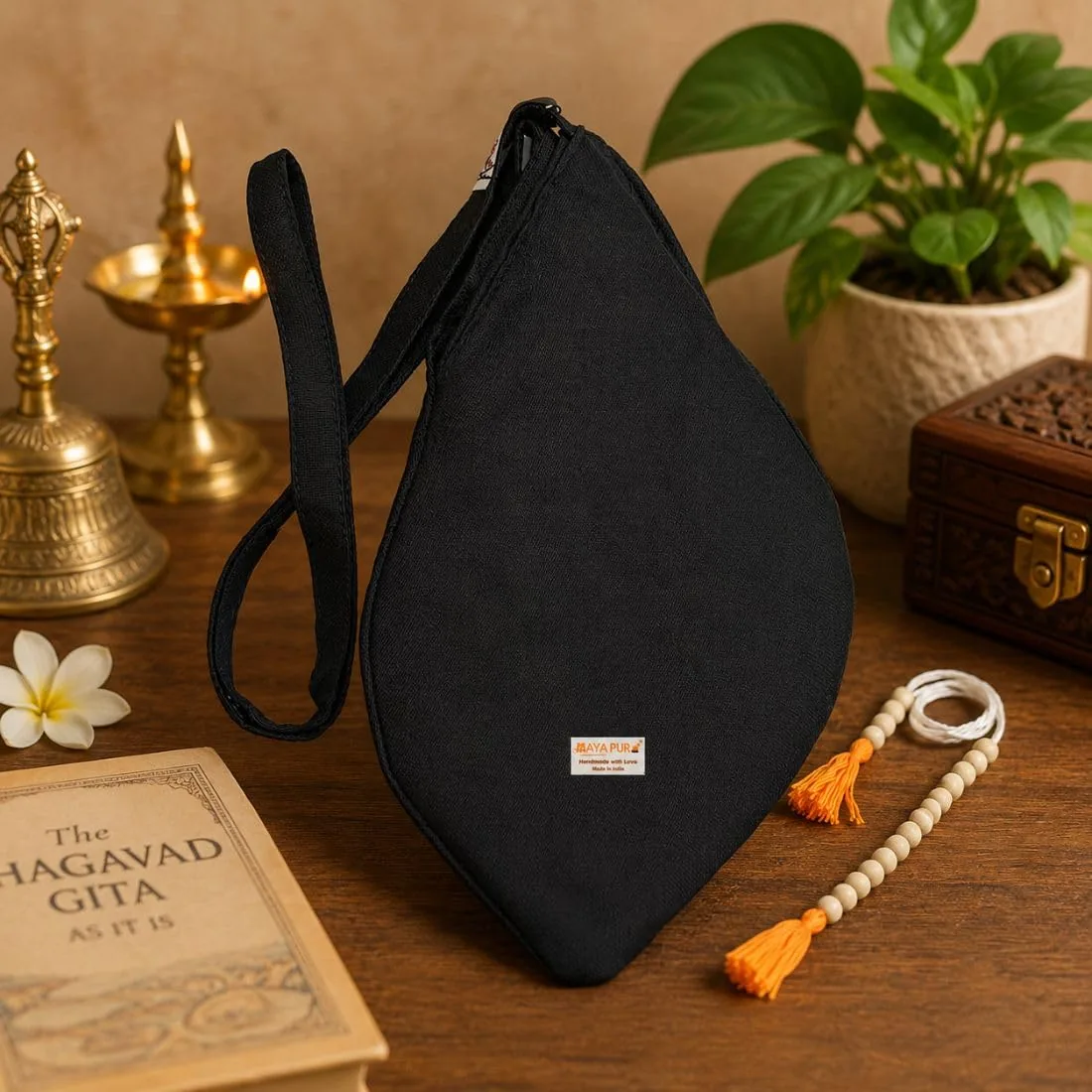
Gomukhi japa bag with counter
गोमुखी जप थैली, काउंटर सहित
The cotton pouch japa is done inside: the hand goes in through the opening, the mala stays clean, and a small counter mala on the strap keeps the round count.
- Material
- Cotton
- Size
- 20 × 18 × 5 cm
- Weight
- About 150 g
- Includes
- Zip pocket, sakshi counter mala
About this japa bag
Gomukhi means the shape of a cow's mouth, which is what the bag makes of your closed hand. The mala sits inside, your hand goes in through the opening, and the beads are turned without ever coming into view. That is the whole idea: japa that is nobody else's business, on a train or in a queue as easily as at home.
The practical part is the small counter strung on the strap, the sakshi mala. Each time a round of 108 finishes you move one of its beads, so the count of rounds lives on the bag rather than in your head. Anyone who has lost track at round seven will understand why it is there.
The zip pocket is for the small things that otherwise get carried loose. Cotton is used rather than silk because it can be washed, and a bag that cannot be washed stops being used within a month.
It is worth being clear about why privacy matters here, because it sounds like modesty and is not. Japa done where it is watched becomes a performance, and Maharaj Ji treats that exactly as he treats seva done in front of an audience: the moment somebody is looking, something has been added to the act that was not part of it. A bag removes that question on a crowded train.
The second reason is plainer. A mala carried loose in a pocket collects dust, ticket stubs and the oil off a phone, and tulsi beads are soft enough to mark. A cotton bag costs very little and keeps a mala usable for years rather than months.
What to look for before buying
Cotton, and whether it can be washed. A japa bag is handled every day and picks up oil from the hand within weeks. Cotton washes and dries; silk and brocade do not, and a bag that cannot be washed quietly stops being used by the second month. Check the weave too: loose cotton lets dust through to the beads, which is the thing the bag exists to prevent.
The opening for the hand. The whole point of a gomukhi is chanting with the hand inside, so the opening has to be wide enough to work in and narrow enough to hold its shape. If the picture only shows the bag closed, look for one that shows a hand in it. A bag with a drawstring but no proper opening is a pouch, not a gomukhi, and you will end up taking the mala out.
The counter on the strap. The small strand of beads on the strap, the sakshi mala, is what keeps the count of completed rounds. Check it is actually attached and has enough beads to be useful, usually ten or more. Without it you are holding the round count in your head, which is where it gets lost.
Keeping it, and where it sits
Wash it by hand in plain water every few weeks and let it dry flat rather than wringing it. Cotton takes that indefinitely. Soap is unnecessary and leaves a smell that transfers to the beads, which matters more than it sounds when the bag spends its life close to your face.
Keep the mala in it rather than beside it. The bag is doing two jobs at once, protecting the beads from pocket dust and hiding the hand during japa, and only the first of those works if the mala lives somewhere else and the bag is picked up for practice.
The zip pocket is for the things that otherwise ride loose in a pocket with the mala and scratch it: keys, a small card, coins. Keeping them separate is half the reason the beads stay smooth for years.
None of it is necessary. Maharaj Ji says repeatedly that the naam can be taken walking, cooking or working, with no bag, no mala and no fixed hour. A gomukhi makes japa easier to do unobserved on a train or in a queue, and that is the entire claim being made for it.
The bag also settles a question that comes up constantly at satsang, which is where to keep a mala when it is not in use. Loose in a drawer it picks up dust and gets tangled with everything else in there; hung on a hook it gathers the dust of the room. Kept in its own bag in the same place each day it stays clean, and more usefully it stays somewhere your hand goes without thinking, which is half of what makes a daily practice hold.
None of this is required. What Maharaj Ji actually asks for is set out on the teachings page, the sayings he repeats most are on the quotes page, and the stotras are free to download as PDFs. If you are planning to visit Vrindavan, read how to meet Maharaj Ji first.
Questions about buying this
What does gomukhi mean?
The shape of a cow’s mouth, which is what your closed hand makes inside the bag. The name describes the posture of the hand rather than anything about the bag itself.
Why chant with the hand inside a bag?
It keeps the beads clean and keeps the practice private. Japa on a train or in a queue stops being something other people watch, which is most of why householders use one.
What is the sakshi mala on the strap for?
Counting completed rounds. Each time a round of 108 finishes you move one bead on the counter, so the number of rounds lives on the bag rather than in your head.
Can the bag be washed?
Yes, by hand in plain water, dried flat. That is the main reason to choose cotton over silk or brocade, which cannot be washed and stop being used.
Does the mala come with it?
Read the listing before ordering. Some sellers include a mala, most supply only the bag and the counter. The two are usually sold separately.
Where should the bag be kept between sittings?
Somewhere fixed that your hand reaches without deciding to, which is most of what turns japa into a daily habit. A drawer that gets opened for other things is the usual mistake.
Is this connected with Maharaj Ji or the ashram?
No. It is not supplied by, authorised by or endorsed by Maharaj Ji or Shri Hit Radha Keli Kunj. It is an ordinary devotional item sold by other people on Amazon, listed here because a devotee might want one.
Do you sell it?
No. The button on this page takes you to Amazon. Amazon takes the payment, ships the order and handles returns and warranty. We hold no stock, never see your payment details, and cannot change or cancel an order.
Is the price on this page current?
It is the price we last saw on Amazon, with the date beside it. Amazon changes prices whenever it likes, so treat the figure here as a guide and the price on the Amazon page as the real one.
Do you make money if I buy it?
Yes. As an Amazon Associate we earn from qualifying purchases. Your price is exactly the same whether you use our link or not; Amazon pays the commission out of its own margin, and that commission is what keeps this site free to read.
Do I need this to follow the teachings?
No. Maharaj Ji asks for the Radha naam and nothing else, with no initiation, no fee and no equipment. Anything on this page is convenience, never a requirement, and he is explicit about that in satsang.
Also for daily japa
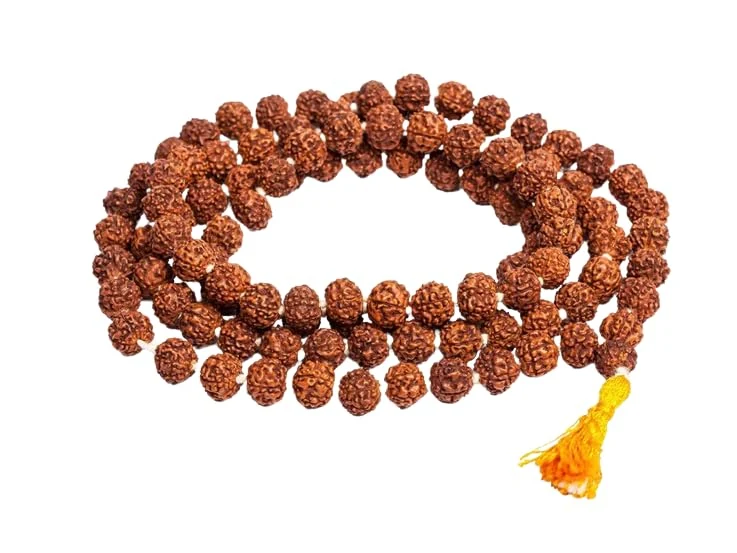
Rudraksha mala, 5 mm, 108 beads
रुद्राक्ष माला, 5 मिमी, 108 दाने
₹999
Small 5 mm panchmukhi beads on a 108 bead strand, light enough to count all day.
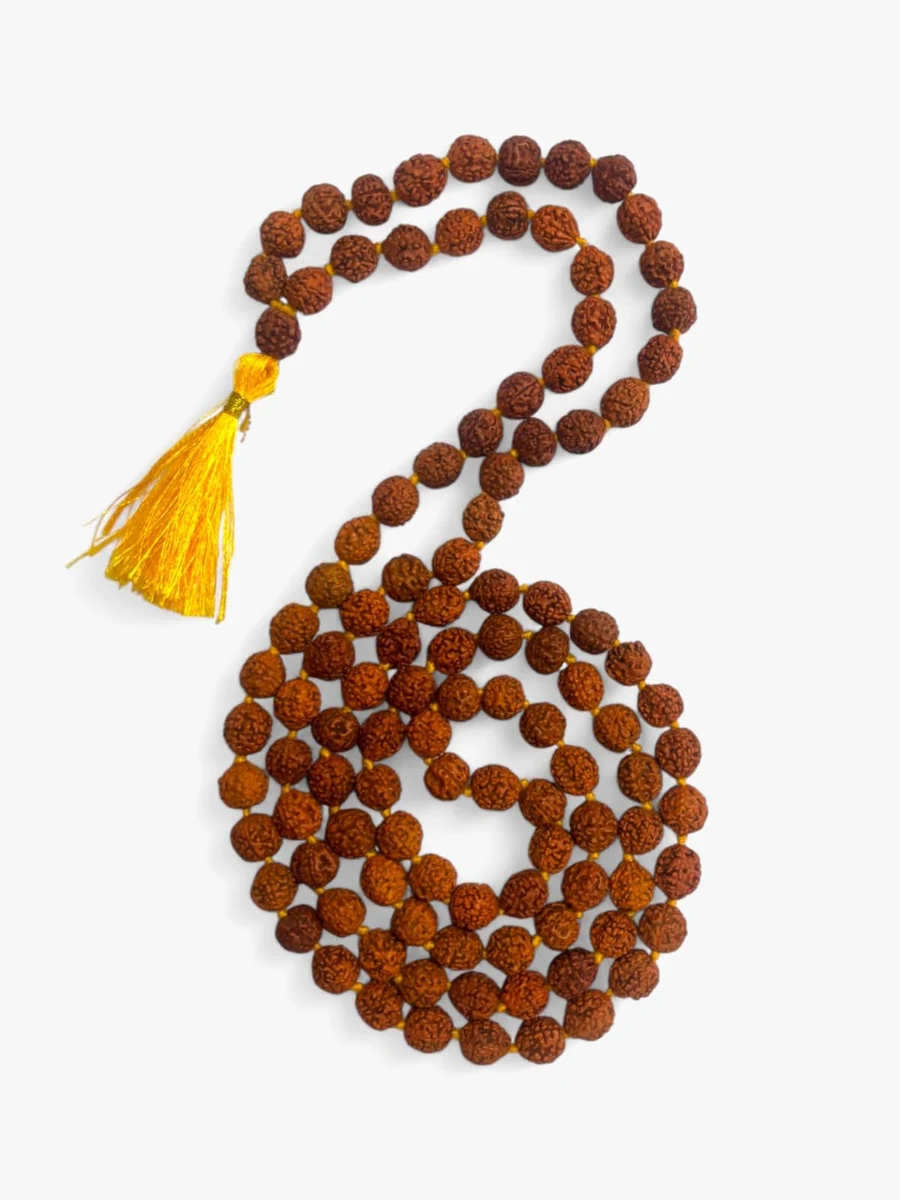
Nepali rudraksha mala, 10 mm
नेपाली रुद्राक्ष माला, 10 मिमी
₹299
Large 10 mm Nepali beads, 109 in all, at about fifty grams on the hand.
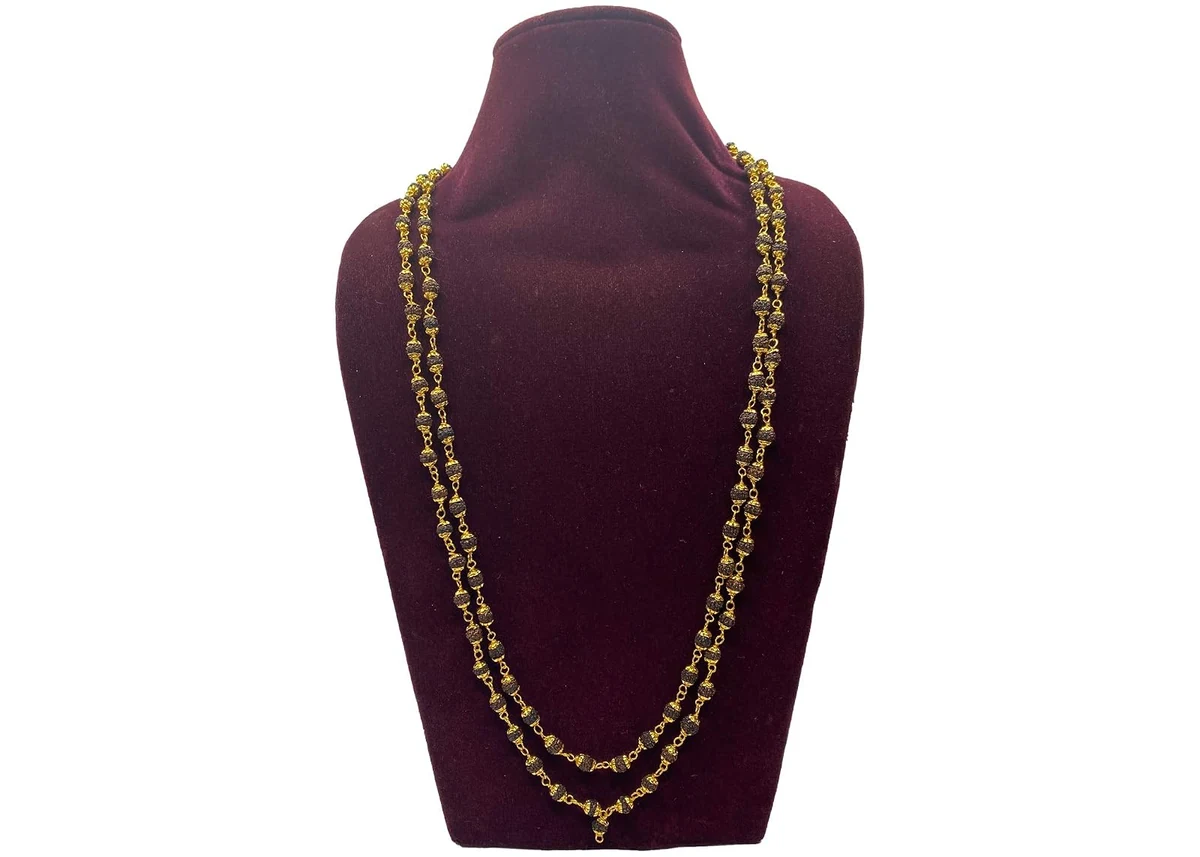
Rudraksha mala in gold plated caps
गोल्ड प्लेटेड कैप वाली रुद्राक्ष माला
₹1,599
Small 4 to 7 mm beads, each capped and linked in gold plated metal.