
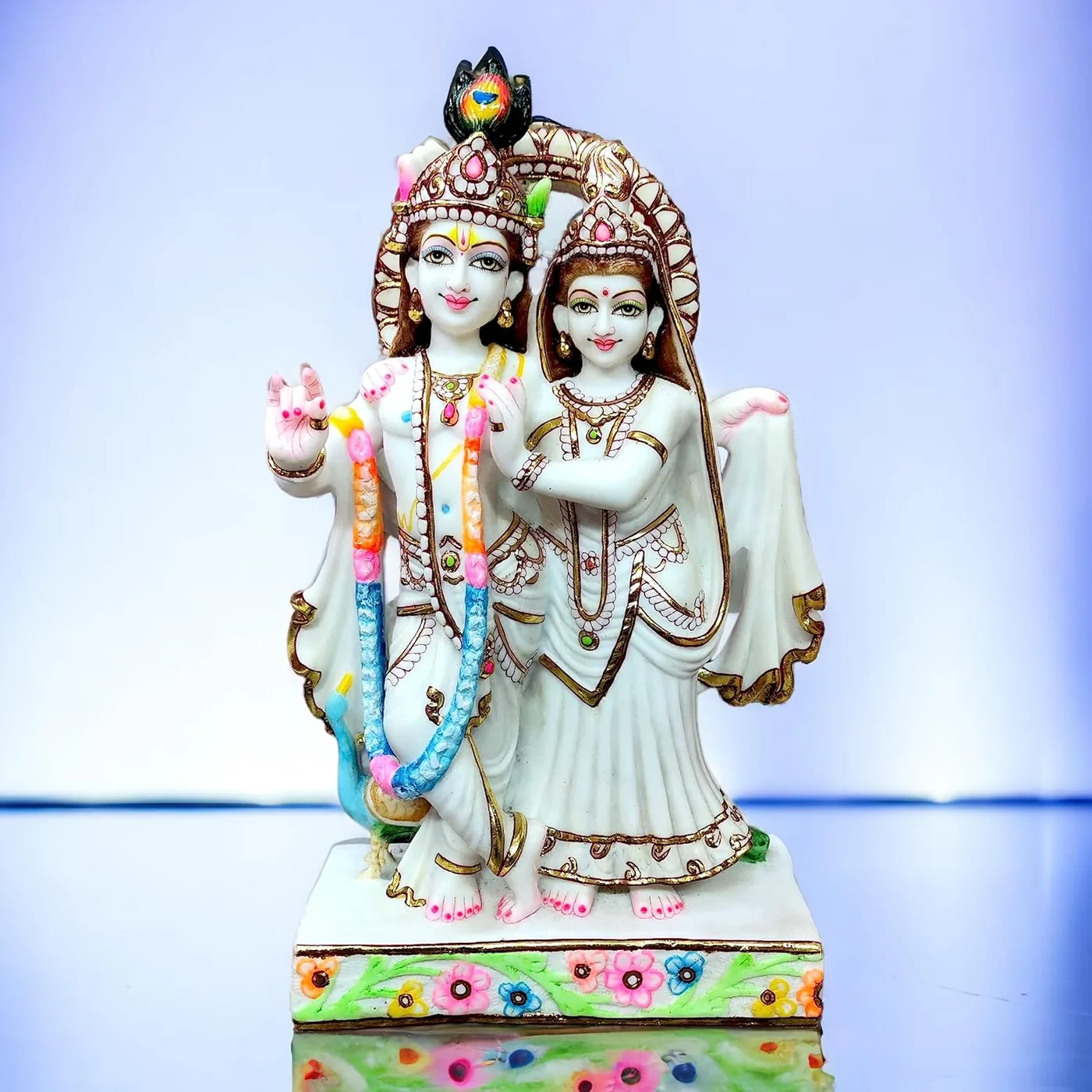
Radha Krishna marble statue, 15 inch
राधा कृष्ण संगमरमर मूर्ति, 15 इंच
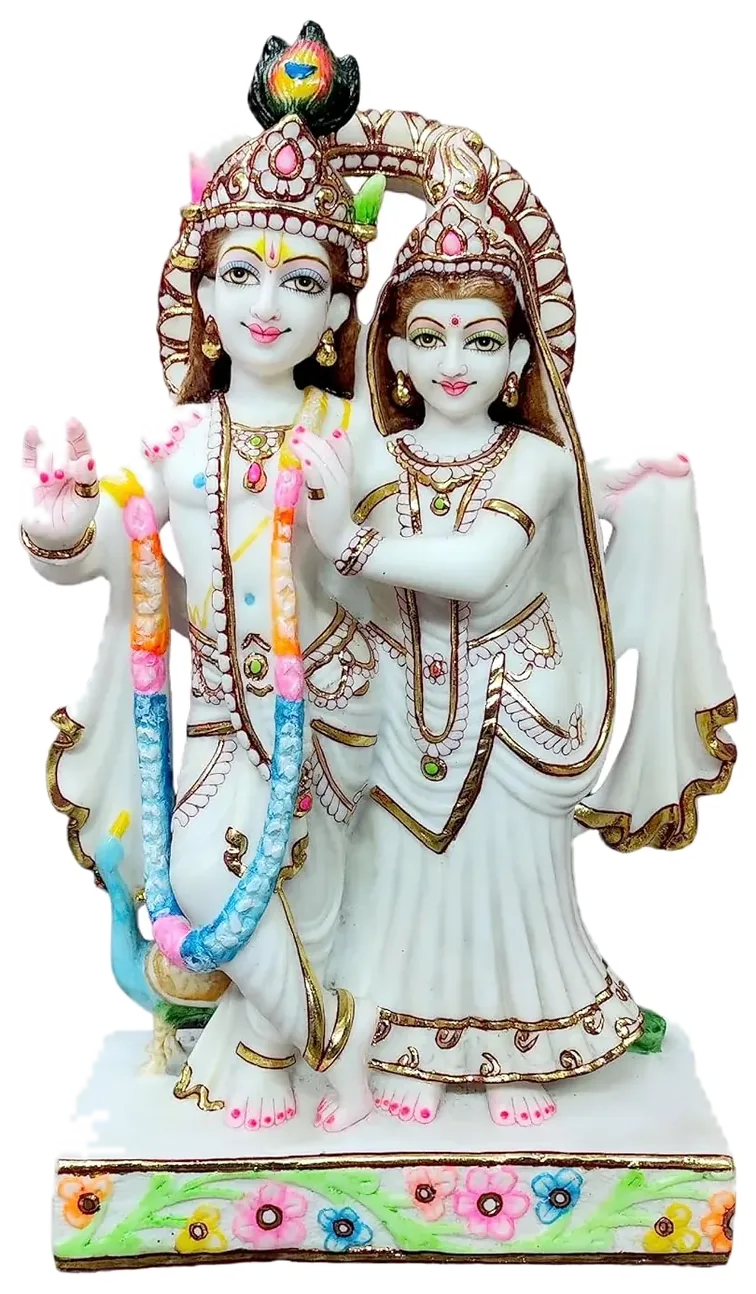
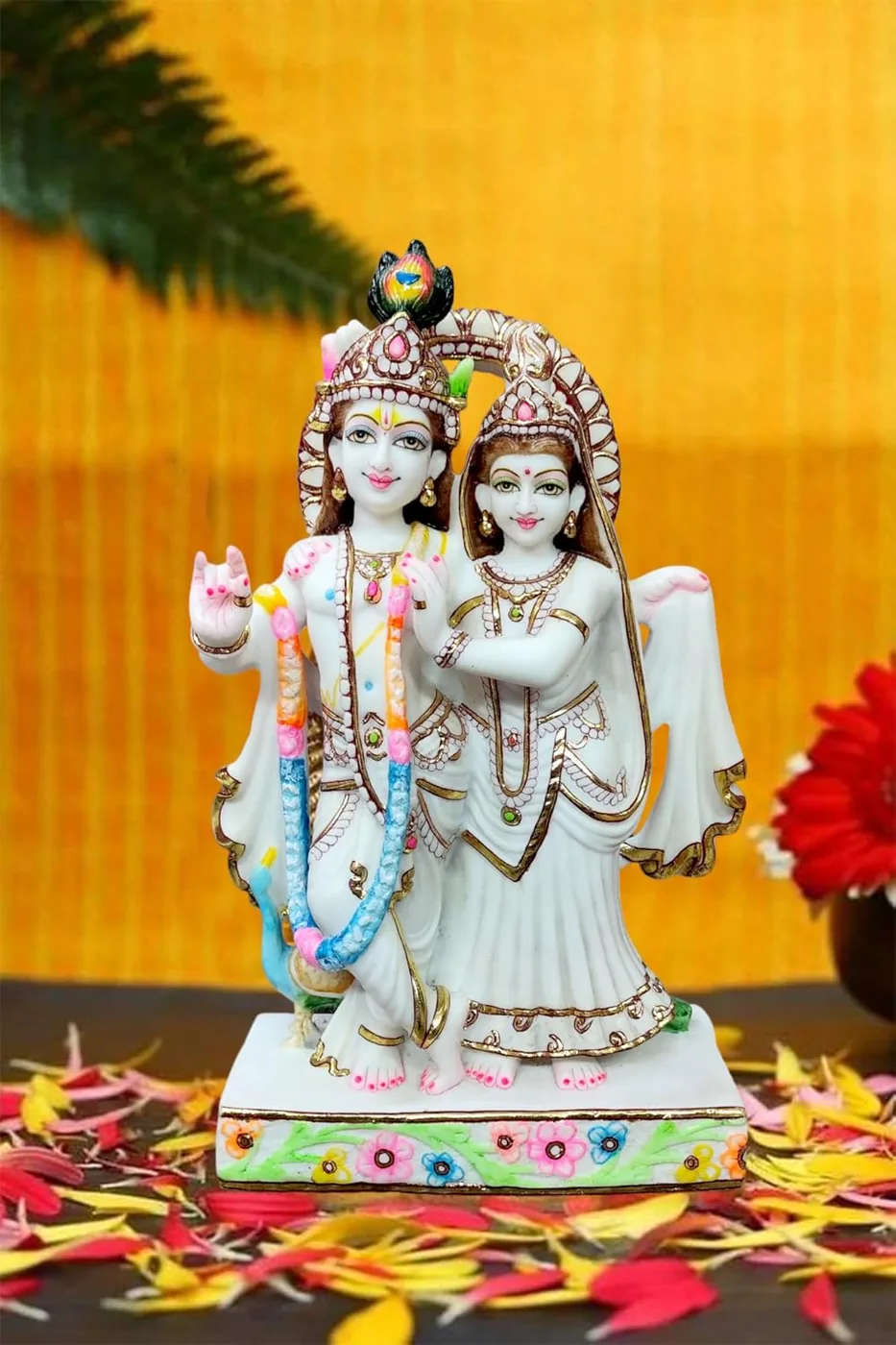
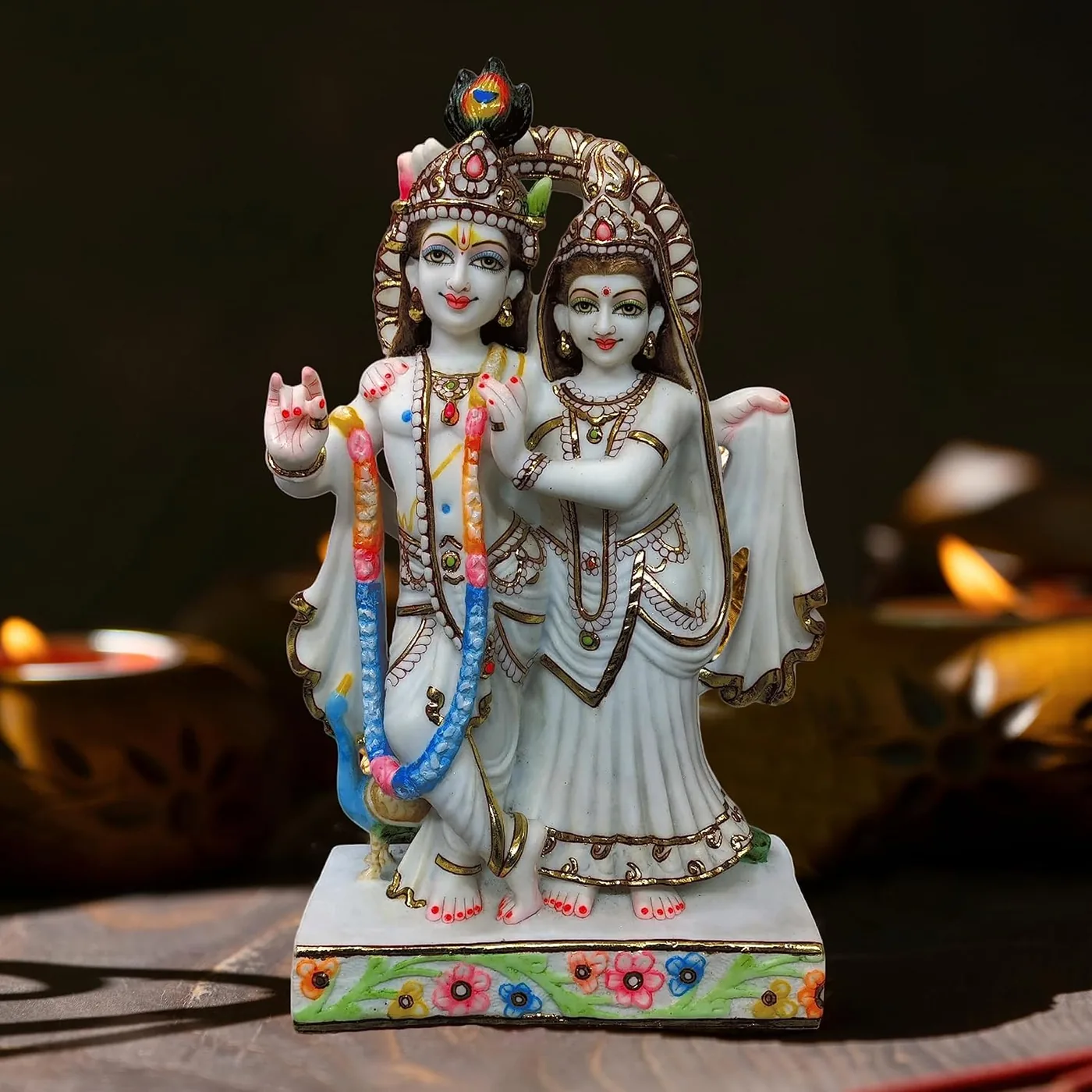
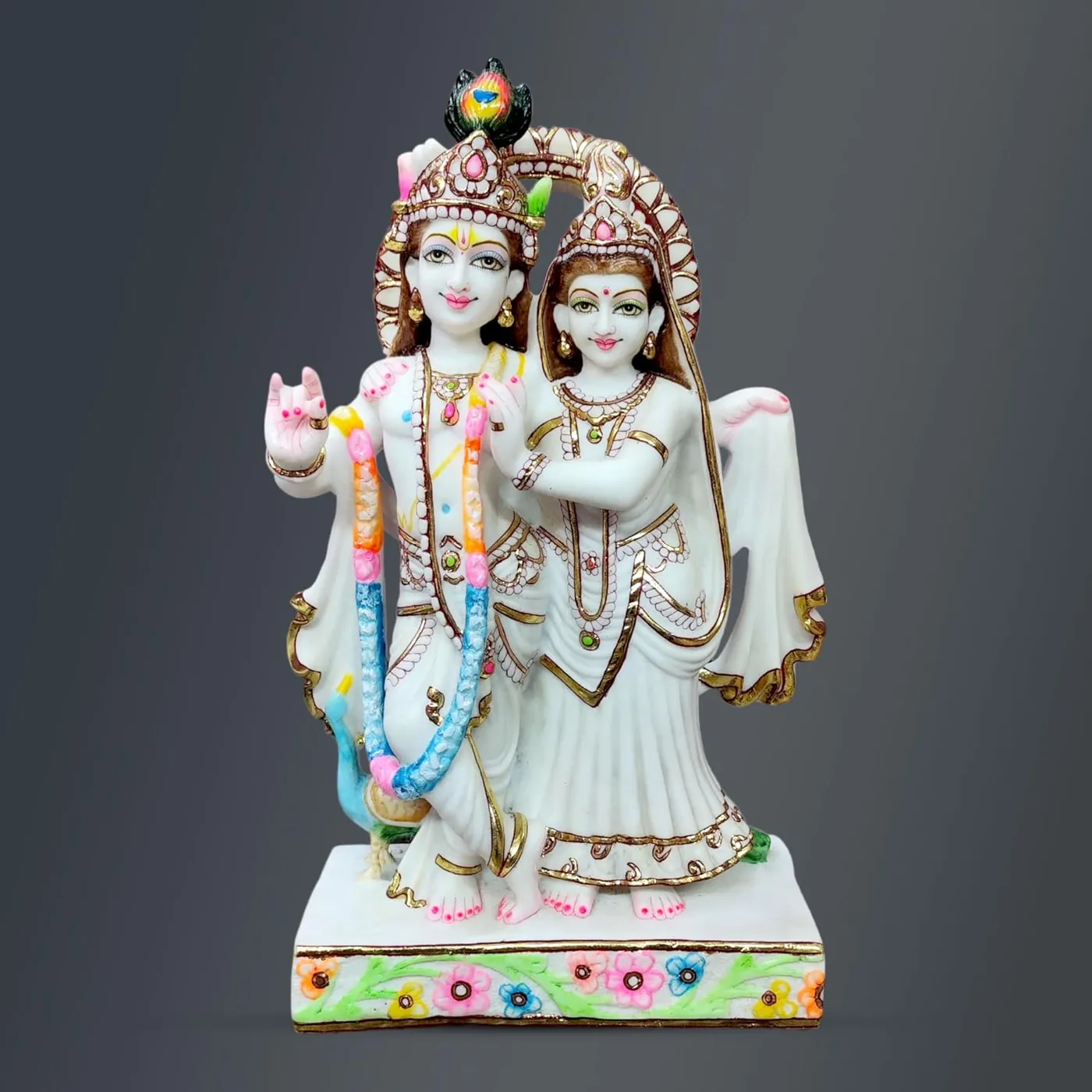
Radha and Krishna carved together in white marble at fifteen inches, painted in the Braj manner, sized for a home mandir rather than a room.
- Height
- 15 inches
- Material
- Marble
- Size
- 15 × 10 × 5 inches
- Finish
- Hand carved, hand painted
About this statue
The pair carved together rather than as two separate murtis, which is how the Radhavallabh tradition prefers them: Shri Radha is not a companion placed beside Krishna in this lineage, she stands at the centre of the worship, and a single stone holding both says that without needing a word.
Marble work is worth a slow look before buying. Run your eye along the edges of the crown and the folds of cloth, because that is where hurried carving shows first, and check that the painted detail follows the carving rather than covering it. Hand painted colour on marble sits slightly into the stone; printed decal sits on top and lifts at the edges within a year.
Fifteen inches is a home mandir size rather than a temple one. It wants a flat shelf, a wall behind it, and light from the side rather than straight on, which is what shows the carving. Marble marks with oil, so keep the diya far enough away that the smoke rises past it.
Makrana and the workshops around Jaipur supply most of the white marble murtis sold in India, and the difference between two pieces at the same price is almost always the hours of carving rather than the stone. Stone of this grade is not expensive; the cutting is.
A fifteen inch pair is the size most households settle on because it holds a shelf on its own without needing a backdrop, a canopy or anything else bought to go with it. Smaller and it disappears among the other things on a mandir shelf; larger and it needs a dedicated place and two people to move it.
What to look for before buying
Carving at the edges. Run your eye along the crown, the fingers and the folds of cloth. Those are the places hurried carving shows first, because they are the hardest to cut and the easiest to round off. Soft, blurred edges on an otherwise detailed piece usually mean the shape was cast or ground rather than carved.
Paint that follows the carving. Hand painted colour on marble sits slightly into the stone and follows the cut lines. Printed decal sits on top, ignores the carving, and lifts at the edges within a year or two. Look closely at a border or a hem in the photographs: if the pattern runs straight across a fold rather than bending with it, it was printed on.
Base and weight. A fifteen inch marble pair is heavy and the base carries all of it. Check the base is a single piece with the figures rather than glued on, and that the listing gives a weight. A piece this size that claims to be light is marble dust and resin, which is a perfectly good material but is not the same thing.
Keeping it, and where it sits
Marble marks with oil, and the commonest damage to a home mandir murti is a diya placed too close. Smoke leaves a film that dulls white stone and cannot be washed off once it has soaked in. Keep the lamp to one side and far enough away that the smoke rises past rather than over.
Dust it with a dry cloth rather than a damp one. Water carries dust into the carving and dries there, which is how the recesses of a white murti turn grey over years. For abhishek, use a little water and dry the piece afterwards rather than leaving it to air.
Give it a wall behind it and light from the side. Carving reads by shadow, so a murti lit straight on from the front flattens out and loses everything the carver did. That single change does more for how a piece looks than anything you can buy to go with it.
A murti is not a condition of anything. The practice Maharaj Ji sets out needs no stone, no shelf and no ceremony, and he says so whenever somebody at satsang starts asking about articles. Where a carved pair earns its place is domestic rather than spiritual: a household that has somewhere to stand together for two minutes in the morning tends to keep standing there, and that is what the shelf is for.
Think about the shelf before the murti arrives rather than after. A fifteen inch pair in marble is heavy enough that a thin ledge or a bracket shelf will bow over a year, and the damage shows as a tilt long before anything breaks. A fixed shelf into masonry, or the top of a solid cupboard, is what this size wants. It also needs to be somewhere the household passes daily; a murti placed where nobody walks stops being visited within a month, whatever the intention was when it was bought.
None of this is required. What Maharaj Ji actually asks for is set out on the teachings page, the sayings he repeats most are on the quotes page, and the stotras are free to download as PDFs. If you are planning to visit Vrindavan, read how to meet Maharaj Ji first.
Questions about buying this
Is this real marble or marble dust?
The listing says marble. Marble dust and resin is a different material, lighter and cheaper, and both are sold under similar wording, so check the stated weight before ordering.
Why are Radha and Krishna carved together?
In the Radhavallabh tradition Shri Radha is not a companion placed beside Krishna, she is at the centre of the worship. A single stone holding both says that without needing an explanation.
Will the paint come off?
Hand painted colour sits into the stone and lasts. Printed decal lifts at the edges within a year or two. Look at whether the pattern bends with the folds of cloth to tell them apart.
How do I clean it?
A dry cloth. Water carries dust into the carving and dries there, which is how white stone goes grey in the recesses.
What size shelf does it need?
Fifteen inches tall with a base of roughly ten by five inches, and it is heavy. A fixed shelf with a wall behind it rather than a narrow ledge.
What kind of shelf does a marble pair need?
A fixed shelf into masonry or the top of a solid cupboard. A thin ledge or bracket shelf bows under this weight over a year and the tilt shows long before anything gives way.
Is this connected with Maharaj Ji or the ashram?
No. It is not supplied by, authorised by or endorsed by Maharaj Ji or Shri Hit Radha Keli Kunj. It is an ordinary devotional item sold by other people on Amazon, listed here because a devotee might want one.
Do you sell it?
No. The button on this page takes you to Amazon. Amazon takes the payment, ships the order and handles returns and warranty. We hold no stock, never see your payment details, and cannot change or cancel an order.
Is the price on this page current?
It is the price we last saw on Amazon, with the date beside it. Amazon changes prices whenever it likes, so treat the figure here as a guide and the price on the Amazon page as the real one.
Do you make money if I buy it?
Yes. As an Amazon Associate we earn from qualifying purchases. Your price is exactly the same whether you use our link or not; Amazon pays the commission out of its own margin, and that commission is what keeps this site free to read.
Do I need this to follow the teachings?
No. Maharaj Ji asks for the Radha naam and nothing else, with no initiation, no fee and no equipment. Anything on this page is convenience, never a requirement, and he is explicit about that in satsang.
Also for the home mandir
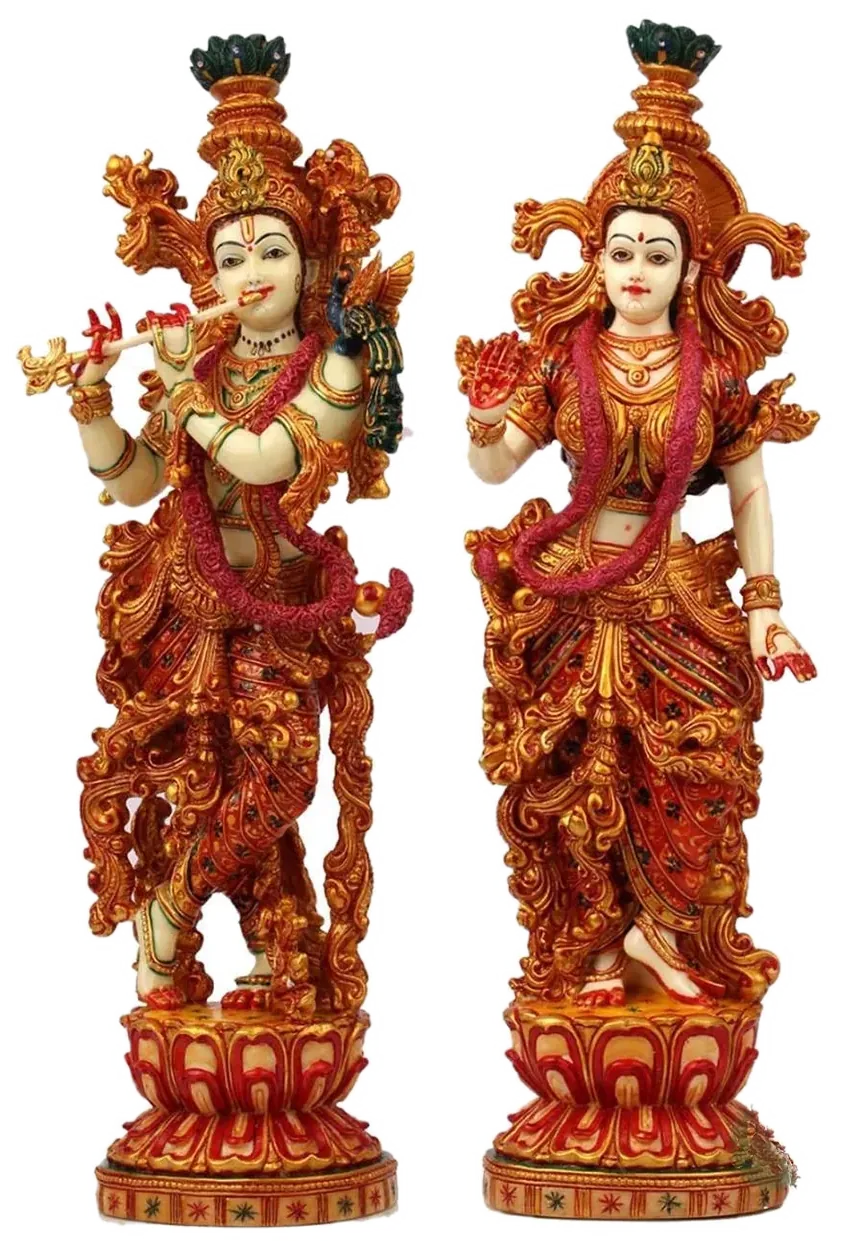
Radha Krishna statue, 15 inch
राधा कृष्ण मूर्ति, 15 इंच
₹14,999
A tall cold cast statue with marble dust and hand painted detail.
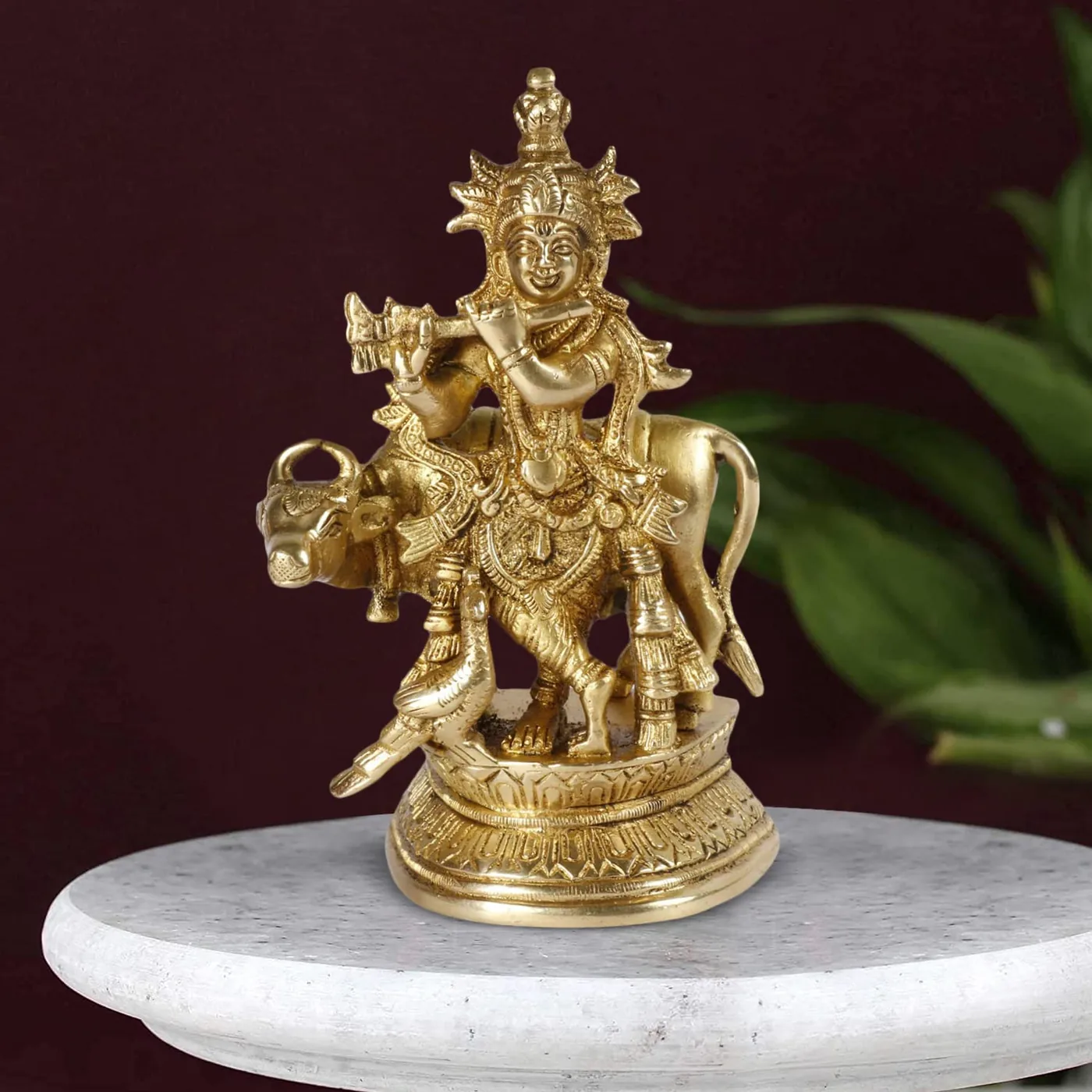
Krishna with cow, brass
गाय के साथ कृष्ण, पीतल
₹2,626
Solid brass, Krishna at the flute with a cow beside him, five and a half inches.
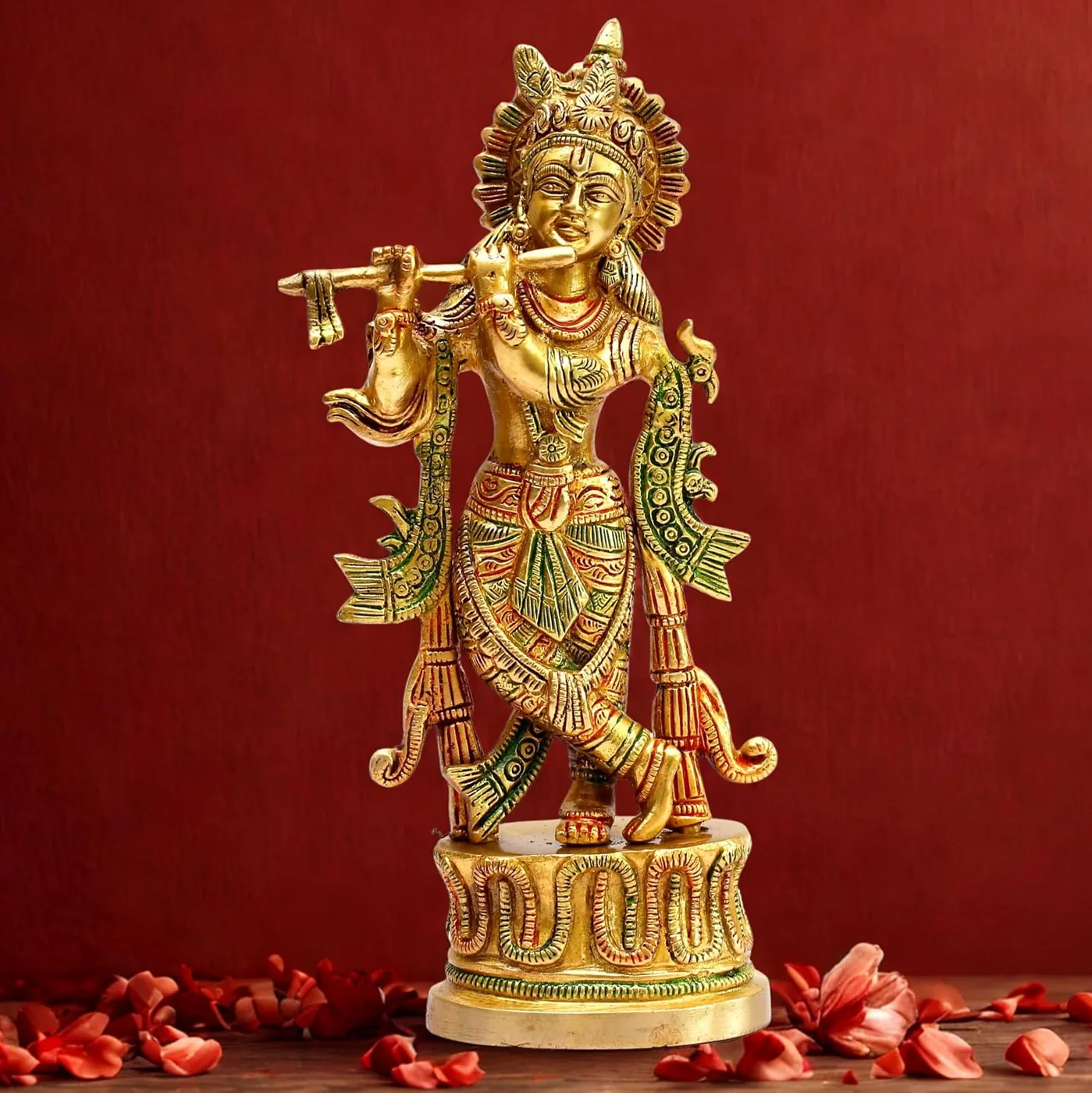
Krishna at the flute, brass
बाँसुरी बजाते कृष्ण, पीतल
₹2,299
Krishna standing at the flute in pure brass, twenty two centimetres, with enamel detail.