

Rudraksha mala with gangajal and vibhuti
गंगाजल और विभूति के साथ रुद्राक्ष माला
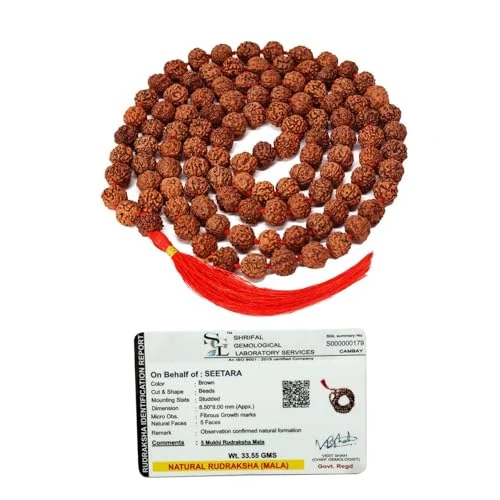
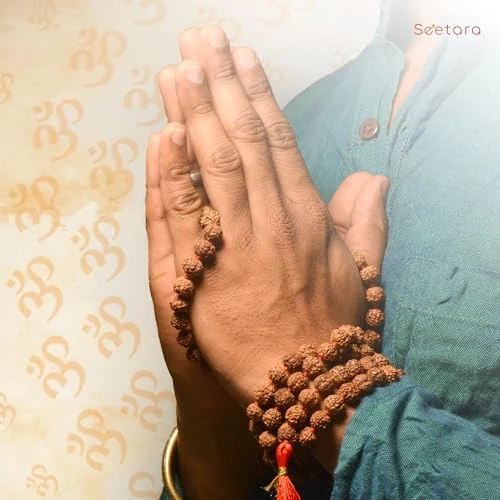
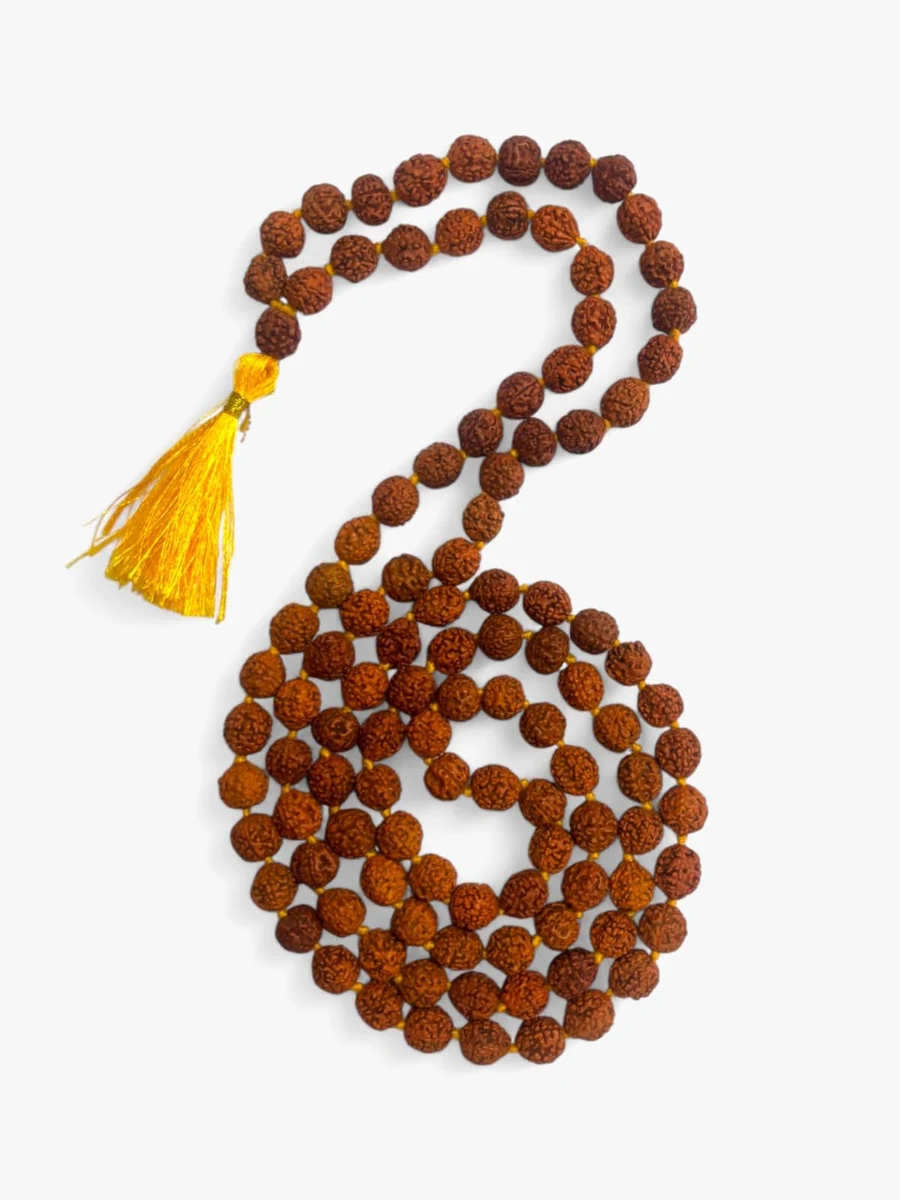
A 108 bead panchmukhi strand in small beads, packed with a vial of gangajal and a little vibhuti for anyone who wants to wash it before first use. About a hundred grams all in.
- Beads
- 108
- Bead size
- Small
- Supplied with
- Gangajal and vibhuti
- Weight
- About 100 g
About this rudraksha mala
What separates this listing from the other rudraksha strands on the page is the box rather than the beads. It arrives with a small sealed vial of gangajal and a pinch of vibhuti, on the understanding that some buyers like to rinse a new mala and mark it before putting it into use. If that is a habit you keep, having the material to hand on the first day is a small convenience worth having.
It is also worth being clear about what it is not. A mala does not need consecrating before it can be counted on, no ceremony makes a strand more effective, and no strand is invalid because it came straight out of the packet into someone's hand. Sellers in this category lean heavily on words like energised, charged and activated. Those words describe a marketing position, not a property of a seed, and this page is not going to repeat them as though they were specifications.
The same caution applies to the health claims that follow rudraksha around the internet, which run from blood pressure to concentration to protection from negative energy. None of that is established, none of it is measured, and a devotional article should not be sold as medicine. If something is genuinely wrong, the answer is a doctor. Buy the bead because you want a counter in your hand, and let the rest go.
On the mala itself: 108 small beads, panchmukhi, around a hundred grams packed. Small beads count quickly and suit anyone who sits for several rounds at a stretch, and they are comfortable in a cloth bag where a hand can work them out of sight. Five faces is the ordinary variety and the only one available in the quantity a matched 108 bead strand requires.
Rudraksha is Shiva's bead. That is not a detail this site will bury, because a page about devotional goods for a Radha naam audience ought to say where an article actually comes from. The Vrindavan lineages count on tulsi, and the Radhavallabh tradition Maharaj Ji stands in is no exception. Owning a rudraksha strand breaks nothing; it simply belongs to a different line, and plenty of homes contain both.
What this page has tried to do is separate the mala from the marketing around it. The strand is fine: 108 small panchmukhi beads that will count as well as any other. The claims stacked on top of it about energy, protection, blood pressure and confidence are not measurable, not verifiable and not part of any teaching this site would repeat. Judge the beads on drilling, matching and thread. Ignore the adjectives, and do not let a seller persuade you that something bought can substitute for something practised.
What to look for before buying
Treat energising claims as noise. Phrases like energised, charged, siddha and activated appear constantly in this category and mean nothing you can verify. They are not a grade, they are not certified by anyone, and no seller can demonstrate them. Judge the mala on bead quality, matching, drilling and thread, which are all things you can see, and ignore the rest of the listing entirely.
Check the beads are seed, not paste. The common fake is rudraksha powder bound in resin and pressed in a mould. Held under a lamp, moulded beads show the same surface pattern repeating from bead to bead, glassy drill holes and a slightly too perfect roundness. Natural beads vary, and the grooves wander. Look at six beads together rather than one on its own and the difference is obvious.
Is the vial sealed. If you intend to use the gangajal, check that it arrives properly sealed rather than in a screw cap that has clearly been filled by hand. This is not a serious matter and nothing about the mala depends on it, but a container that leaks into the packaging in transit will mark the beads and the cloth bag, and that is worth avoiding.
Keeping it, and where it sits
If you are going to rinse the mala at all, do it once, briefly, and dry it slowly on a cloth away from sun and heat. Rudraksha is seed and it takes water in; the danger is not the washing but the drying, because a seed dried fast splits at the drill hole. After that first rinse keep it dry permanently.
Vibhuti is ash and it finds its way into the grooves. If you mark the beads, expect to brush them out occasionally with something soft and dry. Do not wash the ash out with water, which turns it into a paste that sets in the ridges and is considerably harder to remove than the loose powder was.
Small beads mean small drill holes and a fine thread, so this strand will need restringing sooner than a heavy one. Watch for the beads starting to move loosely along the thread, which is the warning sign, and have it restrung before the thread parts rather than after you have spent an evening finding beads under furniture.
Keep it in the bag it came in or any cotton pouch. Loose in a drawer it collects grit, and grit inside a drill hole grinds the thread from the inside where you cannot see it. A mala kept in a pouch and wiped occasionally is essentially maintenance free for years.
None of this is required. What Maharaj Ji actually asks for is set out on the teachings page, the sayings he repeats most are on the quotes page, and the stotras are free to download as PDFs. If you are planning to visit Vrindavan, read how to meet Maharaj Ji first.
Also worth reading: the ashram in Vrindavan , and the teaching in his own words.
Questions about buying this
What is the gangajal and vibhuti for?
Some people rinse a new mala and mark it before first use. The pack simply saves you sourcing those yourself. Nothing about the mala depends on doing it.
Does a mala have to be energised before use?
No. There is no requirement of that kind, and no seller can demonstrate that a bead has been charged in any way. A counting mala works as a counter from the day it arrives.
Do rudraksha beads have health benefits?
No reliable evidence supports the claims made about blood pressure, stress or protection. Treat those listings as marketing, and take medical problems to a doctor.
How many beads should a japa mala have?
One hundred and eight for counting, plus a sumeru at the join that is never counted. Strands sold by length rather than by count are necklaces, not counting malas.
Is this suitable for Radha naam japa?
You can count anything on it. But rudraksha is a Shaiva bead and Braj uses tulsi, so a devotee following the Vrindavan practice would more usually buy tulsi.
Can I wash the mala regularly?
It is not. The practice has no entry fee and no shopping list. Beads help people who like to count and are of no consequence to anybody who does not.
Is this connected with Maharaj Ji or the ashram?
No. It is not supplied by, authorised by or endorsed by Maharaj Ji or Shri Hit Radha Keli Kunj. It is an ordinary devotional item sold by other people on Amazon, listed here because a devotee might want one.
Do you sell it?
No. The button on this page takes you to Amazon. Amazon takes the payment, ships the order and handles returns and warranty. We hold no stock, never see your payment details, and cannot change or cancel an order.
Is the price on this page current?
It is the price we last saw on Amazon, with the date beside it. Amazon changes prices whenever it likes, so treat the figure here as a guide and the price on the Amazon page as the real one.
Do you make money if I buy it?
Yes. As an Amazon Associate we earn from qualifying purchases. Your price is exactly the same whether you use our link or not; Amazon pays the commission out of its own margin, and that commission is what keeps this site free to read.
Do I need this to follow the teachings?
No. Maharaj Ji asks for the Radha naam and nothing else, with no initiation, no fee and no equipment. Anything on this page is convenience, never a requirement, and he is explicit about that in satsang.
Also for daily japa
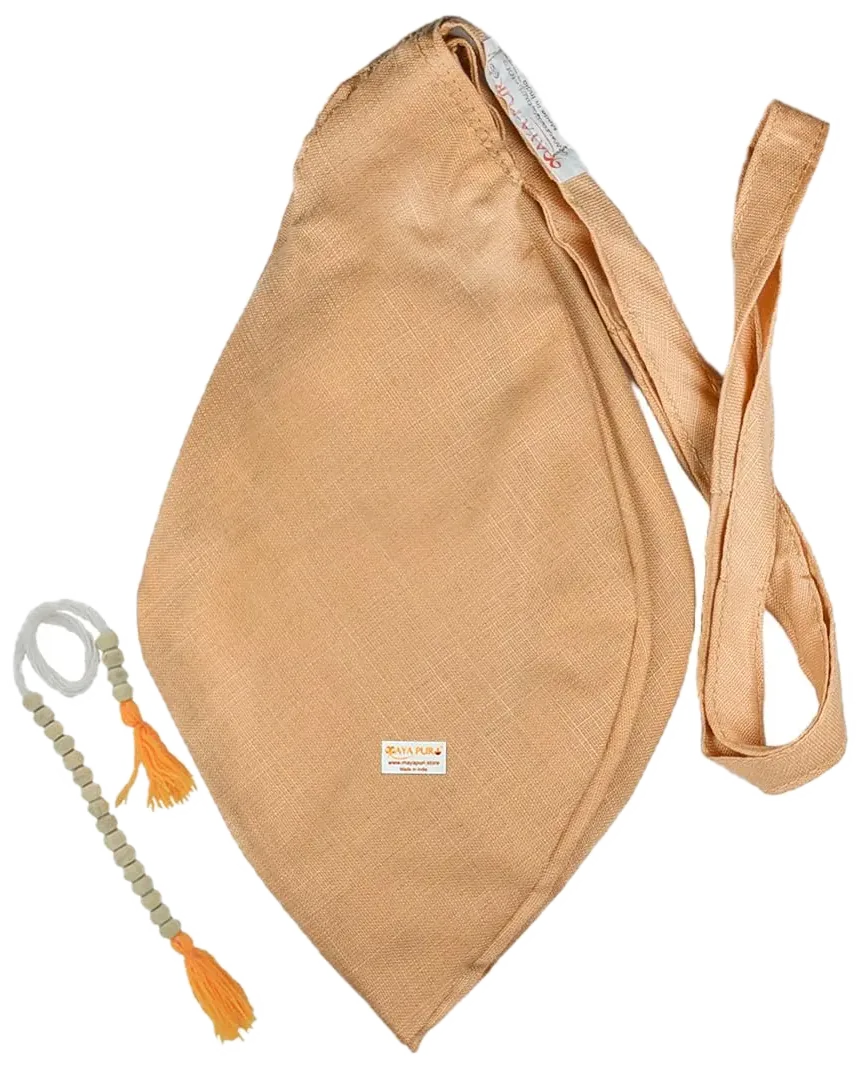
Gomukhi japa bag with counter
गोमुखी जप थैली, काउंटर सहित
₹269
A cotton bag that keeps the mala clean and lets you chant without taking it out.
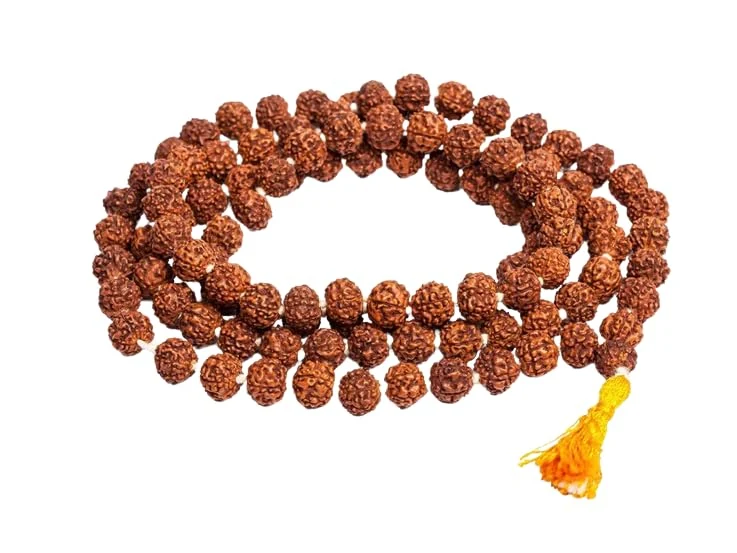
Rudraksha mala, 5 mm, 108 beads
रुद्राक्ष माला, 5 मिमी, 108 दाने
₹999
Small 5 mm panchmukhi beads on a 108 bead strand, light enough to count all day.
Nepali rudraksha mala, 10 mm
नेपाली रुद्राक्ष माला, 10 मिमी
₹299
Large 10 mm Nepali beads, 109 in all, at about fifty grams on the hand.