
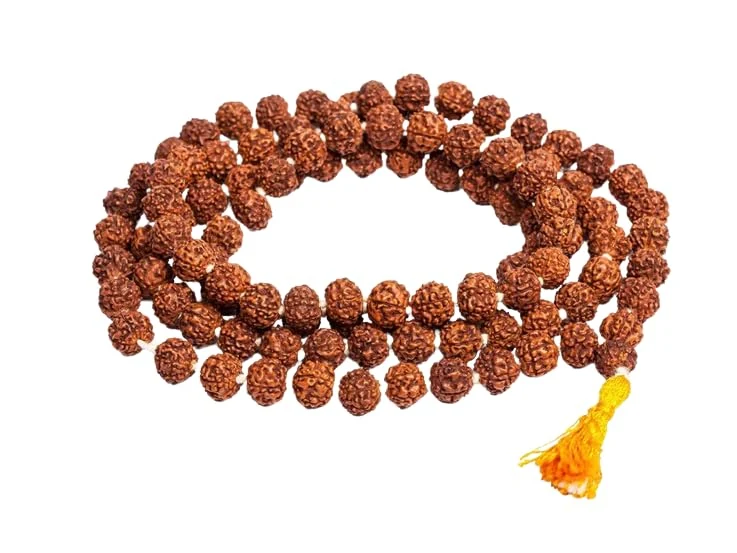
Rudraksha mala, 5 mm, 108 beads
रुद्राक्ष माला, 5 मिमी, 108 दाने
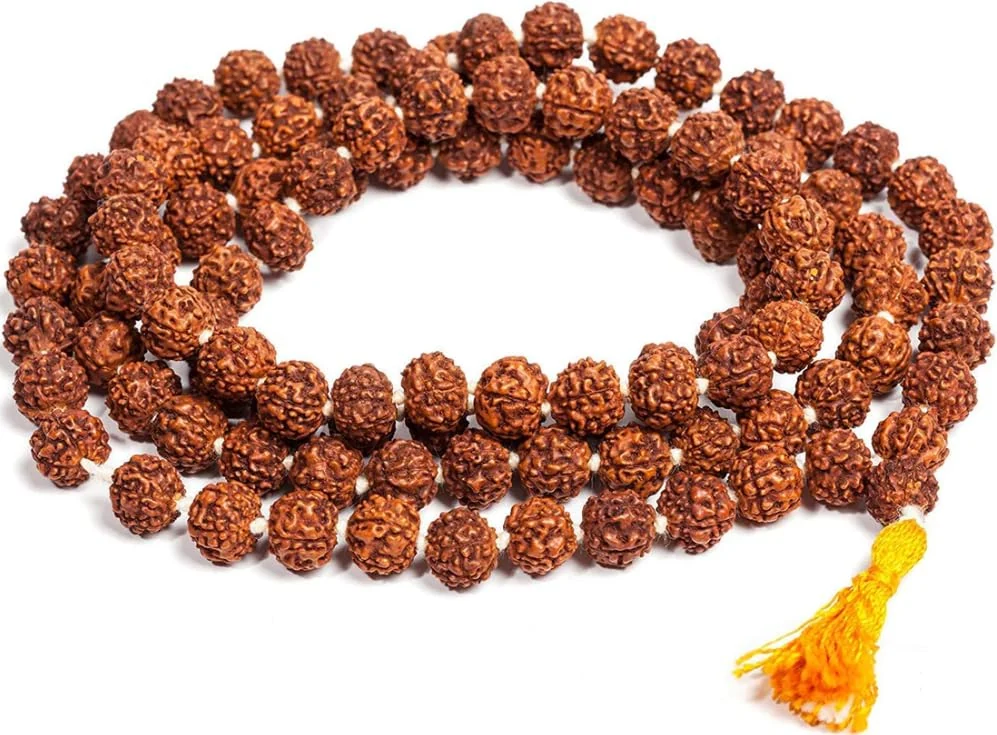
A 108 bead rudraksha strand in small 5 mm panchmukhi beads, with a sumeru at the join and a lab certificate in the packet. Small beads move quickly under the thumb, which is why most people who count a lot of rounds end up with a strand like this one.
- Beads
- 108 plus sumeru
- Bead size
- About 5 mm
- Mukhi
- Five faced (panchmukhi)
- Supplied with
- Lab certificate
About this rudraksha mala
Rudraksha is the dried stone of the Elaeocarpus fruit, and the ridges running from top to bottom of each bead are its mukhis, its faces. Five faced beads are by far the commonest, which is exactly why they are the ones strung into counting malas: a 108 bead strand needs 108 beads that match, and only panchmukhi is available in that quantity at a price a household can pay. Rarer faces are sold singly and worn, not counted on.
The beads here are small, about 5 mm across. Size is the single decision that changes how a mala behaves in the hand more than anything else. A small bead has a short travel between one and the next, so the thumb moves in a tight rhythm and a round finishes sooner. Anyone counting several rounds in a sitting tends to drift towards smaller beads for that reason, and anyone who counts slowly and deliberately usually prefers something larger to hold on to.
One hundred and eight is the count, and the extra bead at the join is the sumeru. It is not counted. When the thumb reaches it the round is over, and the mala is turned and worked back the other way rather than crossed over the sumeru. That single rule is most of what there is to know about handling a counting mala, and it is worth learning on the first day rather than the hundredth.
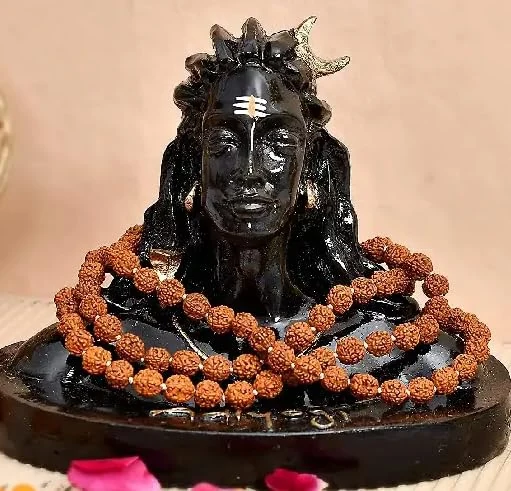
It is worth saying plainly where this bead belongs. Rudraksha is a Shaiva article. It is associated with Shiva, it is what a Shaiva practitioner reaches for, and there is a long tradition behind it that has nothing to do with Braj. In Vrindavan and in the Radhavallabh line the bead is tulsi, and a devotee who wants to match what is done there would buy a tulsi mala instead. Plenty of households own both and use whichever suits the practice they are doing.
That said, a mala is a counter. It does not make a japa work and its absence does not stop one. Maharaj Ji is blunt about this whenever it comes up: the Radha naam needs no initiation, no fee, no fixed posture and no object at all, and anyone who tells you a particular bead is required has added a condition the teaching does not contain. What a strand gives you is a way of keeping count without part of your attention going to counting, which is a small practical help and nothing more.
A last word about what a counting strand can and cannot do. It keeps a number for you so that your attention does not have to. That is the entire service it performs, and it performs it whether the beads cost fifty rupees or five thousand. Nobody in Braj was ever turned away for arriving without one, and no teacher worth listening to has ever made a bead a condition of anything. Buy it if counting on your fingers has started to intrude on the sitting; do not buy it expecting the object to do work that only sitting does.
What to look for before buying
Count the lines on a few beads. The mukhis are the vertical grooves running pole to pole, and on a five faced bead there are five of them, each one continuous from one end to the other. Sellers occasionally cut an extra groove to turn a common bead into a rarer one, and a cut line gives itself away by being shallower, straighter and cleaner than the natural ones beside it. On a counting mala it matters less than on a single worn bead, but it is a two minute check that tells you what kind of seller you are dealing with.
Look at the hole, not the surface. Natural beads are drilled, and a drilled hole through fibrous seed shows slightly ragged edges and a visible grain inside. A moulded bead made from resin and rudraksha powder has a hole that is perfectly round and glassy, and the surface texture repeats from bead to bead because it came out of the same mould. Turning six beads under a lamp and looking for a repeating pattern is the quickest fake test there is.
Decide the size before the price. Five millimetre beads suit long sittings and small hands; seven to ten millimetre beads suit slow counting and are easier to feel through a cloth bag. The difference is not cosmetic and it is not something you get used to, so pick the size for how you actually count rather than buying whatever is cheapest that week. A mala of the wrong size gets quietly abandoned in a drawer.
Keeping it, and where it sits
Rudraksha is seed, not stone, and it responds to water the way wood does. It swells when soaked and shrinks as it dries, and a strand that goes through that cycle often will loosen at the thread and eventually crack at the drill hole. Keep it dry, wipe it with a dry cloth if it picks up something, and do not leave it in a bathroom.
Some people oil the beads occasionally with a drop of mustard or sandal oil worked in with the fingers. It darkens the surface, keeps the seed from drying out in a hot summer and is the traditional treatment. It is not necessary, and doing it every week is worse than not doing it at all, because oil in quantity attracts dust and eventually gums the thread.
Keep it in a cloth bag rather than loose in a pocket or a puja thali. A bag stops the beads knocking against metal, keeps grit out of the drill holes and means the strand is in one findable place, which in practice is the reason most counting malas survive years and most bracelets do not.
The thread wears out long before the beads do. When it starts to fray, take the strand to any bead shop and have it restrung on fresh cotton or silk thread, knotted between beads if they will do it. Knotting costs a little more and means a parted thread loses you one bead rather than scattering all 108 across a floor.
None of this is required. What Maharaj Ji actually asks for is set out on the teachings page, the sayings he repeats most are on the quotes page, and the stotras are free to download as PDFs. If you are planning to visit Vrindavan, read how to meet Maharaj Ji first.
Also worth reading: what the naam actually asks of you , and the sayings he returns to.
Questions about buying this
What does five mukhi rudraksha mean?
Mukhi means face. Each bead has vertical grooves dividing its surface, and a five faced bead has five. It is the commonest variety, which is why counting malas are made from it: 108 matched beads of a rare face would be both scarce and very expensive.
Can I wear this mala instead of counting on it?
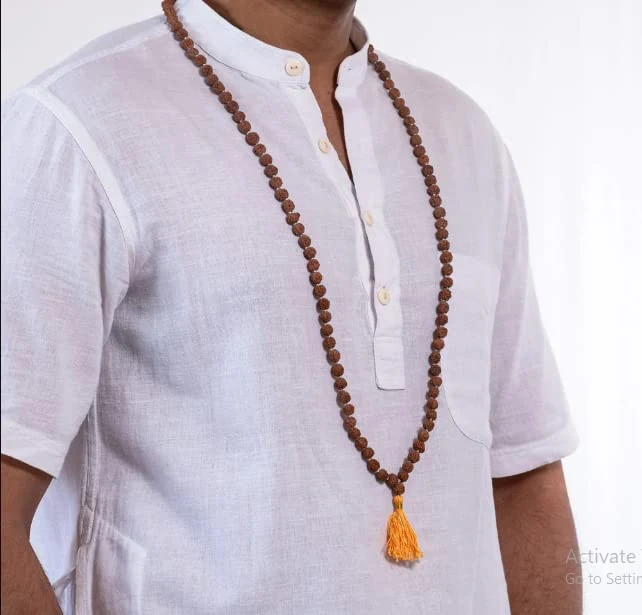
You can, and many people do. A 5 mm strand is light enough to wear under a shirt. Most devotees who do both keep two malas, because one that is worn all day picks up sweat and dust and is not pleasant to hold at counting time.
Does the direction I count in matter?
The usual practice is to work towards the sumeru with the thumb, and when you reach it, turn the mala and go back the other way rather than passing over it. Beyond that the mechanics are not something to worry about.
Is rudraksha used in the Vrindavan tradition?
Not usually. Rudraksha belongs with Shiva and Shaiva practice; in Braj and in the Radhavallabh line the bead is tulsi. Both are in ordinary use across India and owning one does not exclude the other.
Do I need a mala at all to do naam japa?
No. Maharaj Ji says repeatedly that the Radha naam requires no article, no initiation and no fee. A mala only saves you the effort of keeping count in your head.
How do I know the certificate is worth anything?
Nothing of the kind. The naam is free of charge, free of ceremony and free of any requirement to own an object first. A mala spares you the effort of keeping count, and that is all it was ever for.
Is this connected with Maharaj Ji or the ashram?
No. It is not supplied by, authorised by or endorsed by Maharaj Ji or Shri Hit Radha Keli Kunj. It is an ordinary devotional item sold by other people on Amazon, listed here because a devotee might want one.
Do you sell it?
No. The button on this page takes you to Amazon. Amazon takes the payment, ships the order and handles returns and warranty. We hold no stock, never see your payment details, and cannot change or cancel an order.
Is the price on this page current?
It is the price we last saw on Amazon, with the date beside it. Amazon changes prices whenever it likes, so treat the figure here as a guide and the price on the Amazon page as the real one.
Do you make money if I buy it?
Yes. As an Amazon Associate we earn from qualifying purchases. Your price is exactly the same whether you use our link or not; Amazon pays the commission out of its own margin, and that commission is what keeps this site free to read.
Do I need this to follow the teachings?
No. Maharaj Ji asks for the Radha naam and nothing else, with no initiation, no fee and no equipment. Anything on this page is convenience, never a requirement, and he is explicit about that in satsang.
Also for daily japa
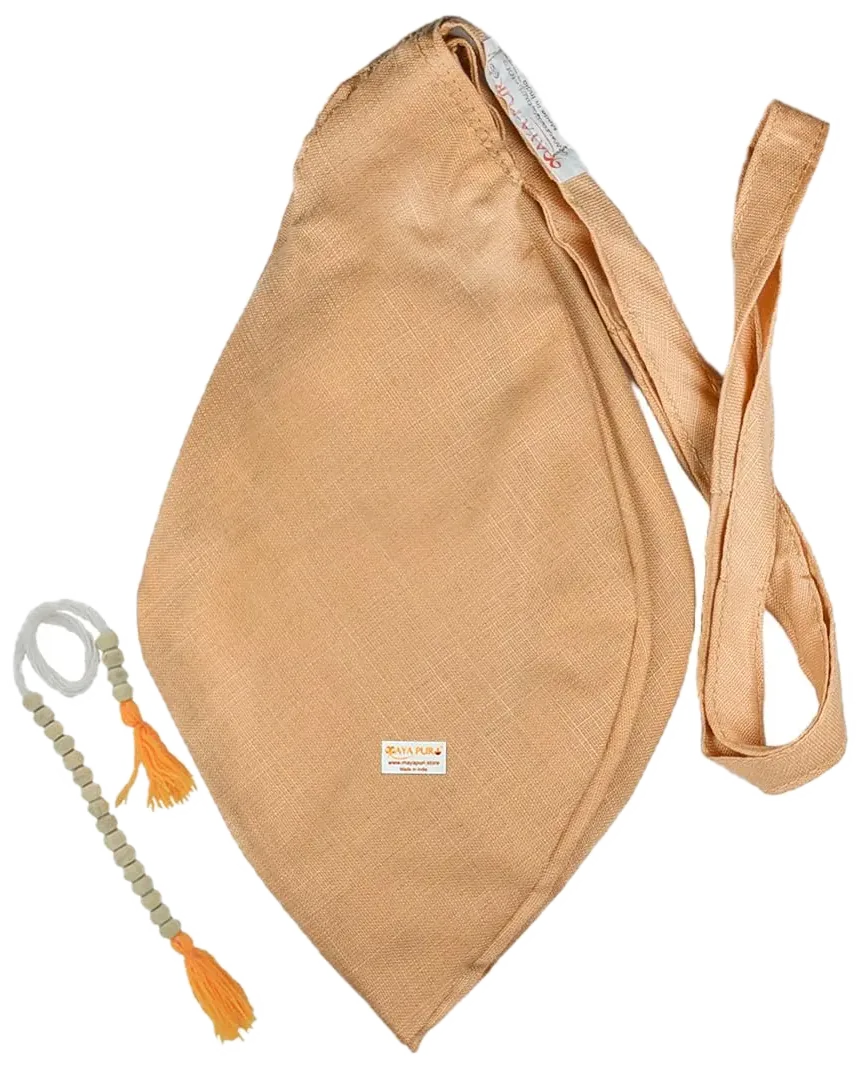
Gomukhi japa bag with counter
गोमुखी जप थैली, काउंटर सहित
₹269
A cotton bag that keeps the mala clean and lets you chant without taking it out.
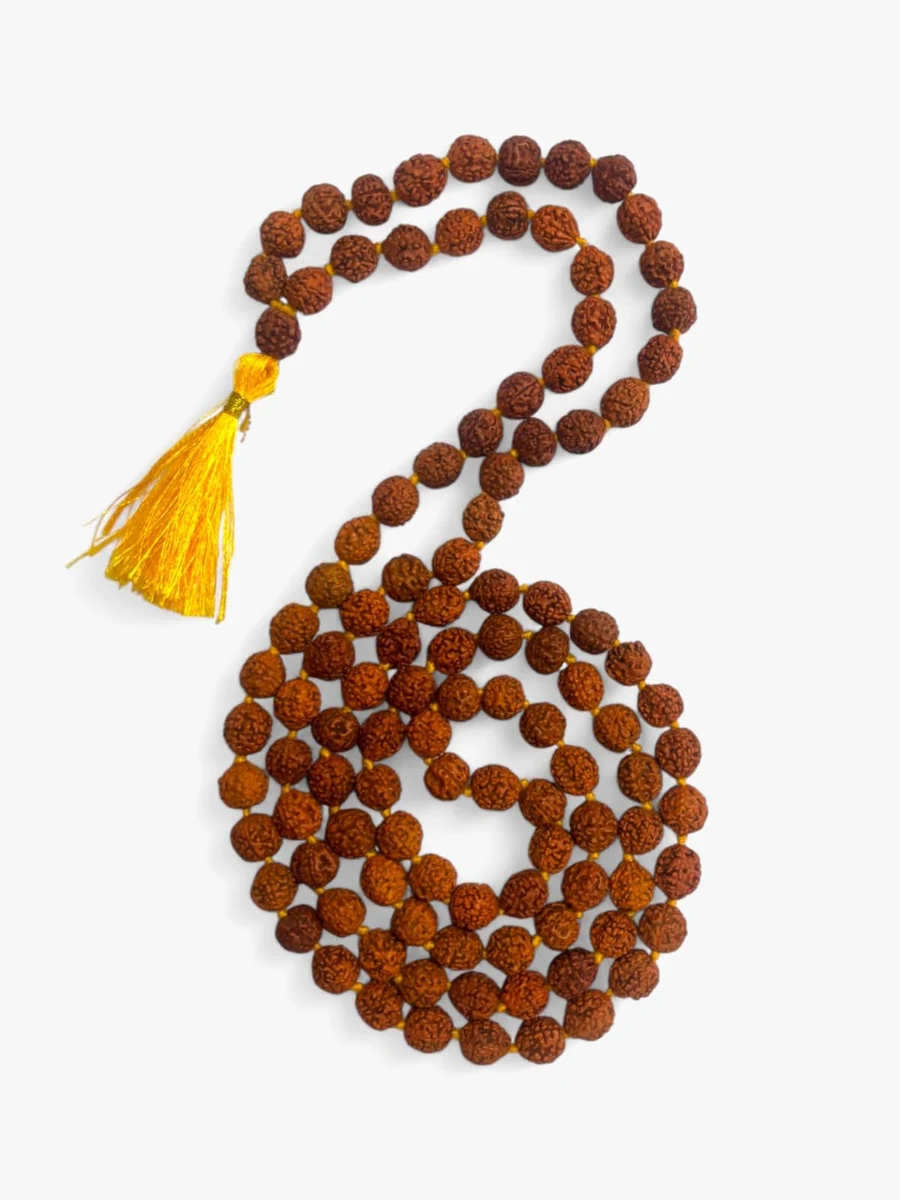
Nepali rudraksha mala, 10 mm
नेपाली रुद्राक्ष माला, 10 मिमी
₹299
Large 10 mm Nepali beads, 109 in all, at about fifty grams on the hand.
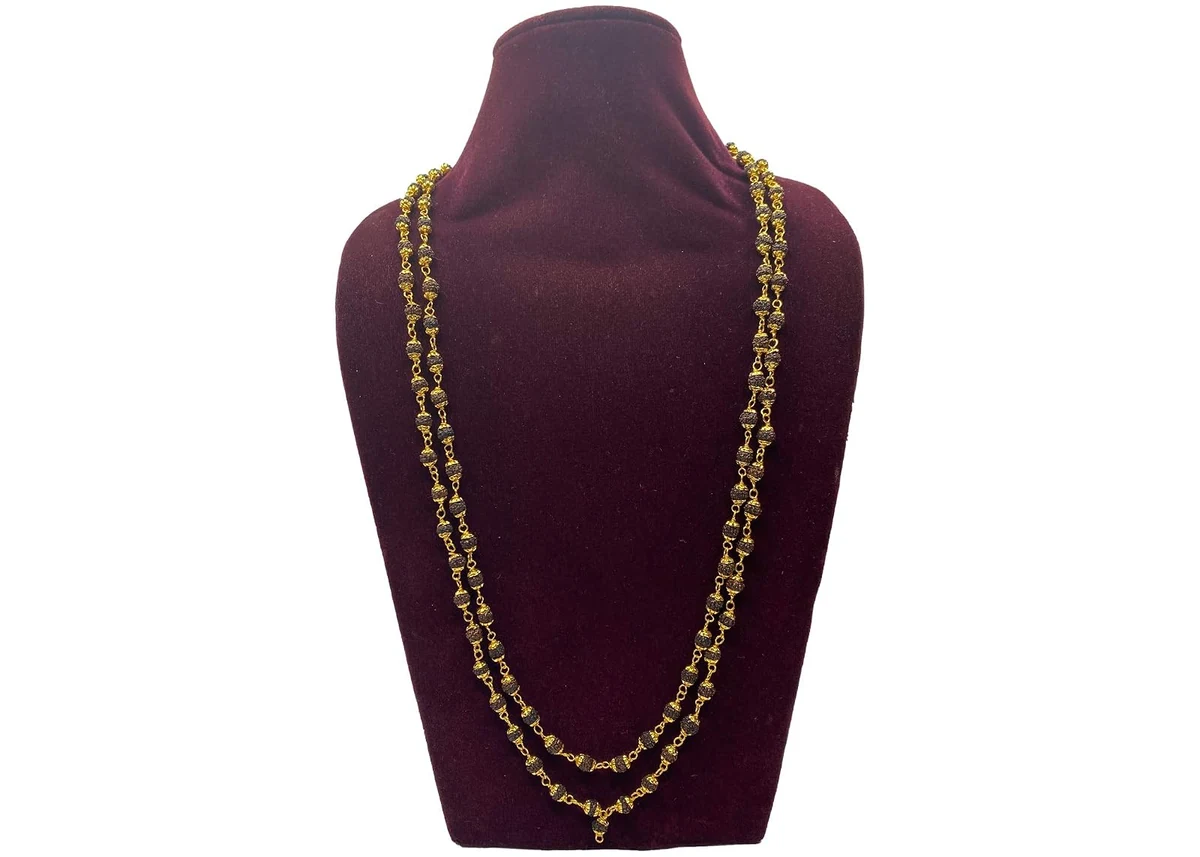
Rudraksha mala in gold plated caps
गोल्ड प्लेटेड कैप वाली रुद्राक्ष माला
₹1,599
Small 4 to 7 mm beads, each capped and linked in gold plated metal.