
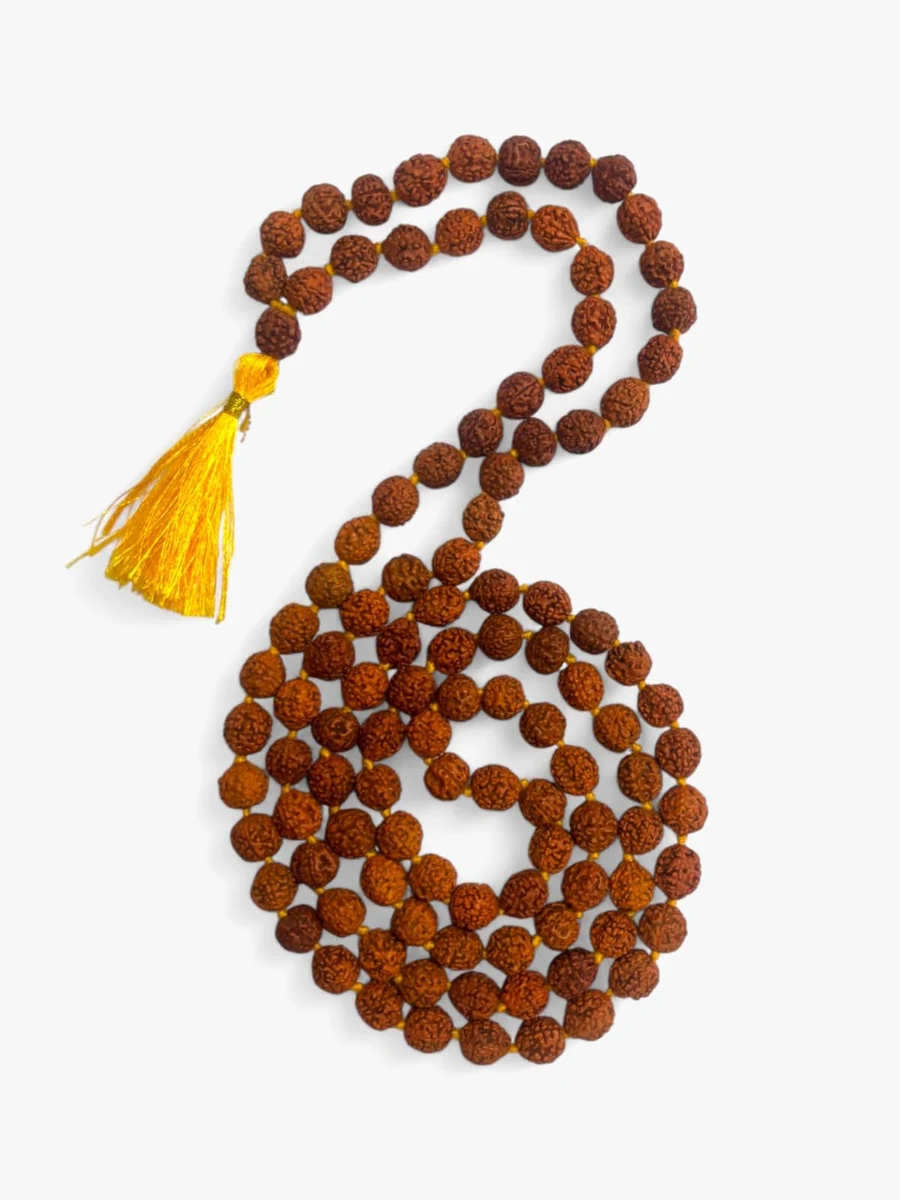
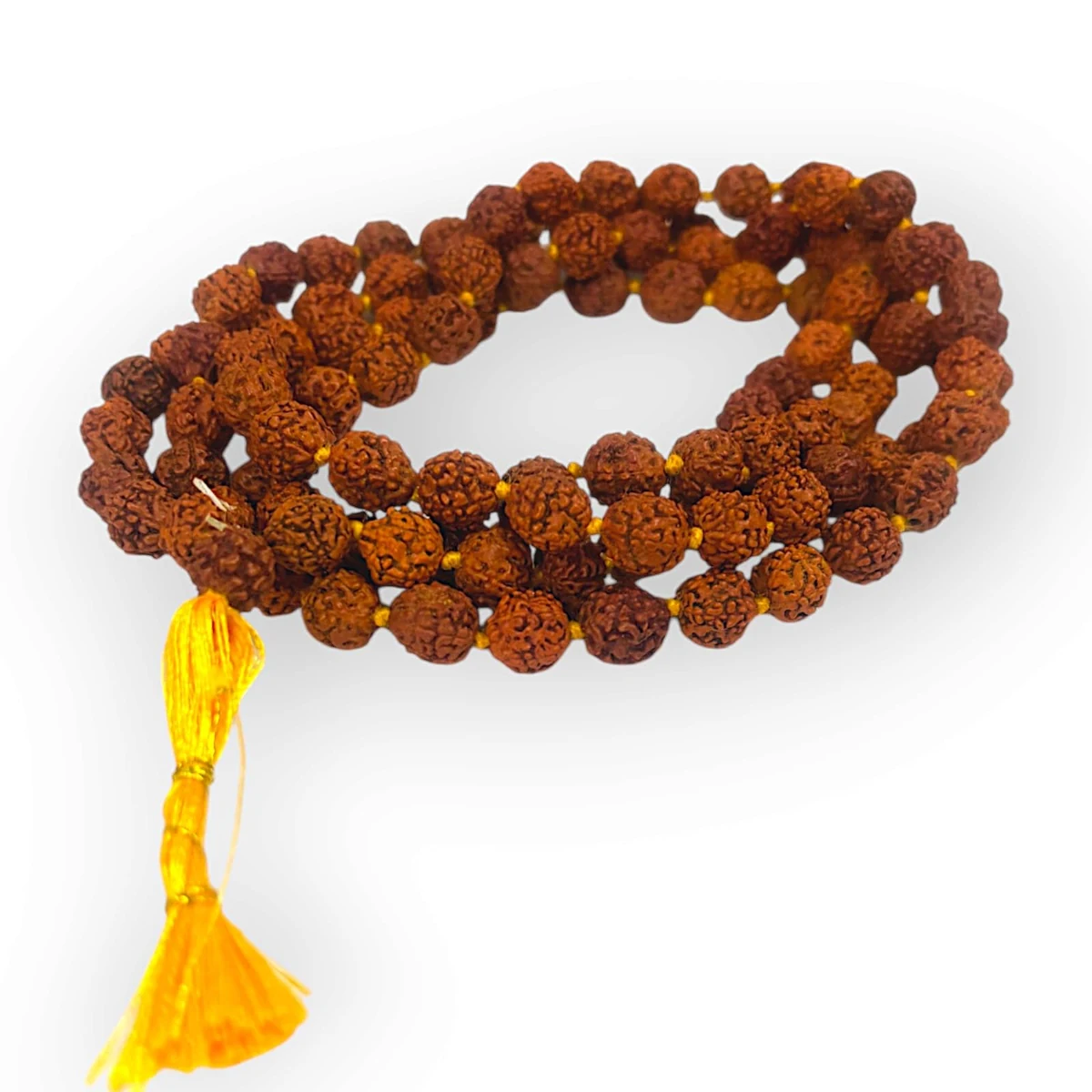
Nepali rudraksha mala, 10 mm
नेपाली रुद्राक्ष माला, 10 मिमी
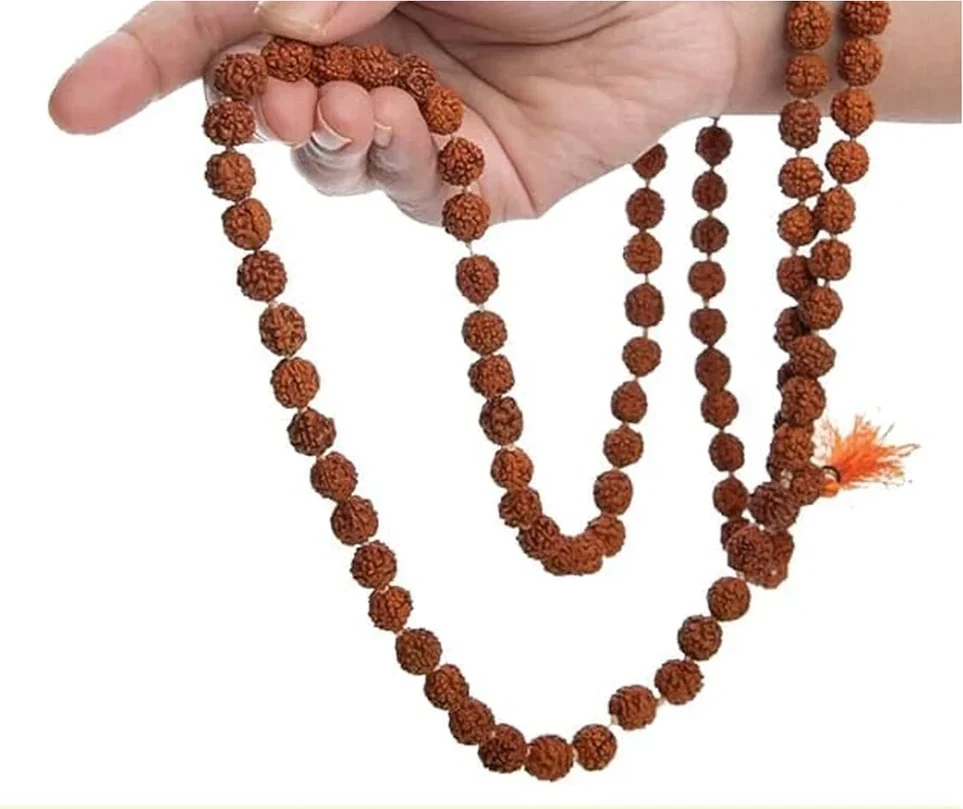
Nepali grown beads at a full 10 mm, 109 of them, weighing around fifty grams. These are the big, deeply ridged beads people picture when they think of rudraksha, and they count slowly and deliberately rather than quickly.
- Bead size
- 10 mm
- Beads
- 109 in total
- Origin
- Nepal
- Weight
- About 50 g
About this rudraksha mala
Almost all rudraksha on sale comes from one of two places. Indonesian beads, grown mostly in Java, are small, smooth and produced in enormous quantity, and they are what fills the cheap end of the market. Nepali beads come from the Himalayan foothills, grow considerably larger, and carry deeper and more sharply cut ridges. This strand is the Nepali kind at a full ten millimetres, which is roughly twice the diameter of the small beads sold for long counting sessions.
The difference in price between the two is not marketing. Nepali trees fruit less, the stones are graded and sorted by hand, and finding a hundred and nine beads that match in size and colour out of that supply takes real sorting. Whether the extra outlay buys you anything spiritual is a question this page will not pretend to answer; what it demonstrably buys you is a bigger, harder, better looking bead that will outlast the thread it is strung on several times over.
Fifty grams is a noticeable weight. Held in the palm this mala has heft, and each bead is large enough that the thumb has to travel between them rather than flicking. That slows counting down, which some people want and some people do not. If you sit for a fixed number of rounds, a large strand makes each round longer; if you count for a fixed time and are not chasing a number, it makes no practical difference at all.
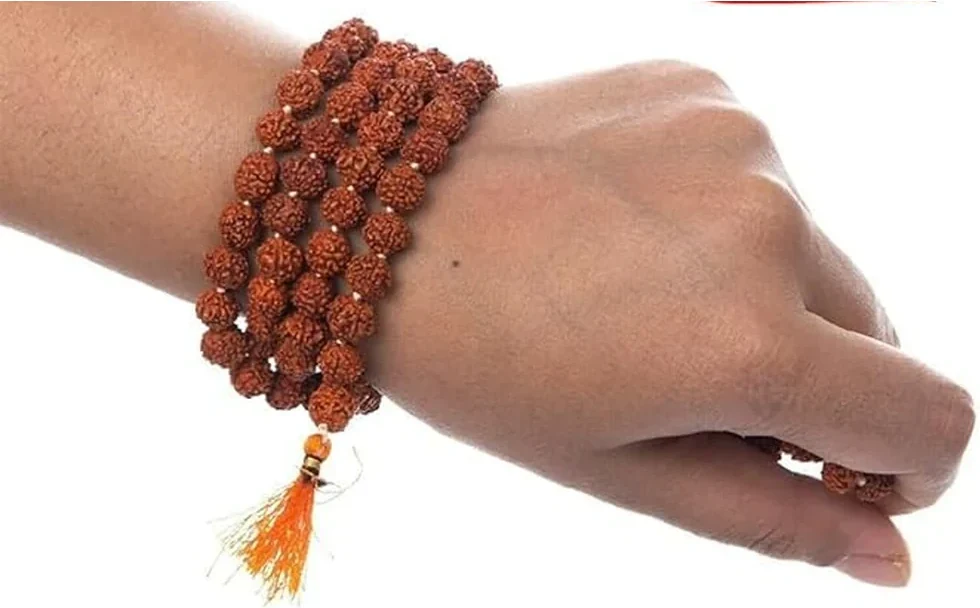
These beads are also the size people wear visibly. A ten millimetre strand sits heavy at the neck and does not disappear under a collar, so it reads as an ornament as much as an article of practice, and it is worth deciding which of those you want before buying. Something small and plain does the same counting work without announcing itself.
On where the bead sits in tradition: rudraksha is Shiva's, and the practice around it is Shaiva through and through. The Vrindavan lineages, including the Radhavallabh line Maharaj Ji belongs to, use tulsi. Nobody in Braj will object to a rudraksha strand in your hand, but it is not the bead of that tradition, and this page would rather say so than let a shop listing imply otherwise.
It is worth setting the price of this strand against what it actually buys. Nepali beads cost more because they are scarcer and harder to match, and that buys you a bigger, harder, better looking object that will outlive its thread many times over. It does not buy a deeper practice, and a person counting on a two hundred rupee strand is not behind anybody. What the tradition asks of a devotee has never included a purchase, and any page that suggests otherwise is selling rather than telling.
What to look for before buying
Nepali size, or Indonesian sold as Nepali. The simplest tell is diameter. Indonesian beads rarely exceed about eight millimetres and are typically much smaller; a genuine ten millimetre bead in quantity is Nepali or it is something else. Look also at the ridges, which on Nepali stock are deep, sharp and irregular rather than shallow and rounded. A strand advertised as Nepali but built from smooth little beads is mislabelled, whatever the certificate says.
Matched beads, or a strand made up from leftovers. Lay the mala flat and look down the line. Good sorting gives you beads within a millimetre or so of each other, in a consistent colour. A strand that steps visibly from large to small, or that runs from dark brown to pale tan, has been assembled from whatever was in the tray, and it will feel uneven under the thumb every time you use it.
The thread has to carry the weight. Fifty grams of bead needs a thread that can take it. Check that the strand is strung on something substantial rather than a thin nylon line, and prefer a knotted mala if you can get one. On a heavy strand a parted thread does not just lose you the mala, it fires large beads across a room, and those drill holes chip when they land on stone.
Keeping it, and where it sits
Large beads take longer to dry than small ones, so keep them out of water entirely. If the strand gets wet, spread it on a cloth somewhere shaded and let it dry slowly; drying a soaked seed fast in sun or near a heater is what splits it. A cracked bead cannot be repaired and the usual fix is to restring the mala one bead short.
Deep ridges trap dust. A soft dry brush, the kind sold for cleaning shoes or camera lenses, clears the grooves in a minute and is worth doing every few months. Do not use soap or any cleaning liquid, which sits in the grooves, dries pale and is far harder to remove than the dust was.
A light oiling once or twice a year keeps the seed from going brittle in a dry climate, and slowly deepens the colour towards a dark reddish brown. Use very little and work it in with the fingers rather than soaking the strand. Beads that have been oiled sensibly for years look considerably better than new ones; beads that have been drowned in oil look sticky and collect everything they touch.
Store it hanging or coiled loose in a bag, not knotted or crushed under other things. Rudraksha is hard but the drill holes are the weak point, and constant pressure at an angle is what enlarges a hole until the bead starts to rock on the thread. A mala kept properly will need restringing every few years and nothing else for decades.
None of this is required. What Maharaj Ji actually asks for is set out on the teachings page, the sayings he repeats most are on the quotes page, and the stotras are free to download as PDFs. If you are planning to visit Vrindavan, read how to meet Maharaj Ji first.
Also worth reading: the stotras as free PDFs , and the questions devotees ask most.
Questions about buying this
Why are Nepali rudraksha beads more expensive?
They grow larger, the trees yield less, and the beads are sorted by hand to match size and colour. Assembling a hundred and nine matched large beads takes far more raw material than a strand of small Indonesian ones.
Is a bigger bead better for japa?
No, only different. Large beads slow the count and are easier to feel; small beads suit long sittings and many rounds. Pick for how you actually sit rather than for size.
Why 109 beads and not 108?
The extra one is the sumeru, the bead at the join. It is never counted. You work up to it, then turn the mala and count back rather than passing over it.
Can this be worn as well as counted on?
It can, but at ten millimetres and fifty grams it is a visible, heavy neck piece. Many people keep a large strand for counting at home and something much smaller for wearing.
Does rudraksha belong in a Radha Krishna practice?
It is not the bead of that tradition, which uses tulsi. There is no rule against owning one, and many households have both, but it is honest to say the two come from different lines.
How often should the mala be restrung?
It is not, and it never has been. The practice costs nothing and requires nothing to begin. Counting beads are a convenience some people like and many people manage without entirely.
Is this connected with Maharaj Ji or the ashram?
No. It is not supplied by, authorised by or endorsed by Maharaj Ji or Shri Hit Radha Keli Kunj. It is an ordinary devotional item sold by other people on Amazon, listed here because a devotee might want one.
Do you sell it?
No. The button on this page takes you to Amazon. Amazon takes the payment, ships the order and handles returns and warranty. We hold no stock, never see your payment details, and cannot change or cancel an order.
Is the price on this page current?
It is the price we last saw on Amazon, with the date beside it. Amazon changes prices whenever it likes, so treat the figure here as a guide and the price on the Amazon page as the real one.
Do you make money if I buy it?
Yes. As an Amazon Associate we earn from qualifying purchases. Your price is exactly the same whether you use our link or not; Amazon pays the commission out of its own margin, and that commission is what keeps this site free to read.
Do I need this to follow the teachings?
No. Maharaj Ji asks for the Radha naam and nothing else, with no initiation, no fee and no equipment. Anything on this page is convenience, never a requirement, and he is explicit about that in satsang.
Also for daily japa
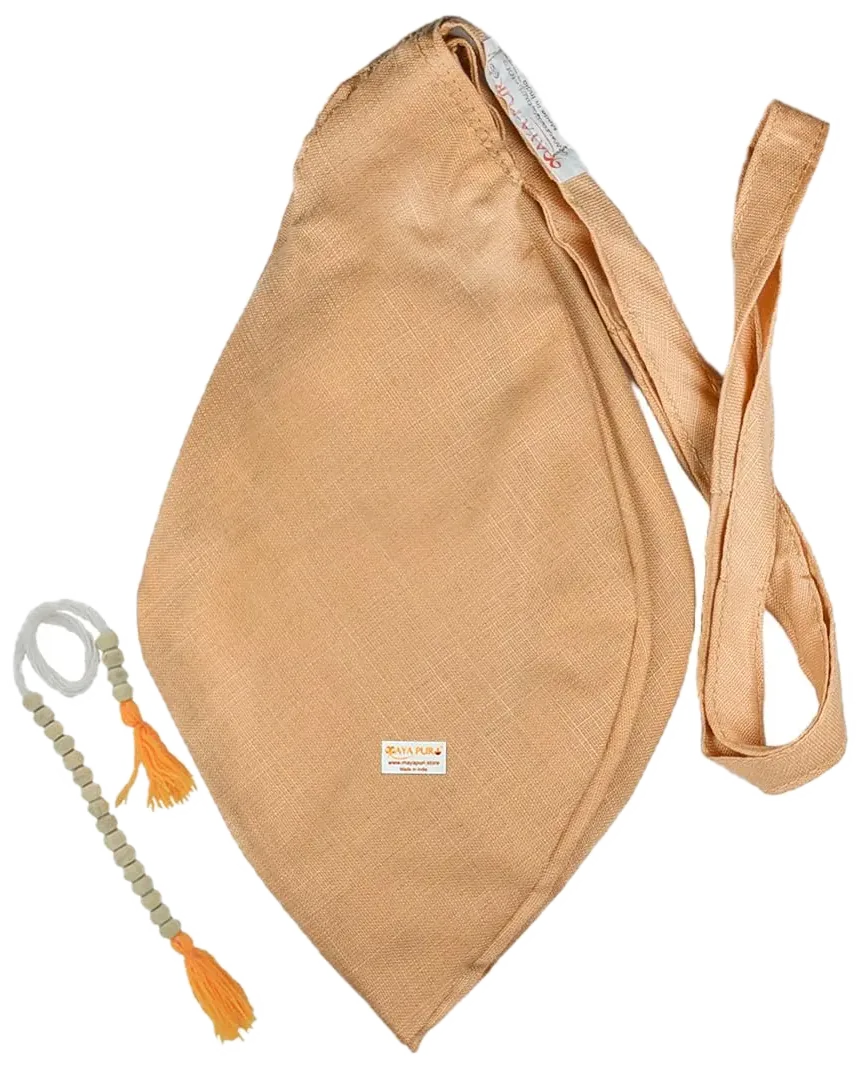
Gomukhi japa bag with counter
गोमुखी जप थैली, काउंटर सहित
₹269
A cotton bag that keeps the mala clean and lets you chant without taking it out.
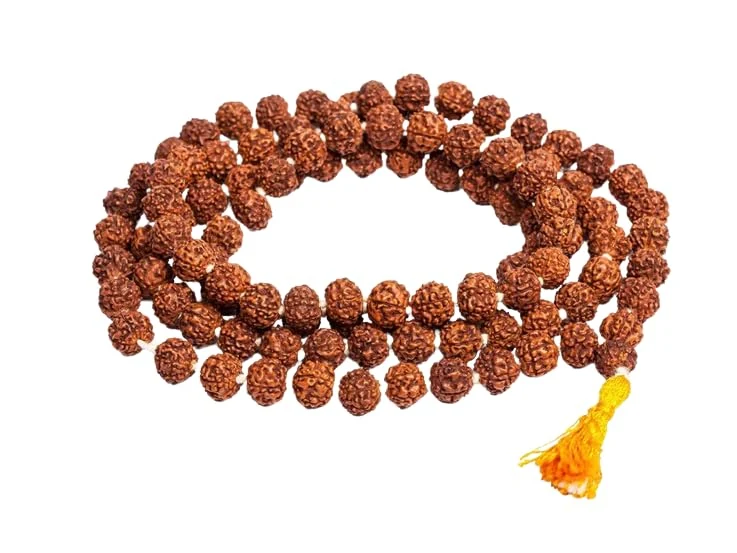
Rudraksha mala, 5 mm, 108 beads
रुद्राक्ष माला, 5 मिमी, 108 दाने
₹999
Small 5 mm panchmukhi beads on a 108 bead strand, light enough to count all day.
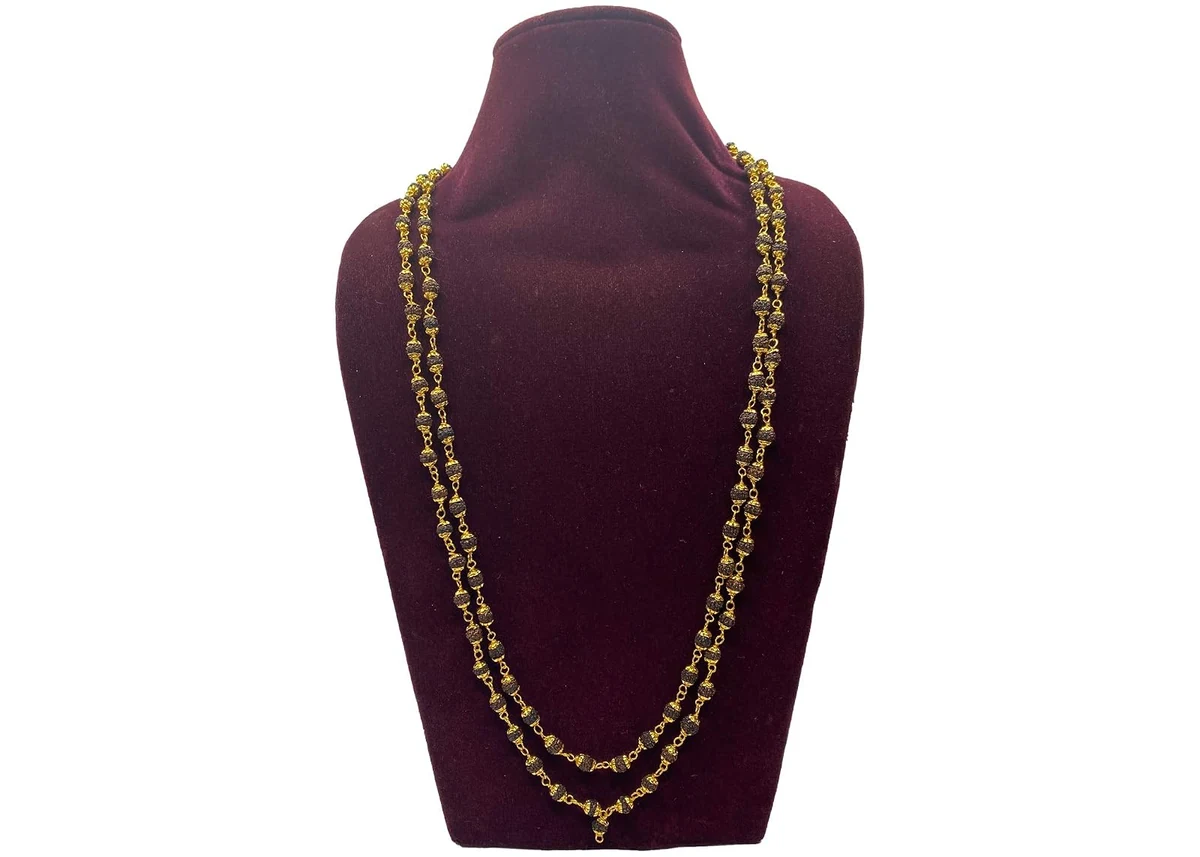
Rudraksha mala in gold plated caps
गोल्ड प्लेटेड कैप वाली रुद्राक्ष माला
₹1,599
Small 4 to 7 mm beads, each capped and linked in gold plated metal.