
Rudraksha jaap mala, 108 beads
रुद्राक्ष जाप माला, 108 दाने
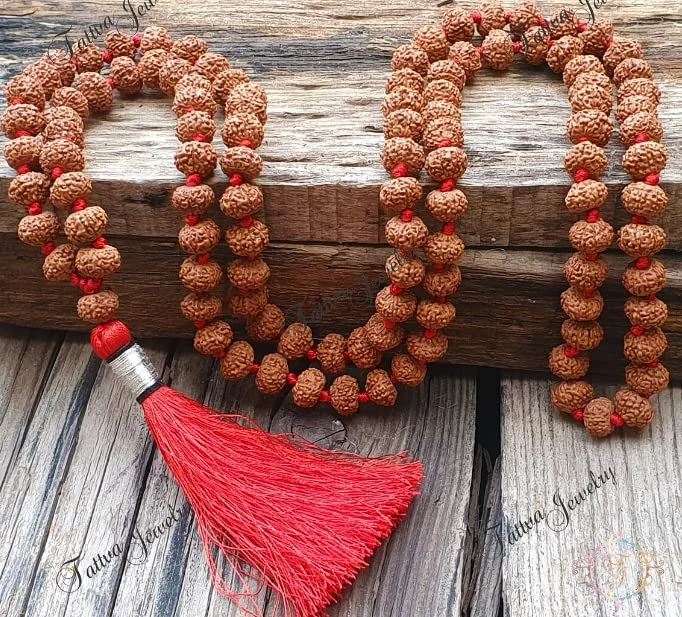
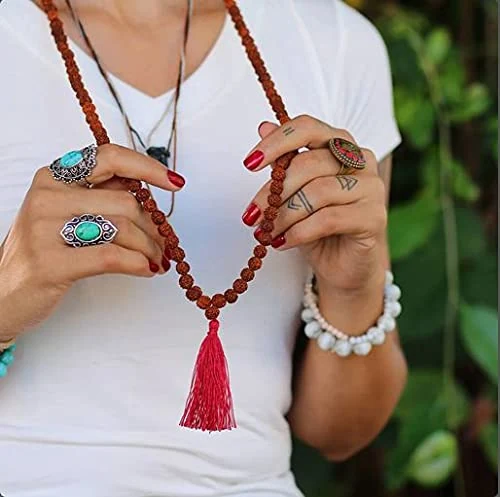
A plain counting strand: 108 round panchmukhi beads, a sumeru at the join, no caps, no pendant and nothing in the box but the mala and a certificate.
- Beads
- 108 plus sumeru
- Mukhi
- Five faced
- Shape
- Round
- Finish
- Plain, unstrung with metal
About this rudraksha mala
This is the version with nothing added: a hundred and eight round beads, a sumeru, cotton thread, and no caps, tassels, pendants or accessories. For counting, that is the right specification. Everything that gets added to a mala adds weight, adds something to catch on a bag, and adds something to break, and none of it improves the one job the object exists to do.
Counting works like this. The mala rests over the middle finger and the thumb pulls one bead towards you for each repetition, without the index finger touching the beads. When the thumb arrives at the sumeru the round is complete. The mala is then turned around and worked back in the other direction rather than passing over the sumeru, so a second round retraces the first. That is the entire technique, and it takes about a minute to learn.
The purpose of counting is not arithmetic. It is that a part of the mind otherwise spends the whole sitting keeping track, and handing that job to the fingers frees it. This is also why the count stops mattering once the habit is established: people who have sat for years generally could not tell you how many rounds they did, only that the hand knew when to turn.
Five faced beads, which is what these are, are the ordinary kind. Rarer mukhis exist, cost far more and are worn as single beads rather than strung in quantity, and any listing offering a matched 108 bead strand of a rare face at an ordinary price is not describing what is in the box. For a counting mala, panchmukhi is not a compromise. It is the correct choice.
Where the bead belongs is worth repeating even though it appears on every rudraksha page here. This is a Shaiva article associated with Shiva, with its own long tradition behind it. The Braj lineages, including the Radhavallabh line, count on tulsi instead. Both are ordinary objects in Indian households and neither excludes the other, but a page that sells you one without mentioning the other is not being straight with you.
There is a reason the plainest version of a thing is often the best version of it. This strand has no caps, no pendant and no accessories, which means there is nothing on it that can catch, rattle or break, and nothing that gets between the thumb and the next bead. That is what a counting mala is for. Everything else added to one over the years has been added for the eye rather than the hand, and the hand is what uses it every morning.
What to look for before buying
Confirm the sumeru is there. A counting mala has 108 beads plus one at the join, usually slightly larger or differently shaped, which marks the end of a round and is never counted. Some cheap strands are simply 108 beads tied in a circle with no marker at all, which means you have no way of knowing where a round finished. It is the first thing to look for in the photographs.
Roll the beads across a flat surface. If you can handle one before buying, tip the strand onto a table and look at how the beads sit. Natural rudraksha is never perfectly spherical, but beads that wobble badly or that are noticeably egg shaped have been cut from poor stock and will feel wrong under the thumb. Slight irregularity is a good sign; visible lopsidedness is not.
Look for knots between beads. Knotted stringing puts a small knot between each pair of beads, which stops them rubbing, keeps the strand hanging evenly and means a broken thread loses one bead rather than all of them. It costs a little more and very few cheap malas have it. If this one does not, it is worth having done at a bead shop the first time it needs restringing.
Keeping it, and where it sits
Keep it dry. That single rule covers most of what can go wrong with a rudraksha strand, because the seed swells with water, shrinks as it dries, and eventually splits at the drill hole if it goes through that cycle repeatedly. Wipe with a dry cloth, never soak, and keep it out of the bathroom.
Use a bag. A cloth pouch keeps grit out of the drill holes, stops the beads knocking against metal in a drawer and means the mala lives in one place instead of migrating around the house. It also makes it possible to count with the hand inside the bag, which is the traditional reason gomukhi bags exist at all.
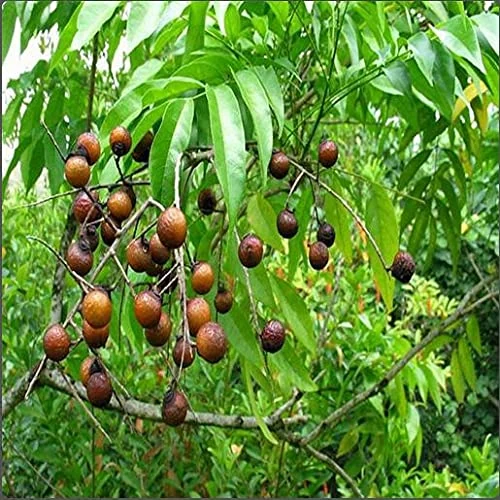
Expect the colour to change. New rudraksha is a light reddish brown and darkens with handling as skin oil works into the surface, so a strand in daily use for a few years looks considerably deeper in colour than it did new. That is wear, not damage, and it is generally considered the mark of a mala that has actually been used.
Restring before it breaks rather than after. The warning signs are beads that slide loosely, a thread that looks fuzzy where it enters the holes, and any visible thinning near the sumeru, which takes the most handling. Restringing is a cheap five minute job at any bead shop and is far easier than finding 108 beads on a floor.
None of this is required. What Maharaj Ji actually asks for is set out on the teachings page, the sayings he repeats most are on the quotes page, and the stotras are free to download as PDFs. If you are planning to visit Vrindavan, read how to meet Maharaj Ji first.
Also worth reading: Radha Kripa Kataksh Stotra , and printable stotra PDFs.
Questions about buying this
How do you use a japa mala for counting?
Rest it over the middle finger and pull one bead with the thumb for each repetition. At the sumeru the round is done; turn the mala and count back the other way rather than crossing it.
What is the sumeru bead for?
It marks where a round ends. It is never counted, and it is the reason the mala is reversed rather than worked continuously around the loop.
Why 108 beads?
It is the traditional count used across Indian practice. A shorter mala of 27 exists for convenience, where four rounds make up the same total.
Is a plain mala worse than one with caps or a tassel?
For counting it is usually better. Additions add weight and give more to snag or break, and none of them help the thumb move from bead to bead.
Should I use rudraksha or tulsi for Radha naam?
Tulsi is what Braj uses, including the Radhavallabh line. Rudraksha is Shaiva. You can count on either, and Maharaj Ji does not make any article a condition.
Can I count without a mala at all?
Not at all. Fingers work, a knotted thread works, and counting nothing at all works. The mala exists only so the mind is not occupied with arithmetic while it is meant to be occupied with something else.
Is this connected with Maharaj Ji or the ashram?
No. It is not supplied by, authorised by or endorsed by Maharaj Ji or Shri Hit Radha Keli Kunj. It is an ordinary devotional item sold by other people on Amazon, listed here because a devotee might want one.
Do you sell it?
No. The button on this page takes you to Amazon. Amazon takes the payment, ships the order and handles returns and warranty. We hold no stock, never see your payment details, and cannot change or cancel an order.
Is the price on this page current?
It is the price we last saw on Amazon, with the date beside it. Amazon changes prices whenever it likes, so treat the figure here as a guide and the price on the Amazon page as the real one.
Do you make money if I buy it?
Yes. As an Amazon Associate we earn from qualifying purchases. Your price is exactly the same whether you use our link or not; Amazon pays the commission out of its own margin, and that commission is what keeps this site free to read.
Do I need this to follow the teachings?
No. Maharaj Ji asks for the Radha naam and nothing else, with no initiation, no fee and no equipment. Anything on this page is convenience, never a requirement, and he is explicit about that in satsang.
Also for daily japa
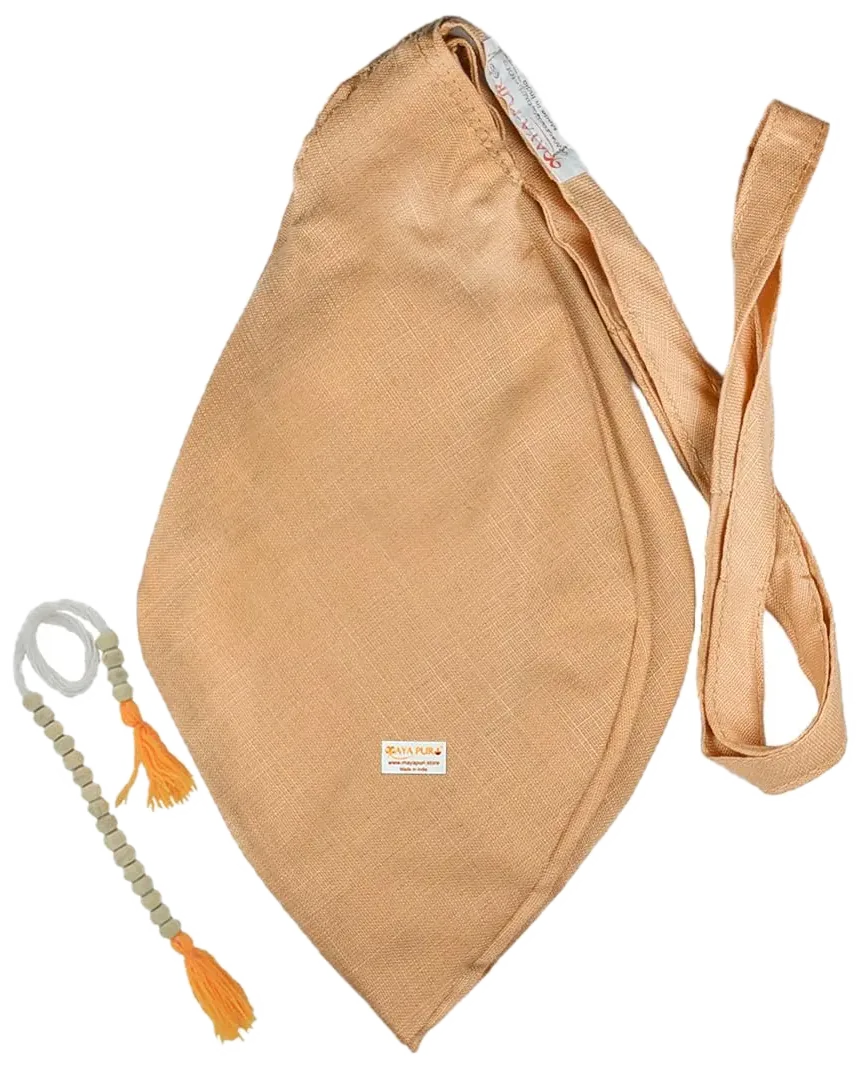
Gomukhi japa bag with counter
गोमुखी जप थैली, काउंटर सहित
₹269
A cotton bag that keeps the mala clean and lets you chant without taking it out.
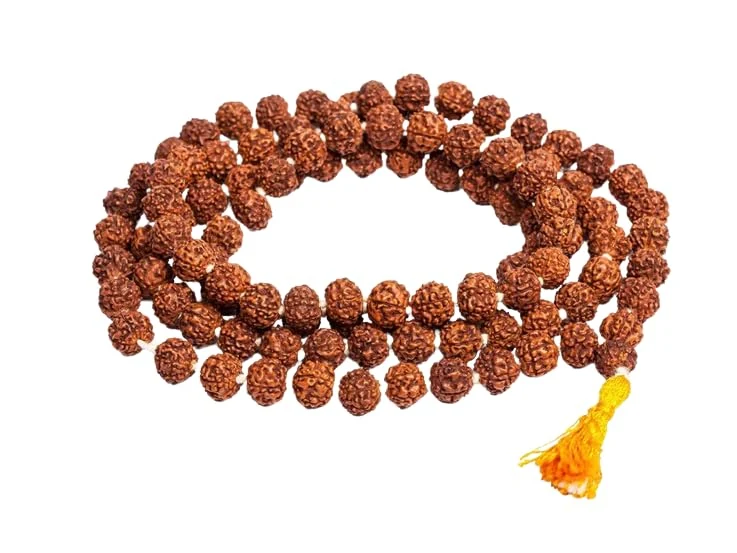
Rudraksha mala, 5 mm, 108 beads
रुद्राक्ष माला, 5 मिमी, 108 दाने
₹999
Small 5 mm panchmukhi beads on a 108 bead strand, light enough to count all day.
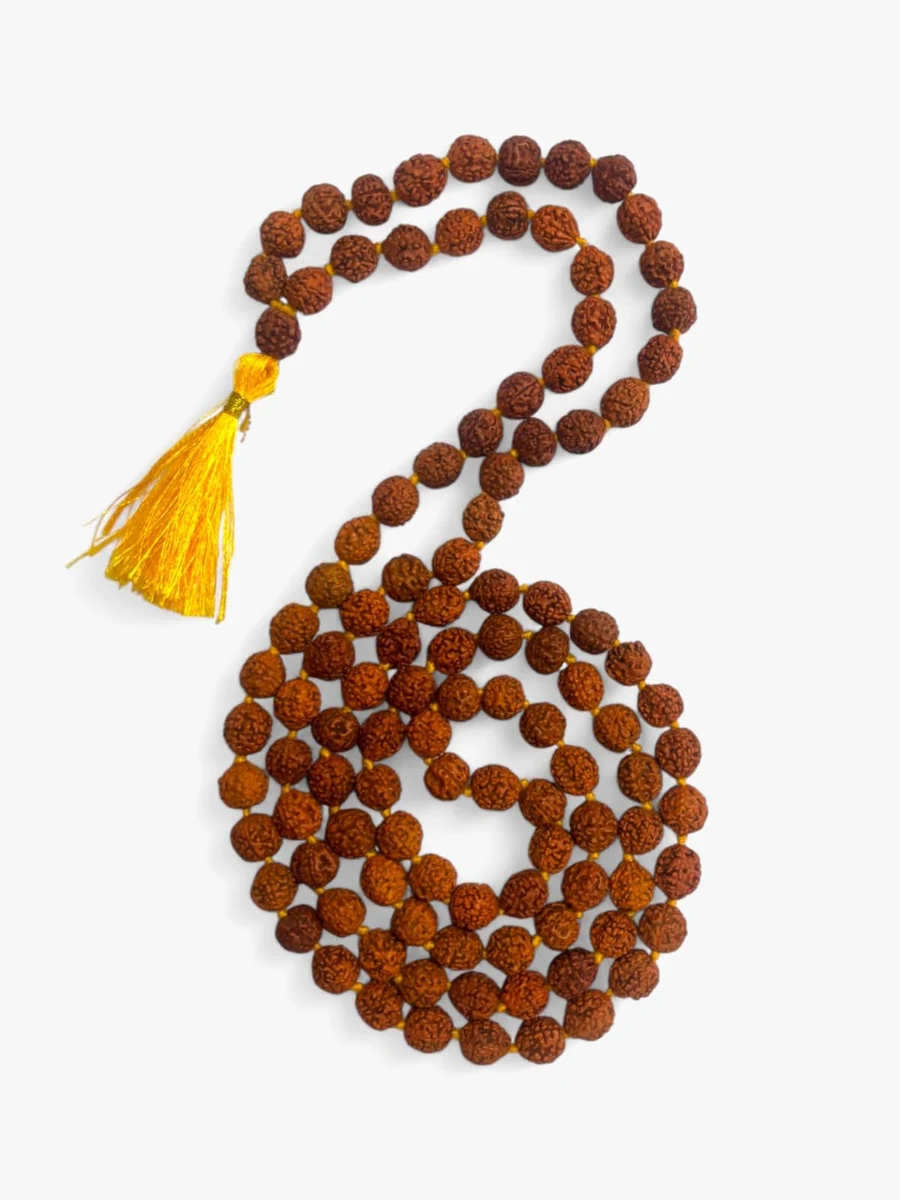
Nepali rudraksha mala, 10 mm
नेपाली रुद्राक्ष माला, 10 मिमी
₹299
Large 10 mm Nepali beads, 109 in all, at about fifty grams on the hand.