
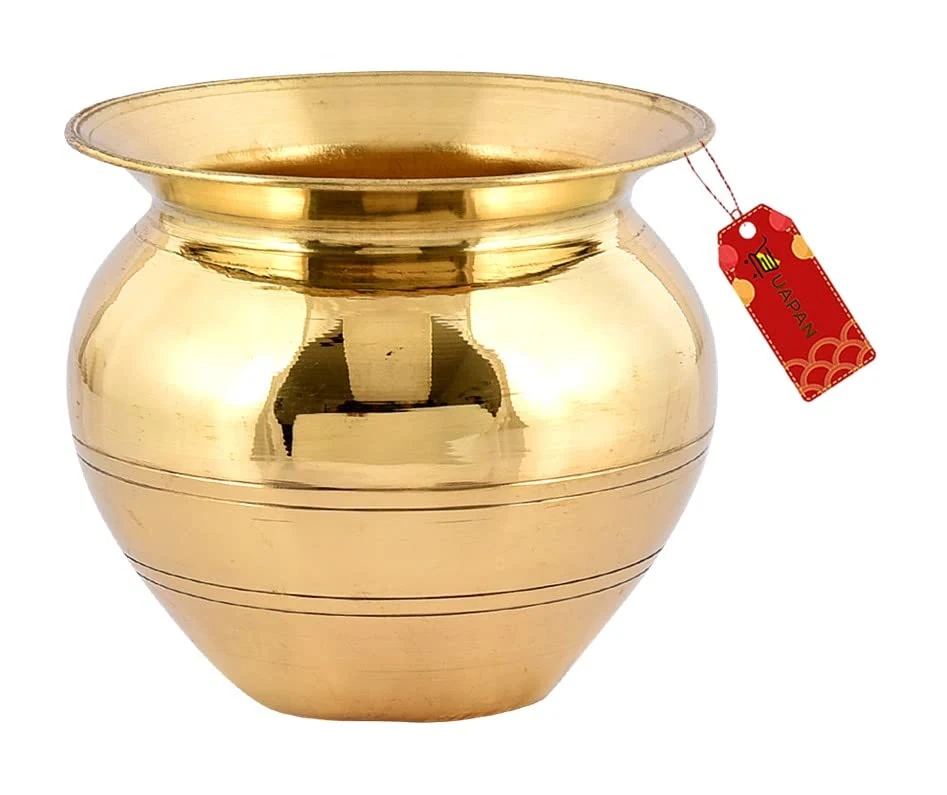
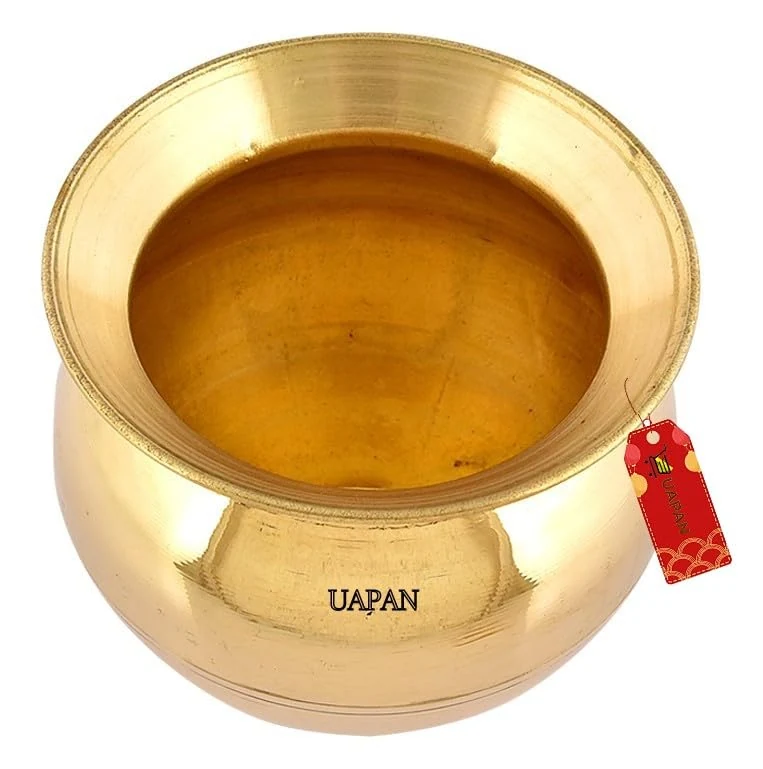
Brass puja kalash lota, 500 ml
पीतल का पूजा कलश लोटा, 500 मिली
A plain brass lota of about half a litre, the ordinary vessel for carrying and pouring water in a home mandir. Small, light at a hundred and thirty grams, and shaped to pour without spilling.
- Capacity
- 500 ml
- Weight
- About 130 g
- Material
- Brass
- Size
- 9 cm wide, 8.5 cm tall
About this kalash
A lota is the plainest object in any mandir and the most used. It holds the water for abhishek, it is what gets filled and carried, and in most households it is handled more often in a week than anything else on the shelf. That is why the shape matters more than the decoration: a good lota pours in a controlled stream from a wide mouth and sits stable when set down full.
The word kalash properly refers to the vessel when it is set up as part of a rite, usually filled with water, sometimes with a coconut and mango leaves at the mouth, and treated as the presence invited into it for the duration. The same pot is a lota when it is simply carrying water and a kalash when it has been established. Nothing about the object changes; the use does.
Half a litre is the small household size and it is the right one for most home mandirs. A larger vessel is heavier to lift when full, harder to pour accurately over a small murti or shivling, and takes more shelf space than it deserves. If the lota is meant for abhishek rather than for a large ceremony, small is the practical choice rather than a compromise.
Brass is used for water vessels for reasons that predate any explanation attached to them: it does not rust, it takes a knock without breaking, it can be cleaned back to bright indefinitely and it lasts for generations. There is a widely repeated claim that water stored in brass or copper is beneficial in itself. That is not established, and this page is not going to present it as though it were.
One thing genuinely does matter about brass and water, and it is worth knowing. Brass reacts with acidic liquids, so anything sour left standing in it can pick up a metallic taste and, over long periods, can leach copper. For plain water over a few hours it is not a concern. For lemon water, buttermilk or anything sour kept for a day, use steel or glass instead.
The point about acidic liquids at the end of this page is the one genuinely useful safety note in this whole shop, and it is worth taking seriously precisely because it is so easily ignored. Plain water in brass for a few hours is fine and always has been. Anything sour left overnight is not, and the fact that a vessel is used for worship does not change the chemistry involved.
What to look for before buying
Look at the mouth and the pouring edge. A lota pours from its rim, so the rim is the working part of it. It should be smooth, even and slightly everted so the stream leaves cleanly rather than running back down the outside. A rolled or thickened rim is better than a raw cut edge, which dribbles and is unpleasant to handle. Photographs taken from slightly above show this clearly.
Check the base is wide enough to sit steady. A full half litre of water in a light vessel is easy to tip. The base should be visibly wider than the neck and flat rather than rounded. Traditional lota shapes bulge in the middle and narrow at the bottom, which looks right and stands badly, so this is a case where the more practical shape is worth choosing over the more classical one.
Ask whether the inside is lined. Some brass vessels sold for water are tinned inside, which is the traditional treatment for anything holding food or acidic liquid, and some are bare. Bare brass is fine for plain water. If you intend to keep anything sour in it, a lined vessel is the correct choice and it is worth asking, since listings rarely say.
Keeping it, and where it sits
Empty it after use rather than leaving water standing. Water left in brass for days leaves a tide mark inside that is tedious to remove and encourages deposits at the waterline. Emptying and inverting it to drain takes a moment and removes the problem entirely.
Clean the inside as carefully as the outside. The outside gets attention because it is visible; the inside is what the water touches. Tamarind or lemon with a little salt, worked around with the fingers and rinsed thoroughly, brings brass back to bright and is the traditional method for exactly this vessel.
Rinse very thoroughly after any cleaning. Residue of lemon or tamarind left inside will sit in the water next time it is filled, and acidic residue in contact with brass for hours is precisely the situation to avoid. Two rinses rather than one, and a sniff before it goes back on the shelf.
Do not use it for storing anything sour overnight. Brass reacts with acids, and while a few hours of plain water is entirely fine, buttermilk or lemon water kept in it will taste of metal and is not worth the risk. Steel or glass costs nothing and is the right tool for that job.
None of this is required. What Maharaj Ji actually asks for is set out on the teachings page, the sayings he repeats most are on the quotes page, and the stotras are free to download as PDFs. If you are planning to visit Vrindavan, read how to meet Maharaj Ji first.
Also worth reading: stotras as PDFs , and the ashram.
Questions about buying this
What is the difference between a lota and a kalash?
The same vessel. It is a lota when it is simply carrying water and a kalash when it has been established as part of a rite, often with a coconut and mango leaves at the mouth.
What size lota is best for a home mandir?
Half a litre suits most households. Larger vessels are heavy when full and harder to pour accurately over a small murti.
Is water stored in brass beneficial?
That claim is widely repeated but not established, and this page does not present it as fact. Brass is used because it lasts, does not rust and cleans up indefinitely.
Can I keep lemon water or buttermilk in a brass lota?
Not for long. Brass reacts with acidic liquids, which affects taste and over time can leach copper. Use steel or glass for anything sour.
How do I clean the inside of a brass vessel?
Tamarind or lemon with a little salt, worked round with the fingers, then rinsed very thoroughly so no acidic residue is left behind.
Is a kalash required for worship at home?
No. Nothing material is asked for, and a person with no vessel, no water and no shelf is missing nothing at all.
Is this connected with Maharaj Ji or the ashram?
No. It is not supplied by, authorised by or endorsed by Maharaj Ji or Shri Hit Radha Keli Kunj. It is an ordinary devotional item sold by other people on Amazon, listed here because a devotee might want one.
Do you sell it?
No. The button on this page takes you to Amazon. Amazon takes the payment, ships the order and handles returns and warranty. We hold no stock, never see your payment details, and cannot change or cancel an order.
Is the price on this page current?
It is the price we last saw on Amazon, with the date beside it. Amazon changes prices whenever it likes, so treat the figure here as a guide and the price on the Amazon page as the real one.
Do you make money if I buy it?
Yes. As an Amazon Associate we earn from qualifying purchases. Your price is exactly the same whether you use our link or not; Amazon pays the commission out of its own margin, and that commission is what keeps this site free to read.
Do I need this to follow the teachings?
No. Maharaj Ji asks for the Radha naam and nothing else, with no initiation, no fee and no equipment. Anything on this page is convenience, never a requirement, and he is explicit about that in satsang.
Also for puja
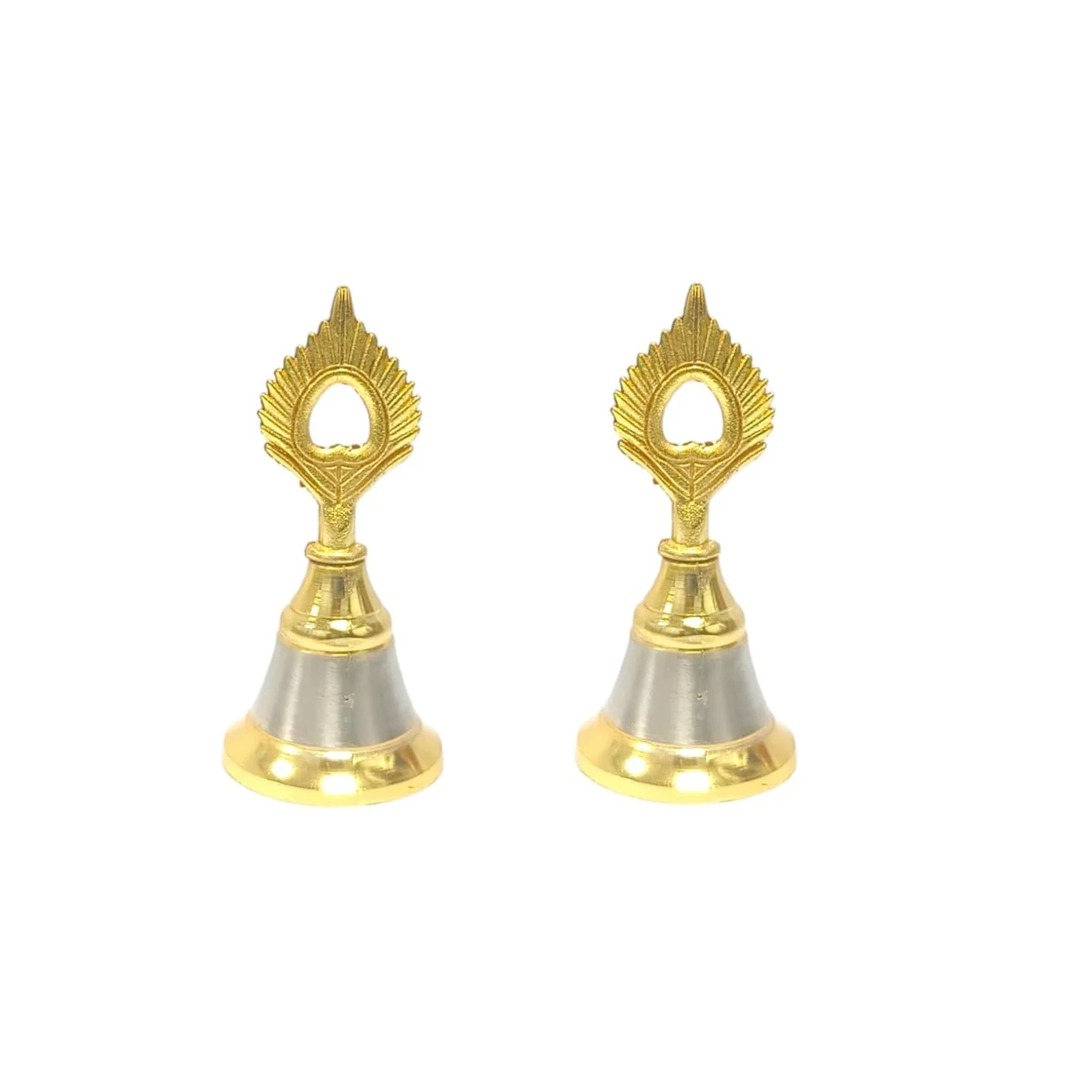
Brass puja bells, shankha chakra, set of two
पीतल की पूजा घंटी, शंख चक्र, दो का सेट
₹431
Two small brass ghanti with shankha and chakra handles, three inches each.
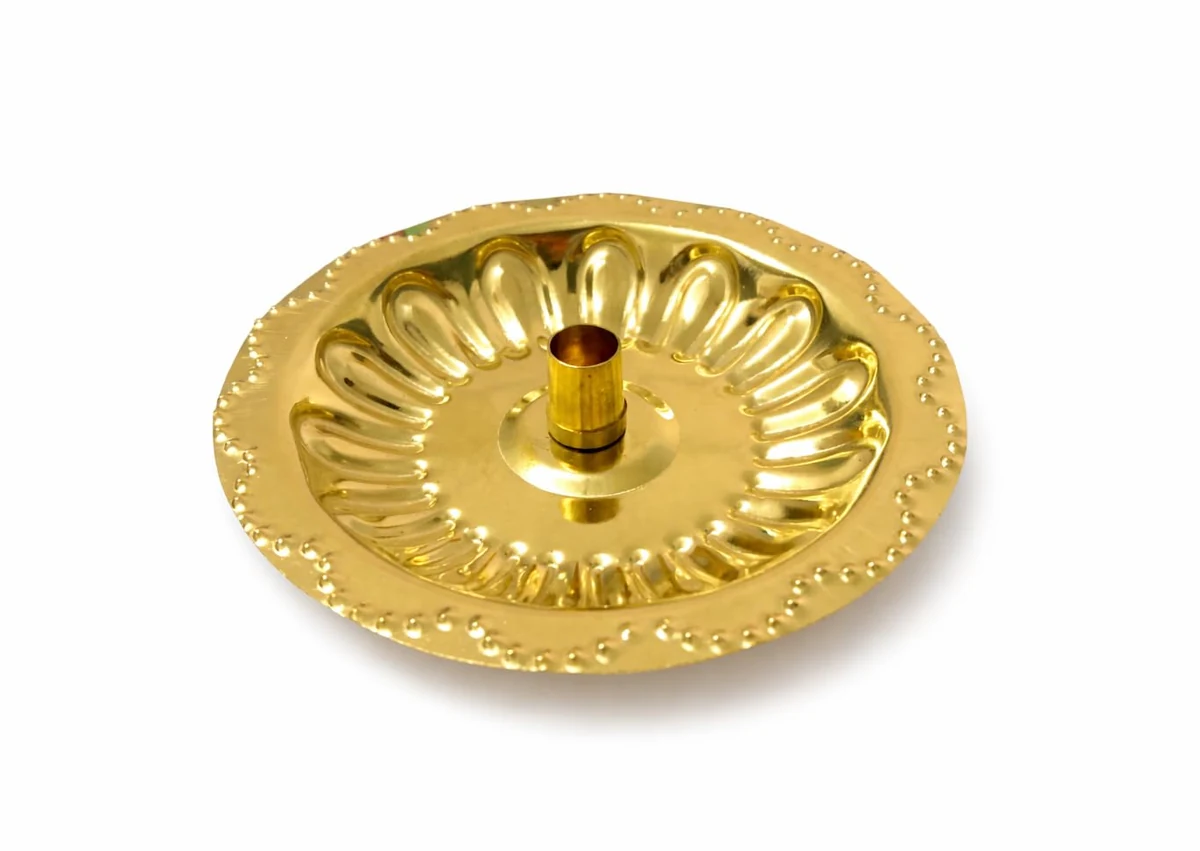
Brass dhoop stand with ash catcher
पीतल का धूप स्टैंड, राख पकड़ने वाला
₹329
A small brass plate with a central holder, eight centimetres, that catches the ash.
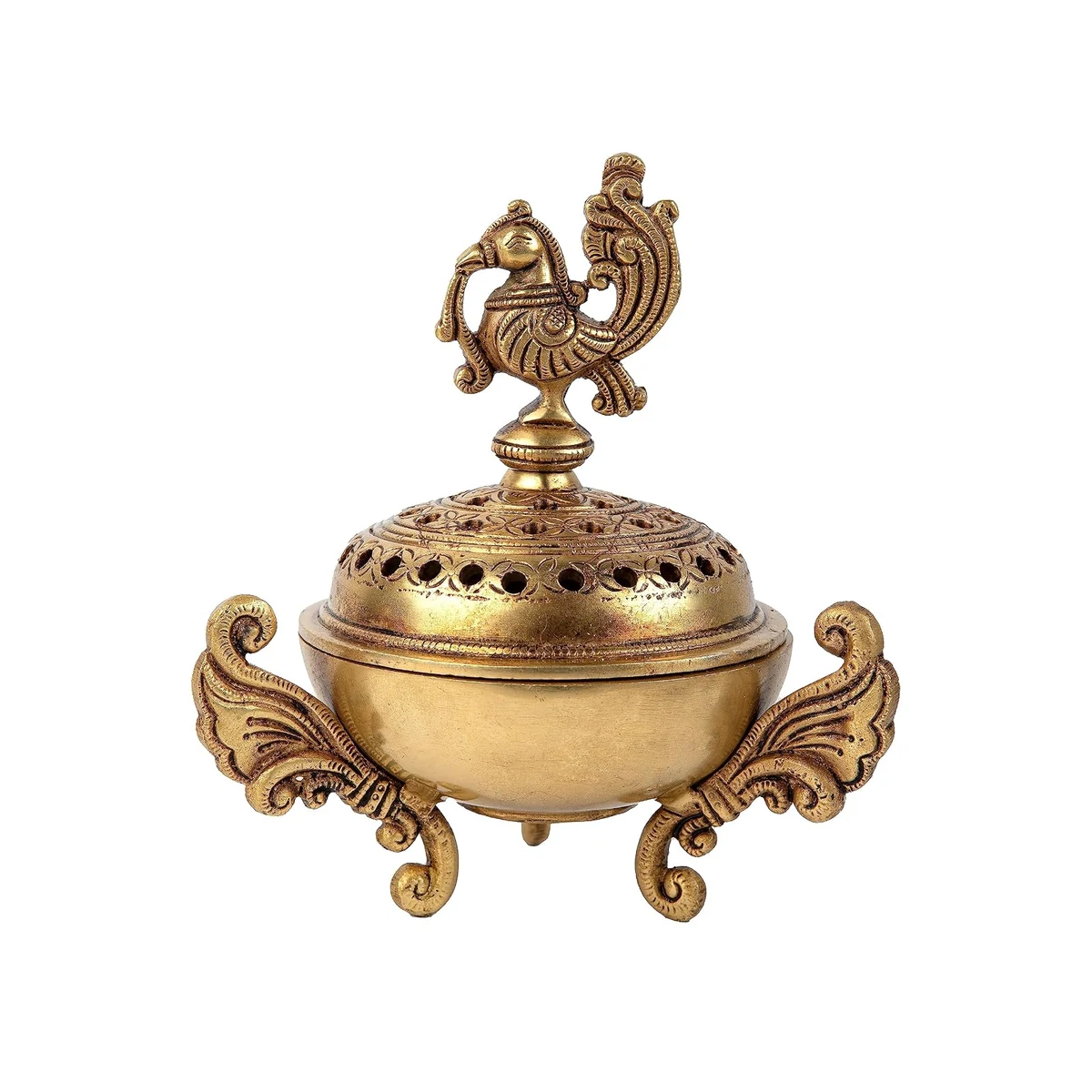
Brass peacock dhoop dani, 6 inch
पीतल की मोर धूपदानी, 6 इंच
₹3,011
A lidded brass burner with a peacock finial, six inches and a full kilo.