
Brass puja bells, shankha chakra, set of two
पीतल की पूजा घंटी, शंख चक्र, दो का सेट
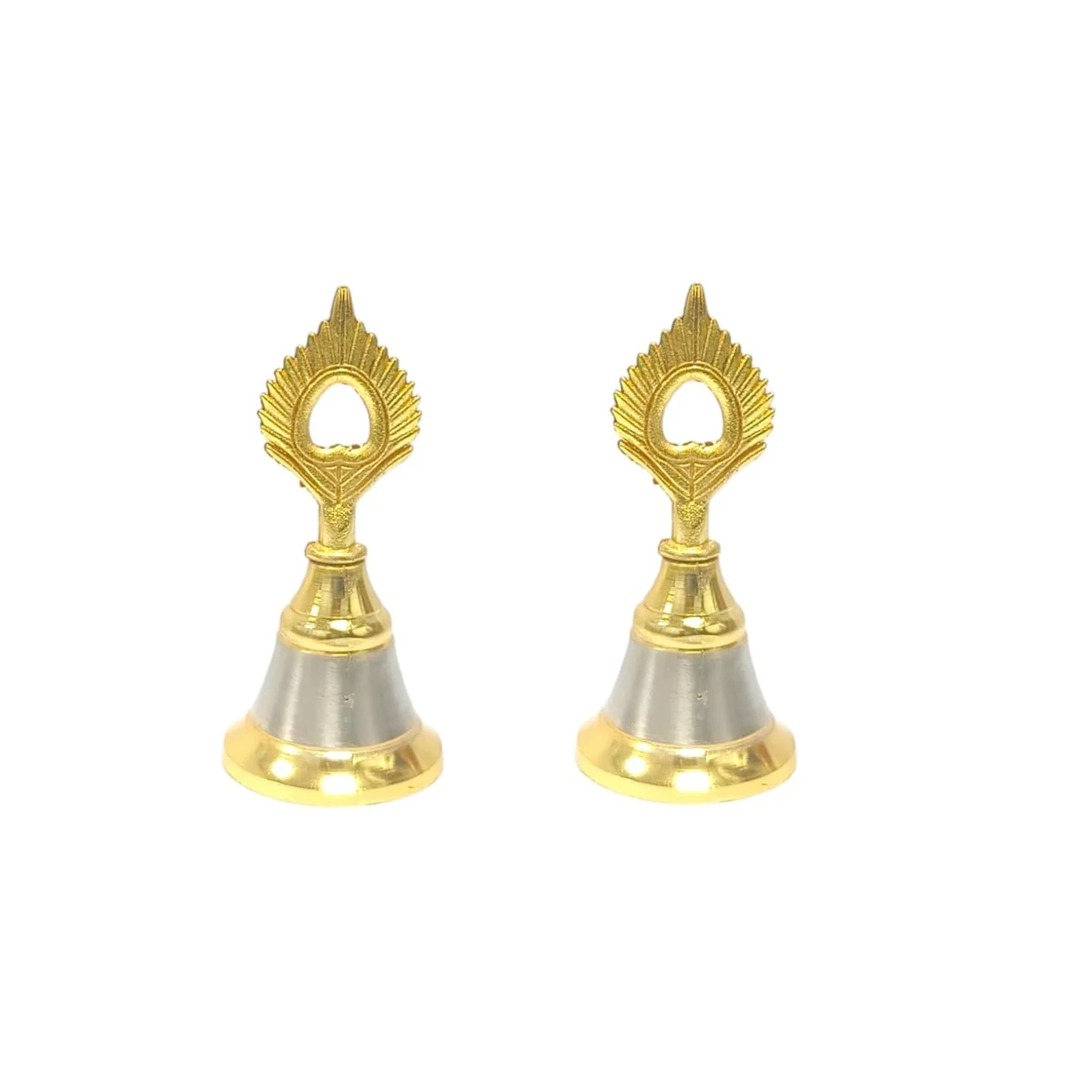
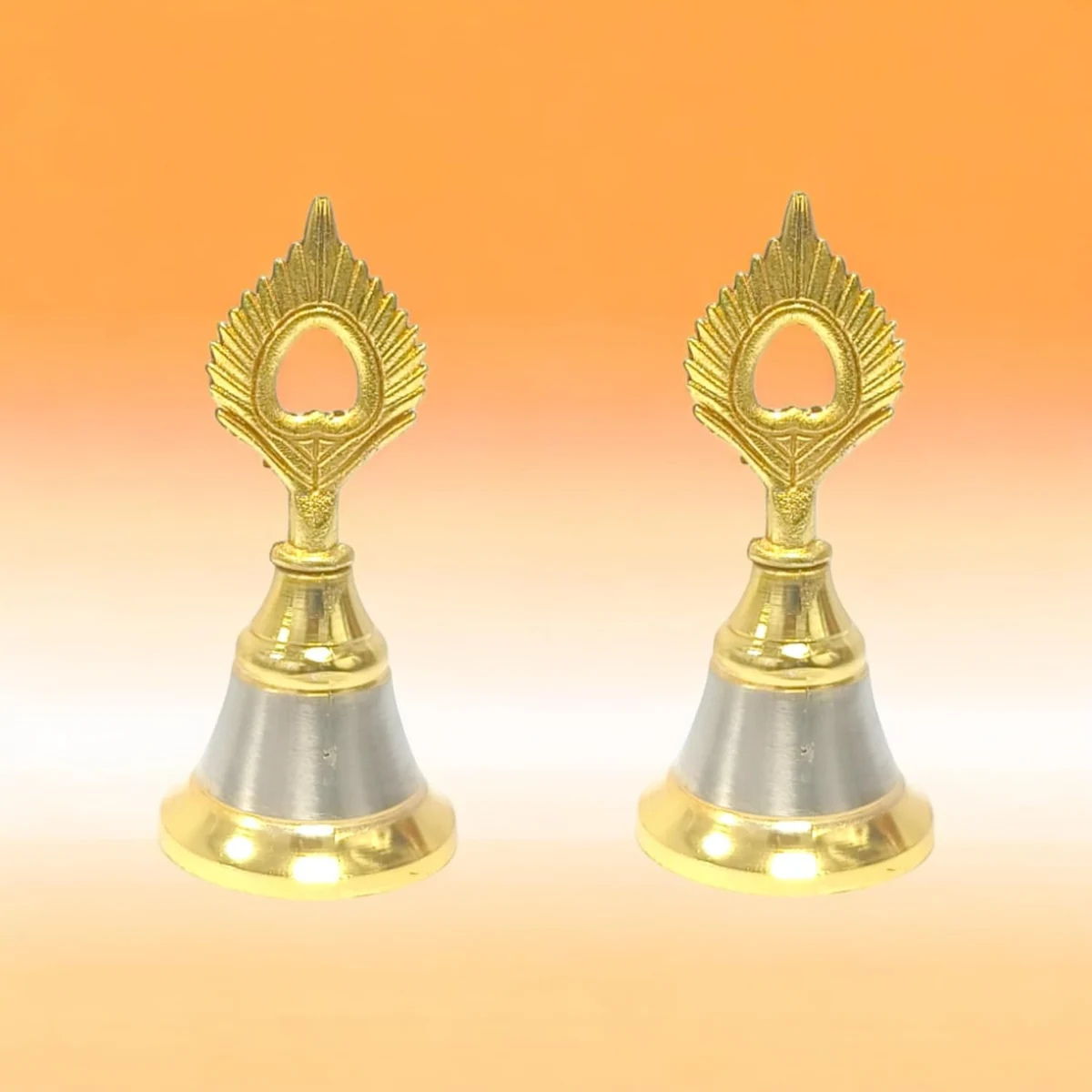
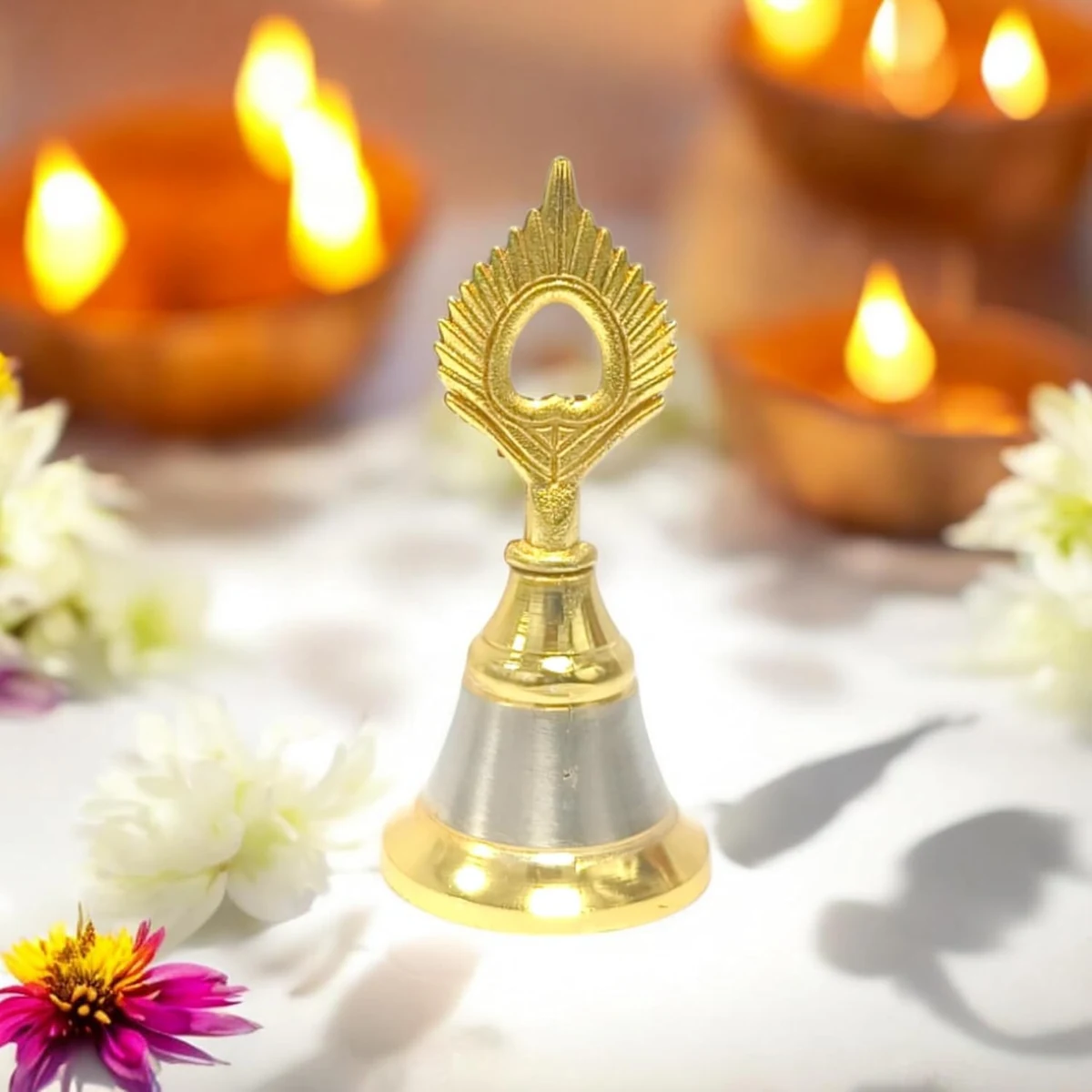
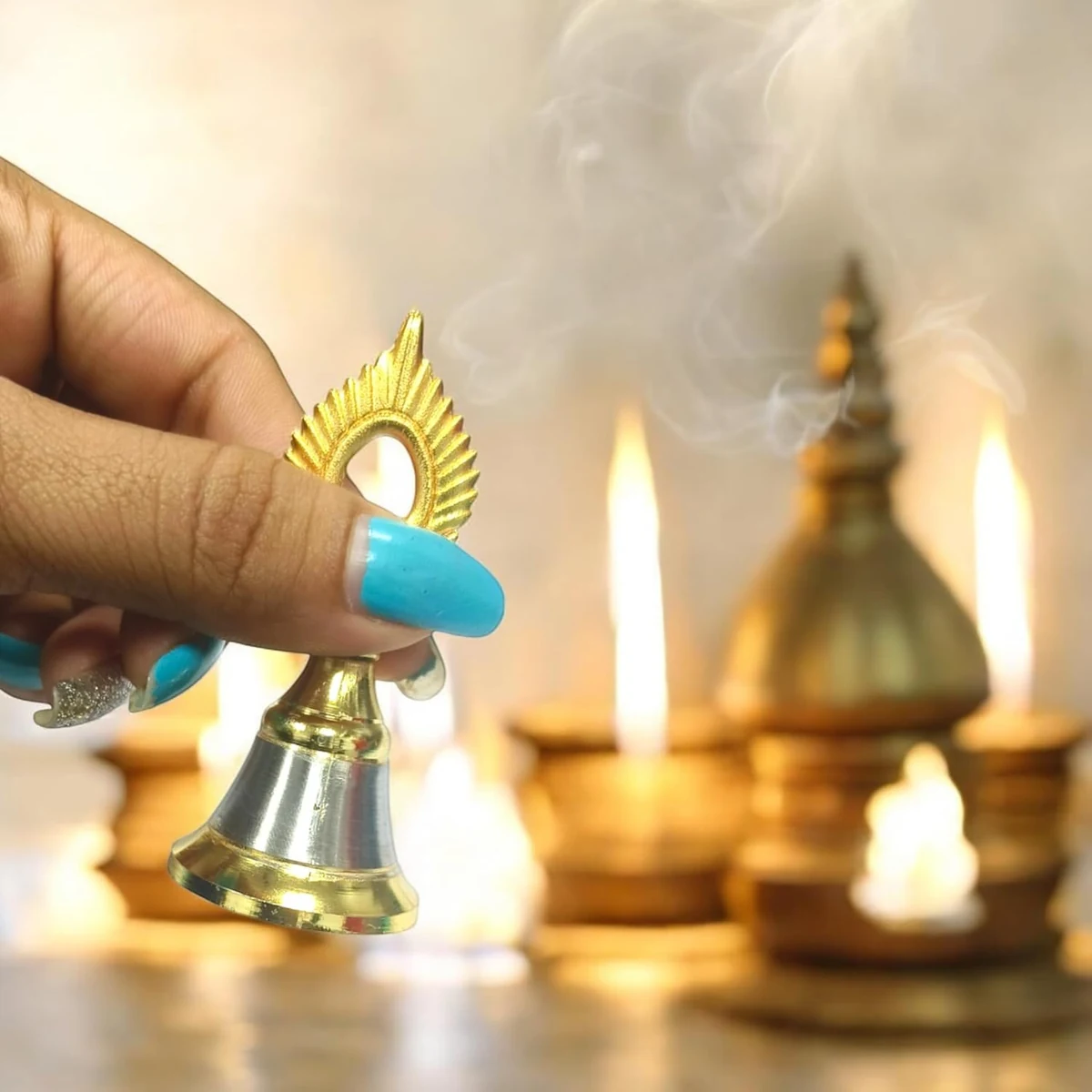
A pair of small brass bells, three inches tall, with the conch and discus worked into the handle and a dual gold and silver tone finish. Sold as two rather than one.
- Height
- 3 inches
- Supplied
- Set of two
- Material
- Brass
- Finish
- Gold and silver tone
About this puja bell
The bell is rung at the start of worship and at points through it, and the reason usually given is the plainest one available: it marks a beginning. A sound that fills a room draws attention in from wherever it had wandered, and everyone present knows the same moment has begun. Whatever else is said about it in various texts, that function is what makes it universal across Indian households.
The handle here carries the shankha and the chakra, the conch and the discus, which are Vishnu's emblems. That makes this a Vaishnava bell rather than a generic one, and it is worth noticing since bells are more commonly made with Nandi, Garuda or Hanuman on the handle depending on the household. For a Braj home the shankha and chakra are the appropriate emblems.
What makes one small brass bell sound better than another is wall thickness and the shape of the lip, not size or decoration. A bell cast thin rings with a bright note that dies quickly; a thicker one has a lower, fuller tone that carries. Three inches is small, so nobody should expect a temple bell's resonance, but there is a noticeable difference between a good small bell and a poor one and it is audible instantly.
They come as a pair, which is genuinely useful rather than a way of padding the price. Households that ring a bell daily tend to want one in the mandir and one somewhere else, and a spare matters because the clapper is the part that fails: it hangs on a small loop or pin inside, and on cheap bells that pin works loose and drops out.
The dual tone finish, gold on the handle and silver on the body, is a plating or lacquer effect over brass rather than two metals. It looks good and it is the part of the bell that will show wear first, because a bell is gripped, rung and put down twice a day. Expect the handle to lose its finish at the points where fingers sit, which on a bell that is actually used is reasonable rather than disappointing.
A bell is one of the few objects in this shop that genuinely improves with use rather than merely surviving it. Handles darken where fingers sit, the note settles, and a bell rung twice a day for twenty years becomes specifically yours in a way that a murti kept behind glass does not. That is a decent argument for buying a good one and then using it hard.
What to look for before buying
Listen before you judge the look. Tone comes from wall thickness and the shape of the lip, not from decoration. If a listing includes a video, use it. If not, weight against size is the best proxy available: a heavier small bell almost always sounds fuller than a lighter one of the same dimensions, because the extra metal is in the wall where it matters.
Check how the clapper is hung. The clapper hangs inside from a loop, a pin or a cast lug. A cast lug is part of the bell and cannot fail. A pin can work loose, and on cheap bells it eventually drops out, at which point the bell is finished. Look for a photograph of the inside, which good sellers provide and poor ones do not.
Match the handle emblem to the house. Bell handles carry different figures, and they are not interchangeable in the way a decorative choice would be. Shankha and chakra are Vishnu's and suit a Vaishnava home; Nandi belongs with Shiva; Hanuman and Garuda appear too. It costs nothing to pick the right one, and it is the kind of detail that is noticed by anybody who would notice.
Keeping it, and where it sits
Wipe the handle dry after use and leave the rest alone. Hands are the main thing a bell meets, and hand oil sitting on brass is what dulls a handle long before the body of the bell shows anything. Ten seconds with a cloth after the morning routine keeps it bright indefinitely.
Do not oil the inside or the clapper pivot. It seems sensible and it is not: oil collects dust, the dust forms a paste, and the paste damps the swing so the bell rings weakly and unevenly. If a clapper is sticking, the fix is to clean it dry, not to lubricate it.
Keep it out of water. A bell has an enclosed inside that never dries properly, and water left there produces green deposits on the inner wall which do affect the tone over years. If it needs cleaning inside, a dry cloth wrapped around a finger is the right tool.
Store it standing rather than lying down, and not loose in a drawer with other metal. A bell lying on its side takes knocks on the lip, and the lip is where the tone is made: a dent there is audible immediately and cannot be taken out. Standing upright on the shelf it lives on is the whole of the storage requirement.
None of this is required. What Maharaj Ji actually asks for is set out on the teachings page, the sayings he repeats most are on the quotes page, and the stotras are free to download as PDFs. If you are planning to visit Vrindavan, read how to meet Maharaj Ji first.
Also worth reading: the teaching , and sayings from satsang.
Questions about buying this
Why is a bell rung during puja?
It marks the beginning and draws attention into the moment. A sound that fills a room means everybody present starts at the same point.
What makes one bell sound better than another?
Wall thickness and the shape of the lip. A heavier bell of the same size will almost always sound fuller than a lighter one.
What do the shankha and chakra on the handle mean?
They are Vishnu's emblems, the conch and the discus, which makes this a Vaishnava bell. Other bells carry Nandi, Garuda or Hanuman instead.
Why are these sold as a pair?
Households that ring a bell daily usually want one in the mandir and a spare, since the clapper pin is the part most likely to fail.
Can a puja bell be washed?
Better not. The inside never dries properly and trapped water produces deposits that eventually affect the tone. Clean it with a dry cloth.
Is a bell necessary for worship at home?
No. The naam needs no sound, no signal and no equipment. A bell marks a moment for people who find a marked moment useful.
Is this connected with Maharaj Ji or the ashram?
No. It is not supplied by, authorised by or endorsed by Maharaj Ji or Shri Hit Radha Keli Kunj. It is an ordinary devotional item sold by other people on Amazon, listed here because a devotee might want one.
Do you sell it?
No. The button on this page takes you to Amazon. Amazon takes the payment, ships the order and handles returns and warranty. We hold no stock, never see your payment details, and cannot change or cancel an order.
Is the price on this page current?
It is the price we last saw on Amazon, with the date beside it. Amazon changes prices whenever it likes, so treat the figure here as a guide and the price on the Amazon page as the real one.
Do you make money if I buy it?
Yes. As an Amazon Associate we earn from qualifying purchases. Your price is exactly the same whether you use our link or not; Amazon pays the commission out of its own margin, and that commission is what keeps this site free to read.
Do I need this to follow the teachings?
No. Maharaj Ji asks for the Radha naam and nothing else, with no initiation, no fee and no equipment. Anything on this page is convenience, never a requirement, and he is explicit about that in satsang.
Also for puja
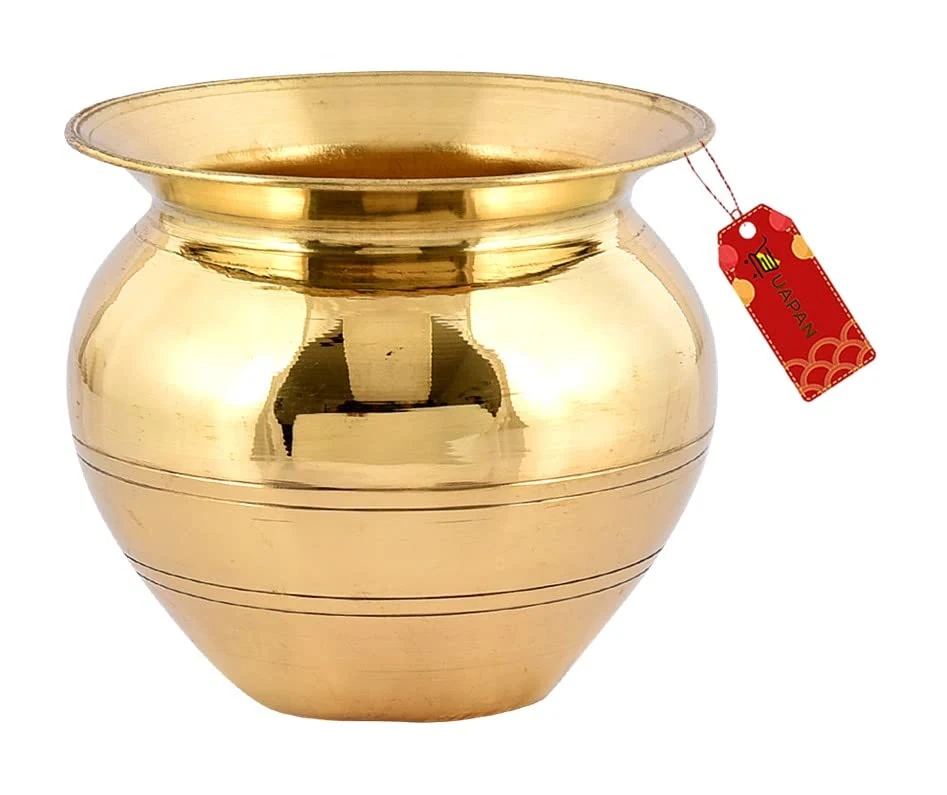
Brass puja kalash lota, 500 ml
पीतल का पूजा कलश लोटा, 500 मिली
₹322
A small brass water pot of half a litre, for abhishek and for setting a kalash.
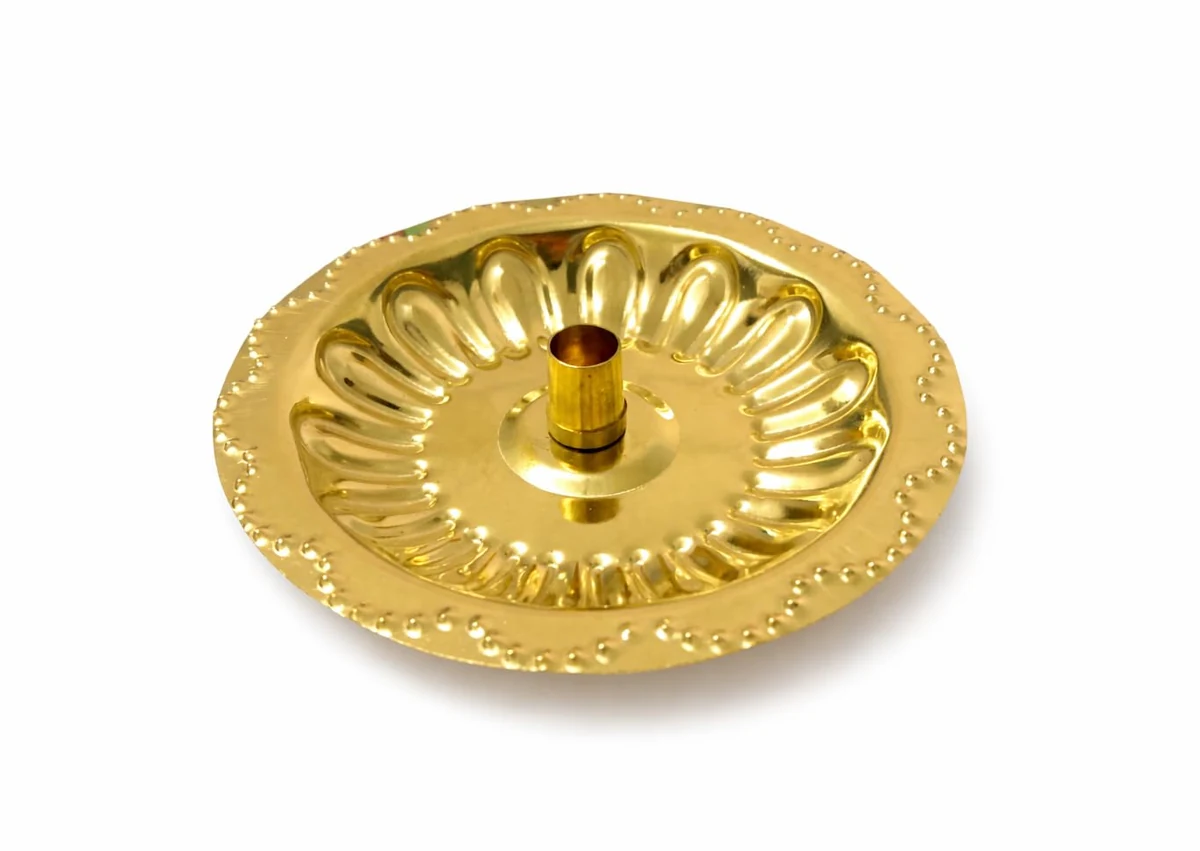
Brass dhoop stand with ash catcher
पीतल का धूप स्टैंड, राख पकड़ने वाला
₹329
A small brass plate with a central holder, eight centimetres, that catches the ash.
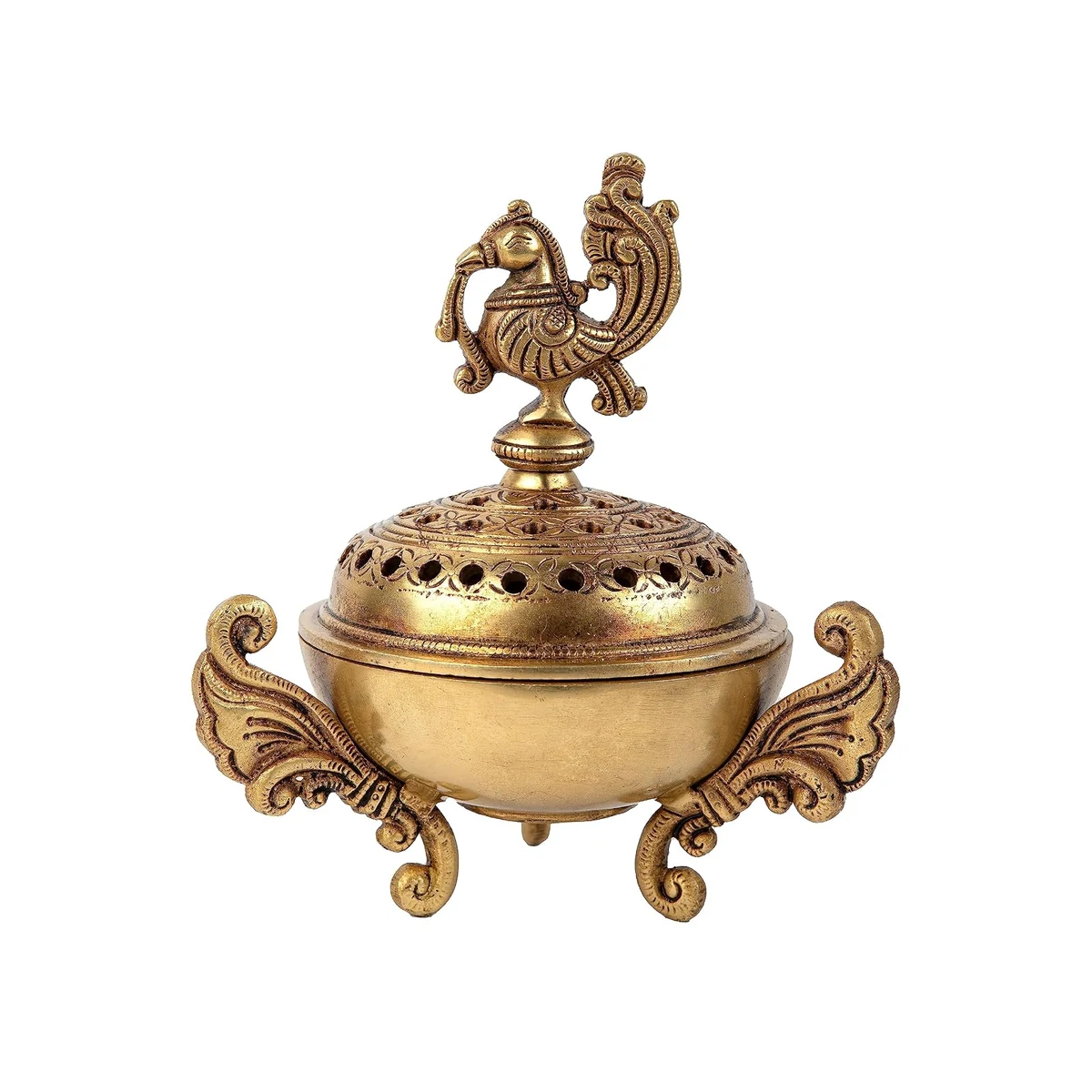
Brass peacock dhoop dani, 6 inch
पीतल की मोर धूपदानी, 6 इंच
₹3,011
A lidded brass burner with a peacock finial, six inches and a full kilo.