
Brass peacock dhoop dani, 6 inch
पीतल की मोर धूपदानी, 6 इंच
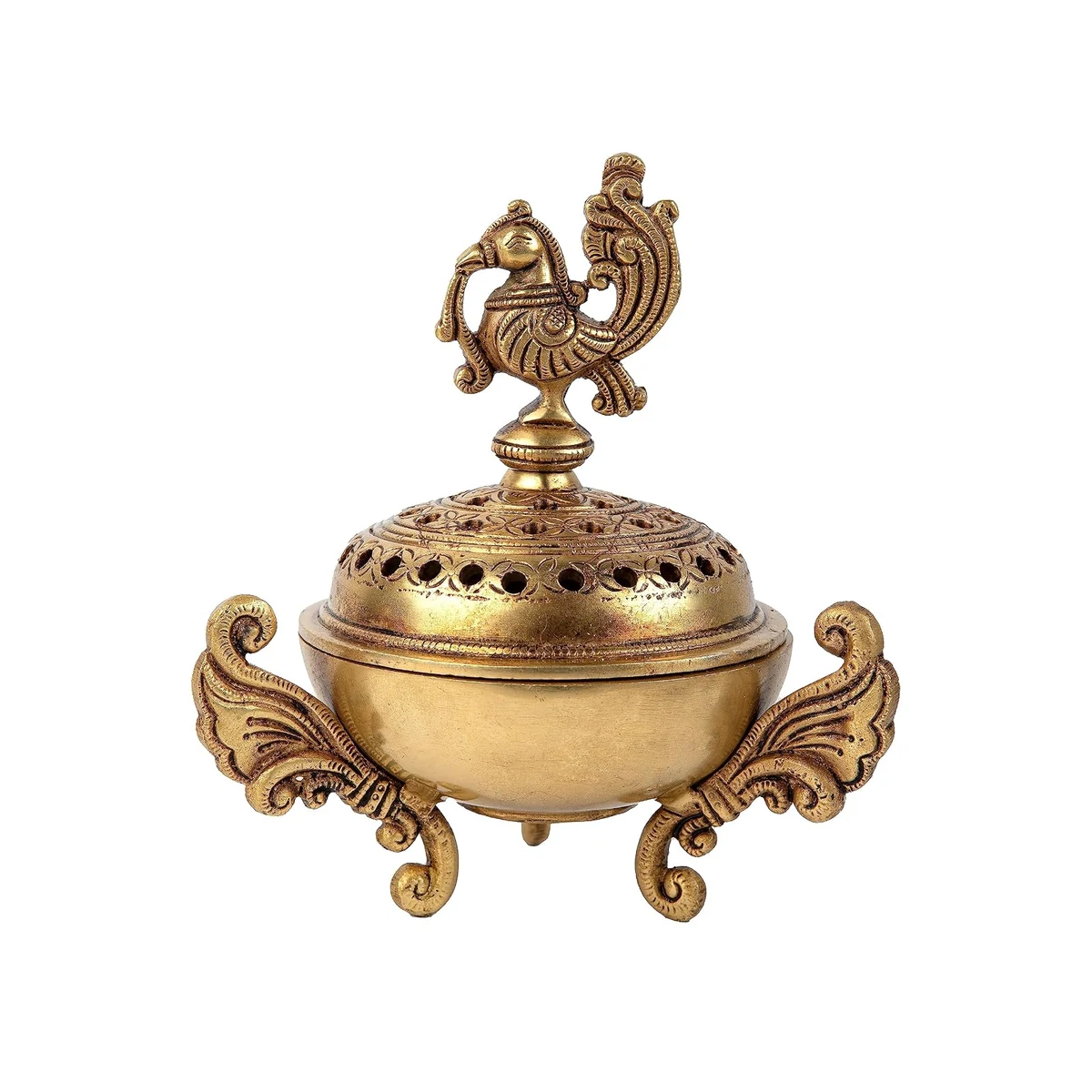
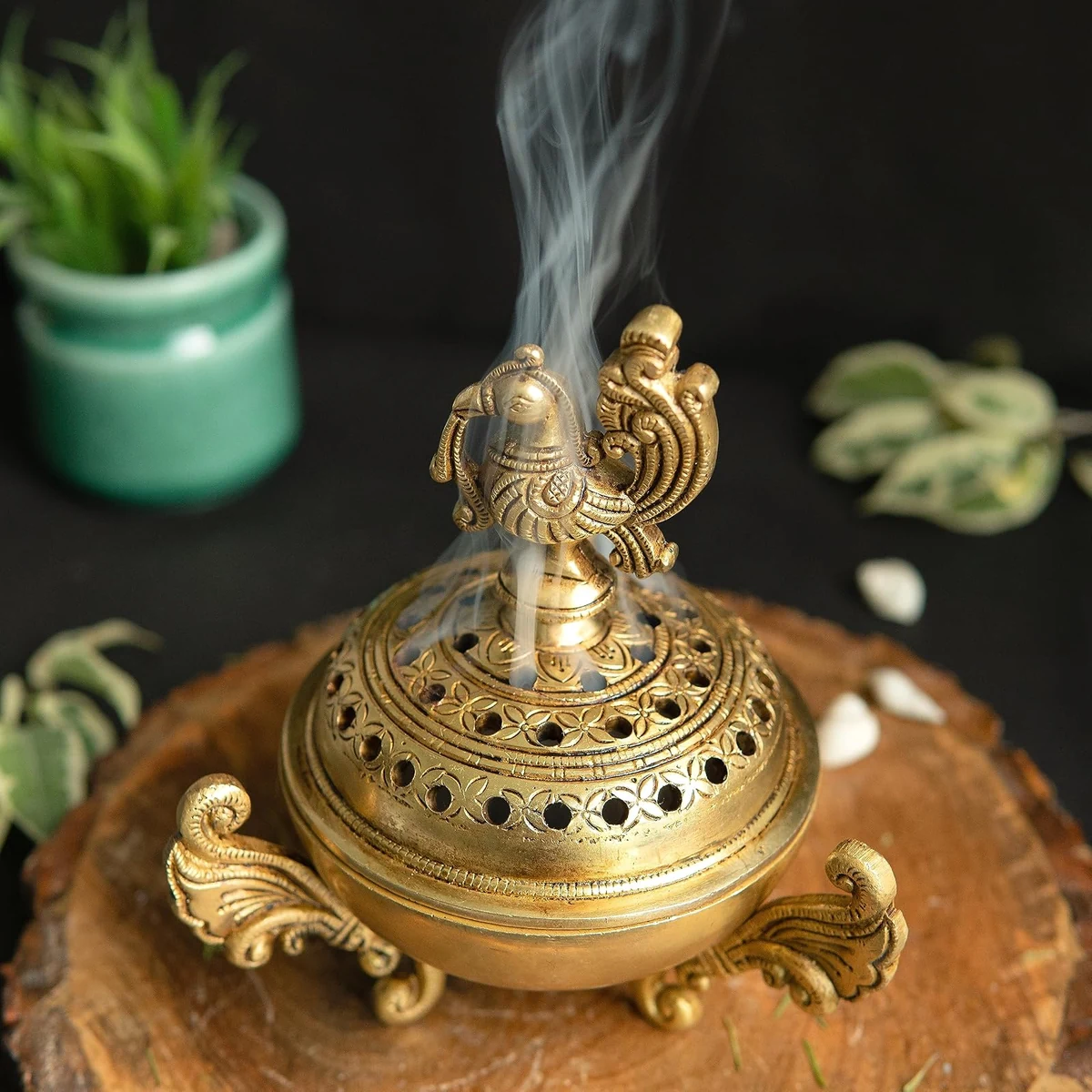
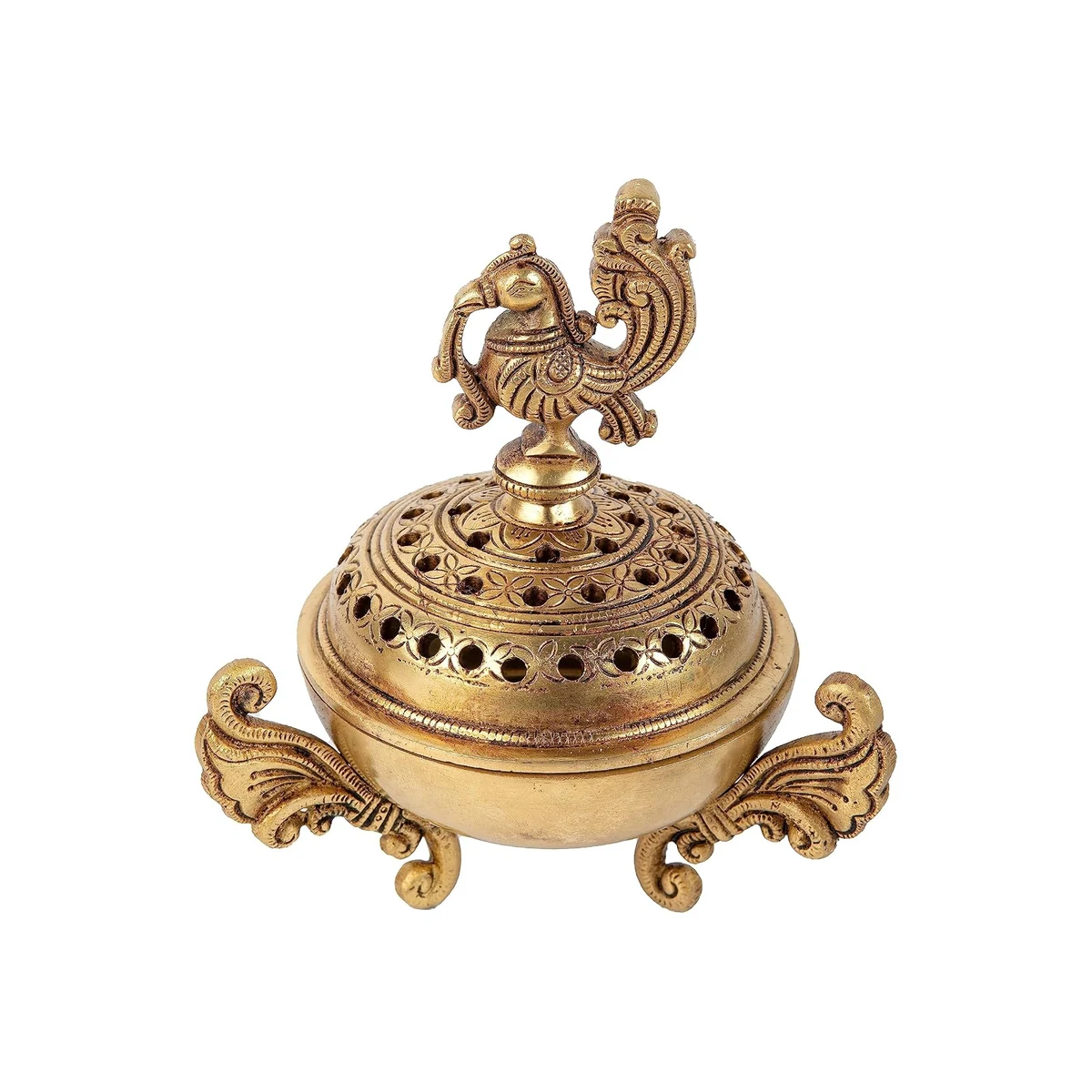
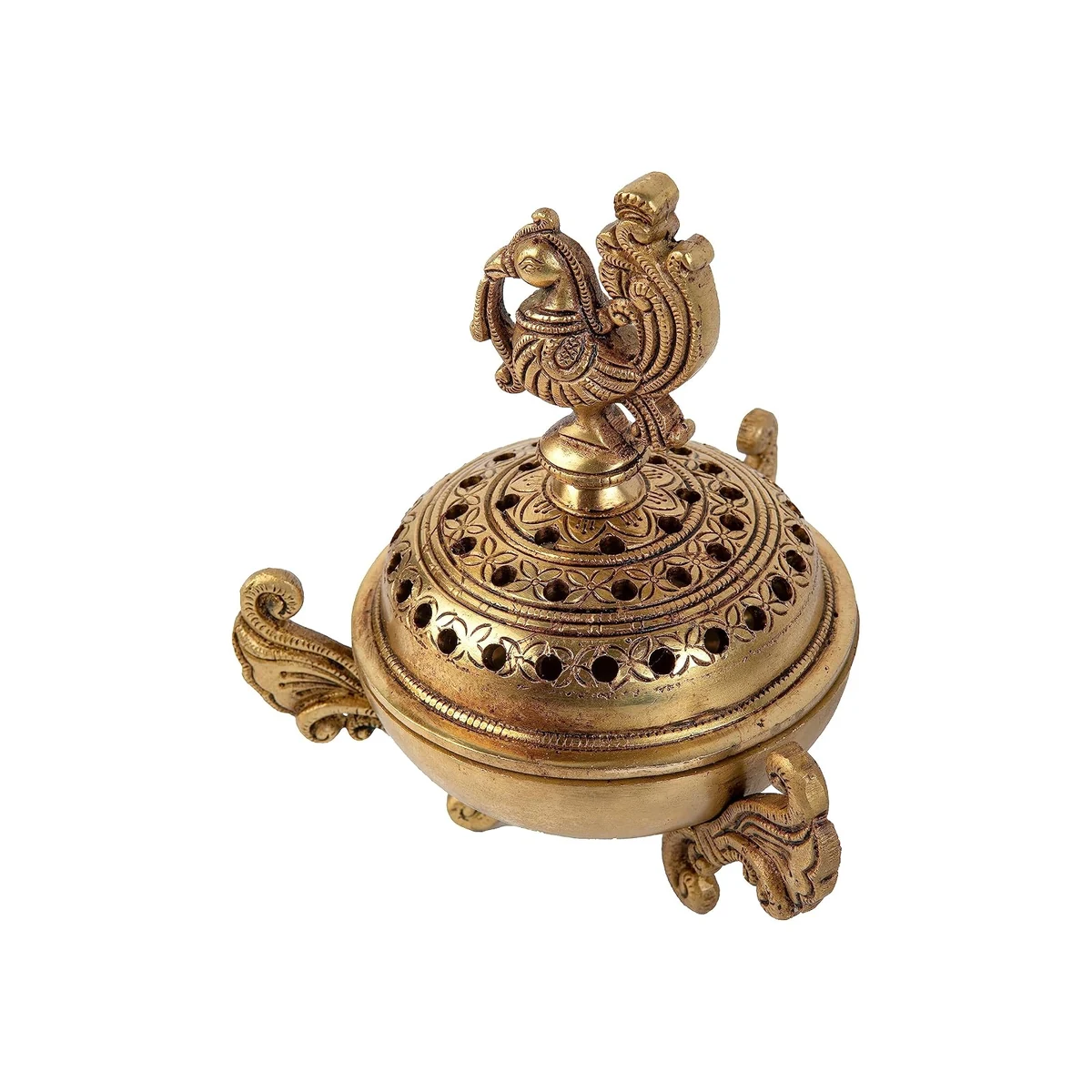
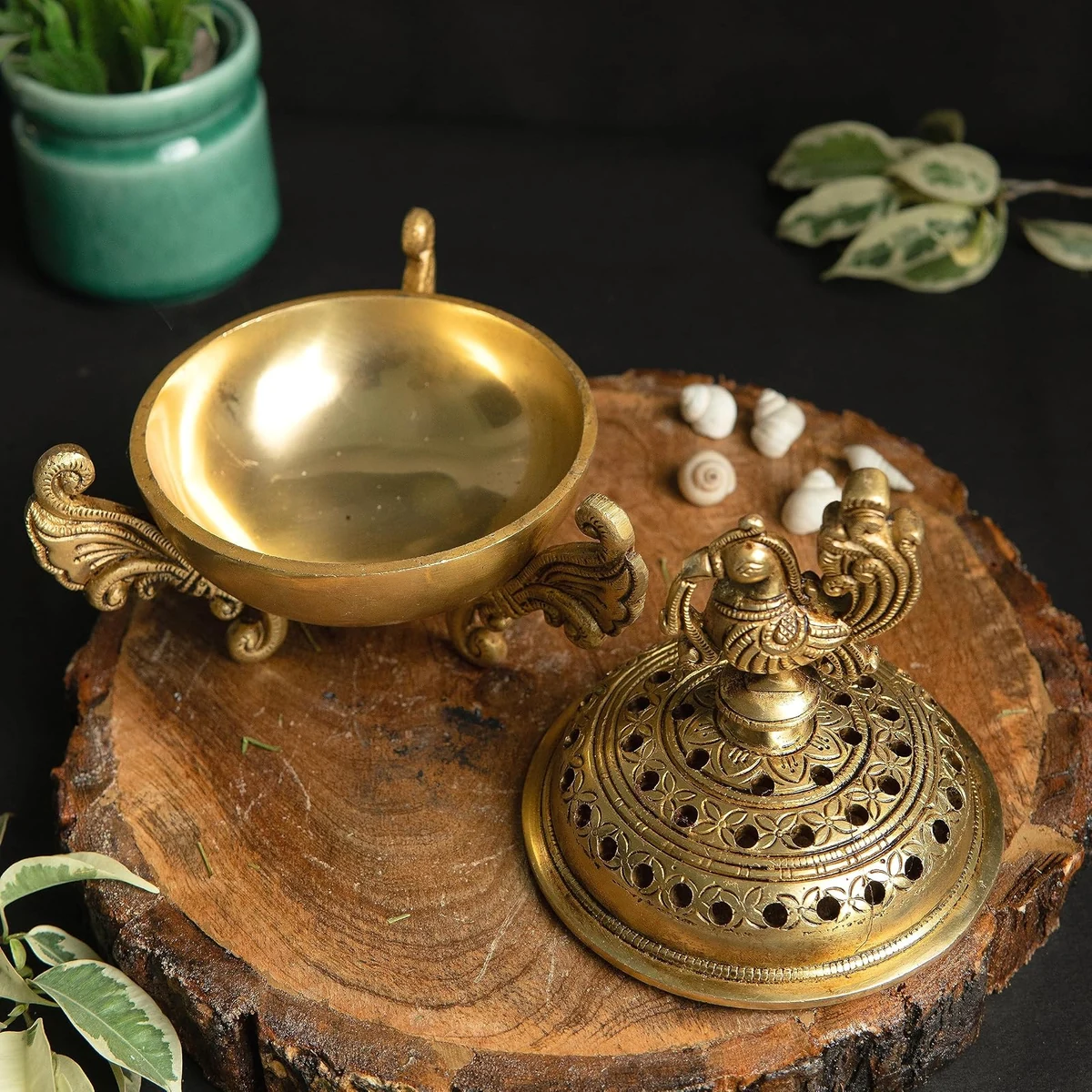
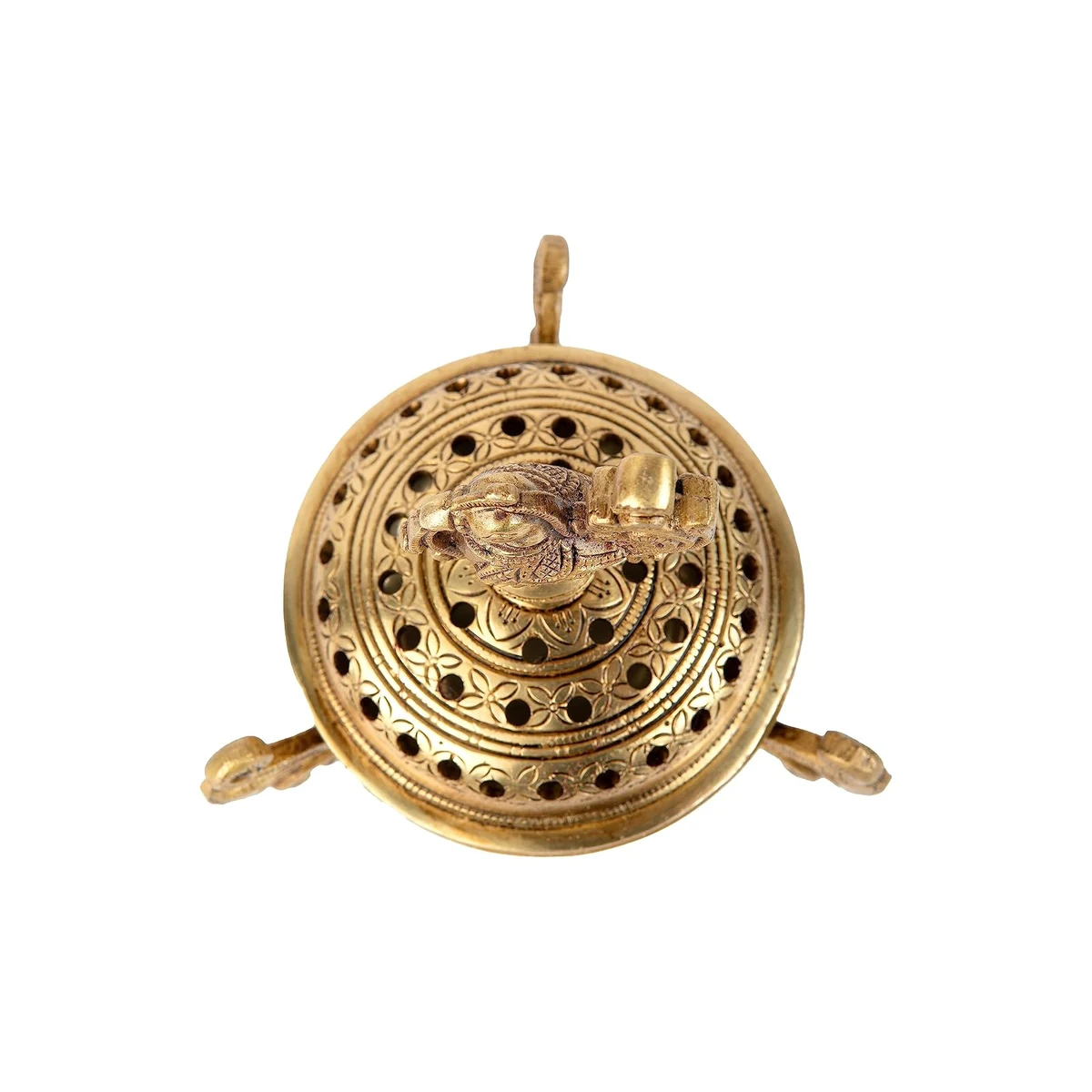
A covered brass dhoop dani with a pierced lid and a peacock standing on top, on three curled feet. Six inches and around a kilo, made for loose dhoop and charcoal rather than sticks.
- Height
- About 17 cm
- Weight
- About 1 kg
- Material
- Brass
- Design
- Peacock finial, pierced lid
About this dhoop dani
A dhoop dani is a different instrument from a stick holder and it is worth being clear about which one you need. A stick holder takes a prepared dhoop batti and holds it upright. A dani is a covered bowl: charcoal or loose resin goes inside, the pierced lid goes on, and the smoke comes out through the holes. It is for guggul, loban, sambrani and loose mixtures rather than for sticks.
The advantage of the covered form is control and containment. Everything burning is inside a metal bowl with a lid on it, so nothing can fall out, ash stays where it is made, and the smoke is diffused through the piercing rather than rising in a single line. It is also much better suited to the kind of burning that happens in short bursts at a fixed time rather than a stick left to burn down.
The three curled feet are not decoration. A dani gets genuinely hot in use, hot enough to mark a surface, and the feet lift the bowl clear so that air can circulate underneath. Never use one directly on a table, and never on a burner that has lost a foot, which is exactly how mandir shelves acquire a permanent ring.
A kilogram is substantial and that is a point in its favour here. Weight means the bowl heats slowly and evenly rather than glowing hot at one spot, and it means the dani will not skid when the lid is lifted with tongs. It also means the handle, the lid and the peacock all get hot, which is the single most important practical fact on this page.
The peacock is a common motif on Indian brass work and a particularly apt one in Braj, where the peacock is associated with Krishna and its feather is the standard image in the whole region. Of everything in this part of the shop, this is the object whose ornament sits most naturally with the rest of the site, which is worth mentioning since so much else in this category does not.
A last practical word, since this is the one object here that is genuinely hot in use. Keep tongs beside it, keep sand in it and keep it off wood. Those three habits cover essentially every way a dhoop dani causes trouble, and none of them costs anything. An object that involves fire deserves that much thought before it involves a burn.
What to look for before buying
Confirm it is for loose dhoop, not sticks. A covered dani takes charcoal, guggul, loban or sambrani inside the bowl. It is not a stick holder, and a dhoop batti will not stand in it properly. If what you actually burn is sticks, a flat stand with an ash plate is the right purchase and this is not. Listings often blur the two because both are called dhoop holders.
Check the feet and the base clearance. The feet are what keep a hot bowl off a surface, so they matter. Look for three or four feet that are cast as part of the base rather than soldered on, and check that they lift the bowl a visible amount. A dani with short or applied feet will mark a shelf and will eventually lose one, at which point it becomes a hazard rather than an object.
Look at the piercing in the lid. The holes are what the smoke comes through and what lets air in to keep charcoal alight. Too few or too small and the charcoal smothers; too many and the piece loses strength around the rim. A good lid has generous, evenly spaced piercing. It is visible in any top down photograph and is worth a moment.
Keeping it, and where it sits
Use tongs, always, once it has been lit. The lid, the finial and the whole upper bowl reach temperatures that will burn a hand, and they stay hot long after the charcoal looks dead. A pair of cheap kitchen tongs kept beside the mandir is the single most sensible accessory for this object.
Let it cool completely before cleaning, and never put a hot brass bowl into water. Thermal shock can crack a casting, and at the very least it will mark the finish. Emptying it cold, an hour or more after use, is part of the routine rather than an inconvenience.
Line the bowl with a little sand or ash. This is the traditional practice and it is genuinely useful: it insulates the metal from direct contact with burning charcoal, spreads the heat, prevents the bottom of the bowl from discolouring, and makes emptying afterwards trivial. A centimetre is plenty.
Expect the inside to darken and leave it alone. The interior of any burner blackens and there is no point fighting it; it is soot on a surface that will be sooty again tomorrow. Clean the outside occasionally with lemon and salt, keep the inside merely emptied, and the piece will look right for decades.
None of this is required. What Maharaj Ji actually asks for is set out on the teachings page, the sayings he repeats most are on the quotes page, and the stotras are free to download as PDFs. If you are planning to visit Vrindavan, read how to meet Maharaj Ji first.
Also worth reading: what he actually teaches , and visiting Vrindavan.
Questions about buying this
What is a dhoop dani used for?
Loose dhoop: charcoal with guggul, loban or sambrani inside a covered bowl. It is not a holder for dhoop sticks.
Why does it stand on feet?
The bowl gets hot enough to mark a surface. The feet lift it clear and let air circulate underneath. Never use one directly on a table.
Should I put sand inside?
Yes, a centimetre of sand or ash. It insulates the metal, spreads the heat, stops the base discolouring and makes emptying easy.
How hot does it get?
Hot enough that the lid, finial and upper bowl will burn a hand, and it stays hot well after the charcoal looks out. Use tongs.
How do I clean it?
Let it cool fully first, then clean the outside with lemon and salt. Leave the inside blackened; it is soot and it will simply return.
Is burning dhoop part of what Maharaj Ji teaches?
No. Nothing is asked for and nothing has to be burned. This is equipment for a household that already burns loose dhoop.
Is this connected with Maharaj Ji or the ashram?
No. It is not supplied by, authorised by or endorsed by Maharaj Ji or Shri Hit Radha Keli Kunj. It is an ordinary devotional item sold by other people on Amazon, listed here because a devotee might want one.
Do you sell it?
No. The button on this page takes you to Amazon. Amazon takes the payment, ships the order and handles returns and warranty. We hold no stock, never see your payment details, and cannot change or cancel an order.
Is the price on this page current?
It is the price we last saw on Amazon, with the date beside it. Amazon changes prices whenever it likes, so treat the figure here as a guide and the price on the Amazon page as the real one.
Do you make money if I buy it?
Yes. As an Amazon Associate we earn from qualifying purchases. Your price is exactly the same whether you use our link or not; Amazon pays the commission out of its own margin, and that commission is what keeps this site free to read.
Do I need this to follow the teachings?
No. Maharaj Ji asks for the Radha naam and nothing else, with no initiation, no fee and no equipment. Anything on this page is convenience, never a requirement, and he is explicit about that in satsang.
Also for puja
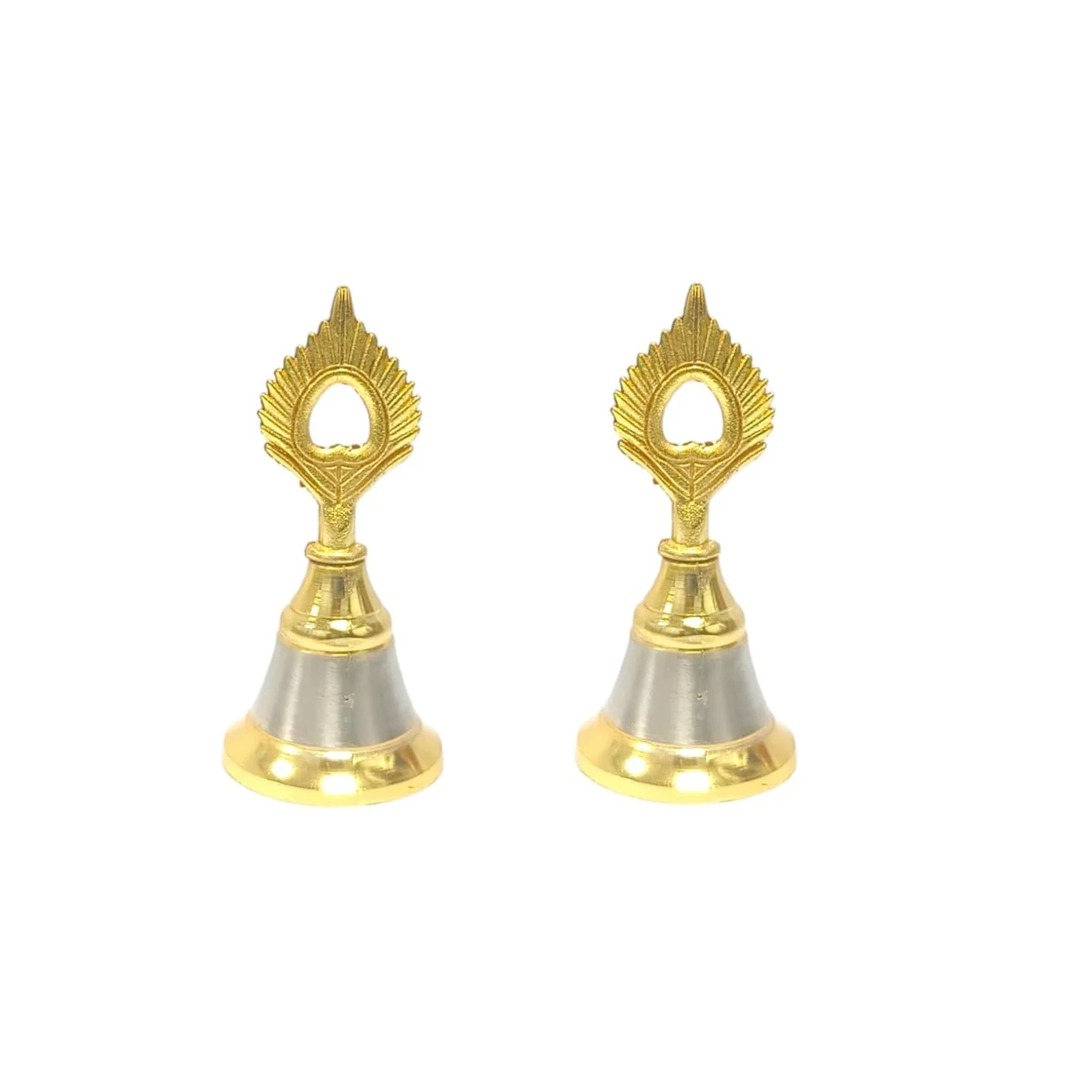
Brass puja bells, shankha chakra, set of two
पीतल की पूजा घंटी, शंख चक्र, दो का सेट
₹431
Two small brass ghanti with shankha and chakra handles, three inches each.
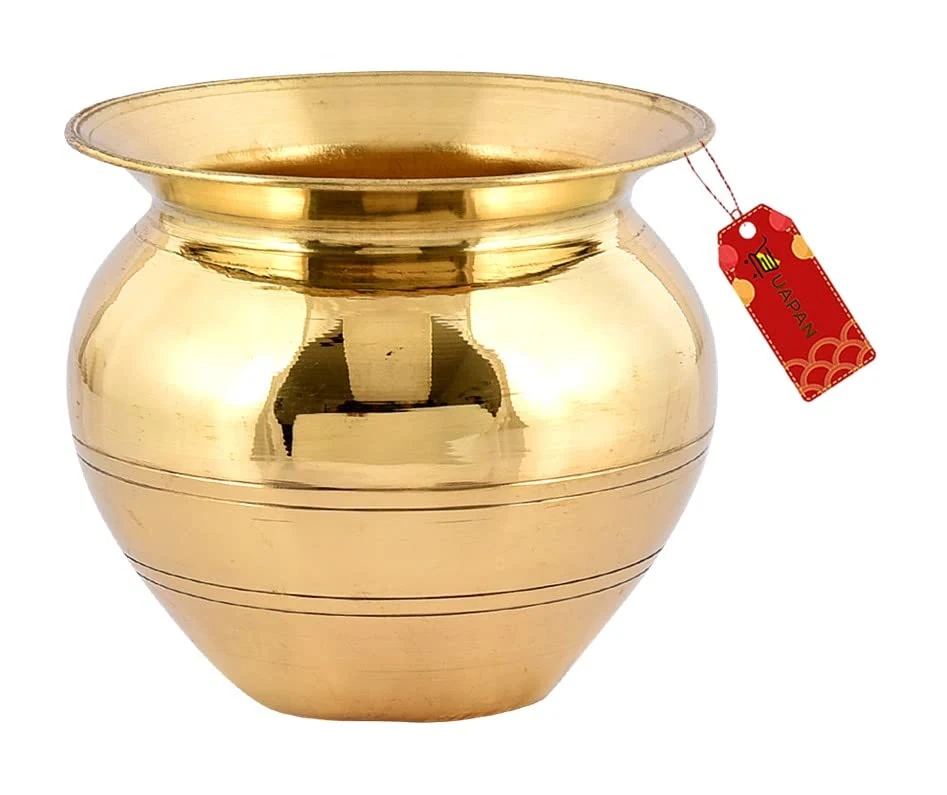
Brass puja kalash lota, 500 ml
पीतल का पूजा कलश लोटा, 500 मिली
₹322
A small brass water pot of half a litre, for abhishek and for setting a kalash.
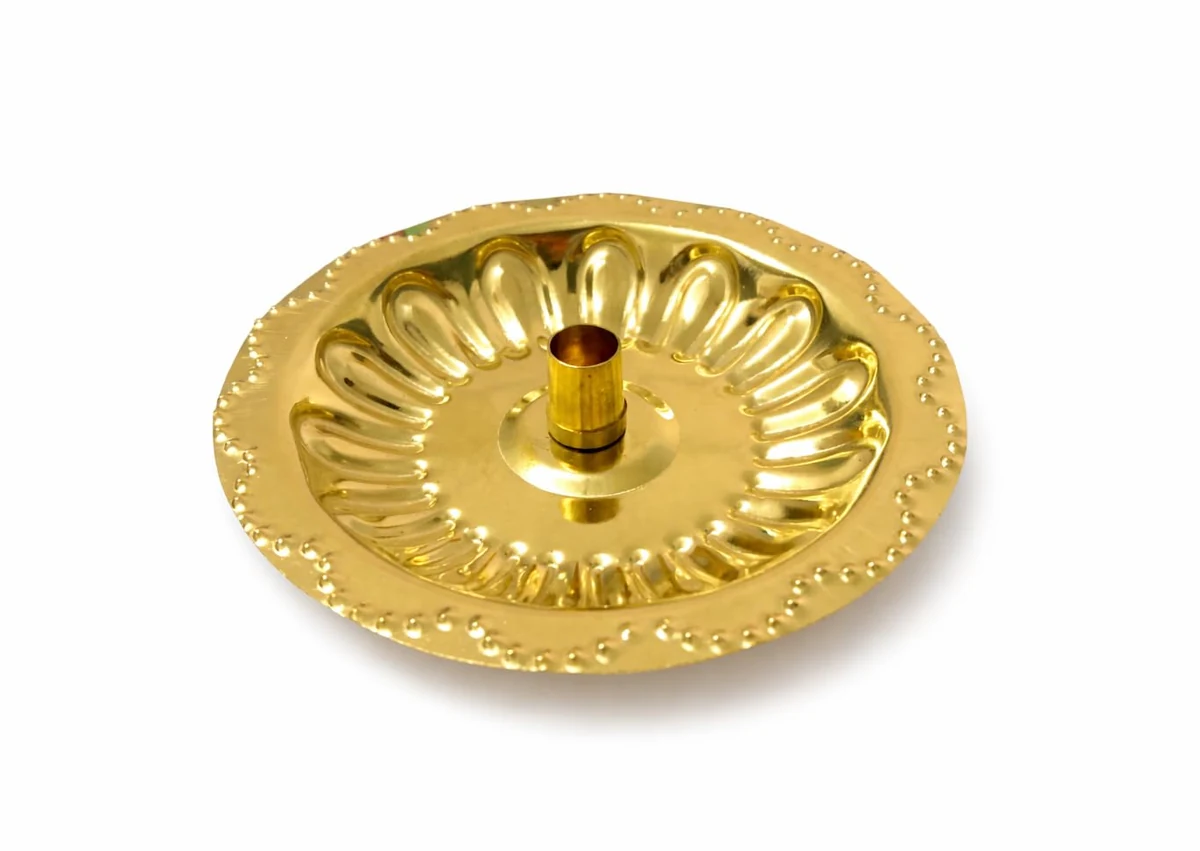
Brass dhoop stand with ash catcher
पीतल का धूप स्टैंड, राख पकड़ने वाला
₹329
A small brass plate with a central holder, eight centimetres, that catches the ash.