
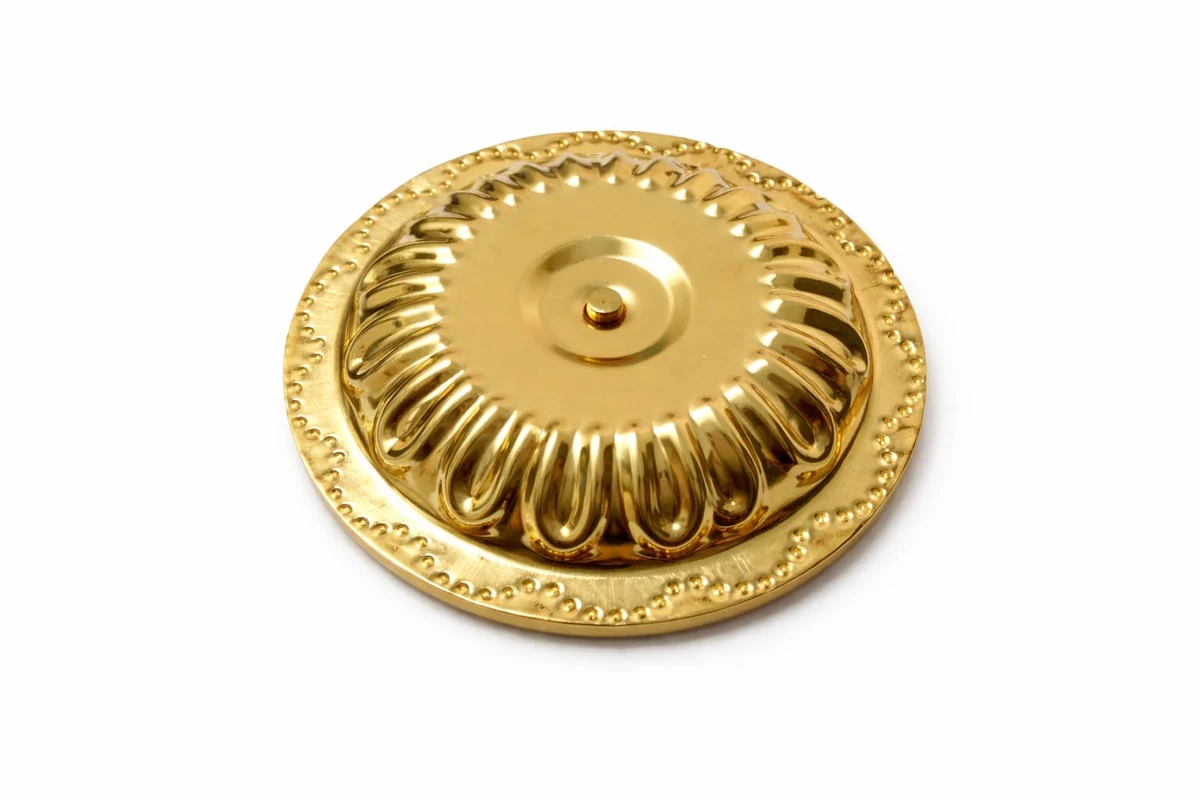
Brass dhoop stand with ash catcher
पीतल का धूप स्टैंड, राख पकड़ने वाला
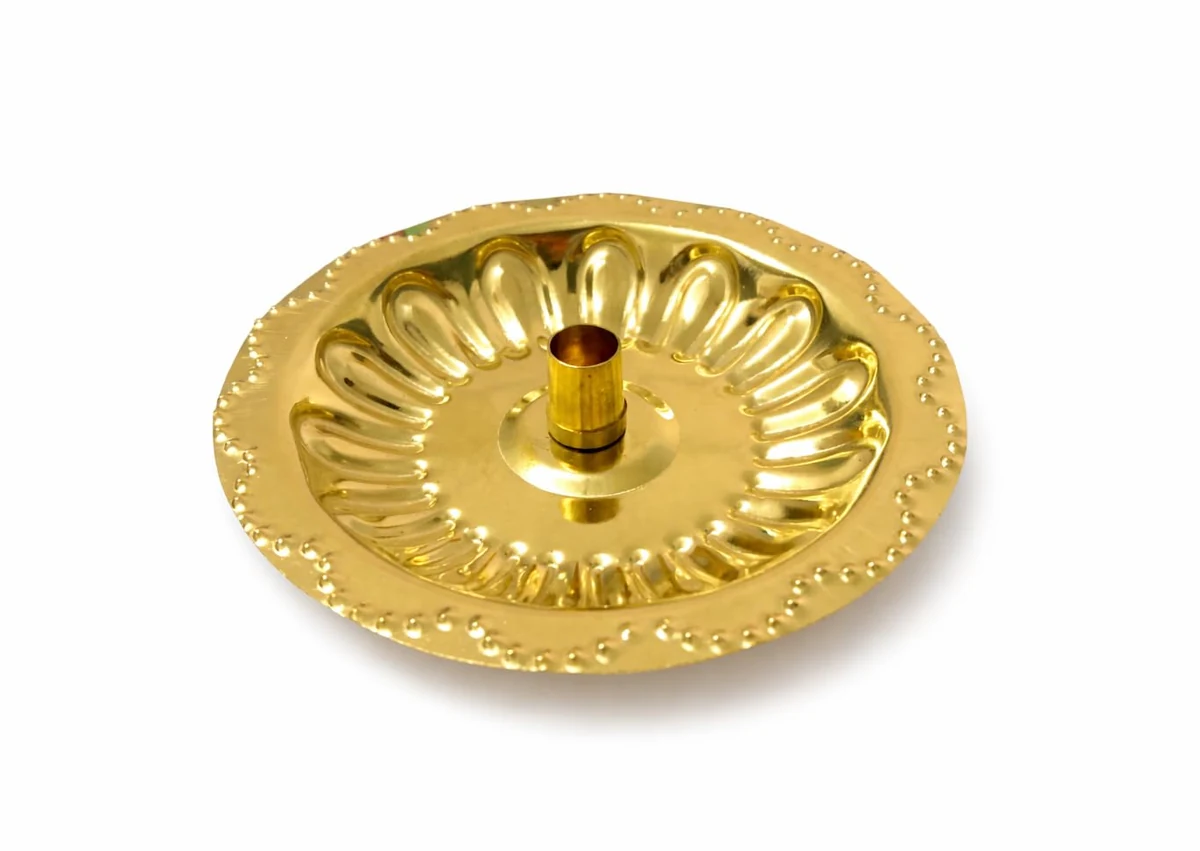
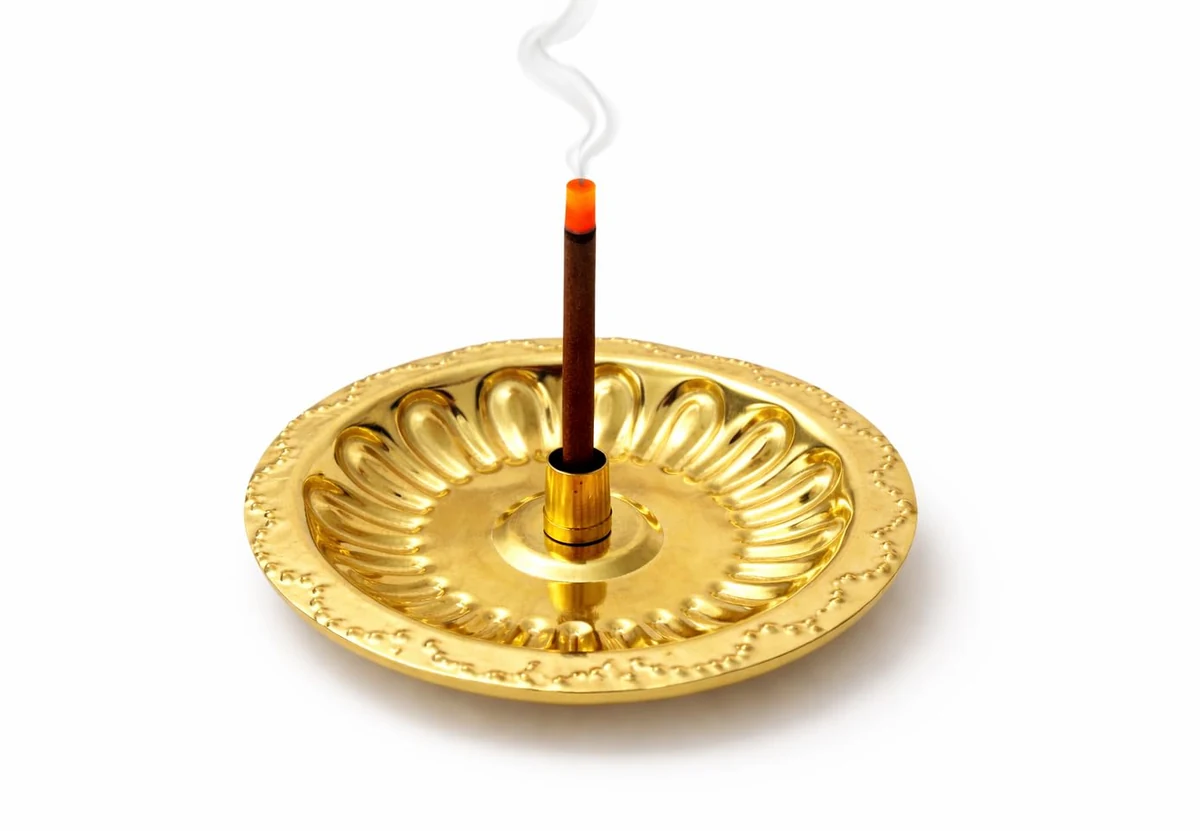
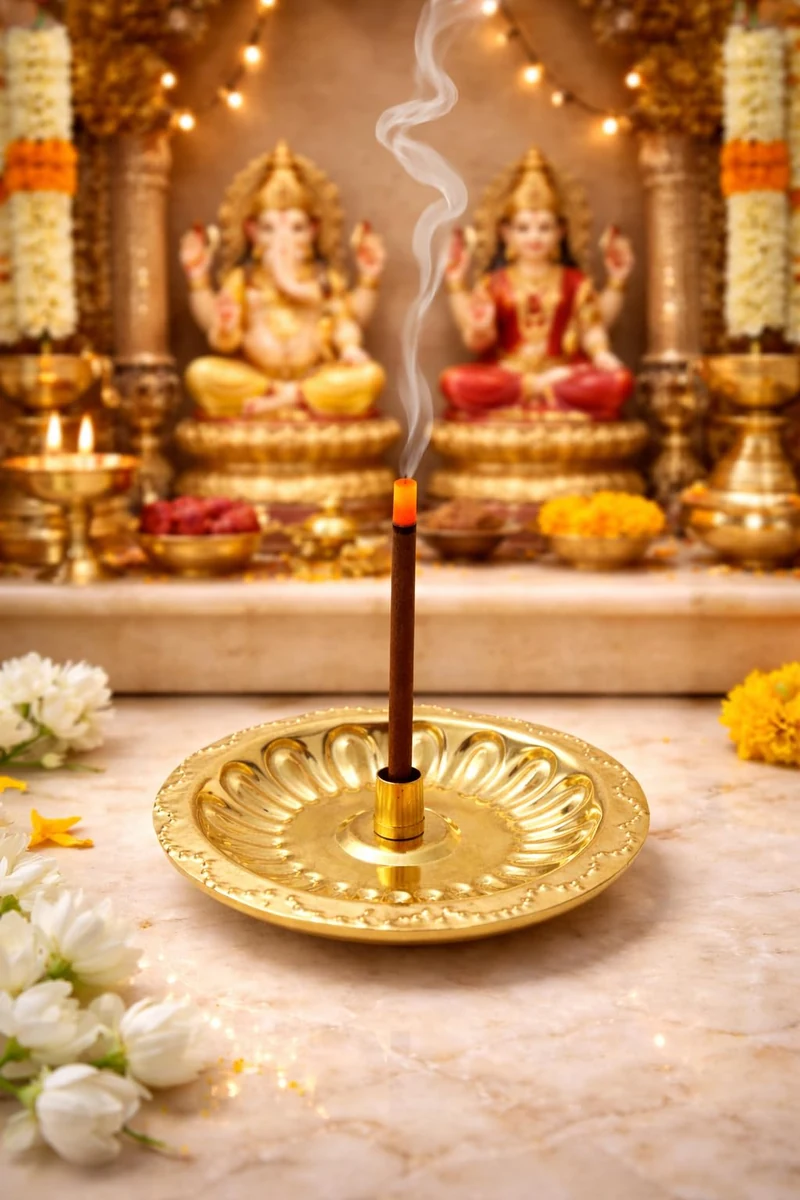
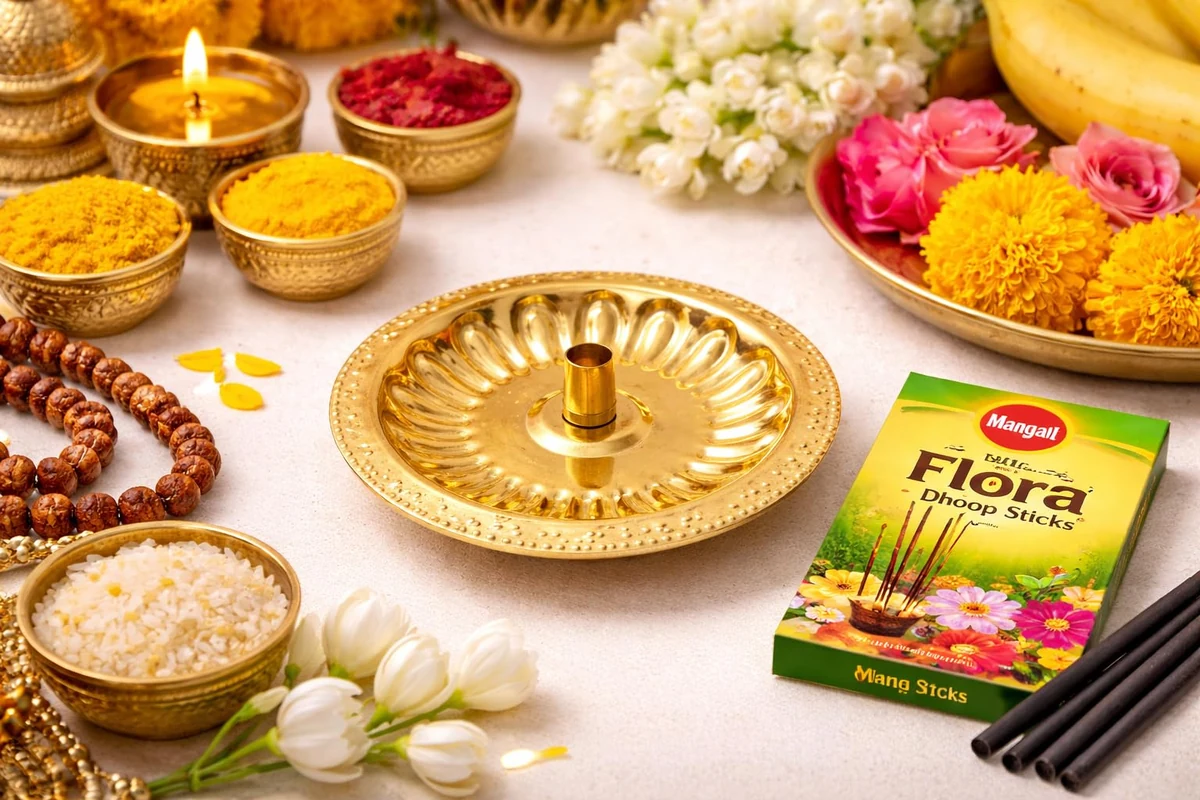
A flat brass dish eight centimetres across with a short tube in the middle. The dhoop batti stands in the tube and every bit of ash falls into the dish rather than onto the shelf.
- Diameter
- 8 cm
- Height
- 1.5 cm
- Weight
- 30 g
- Material
- Brass
About this dhoop stand
The whole argument for this object is contained in one observation: dhoop ash goes everywhere. A stick burning in a plain holder drops ash continuously, it is light enough to drift, and the residue is faintly greasy rather than dry, so it marks whatever it lands on. On a wooden mandir shelf that shows within weeks and does not wipe off cleanly.
A dish with a raised centre solves it completely. The stick stands in the middle, the ash falls outward onto the plate, and the plate is emptied when convenient. Eight centimetres is enough diameter to catch a full stick's worth without the ash reaching the edge, and at a centimetre and a half tall it takes almost no vertical space at all.
It is also a safety object rather than only a convenience one. A dhoop stick is burning material and the tip stays hot after it has gone out. A holder that keeps the stick upright and contained means the burning end is over metal rather than over fabric or wood, which is the difference between an ordinary morning and a scorch mark on a shelf.
At thirty grams this is light, which is right for a plate that gets picked up and emptied daily, but it does mean it slides. On a polished surface a light brass dish will move if a stick is pushed into it firmly, and it is worth having a hand on the plate while seating the dhoop rather than pressing down on the tube.
Brass is the right material here for a specific reason: it can be cleaned back completely. Dhoop residue bakes onto whatever it lands on, and on brass it comes off with lemon and salt every few months and leaves no trace. On aluminium or a painted stand it dulls the surface permanently, which is why cheap holders look ruined after a year and brass ones do not.
This is the cheapest thing in the shop and possibly the one that earns its price fastest. A shelf that does not need scrubbing, a surface that does not stain and a burning stick that is not standing on wood: three small problems solved for very little money. Not everything has to be significant to be worth owning.
What to look for before buying
Check the hole size against your dhoop. Dhoop batti come in noticeably different thicknesses, and a holder sized for a thin stick will not take a thick one. Look for the internal diameter in the listing, and if it is not given, compare the tube against the stick in the photographs. A tube that is too wide is a lesser problem, since the stick can be wedged, but too narrow makes the stand useless.
Make sure the plate is wide enough. Ash from a full length stick falls over a wider area than people expect, particularly if there is any air movement. Eight centimetres is adequate; anything much smaller becomes decorative rather than functional and you will still be wiping the shelf. If the stand sits near a fan or an open window, larger is better.
Look for a rolled or raised rim. A perfectly flat plate lets ash slide off when it is carried to be emptied, which defeats the point. A slight lip or a raised rim keeps it contained until the plate is over a bin. It is a detail that never appears in a listing description and is always visible in a side on photograph.
Keeping it, and where it sits
Empty it daily and wipe it with a dry cloth. Ash left sitting absorbs moisture from the air and becomes a paste that then bakes on next time a stick burns above it. Thirty seconds a day means the plate never reaches the state where it needs proper cleaning.
For burnt on residue, use lemon with salt or tamarind, applied by hand and given a few minutes to work before rinsing. Dhoop residue is partly resin and it does not respond to a dry cloth once it has set, but it comes away readily with an acid. Rinse thoroughly and dry the plate completely afterwards.
Never scrape it with a knife or steel wool. The marks go into the brass and then collect residue faster than the smooth surface did, so a scraped plate deteriorates from then on. Patience with lemon is slower on the day and far better over a year.
Keep it away from the edge of the shelf. A light plate carrying a burning stick is an object worth positioning carefully, and the back of the shelf is a better place for it than the front. If the mandir is somewhere people pass closely, a heavier stand is a more sensible purchase than this one.
None of this is required. What Maharaj Ji actually asks for is set out on the teachings page, the sayings he repeats most are on the quotes page, and the stotras are free to download as PDFs. If you are planning to visit Vrindavan, read how to meet Maharaj Ji first.
Also worth reading: common questions , and photo gallery.
Questions about buying this
Why use a dhoop stand with an ash catcher?
Dhoop ash is light and slightly greasy, so it drifts and marks whatever it lands on. A dish catches all of it and is emptied when convenient.
How big should the ash plate be?
Eight centimetres is enough for a full stick. Smaller plates are decorative rather than useful, and near a fan or window a wider plate is better.
Will the dhoop stick fit?
Check the internal diameter of the tube against the sticks you use. Thicknesses vary, and a tube that is too narrow makes the stand unusable.
How do I remove burnt on dhoop residue from brass?
Lemon with salt or tamarind, left for a few minutes and then rinsed and dried. Never scrape it, which marks the brass permanently.
Is a brass stand better than a cheaper one?
Brass can be cleaned back completely. Aluminium and painted holders dull permanently from dhoop residue, which is why they look ruined after a year.
Is burning dhoop necessary?
No. Smoke, flame and fragrance are all optional. What is asked for requires nothing to be lit and nothing to be bought.
Is this connected with Maharaj Ji or the ashram?
No. It is not supplied by, authorised by or endorsed by Maharaj Ji or Shri Hit Radha Keli Kunj. It is an ordinary devotional item sold by other people on Amazon, listed here because a devotee might want one.
Do you sell it?
No. The button on this page takes you to Amazon. Amazon takes the payment, ships the order and handles returns and warranty. We hold no stock, never see your payment details, and cannot change or cancel an order.
Is the price on this page current?
It is the price we last saw on Amazon, with the date beside it. Amazon changes prices whenever it likes, so treat the figure here as a guide and the price on the Amazon page as the real one.
Do you make money if I buy it?
Yes. As an Amazon Associate we earn from qualifying purchases. Your price is exactly the same whether you use our link or not; Amazon pays the commission out of its own margin, and that commission is what keeps this site free to read.
Do I need this to follow the teachings?
No. Maharaj Ji asks for the Radha naam and nothing else, with no initiation, no fee and no equipment. Anything on this page is convenience, never a requirement, and he is explicit about that in satsang.
Also for puja
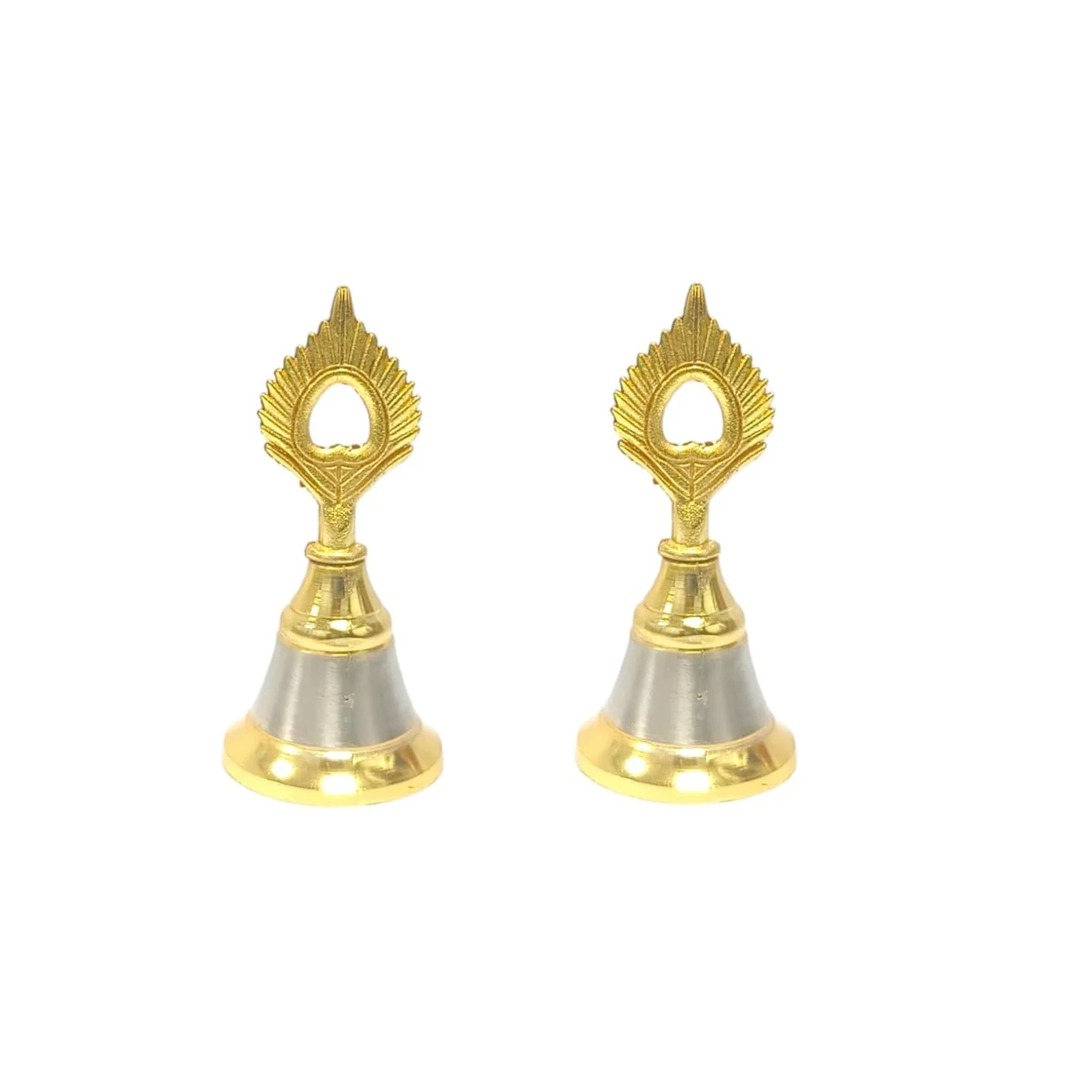
Brass puja bells, shankha chakra, set of two
पीतल की पूजा घंटी, शंख चक्र, दो का सेट
₹431
Two small brass ghanti with shankha and chakra handles, three inches each.
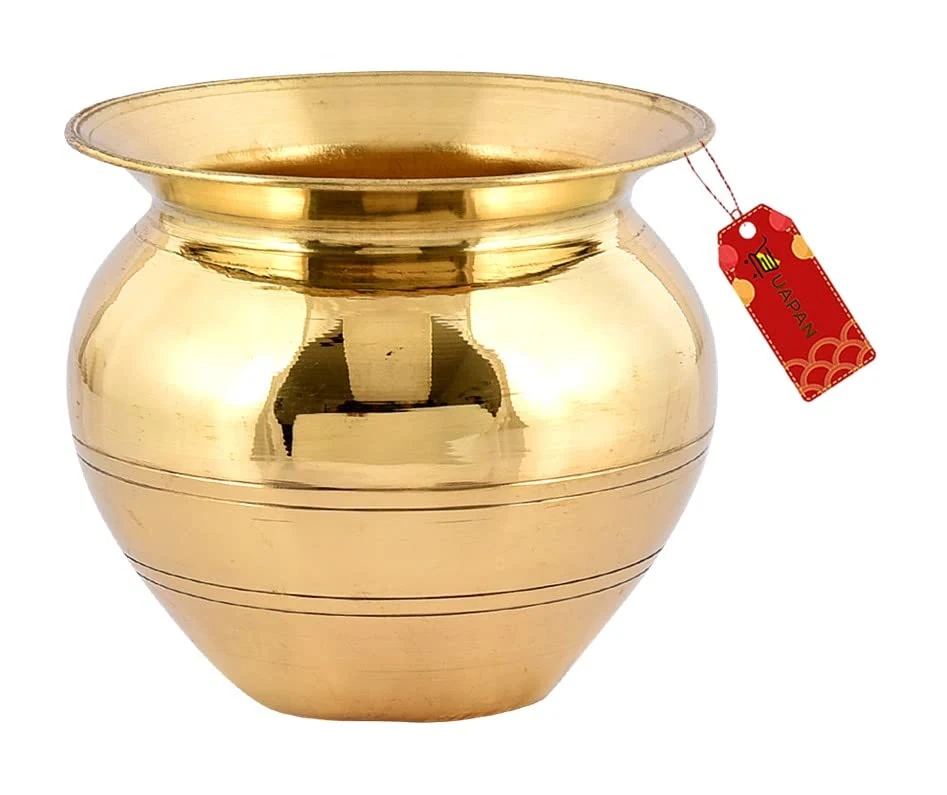
Brass puja kalash lota, 500 ml
पीतल का पूजा कलश लोटा, 500 मिली
₹322
A small brass water pot of half a litre, for abhishek and for setting a kalash.
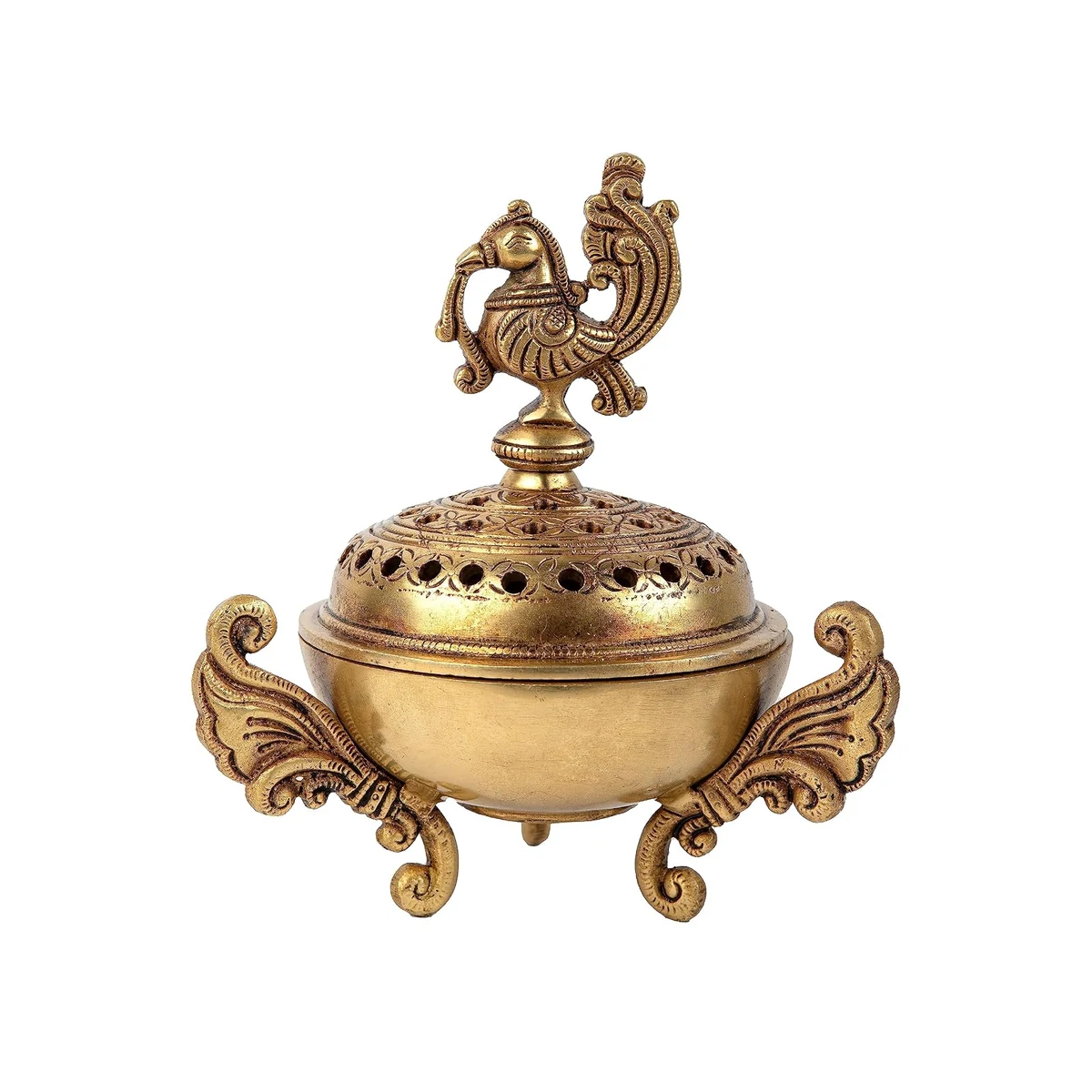
Brass peacock dhoop dani, 6 inch
पीतल की मोर धूपदानी, 6 इंच
₹3,011
A lidded brass burner with a peacock finial, six inches and a full kilo.