
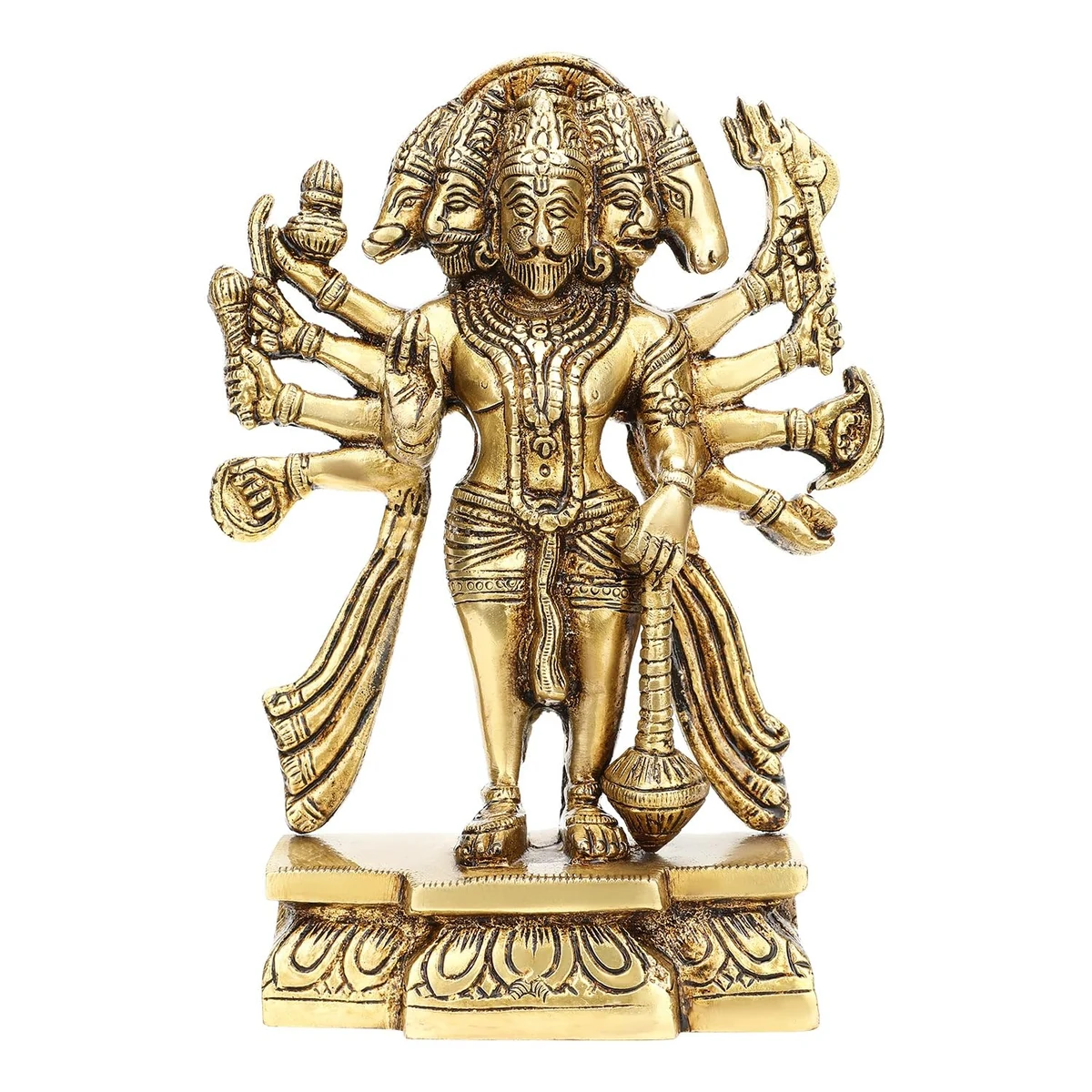
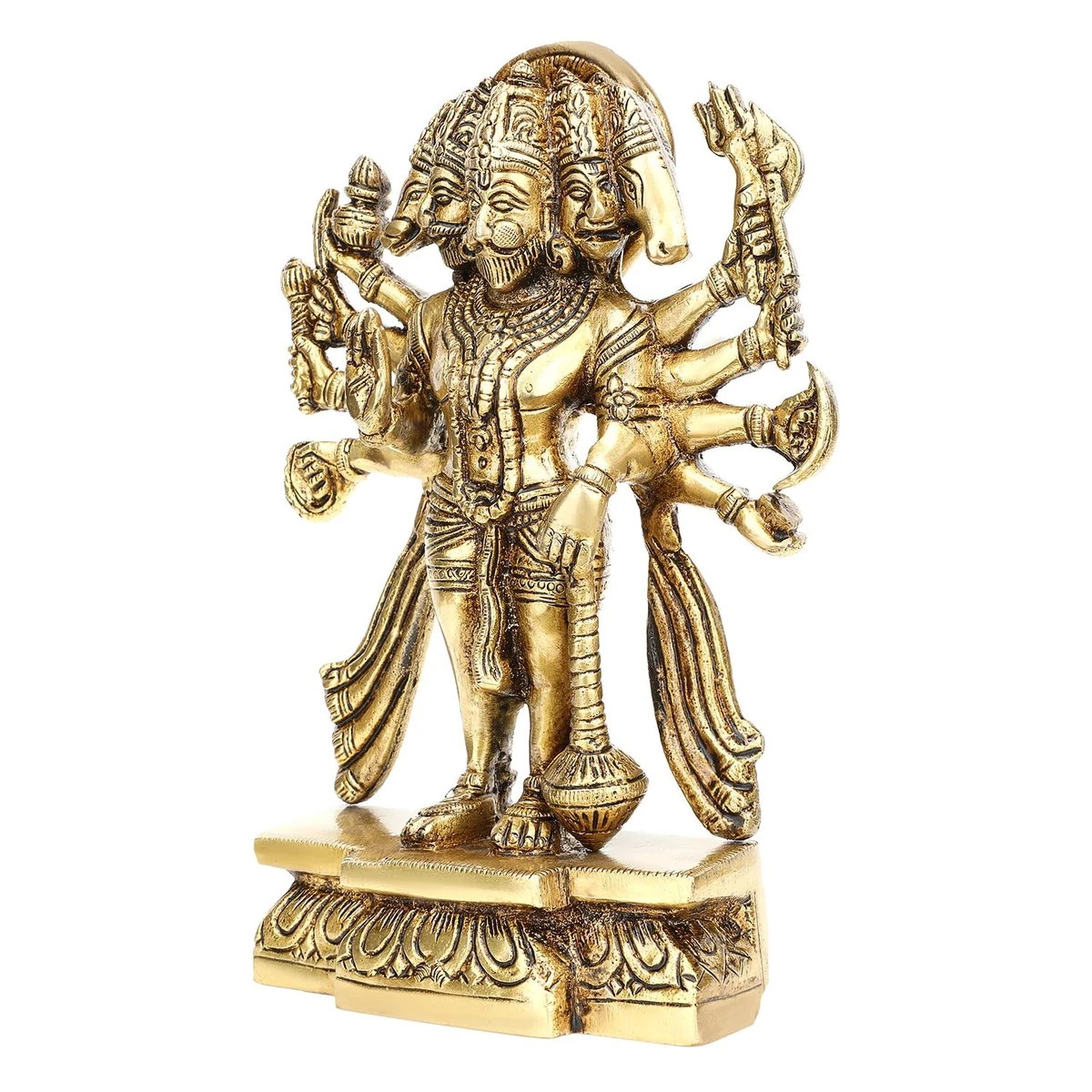
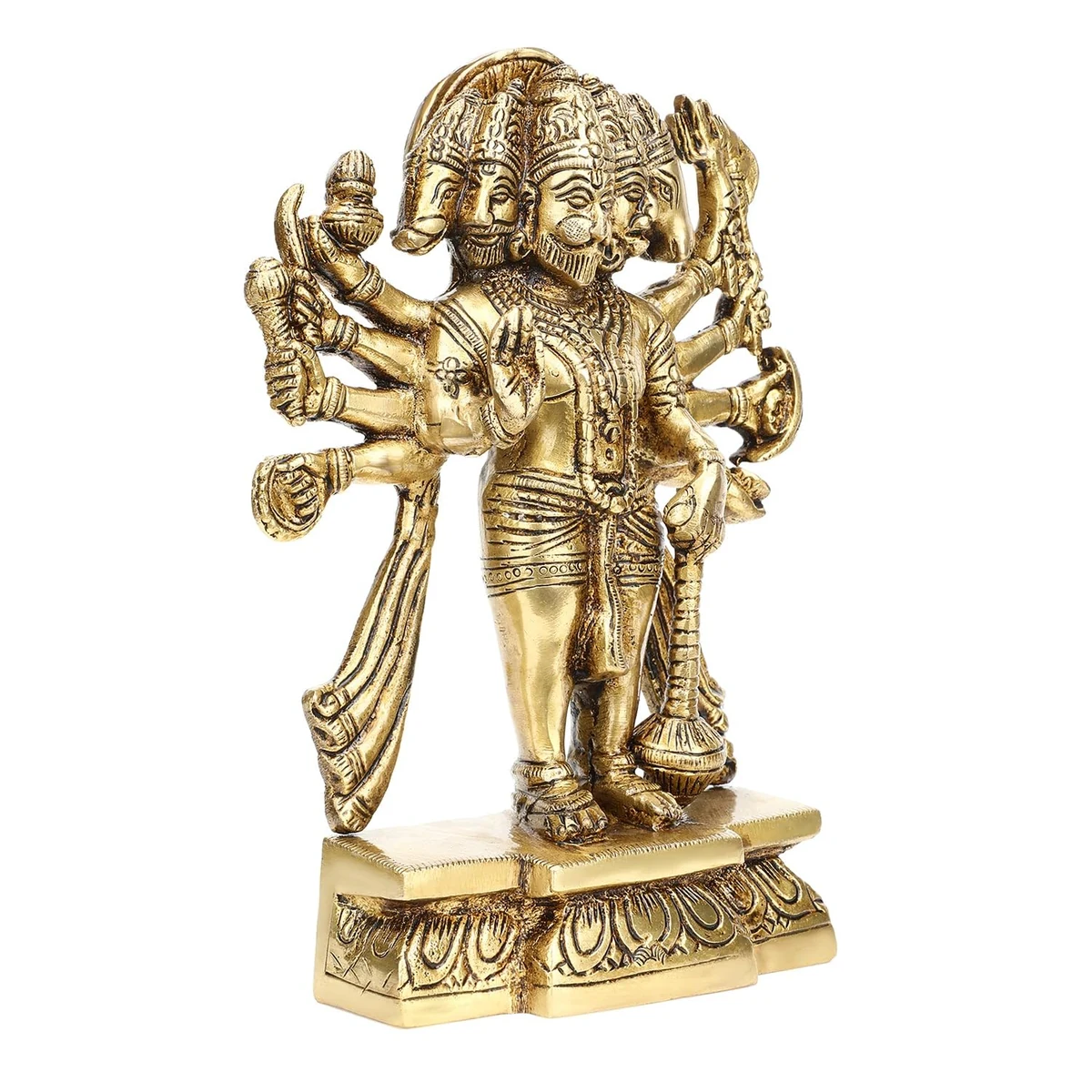
Standing Panchmukhi Hanuman, 7 inch brass
खड़े पंचमुखी हनुमान, 7 इंच पीतल
Seven inches of solid brass in the standing posture, arms out and weapons in hand. The standing form takes up more width than a seated murti and needs a deeper shelf than people expect.
- Height
- 17.5 cm, about 7 inches
- Width
- About 18.5 cm
- Material
- Solid brass
- Form
- Standing, five faced
About this hanuman murti
Seated and standing murtis of the same deity are not interchangeable on a shelf, and the difference catches people out. A seated figure is compact: its width is roughly its depth and it occupies a square of space. A standing figure with arms extended is wide and shallow, and at seven inches tall this one is about the same again across. If your mandir is a narrow niche, a standing murti of this size simply will not go in.
The standing form also reads differently. Seated images of Hanuman tend towards the devotional, hands folded or at the heart; standing images with weapons held out are the active, protective posture, which is the one usually chosen when the murti is meant to face a room or a doorway. Neither is more correct. They are chosen for what the household wants in front of it.
Solid brass at this size is a substantial object and should feel like one. The word solid in a listing is worth testing against the stated dimensions, because hollow cast pieces are common in the seven inch range where the saving is largest. A hollow figure will be listed without a weight far more often than not, and that omission is usually the answer.
On the form itself: five faces, with Hanuman looking forward and Narasimha, Garuda, Varaha and Hayagriva set around him and above. It comes from the episode of extinguishing five lamps burning in five directions at once, and the association with protection from every quarter follows from that directly rather than being attached to it later.
Hanuman sits squarely within Vaishnava practice as the image of service carried to completion, so keeping one in a Braj home is ordinary rather than notable. What is settled in Vrindavan households is how a mandir is laid out: Shri Radha and Shri Krishna in the middle, and other murtis, whatever their size, standing beside them.
If there is a recurring lesson across this whole category it is that the shelf decides more than the shopper does. A standing murti in a narrow niche, a heavy one on a thin board, a wide one where there is no depth: these are the problems people actually have, and they are all solved with a tape measure before ordering rather than with a return afterwards.
What to look for before buying
Measure width, not just height. Standing figures with extended arms are nearly as wide as they are tall, and mandir listings almost always quote height alone. This one is about 18.5 cm across against 17.5 cm tall. Measure the internal width of the niche or shelf, allow clearance at both sides, and check the depth too. A murti wedged in tight cannot be lifted out to clean behind.
Ask for the weight if it is not given. Solid brass at seven inches should be well over a kilogram. Listings that describe a piece as solid but never state a weight are worth questioning, because weight is the first specification a seller volunteers when it favours them. A hollow figure is not necessarily bad, but it should be priced as one.
Look at the outstretched parts. On a standing murti the arms, the weapons and anything projecting are cast separately or thinly, and they are where damage occurs in transit and in handling. Check the photographs for straightness and for any visible join, and when it arrives, check those points before anything else. A bent brass arm can rarely be straightened without spoiling the finish around it.
Keeping it, and where it sits
A dry cotton cloth once a week is the whole routine for brass in a dry room. Standing figures collect more dust than seated ones simply because they present more surface and more undercuts, so a soft brush for the detail around the faces and the weapons is worth keeping alongside the cloth.
If the murti is bathed daily, dry it properly afterwards, and pay attention to where water runs down and collects at the base. Standing figures shed water off the body and hold it at the feet, which is exactly where green deposits appear first on a piece that is wiped carelessly.
Go easy with polish. Bright brass can be polished and will need it occasionally, but every polishing takes a little metal, and on a detailed casting that means the sharpest edges soften over years. Clean it when it looks dull rather than on a schedule, and use lemon and salt or tamarind rather than a commercial abrasive paste.
Support it at the body and base together when lifting, never at an arm. This is the single most important handling rule for any standing murti, and it is the one that gets forgotten when a shelf is being cleaned in a hurry. Brass bends before it breaks, which means the damage is permanent but not dramatic enough to be noticed at the time.
None of this is required. What Maharaj Ji actually asks for is set out on the teachings page, the sayings he repeats most are on the quotes page, and the stotras are free to download as PDFs. If you are planning to visit Vrindavan, read how to meet Maharaj Ji first.
Also worth reading: the teaching in his words , and darshan timings.
Questions about buying this
Is a standing or seated murti better?
Neither. Standing forms are the active, protective posture and need a wider shelf; seated forms are compact and devotional. Choose by the space and by what you want in front of you.
How much space does this murti need?
It is roughly as wide as it is tall, about 18.5 cm across and 17.5 cm high, so measure the width of your niche rather than only the height.
How do I know if brass is solid or hollow?
Weight against size. Solid brass at seven inches is well over a kilogram. Listings that avoid stating weight are usually hollow.
What are the five faces?
Hanuman facing forward with Narasimha, Garuda, Varaha and Hayagriva around and above, from the story of five lamps extinguished at once.
How often should brass be polished?
Only when it looks dull, not on a schedule. Every polish removes a little metal and softens fine detail over the years.
Is any of this needed to follow the teaching?
No. What is asked for is free and universally available, and it does not begin with a purchase of any kind.
Is this connected with Maharaj Ji or the ashram?
No. It is not supplied by, authorised by or endorsed by Maharaj Ji or Shri Hit Radha Keli Kunj. It is an ordinary devotional item sold by other people on Amazon, listed here because a devotee might want one.
Do you sell it?
No. The button on this page takes you to Amazon. Amazon takes the payment, ships the order and handles returns and warranty. We hold no stock, never see your payment details, and cannot change or cancel an order.
Is the price on this page current?
It is the price we last saw on Amazon, with the date beside it. Amazon changes prices whenever it likes, so treat the figure here as a guide and the price on the Amazon page as the real one.
Do you make money if I buy it?
Yes. As an Amazon Associate we earn from qualifying purchases. Your price is exactly the same whether you use our link or not; Amazon pays the commission out of its own margin, and that commission is what keeps this site free to read.
Do I need this to follow the teachings?
No. Maharaj Ji asks for the Radha naam and nothing else, with no initiation, no fee and no equipment. Anything on this page is convenience, never a requirement, and he is explicit about that in satsang.
Also for the home mandir
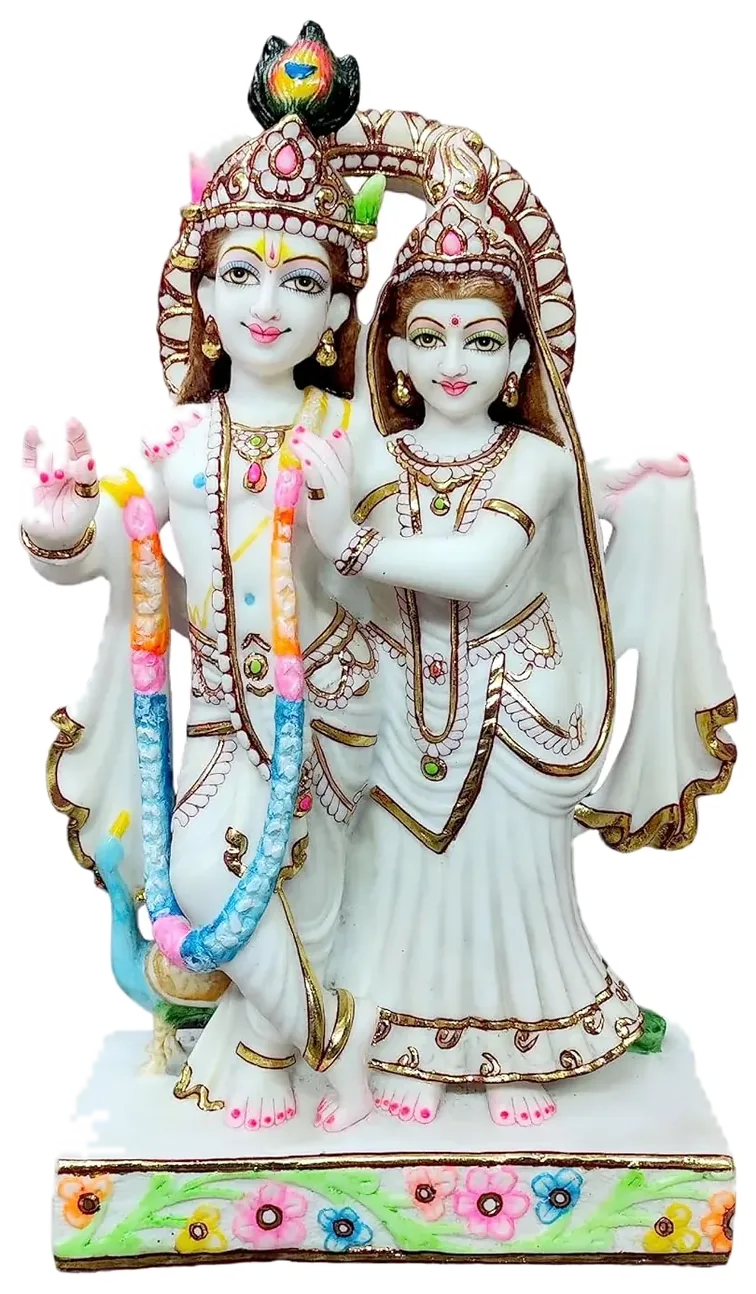
Radha Krishna marble statue, 15 inch
राधा कृष्ण संगमरमर मूर्ति, 15 इंच
₹8,000
A hand carved white marble Radha Krishna, fifteen inches, for a home shrine.
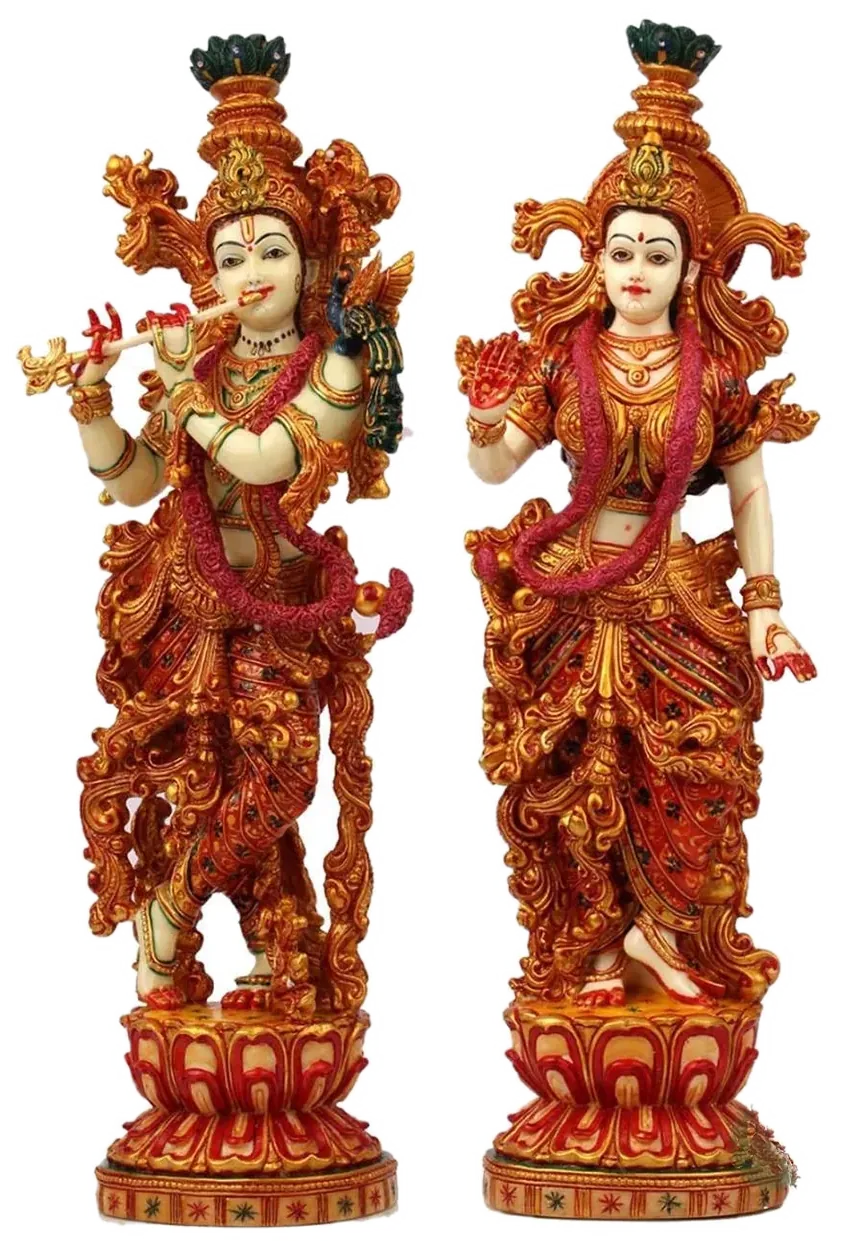
Radha Krishna statue, 15 inch
राधा कृष्ण मूर्ति, 15 इंच
₹14,999
A tall cold cast statue with marble dust and hand painted detail.
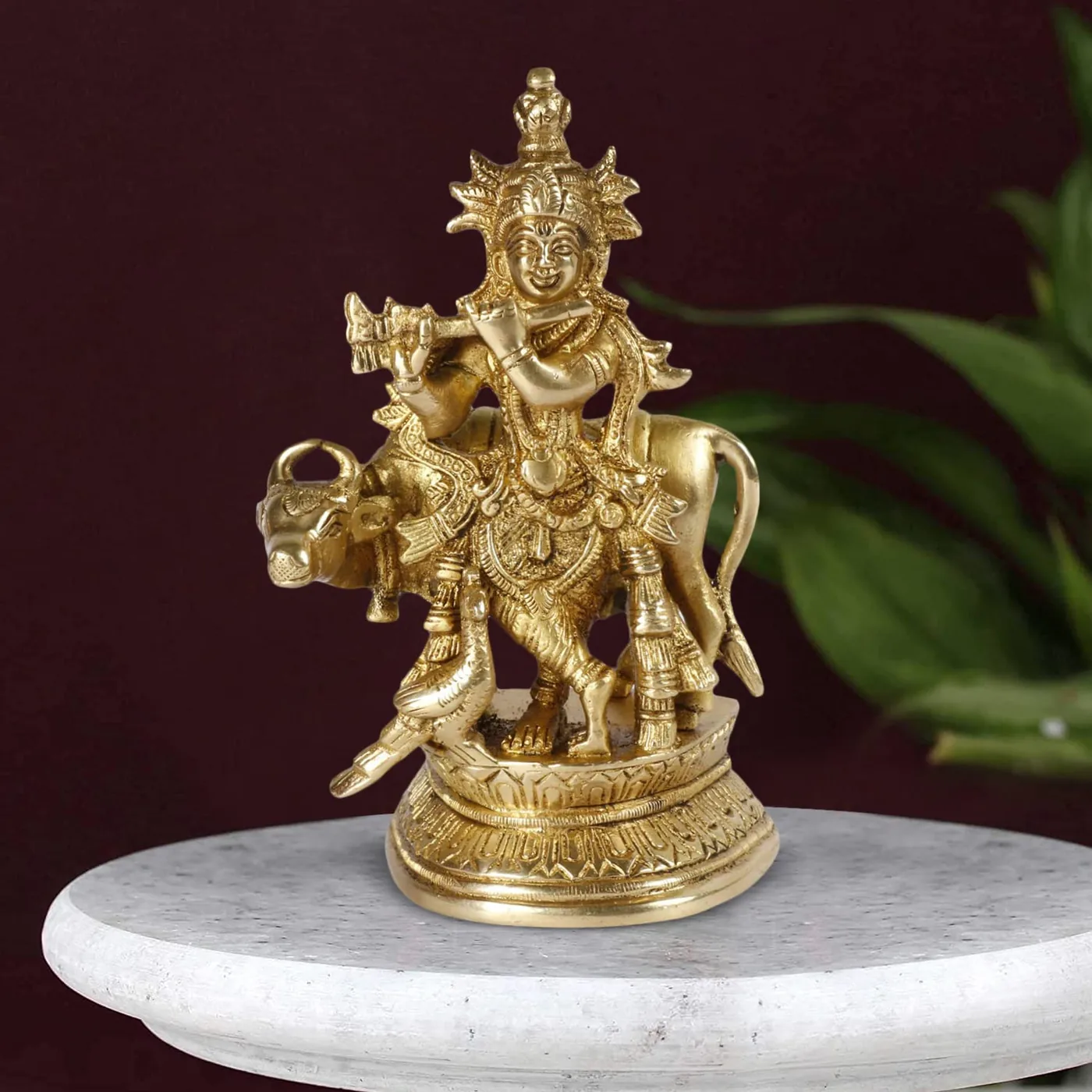
Krishna with cow, brass
गाय के साथ कृष्ण, पीतल
₹2,626
Solid brass, Krishna at the flute with a cow beside him, five and a half inches.