
Krishna at the flute, brass
बाँसुरी बजाते कृष्ण, पीतल
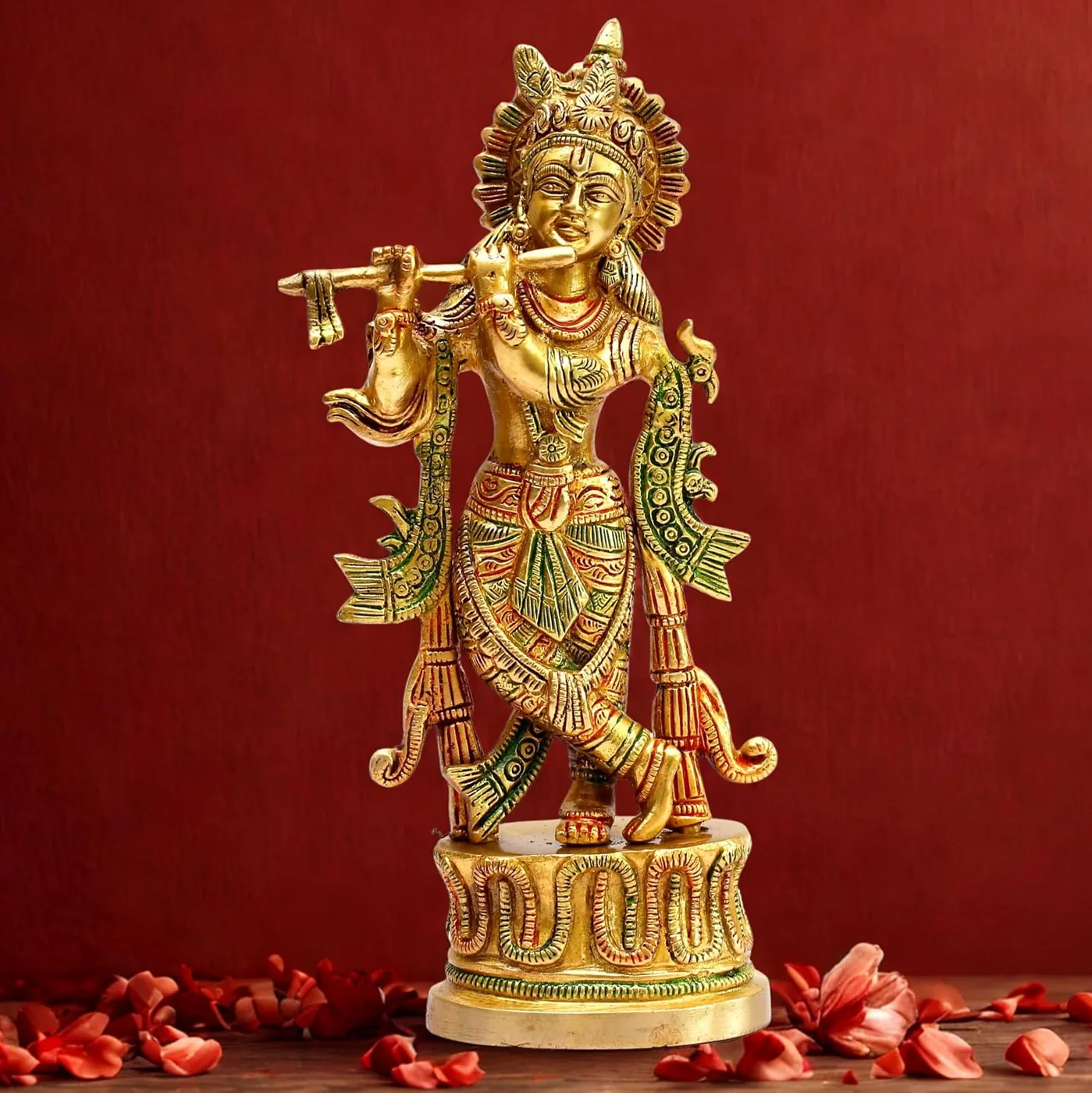
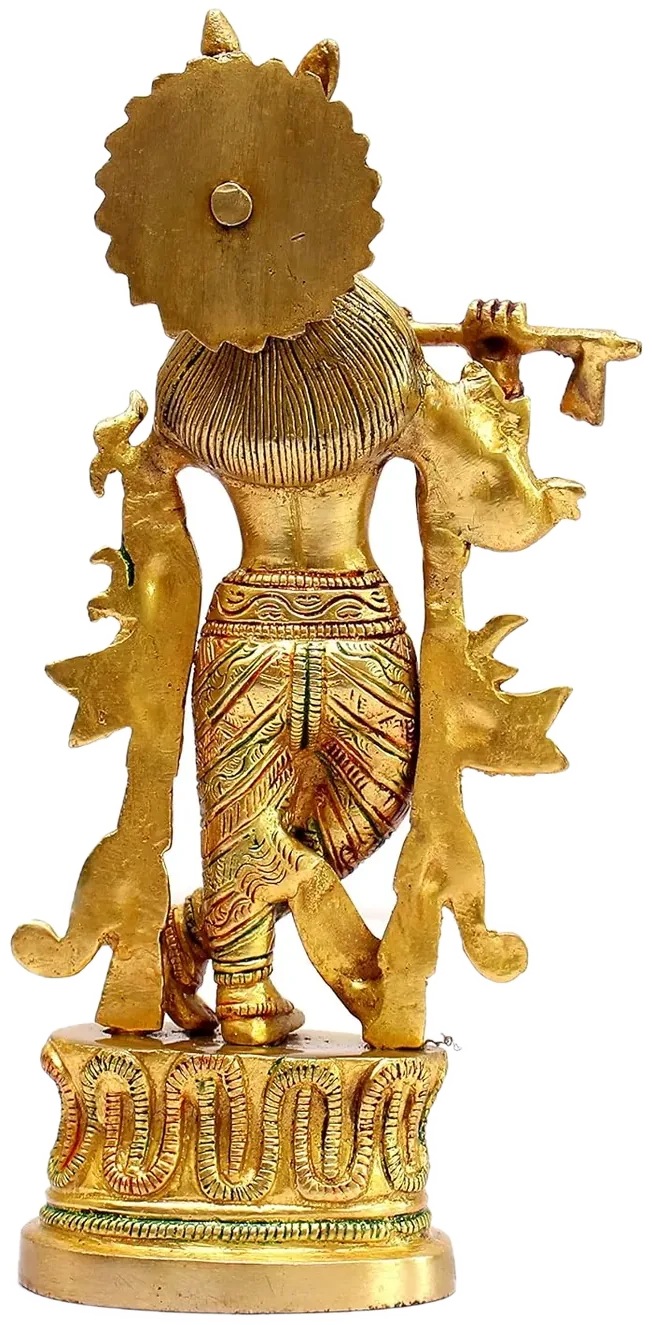
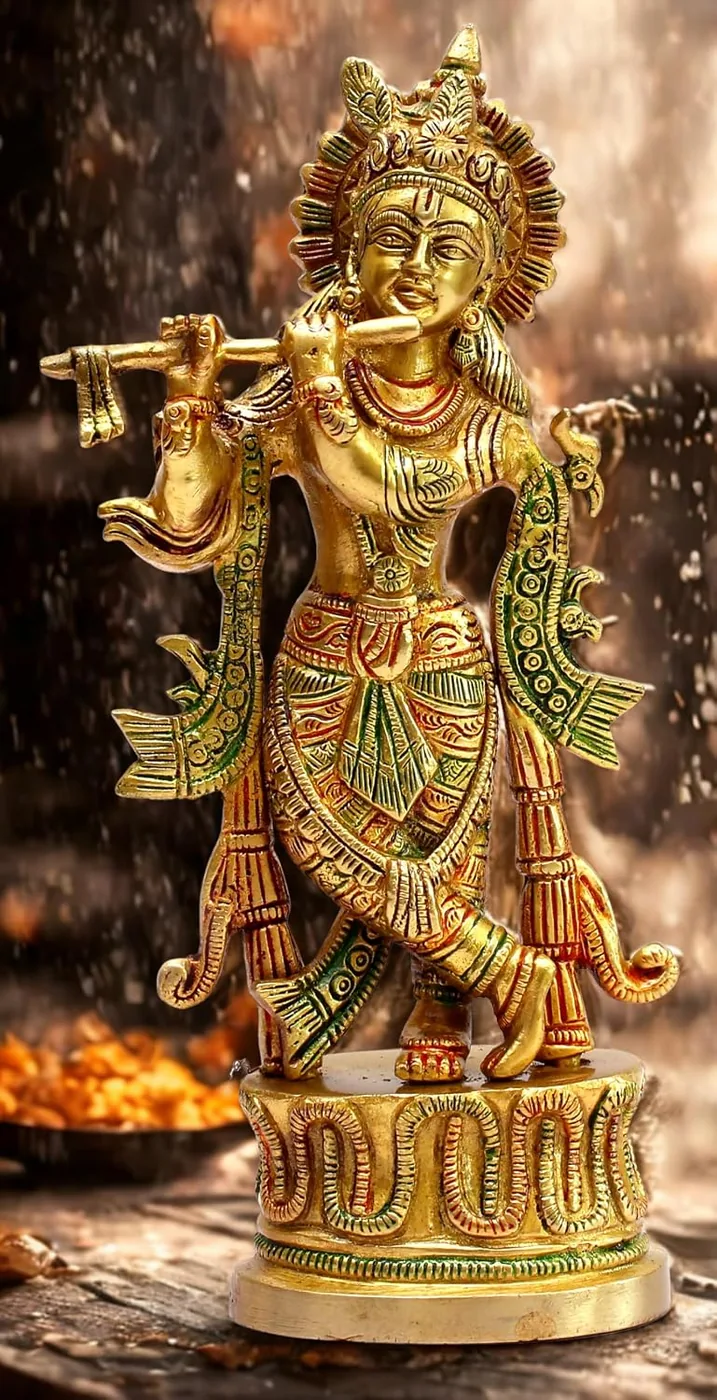
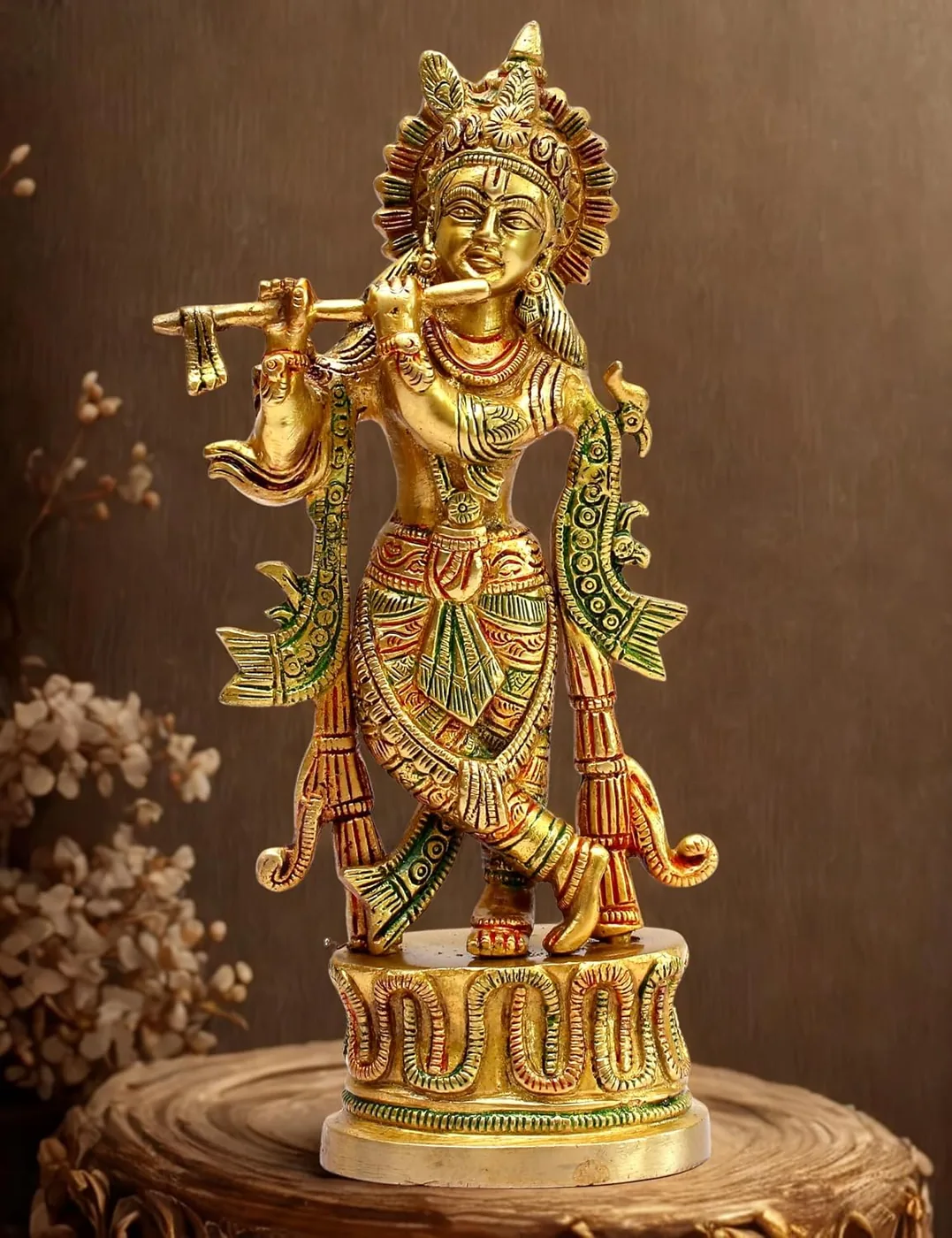
Krishna in the standing pose at the flute, cast in pure brass at twenty two centimetres and finished with coloured enamel on the cloth and ornament.
- Height
- 22.5 cm
- Material
- Brass
- Finish
- Coloured enamel detail
- Base
- 10.5 × 5 cm
About this idol
The tribhanga pose, bent at neck, waist and knee, with the flute at the lips. It is the oldest way of showing him and the reason is in the stories rather than in sculpture: the flute is what called the gopis out of their houses, and Shri Radha first among them, so an image of Krishna playing is an image of that call.
This one is pure brass with coloured enamel worked into the cloth and ornament rather than painted over it, which is why the colour sits in the recesses and the raised surfaces stay metal. Enamel of that kind does not lift; paint applied on top of brass does, usually starting at the high points where it gets handled.
At twenty two centimetres it is taller than a shelf murti and shorter than a floor one, which makes it awkward in a crowded mandir and very good on its own. Keep it out of running water. Brass takes abhishek, but standing damp is what turns the enamel edges green.
Enamelled brass of this kind sits between two traditions. The casting is the old Braj and Rajasthan workshop method, unchanged for generations, while the coloured work belongs to the Jaipur meenakari trade. The combination became common in home murtis over the last few decades because it gives a small figure the presence of a much larger plain one.
Whether that suits a home mandir is a matter of taste rather than correctness. Plain brass darkens into something quiet over the years; an enamelled piece stays bright and holds the eye. Households that already keep several murtis usually want one of each rather than two of the same.
What to look for before buying
Enamel worked in, not painted on. Colour on good brass sits in the recesses of the casting while the raised surfaces stay bare metal. Paint applied over the top covers both, and it lifts first at the high points where the murti gets handled. In photographs, look at whether the metal still shows on the edges of the ornament; if everything is coloured, it was painted.
Weight for the height. Twenty two and a half centimetres of solid brass is heavy, and the listing should say so. A tall brass figure that weighs little is cast thin, and thin castings at this height are prone to bending at the ankles, which is the narrowest point of a standing Krishna and the first place a fall does damage.
The pose and the flute. Tribhanga bends at neck, waist and knee, and a good casting keeps all three curves clearly separate. Where the mould is worn from overuse the bends flatten and the figure starts to look upright and stiff. The flute is the other tell: it should stand clear of the face rather than merging into it.
Keeping it, and where it sits
Keep it out of standing water. Brass takes abhishek well, which is most of why households choose it, but enamel worked into a casting has edges, and water that sits at those edges over months turns them green. Dry the piece after bathing it rather than leaving it on a wet tray.
Do not polish the enamelled areas. Metal polish will brighten bare brass, but on a coloured casting it dulls the enamel and eventually takes it off the raised edges. Wipe the coloured parts with a dry cloth and confine any polish to the plain metal, if you use it at all.
At twenty two centimetres it is awkward in a crowded mandir and very good on its own. It suits a shelf where nothing stands beside it, or a low table with a wall behind. Standing Krishna is a tall narrow shape and it needs vertical room more than it needs width.
None of it is asked for. What comes from the asan is the Radha naam, repeated as needing no image, no ritual and nothing bought. A murti gives a household somewhere to gather in the morning, and the teaching would be complete without one.
Where it stands is worth more thought than usual because of the height. Twenty two centimetres is tall enough that the face sits above eye level on a high shelf and below it on a low table, and a standing Krishna reads quite differently from the two. Most households settle on a shelf where the face is roughly level with a seated person, which is also the height at which the flute stops being a silhouette and becomes something you can see clear of the chin.
None of this is required. What Maharaj Ji actually asks for is set out on the teachings page, the sayings he repeats most are on the quotes page, and the stotras are free to download as PDFs. If you are planning to visit Vrindavan, read how to meet Maharaj Ji first.
Questions about buying this
What does the tribhanga pose mean?
Bent at neck, waist and knee: the oldest way of showing Krishna. It is the pose of somebody standing at ease and playing, rather than a formal or royal stance.
Why is the flute significant?
In the Braj stories the flute is what called the gopis out of their houses, and Shri Radha first among them. An image of Krishna playing is an image of that call.
Will the colour come off?
Enamel worked into the casting does not lift. Paint applied over the top does, usually first at the raised points where the murti is handled.
Can I bathe it?
Yes, and dry it afterwards. Water left standing at the edges of enamel work turns them green over months.
How much space does it need?
About twenty three centimetres of height and a base of ten by five. It is a tall narrow piece and wants vertical clearance rather than width.
At what height should it stand?
Roughly at the eye level of somebody seated. Higher and the face turns away from you; lower and the flute reads as a silhouette rather than standing clear of the chin.
Is this connected with Maharaj Ji or the ashram?
No. It is not supplied by, authorised by or endorsed by Maharaj Ji or Shri Hit Radha Keli Kunj. It is an ordinary devotional item sold by other people on Amazon, listed here because a devotee might want one.
Do you sell it?
No. The button on this page takes you to Amazon. Amazon takes the payment, ships the order and handles returns and warranty. We hold no stock, never see your payment details, and cannot change or cancel an order.
Is the price on this page current?
It is the price we last saw on Amazon, with the date beside it. Amazon changes prices whenever it likes, so treat the figure here as a guide and the price on the Amazon page as the real one.
Do you make money if I buy it?
Yes. As an Amazon Associate we earn from qualifying purchases. Your price is exactly the same whether you use our link or not; Amazon pays the commission out of its own margin, and that commission is what keeps this site free to read.
Do I need this to follow the teachings?
No. Maharaj Ji asks for the Radha naam and nothing else, with no initiation, no fee and no equipment. Anything on this page is convenience, never a requirement, and he is explicit about that in satsang.
Also for the home mandir
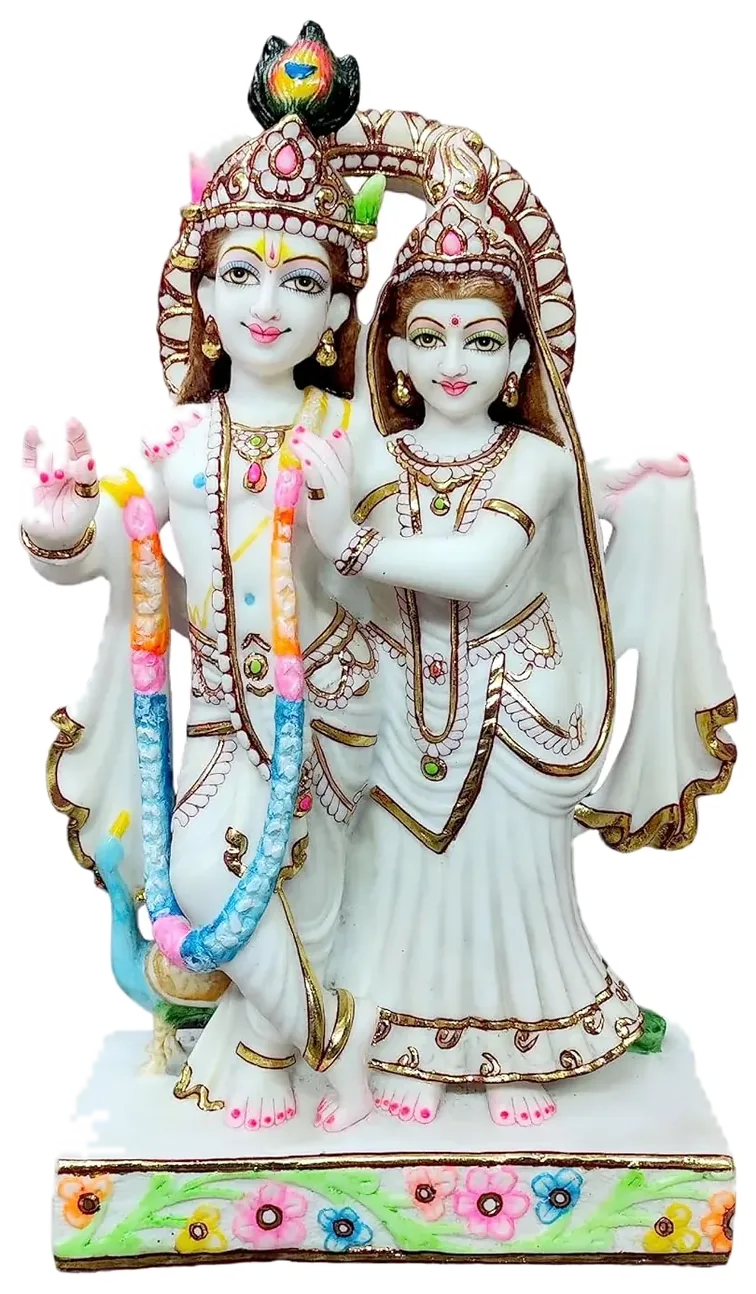
Radha Krishna marble statue, 15 inch
राधा कृष्ण संगमरमर मूर्ति, 15 इंच
₹8,000
A hand carved white marble Radha Krishna, fifteen inches, for a home shrine.
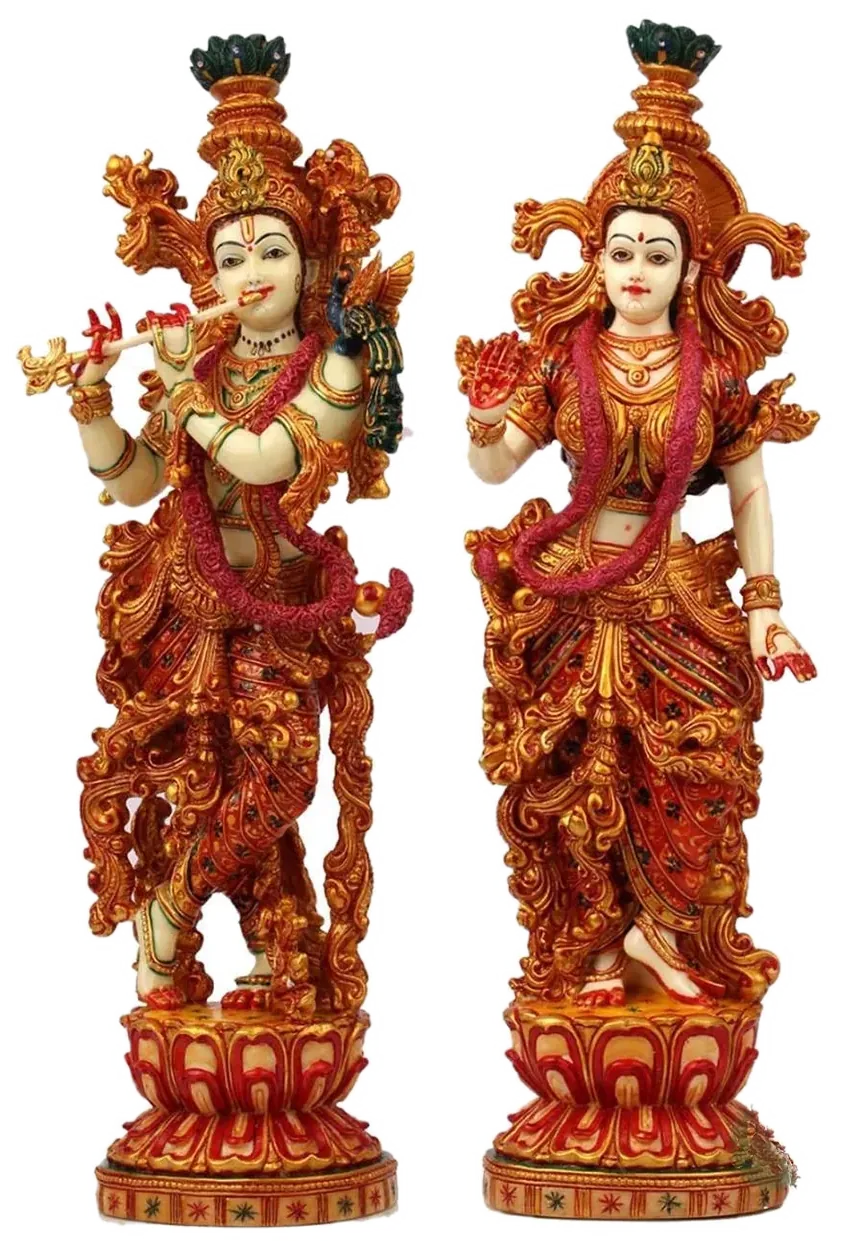
Radha Krishna statue, 15 inch
राधा कृष्ण मूर्ति, 15 इंच
₹14,999
A tall cold cast statue with marble dust and hand painted detail.
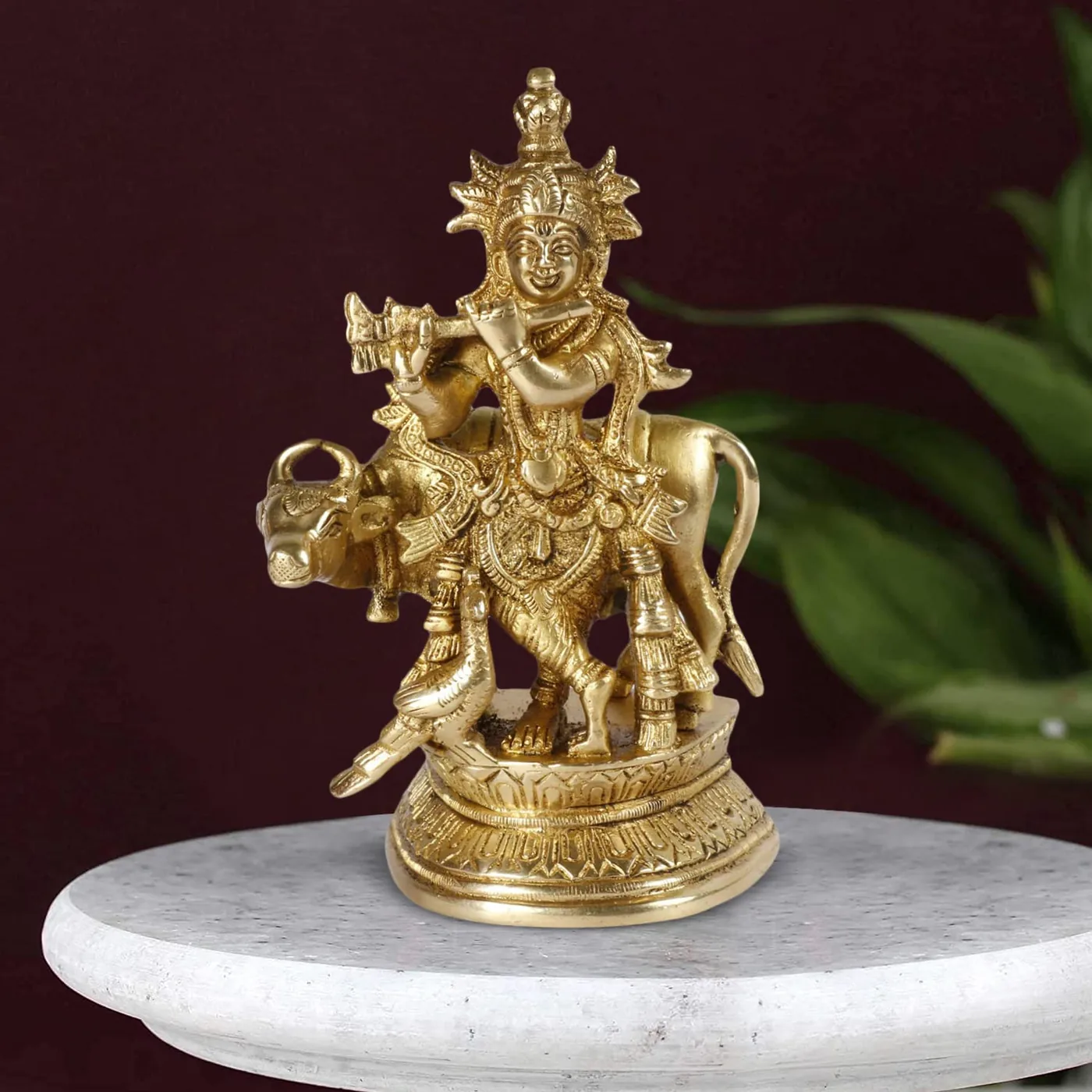
Krishna with cow, brass
गाय के साथ कृष्ण, पीतल
₹2,626
Solid brass, Krishna at the flute with a cow beside him, five and a half inches.