
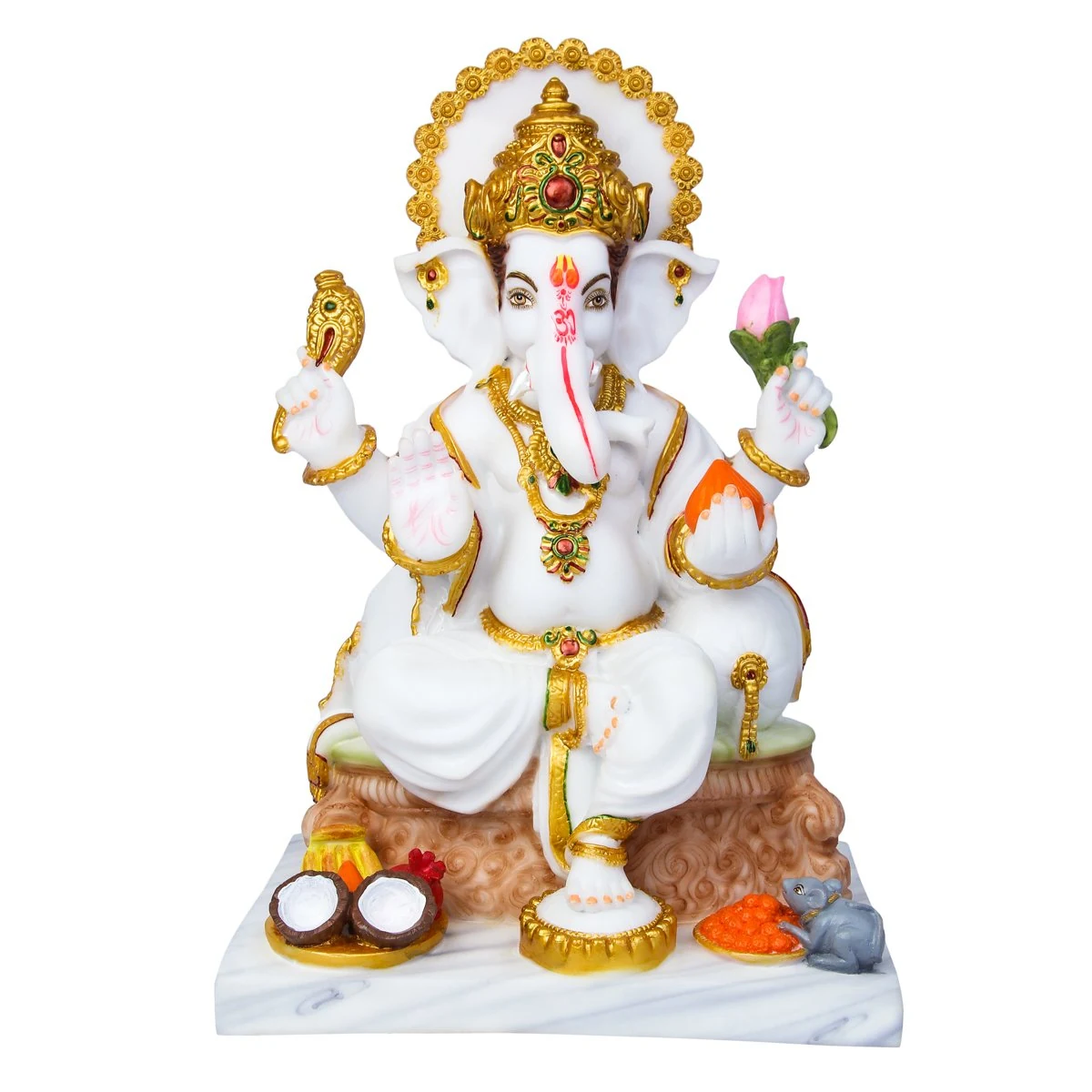
Marble Ganesh idol, 12 inch
संगमरमर गणेश मूर्ति, 12 इंच
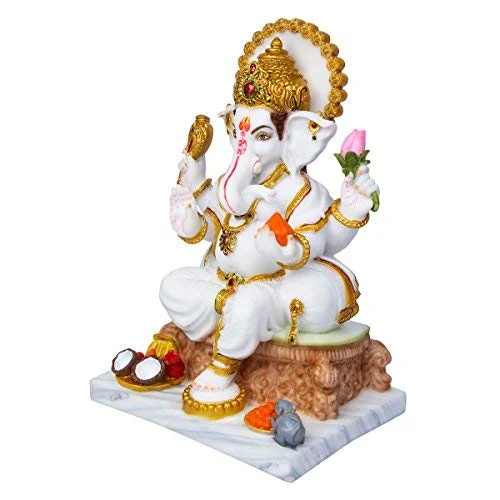
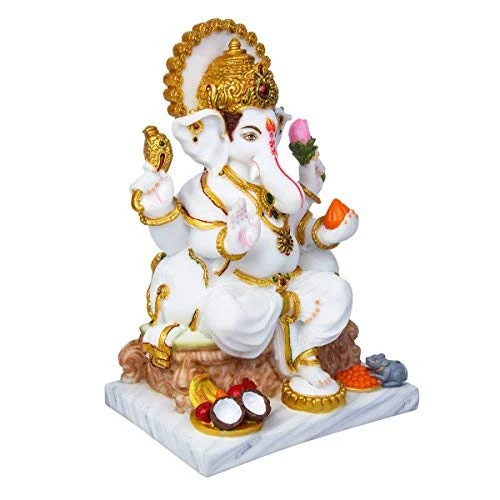
A full sized marble Ganesh, about thirteen inches to the top and a kilo and a half on the shelf, painted white and gold. This is a murti meant to be the centre of a mandir rather than a piece on a desk.
- Height
- About 13.5 inches
- Weight
- About 1.5 kg
- Material
- Marble, painted
- Base
- 9 by 7 inches
About this ganesh murti
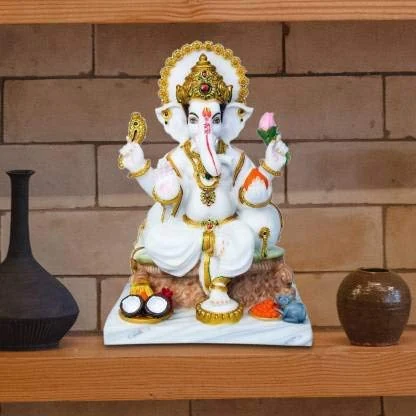
Size is the decision people get wrong most often when buying a murti, and it is the one that cannot be undone. Thirteen inches is a substantial figure: on a shelf it dominates, in a proper mandir cabinet it looks right, and on a crowded table it looks like furniture that has arrived in the wrong room. Before ordering anything this size, measure the space, allow a hand's width of clear air around the murti, and check the height against the shelf above.
The traditional guidance, in households that follow it, is that the murti in a home should not be larger than about a span of the hand, roughly nine to twelve inches, with the larger sizes reserved for temples. That is custom rather than rule, and it exists for a practical reason as much as a religious one: a murti you can lift with one hand can be bathed, dressed and moved for cleaning, and a heavy one becomes a fixture that gets dusted rather than served.
A kilo and a half is at the upper edge of comfortable handling. It can be lifted, but not casually, and the base needs a surface that will take a point load without the shelf bowing over a year. Check what the mandir shelf is made from before putting this on it; thin MDF at a span will sag, and a sagging shelf under a marble murti is how they end up on the floor.
The paint is the second thing to think about. This one is finished in white with gold detail, which is how most marble murtis are sold in India now, and it is a good deal more forgiving of a mixed room than plain white stone. It is also the part that ages: paint on marble can chip at edges, and gold detail dulls under repeated wiping in a way that plain polished stone does not.
Ganesh occupies an unusual position among the deities: he is called on first, before any undertaking, in Shaiva, Shakta and Vaishnava houses alike. A Ganesh murti in a Braj home is therefore nothing remarkable. What would be out of keeping is Ganesh at the focus of the shelf, since in households around Vrindavan that position is held by the divine pair, and everything else is arranged outward from them.
A thing worth weighing before spending at this scale. A murti this size becomes a fixture: too heavy to bathe casually, too large to move, too prominent to ignore. Households that keep a big one often find the daily routine quietly migrating to a small portable murti beside it, which is a hint about what a home actually uses. Buy the large one for what it does to a room, and keep something smaller if you want an object you will handle every morning.
What to look for before buying
Measure the shelf before the murti. A thirteen inch figure needs about sixteen inches of clear height to look right and to let you reach in to clean behind it. Measure the internal height of the mandir, not the outside, and check the depth too: a nine inch base needs more than nine inches of shelf or it will overhang at the back where you cannot see it. This is the single most common reason a murti gets returned.
Ask whether it is marble or marble dust. Real marble is cut from stone and has visible grain and slight colour variation through the body. Marble dust is stone powder bound in resin and cast in a mould, which is lighter, cheaper and perfectly uniform. Both are sold as marble in listings. At a kilo and a half for thirteen inches this is on the light side for solid stone, so it is worth asking the seller directly rather than assuming.
Look closely at the painted detail. On a painted murti the quality is in the face and the fingers, not the body. Zoom into the photographs and check that the eyes are even, that the gold has not run over its edges, and that the small details on the crown are crisp rather than blobbed. Painting is hand work, it varies piece to piece, and the difference between a careful piece and a rushed one is entirely in those few square inches.
Keeping it, and where it sits
Dust it dry, with a soft brush rather than a cloth. A cloth skips over carved detail and pushes dust deeper into the undercuts around the crown and the fingers; a soft brush, the kind sold for painting or for cleaning camera lenses, lifts it out. Doing this weekly means the murti never needs a proper wash, which is the ideal state for anything painted.
When it does need washing, use cool water and nothing else. No soap, no detergent, no scouring pad and nothing with even mild abrasive in it: those dull the polish on the stone and lift paint from the edges where it is thinnest. Wash gently, do not scrub, and dry it immediately with a soft cloth rather than leaving it to air dry, which leaves water marks on marble.
Keep it out of direct sunlight, and away from a window where sun falls on it for hours. Paint fades, and the gold detail is the first thing to go, turning a dull greenish colour that cannot be brought back. An interior shelf is better for the murti than a bright one, whatever it does for the photograph.
Lift it with two hands under the base, never by the crown, the trunk or an arm. Those are the thin sections and they are where marble breaks, usually not while you are holding it but a week later when a hairline crack you did not notice finally opens. If it must be moved often, keep a folded cloth under it so it slides rather than being picked up each time.
None of this is required. What Maharaj Ji actually asks for is set out on the teachings page, the sayings he repeats most are on the quotes page, and the stotras are free to download as PDFs. If you are planning to visit Vrindavan, read how to meet Maharaj Ji first.
Also worth reading: the ashram at Vrindavan , and questions devotees ask.
Questions about buying this
What size murti is right for a home mandir?
Traditionally around nine to twelve inches at most, on the principle that a murti at home should be one a person can handle. Larger sizes are for temples. It is custom rather than a rule, but it is practical custom.
How heavy is a 12 inch marble Ganesh?
This one is about a kilo and a half. Solid stone of that size is usually heavier, so check with the seller whether it is cut marble or cast marble dust.
Can a painted marble murti be washed?
Gently, in cool water, with no soap and no scrubbing. Dry it straight away with a soft cloth. Most of the time dry dusting with a brush is enough and is better for the paint.
Will the gold paint fade?
In direct sunlight, yes, and it cannot be restored. Keeping the murti out of a sunny window is the single thing that most extends its life.
Is Ganesh worshipped in Vaishnava homes?
Commonly, yes. He is called on first before anything begins, in most Hindu traditions. Braj homes simply differ on position: the divine pair hold the focus of the shelf and others are set outward from them.
Do I need a murti to follow Maharaj Ji's teaching?
Nothing is required in that sense. The practice has no material entry requirement at all, and a house with no murti in it is not a house that is missing something.
Is this connected with Maharaj Ji or the ashram?
No. It is not supplied by, authorised by or endorsed by Maharaj Ji or Shri Hit Radha Keli Kunj. It is an ordinary devotional item sold by other people on Amazon, listed here because a devotee might want one.
Do you sell it?
No. The button on this page takes you to Amazon. Amazon takes the payment, ships the order and handles returns and warranty. We hold no stock, never see your payment details, and cannot change or cancel an order.
Is the price on this page current?
It is the price we last saw on Amazon, with the date beside it. Amazon changes prices whenever it likes, so treat the figure here as a guide and the price on the Amazon page as the real one.
Do you make money if I buy it?
Yes. As an Amazon Associate we earn from qualifying purchases. Your price is exactly the same whether you use our link or not; Amazon pays the commission out of its own margin, and that commission is what keeps this site free to read.
Do I need this to follow the teachings?
No. Maharaj Ji asks for the Radha naam and nothing else, with no initiation, no fee and no equipment. Anything on this page is convenience, never a requirement, and he is explicit about that in satsang.
Also for the home mandir
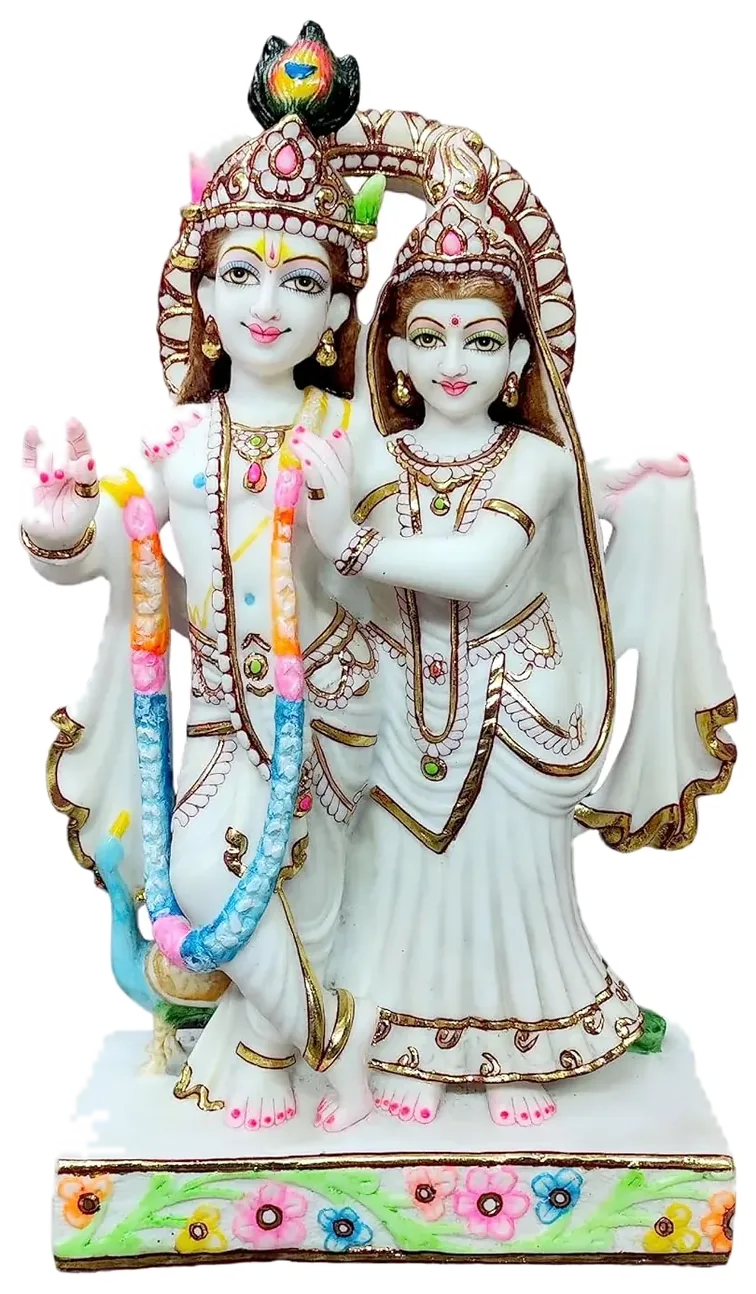
Radha Krishna marble statue, 15 inch
राधा कृष्ण संगमरमर मूर्ति, 15 इंच
₹8,000
A hand carved white marble Radha Krishna, fifteen inches, for a home shrine.
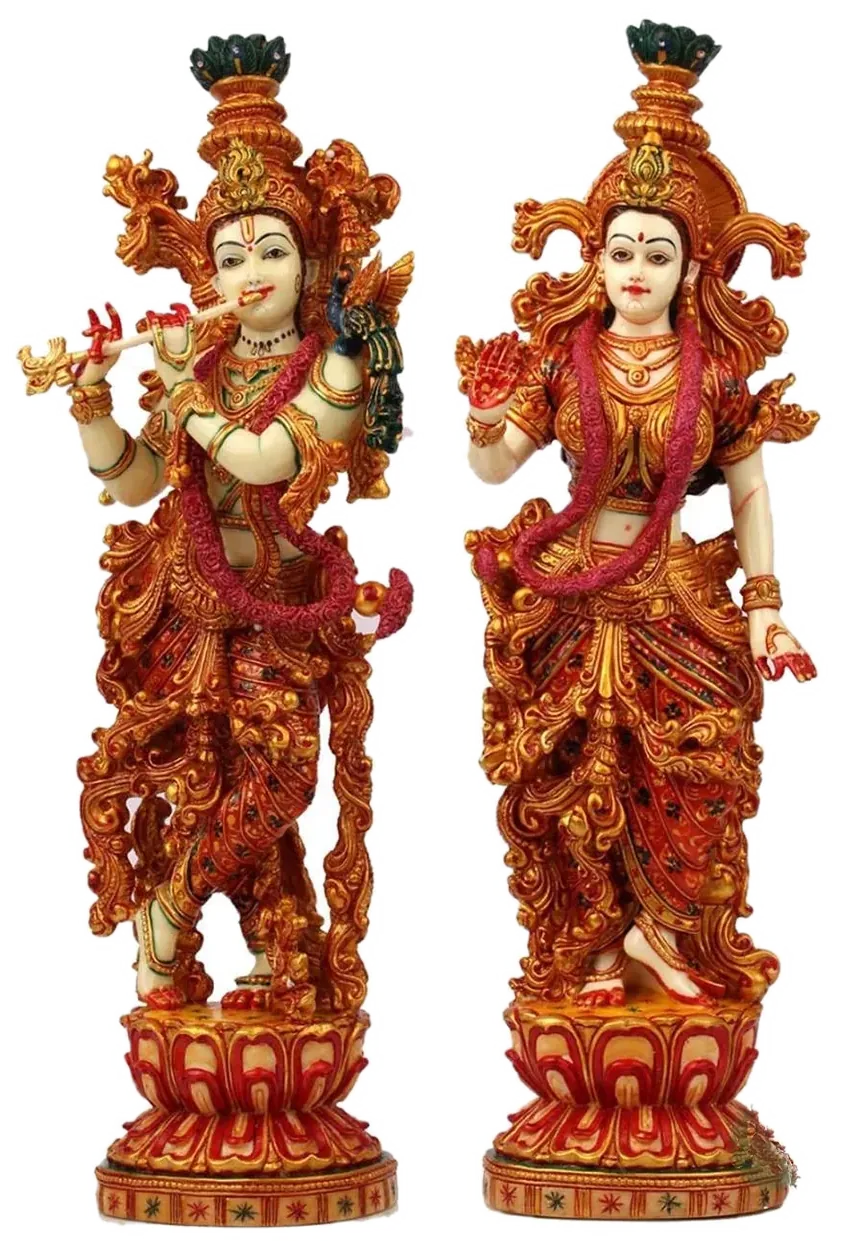
Radha Krishna statue, 15 inch
राधा कृष्ण मूर्ति, 15 इंच
₹14,999
A tall cold cast statue with marble dust and hand painted detail.
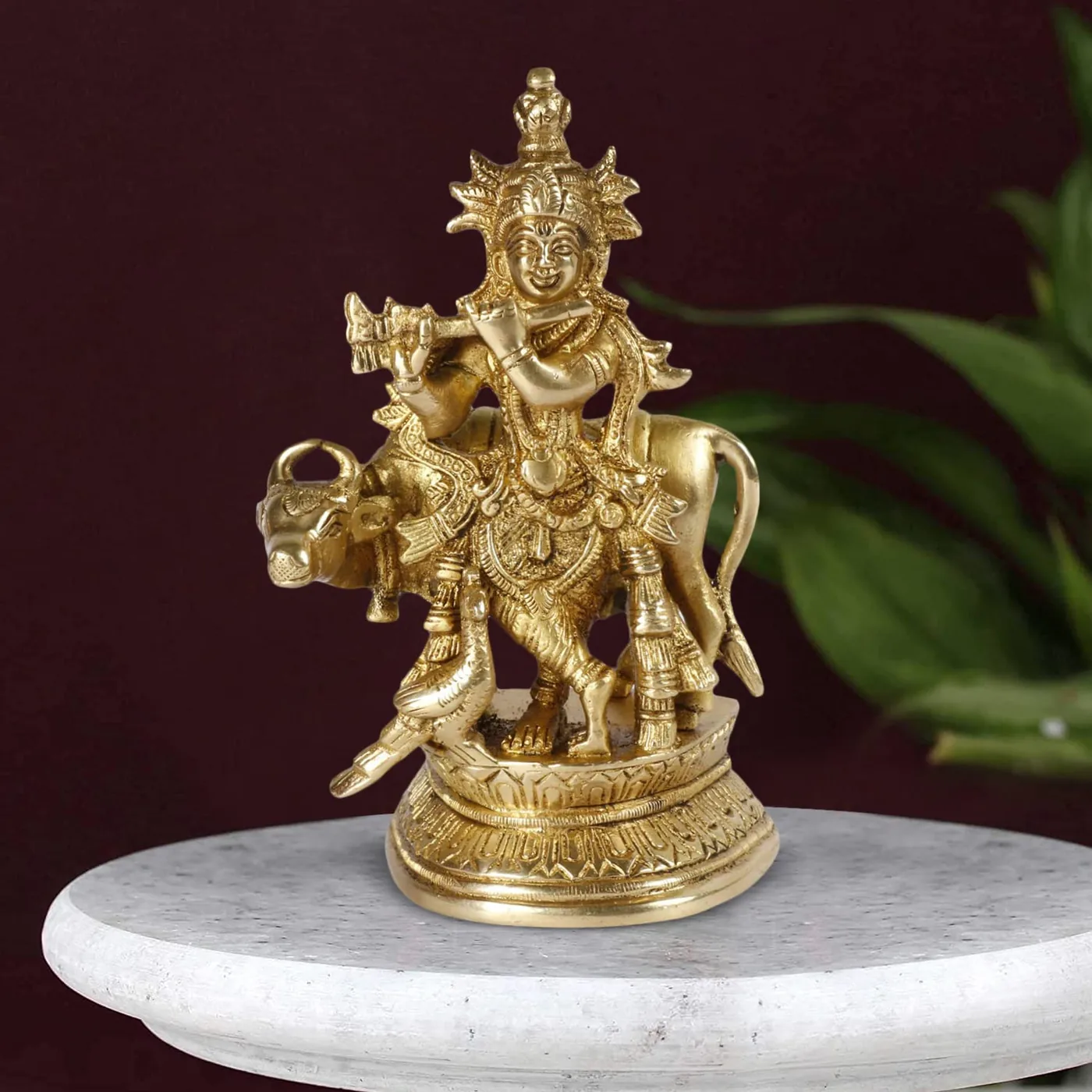
Krishna with cow, brass
गाय के साथ कृष्ण, पीतल
₹2,626
Solid brass, Krishna at the flute with a cow beside him, five and a half inches.