
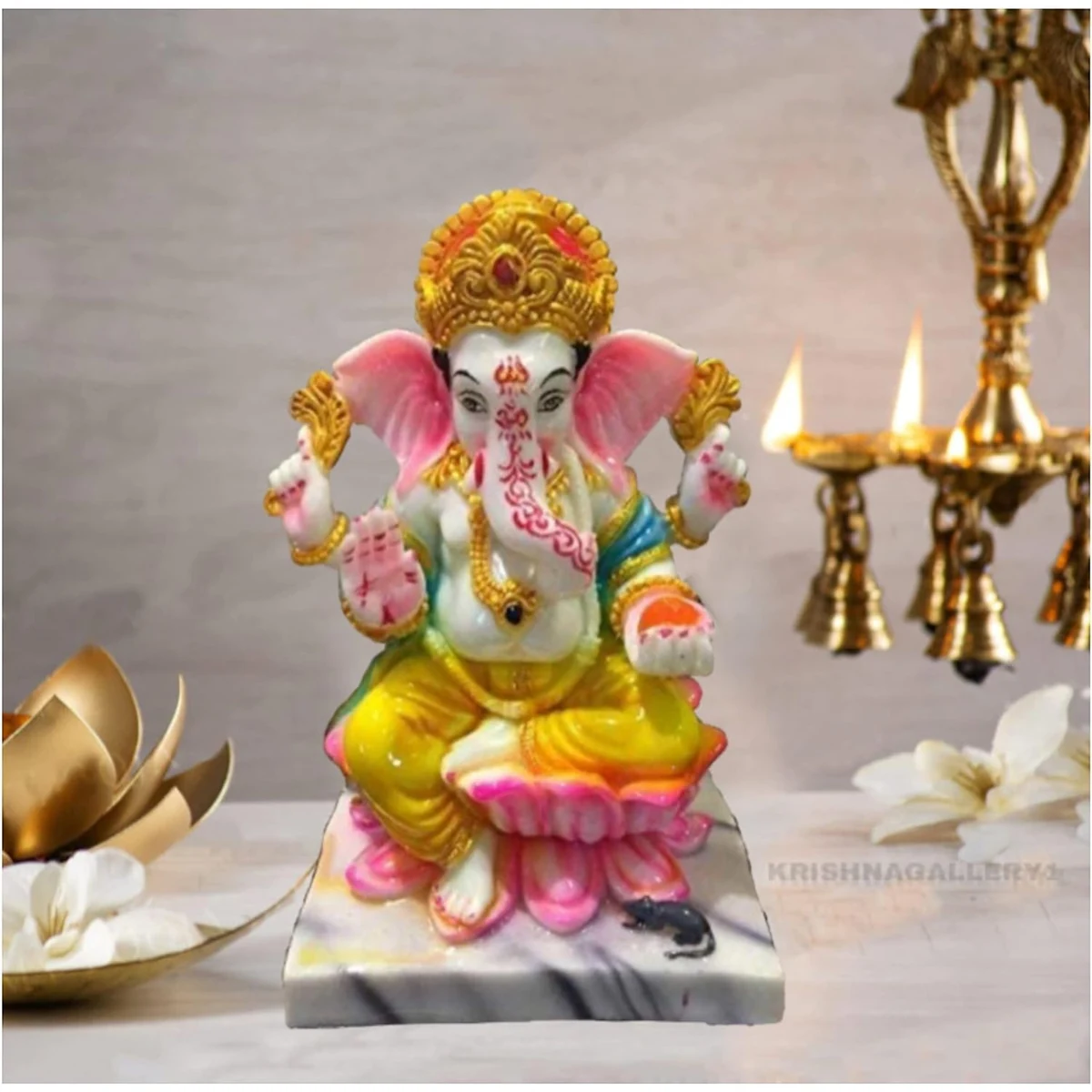
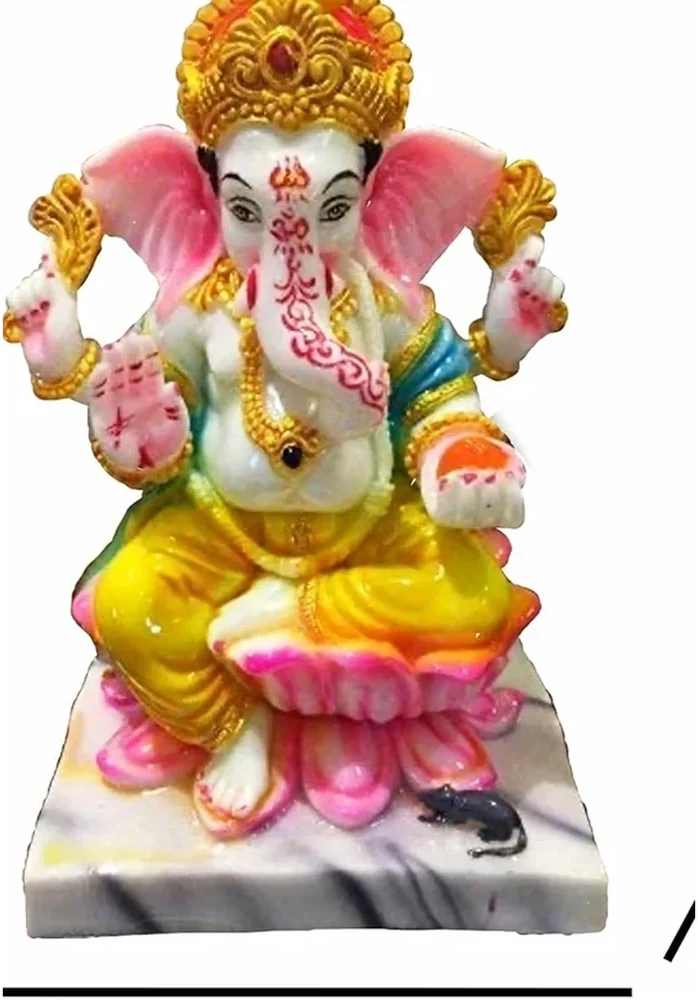
Marble dust Ganesh murti, 7 inch
मार्बल डस्ट गणेश मूर्ति, 7 इंच
A seven inch Ganesh cast from marble dust and resin rather than carved from block marble, hand painted in colour. Lighter and cheaper than stone, and a different thing from it.
- Height
- About 7 inches
- Material
- Marble dust, cast
- Finish
- Hand painted
- Base
- Roughly 10 by 8 cm
About this ganesh murti
Marble dust is not marble, and the difference is worth understanding before buying rather than after. Block marble is quarried stone, cut and carved, with grain running through it and slight variations of colour that no two pieces share. Marble dust is the powder left over from cutting stone, mixed with a resin binder and poured into a mould. The result looks like marble at arm's length and is not the same material at all.
That is not a criticism. Cast murtis carry sharper, finer detail than a carver would attempt in stone at this price, because a mould can hold undercuts and thin sections that would break under a chisel. They are lighter, which matters on a shelf. They are considerably cheaper. And they take paint beautifully, which is why the bright multicoloured murtis sold everywhere in India are almost all cast rather than carved.
What you give up is what stone gives. A cast piece has no grain, so it is uniform in a way that reads slightly flat next to real marble in the same light. It is more brittle at thin sections, and a break shows a matte powdery interior rather than a crystalline one. And it will not take the deep polish that stone takes, so the surface has a soft rather than a glassy finish.
The commercial problem is that listings routinely say marble when they mean marble dust, and nothing forces them to distinguish the two. This listing is unusually straightforward about it, which is the reason it is on this page. The rough test is weight: solid marble at seven inches would be noticeably heavy in the hand, and a cast piece feels light for its size.
As for placement, Ganesh is the deity called on before anything begins, which makes him common to nearly every Hindu household whatever its sampradaya. Nothing about a Ganesh murti sits oddly in a Vaishnava home. The convention in Braj is about position rather than presence: Shri Radha and Shri Krishna take the middle and Ganesh goes at the side, which is how almost every Vrindavan mandir is laid out.
The reason this page spends so long on materials is that the category is full of imprecision, not because the material decides anything. A cast murti and a carved one are both perfectly ordinary things to keep, used in millions of households, and no tradition has ever graded devotion by what the image was made from. What is worth knowing is which one you are paying for, since the two are priced very differently and described identically.
What to look for before buying
Weigh the claim of marble. Ask the seller whether it is carved stone or cast marble dust, and read the weight if it is given. A solid marble figure seven inches tall would usually be well over a kilo; a cast one is a few hundred grams. Neither is wrong to buy, but they are different products at different prices, and a listing that answers the question straight is a listing worth trusting on other things too.
Check the thin sections in the photographs. Cast pieces are strongest in the body and weakest where they are thin: the trunk, the fingers, an outstretched arm, the tips of a crown. Look at those areas closely for casting seams, bubbles or a slight softness where the mould did not fill. Those are the places that arrive chipped, and they are the places that break later if the murti is handled often.
Look at the face, twice. The mould gives every copy the same features, so the difference between a good example and a poor one is entirely in the painting, and the painting is done by hand at speed. Eyes that are uneven or set too low will bother you every single day. It is the one detail worth being fussy about, because everything else on a cast murti is identical from piece to piece.
Keeping it, and where it sits
Dry dusting with a soft brush is the correct routine and very nearly the only one needed. Cast and painted pieces hold dust in the fine detail that a mould was able to capture, and a cloth will not reach into it. A brush takes a minute and keeps the murti from ever needing anything more aggressive.
Keep water to a minimum. The binder in a cast piece is resin rather than stone, and while a quick wipe does no harm, soaking can work moisture into hairline seams and lift paint from the inside out. If you do wipe it, use a barely damp cloth and dry it immediately rather than letting it stand wet.
Never use abrasive cleaners, scouring pads or any polish sold for metal or stone. A cast surface is softer than marble and will scuff visibly and permanently, and the paint will come away with the scuff. If something has dried onto the surface, soften it with a damp cloth and patience rather than removing it by force.
Handle it by the base and store it wrapped if it ever has to travel. Thin sections in a cast murti break more readily than in carved stone, and the usual casualty is the trunk, because it is the natural place to grip. A folded cloth around the figure and a box with room around it is enough for any ordinary move.
None of this is required. What Maharaj Ji actually asks for is set out on the teachings page, the sayings he repeats most are on the quotes page, and the stotras are free to download as PDFs. If you are planning to visit Vrindavan, read how to meet Maharaj Ji first.
Also worth reading: free stotra PDFs , and pictures from Vrindavan.
Questions about buying this
What is marble dust?
Powder left over from cutting stone, mixed with a resin binder and cast in a mould. It looks like marble at a distance but is a different material from carved block stone.
Is a marble dust murti worse than a marble one?
Not worse, different. It carries finer detail and costs far less; it is lighter, more brittle at thin sections and will not take a deep polish.
How can I tell which one I am being sold?
Weight is the simplest guide, and asking the seller directly is better. Solid marble at seven inches is heavy; a cast piece is light for its size.
Can a cast murti be washed?
Only lightly. Wipe with a barely damp cloth and dry it at once. Soaking can lift paint and work moisture into casting seams.
Is a cast murti acceptable for worship?
Yes. Material has never been what decides that, and painted cast murtis are in ordinary daily use in millions of Indian homes.
Does the practice require any murti at all?
No. Material has never been the question, and neither has ownership. The practice asks for nothing that has to be bought.
Is this connected with Maharaj Ji or the ashram?
No. It is not supplied by, authorised by or endorsed by Maharaj Ji or Shri Hit Radha Keli Kunj. It is an ordinary devotional item sold by other people on Amazon, listed here because a devotee might want one.
Do you sell it?
No. The button on this page takes you to Amazon. Amazon takes the payment, ships the order and handles returns and warranty. We hold no stock, never see your payment details, and cannot change or cancel an order.
Is the price on this page current?
It is the price we last saw on Amazon, with the date beside it. Amazon changes prices whenever it likes, so treat the figure here as a guide and the price on the Amazon page as the real one.
Do you make money if I buy it?
Yes. As an Amazon Associate we earn from qualifying purchases. Your price is exactly the same whether you use our link or not; Amazon pays the commission out of its own margin, and that commission is what keeps this site free to read.
Do I need this to follow the teachings?
No. Maharaj Ji asks for the Radha naam and nothing else, with no initiation, no fee and no equipment. Anything on this page is convenience, never a requirement, and he is explicit about that in satsang.
Also for the home mandir
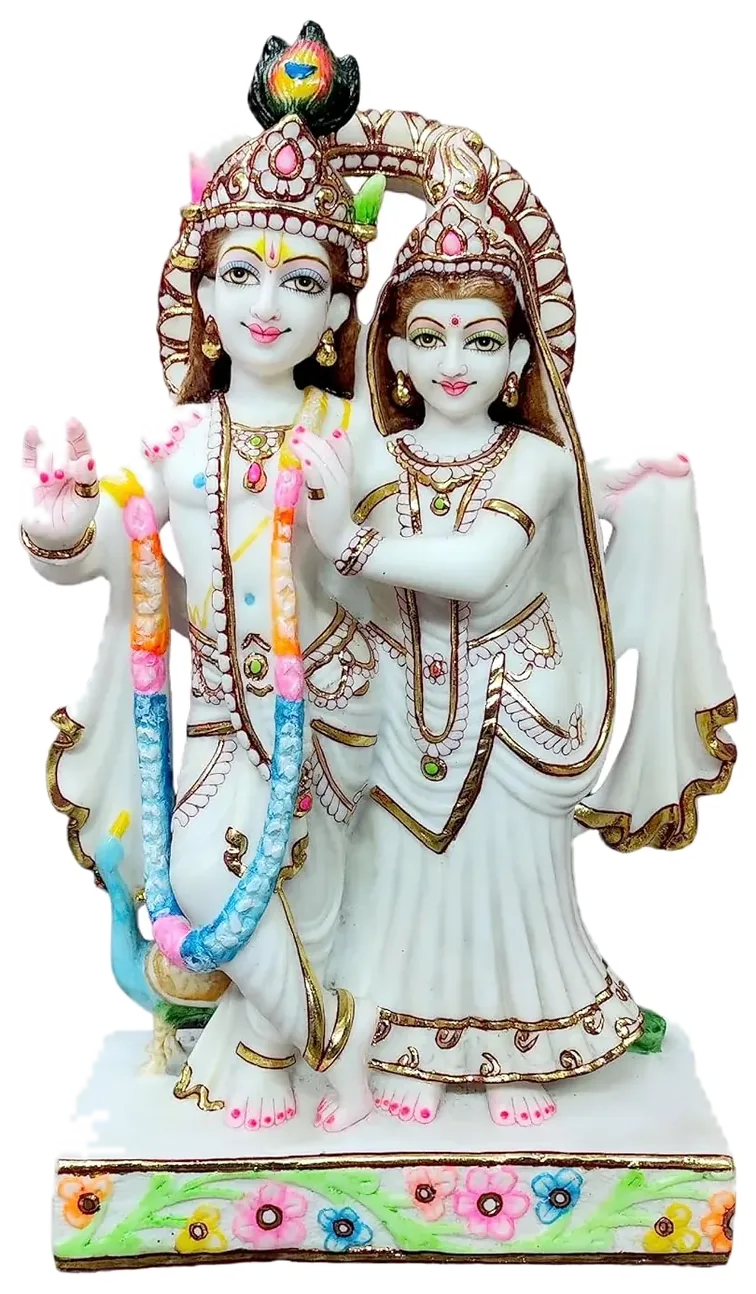
Radha Krishna marble statue, 15 inch
राधा कृष्ण संगमरमर मूर्ति, 15 इंच
₹8,000
A hand carved white marble Radha Krishna, fifteen inches, for a home shrine.
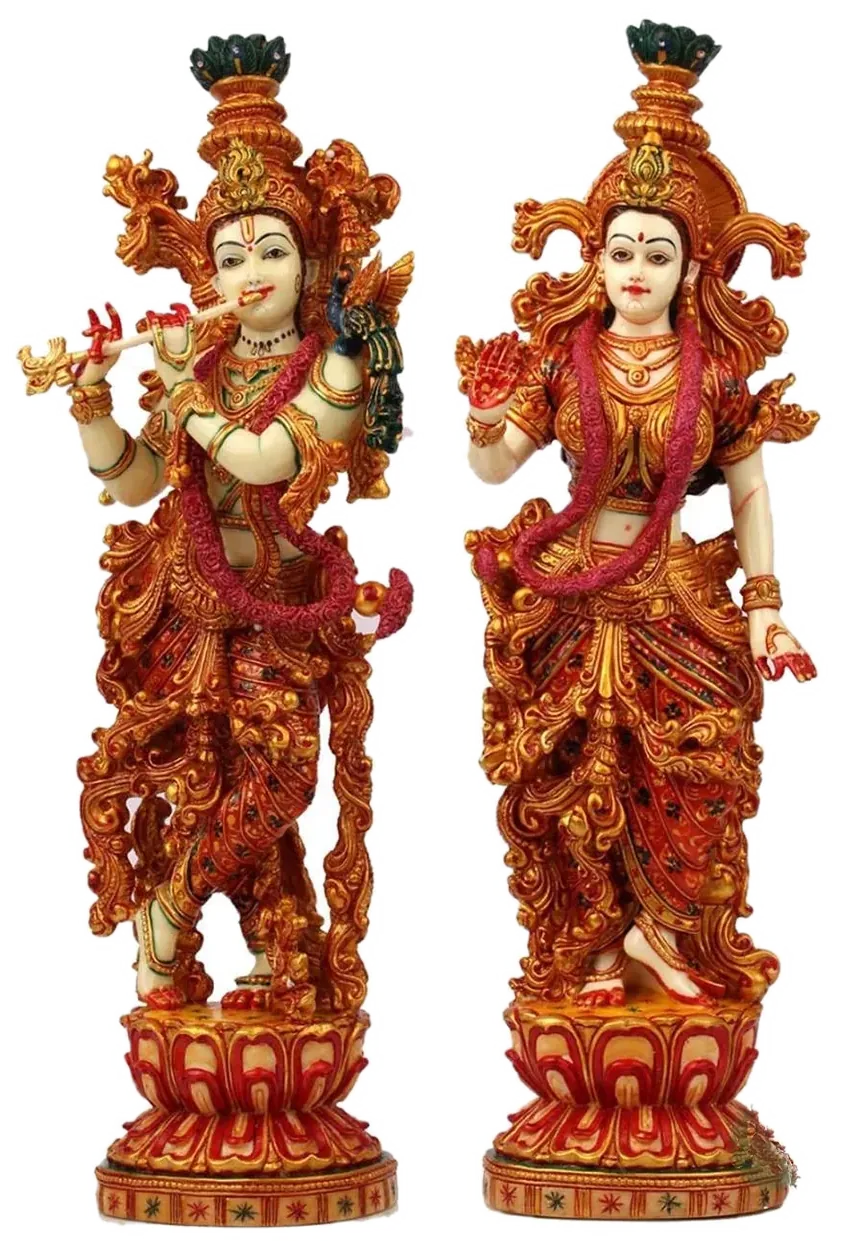
Radha Krishna statue, 15 inch
राधा कृष्ण मूर्ति, 15 इंच
₹14,999
A tall cold cast statue with marble dust and hand painted detail.
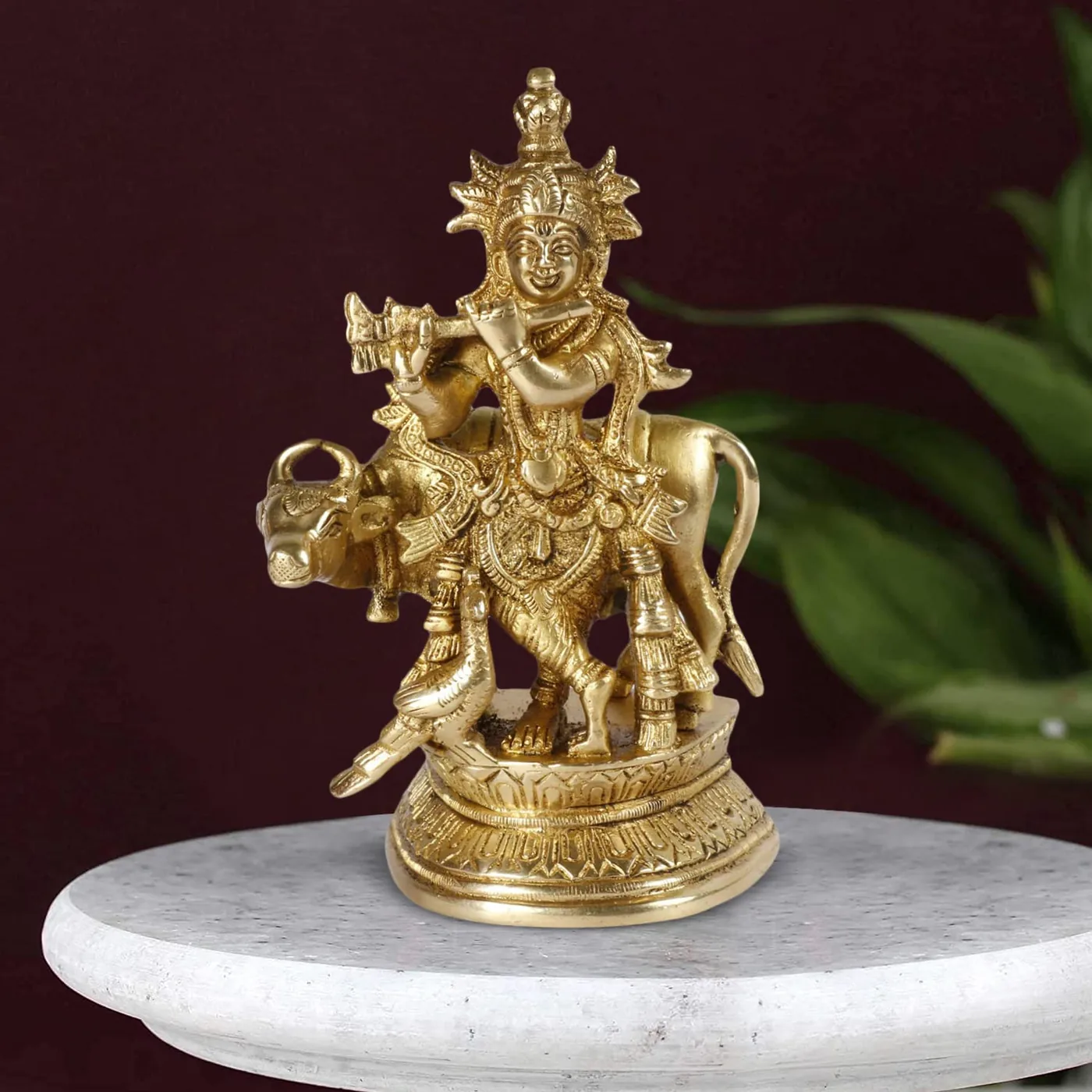
Krishna with cow, brass
गाय के साथ कृष्ण, पीतल
₹2,626
Solid brass, Krishna at the flute with a cow beside him, five and a half inches.