
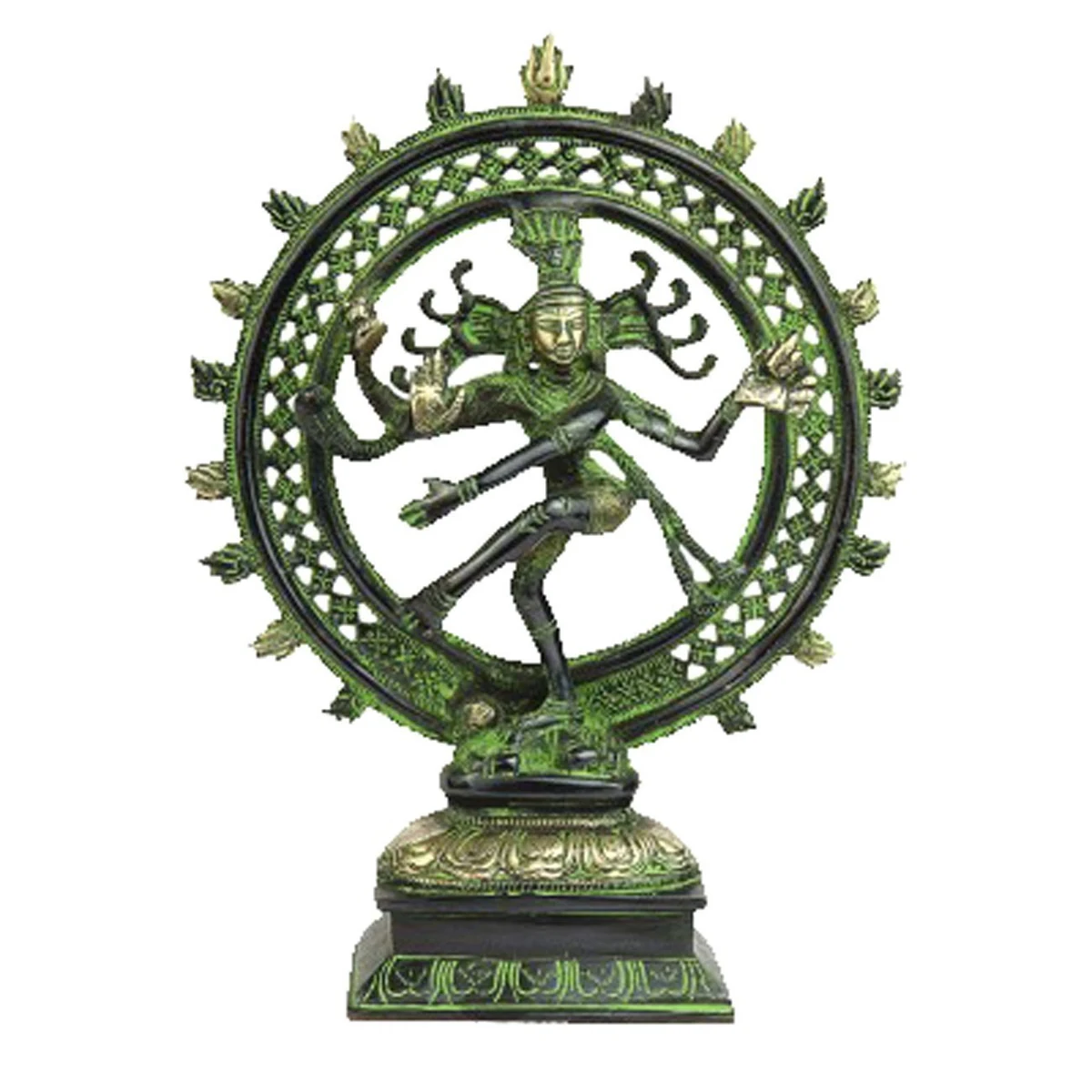
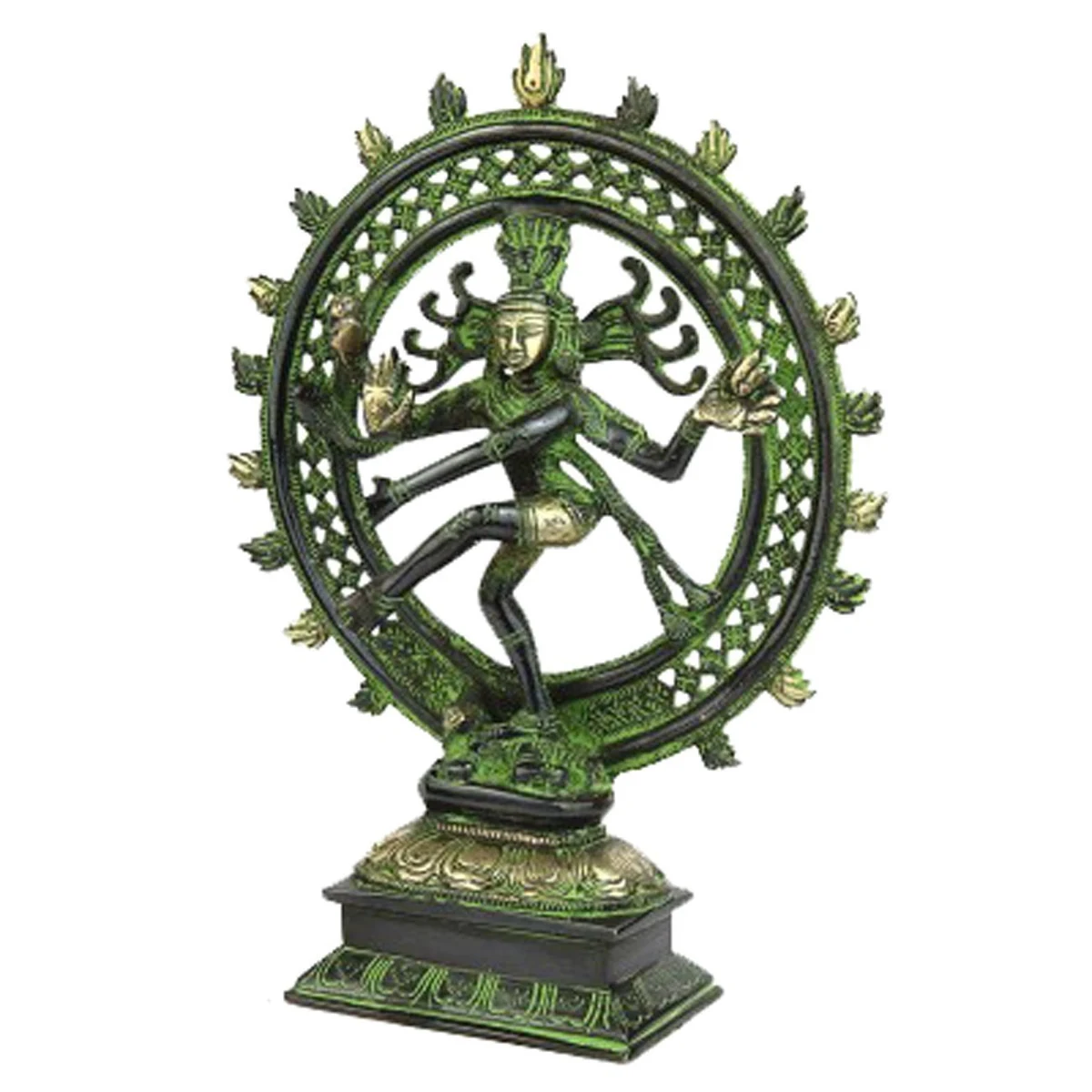
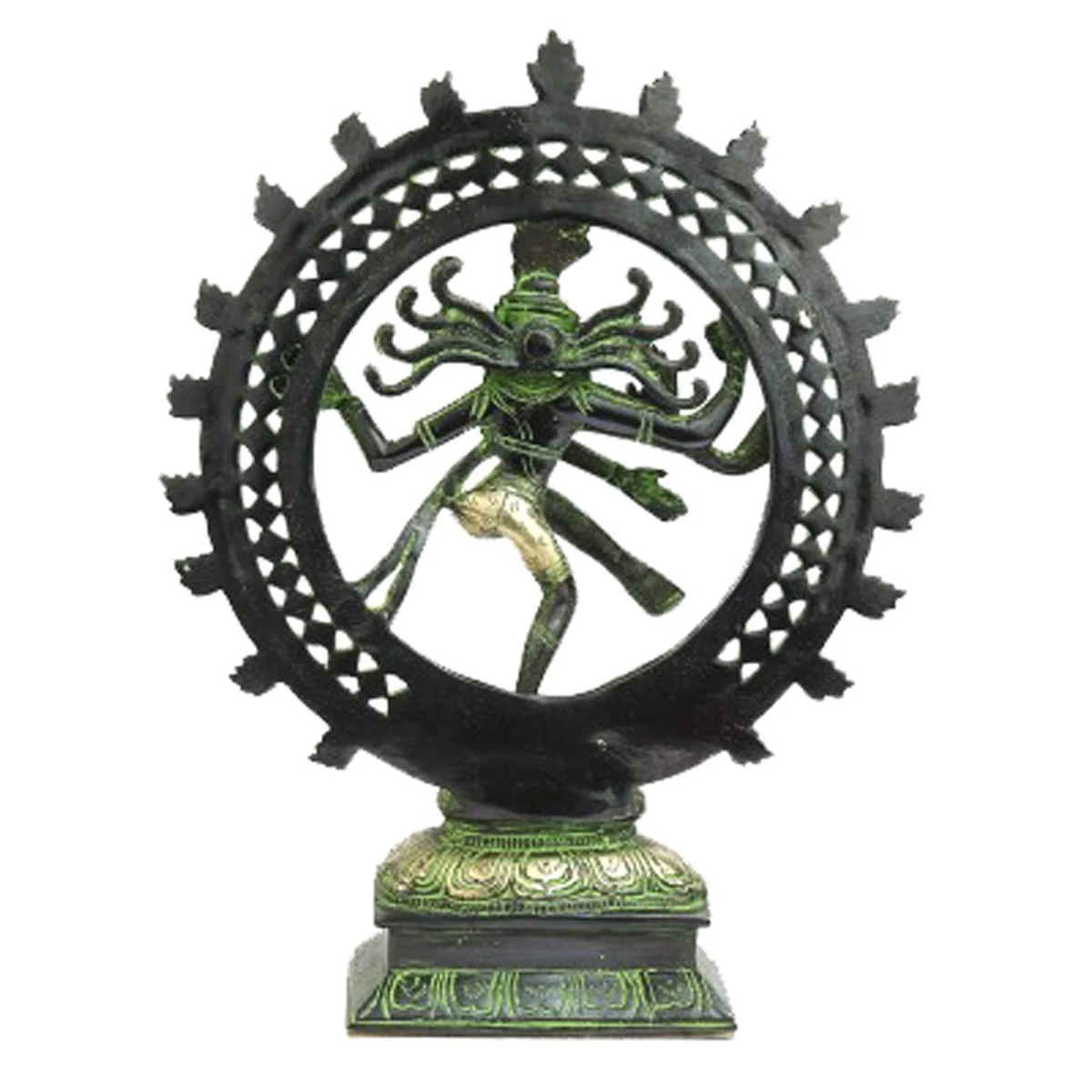
Brass Nataraja murti, green patina, 8 inch
पीतल नटराज मूर्ति, हरी पेटिना, 8 इंच
The dancing form of Shiva in brass, finished with a green antique patina rather than left bright, about eight inches across the ring and 1.8 kg on the shelf.
- Size
- About 20 by 10 cm
- Weight
- 1.8 kg
- Material
- Brass
- Finish
- Green antique patina
About this nataraja murti
The Nataraja is probably the most heavily read image in Indian art, and almost every element in it carries a stated meaning. The drum in the upper right hand is sound, and with it creation; the flame in the upper left is dissolution. The lower right hand is raised in the gesture of do not fear, and the lower left points down at the raised foot, which is the refuge. The figure crushed underfoot is the demon of forgetfulness and inattention.
The ring of flame around the whole thing is the cycle within which all of that happens, and the whole piece is a statement that creation and dissolution are one process rather than two events. It is why the image travelled so far beyond devotional use, and why it turns up in physics departments and on book covers. Understanding that makes it a more interesting object to own than a decorative bronze.
The green patina here is an antiquing treatment rather than genuine verdigris, applied and then polished back on the raised surfaces. On an image this busy, where the appeal is entirely in the outline and the ring, a darkened finish reads far better across a room than bright brass, which flares and flattens the detail under a lamp.
At 1.8 kilograms and eight inches across the ring, this needs width rather than height. The ring is the widest point, it is thin, and it is what will catch a sleeve or a duster. That is the single practical thing to plan for: place it where nothing passes close to it, because the ring is the part of a Nataraja that gets bent, and it is bent once and then permanently.
It is worth being clear about where this image belongs. Shiva is not the deity of Braj practice, and a Nataraja would not be found at the focus of a Vrindavan household shrine, which is given over to the divine pair. A great many Indian homes keep a Nataraja without any contradiction arising, often as much for the artistry as for worship, and that is an honest thing to say about it.
It is fair to say that a good many Nataraja sculptures are bought for what they are rather than for worship, and there is nothing to apologise for in that. This is one of the great images in world art and it deserves to be owned as such. If it goes into a room rather than into a mandir, it is still a considered object well made, and describing it honestly is better than pretending it is something else.
What to look for before buying
Look closely at the ring. The circle of flame is cast thin and it is the weak point of every Nataraja ever made. Check the photographs for a ring that is true rather than slightly oval, look for any join where it meets the base, and when it arrives check that it has not been knocked out of plane in transit. A bent ring is the commonest damage on this form and it is effectively unrepairable.
Check the raised foot and the fingers. The raised leg, the outstretched arms and the fingers making the gestures are all thin sections that a cheap mould renders as blobs. Zoom in and check that the two lower hands are actually making distinguishable gestures rather than being lumps at the ends of arms. That detail is the meaning of the image, and a casting that loses it has lost the point.
Know that the patina is a surface. Green antique here is applied rather than grown, and it behaves like any other antiqued finish: it sits thin on the metal and abrasives take it off. If you would rather have something you can polish to a shine, buy plain brass. If you like the darkened look, buy it and accept that dry dusting is now the only cleaning it will ever get.
Keeping it, and where it sits
Dust it with a soft dry cloth and a brush for the ring and the detail, and do nothing else. The manufacturer's own instruction on this piece is a soft dry cloth, and that is not laziness on their part: patinated finishes are preserved by being left alone and spoiled by being cleaned.
Do not use brass polish, metal cleaner or any acidic paste. Those will lift the green unevenly, leaving bright metal at the high points and dark recesses, which on a piece meant to look aged reads simply as damage. There is no way back from it short of stripping and redoing the whole finish.
Keep water off it entirely. This is not a murti for abhishek: water marks an applied patina and gets into the joins at the base and the ring, and the resulting green deposits are a different, unwanted green from the one you paid for. Keep any offerings on a thali in front of it.
Place it where nothing brushes past. Give the ring clear air on both sides and above, keep it back from the edge of a shelf, and if it has to be moved, carry it by the base with the other hand supporting the ring rather than gripping it. Almost every damaged Nataraja was damaged while somebody was cleaning around it.
None of this is required. What Maharaj Ji actually asks for is set out on the teachings page, the sayings he repeats most are on the quotes page, and the stotras are free to download as PDFs. If you are planning to visit Vrindavan, read how to meet Maharaj Ji first.
Also worth reading: frequently asked questions , and the photo gallery.
Questions about buying this
What does the Nataraja image mean?
The drum is creation through sound, the flame is dissolution, one hand gives freedom from fear and one points to the raised foot as refuge. The figure underfoot is inattention, and the ring of flame is the cycle containing it all.
Why is the Nataraja shown inside a ring of fire?
The ring represents the cycle of creation and dissolution within which the dance takes place. It is also, practically, the most fragile part of the casting.
Can a patinated brass murti be polished?
No. The green is an applied surface and polish strips it unevenly. Dry dusting is the only appropriate cleaning.
Can I do abhishek on a Nataraja like this?
Not on a patinated finish. Water marks it and collects in the joins. Use plain polished brass if bathing the murti matters to you.
Does a Nataraja belong in a Vaishnava home?
It is not the deity of Braj practice, where Radha and Krishna hold the centre. Many Indian homes keep one anyway, often as much for the artistry as for worship.
Is any murti required by Maharaj Ji's teaching?
No. The practice has no material requirement, and an image belonging to another tradition altogether is plainly not one.
Is this connected with Maharaj Ji or the ashram?
No. It is not supplied by, authorised by or endorsed by Maharaj Ji or Shri Hit Radha Keli Kunj. It is an ordinary devotional item sold by other people on Amazon, listed here because a devotee might want one.
Do you sell it?
No. The button on this page takes you to Amazon. Amazon takes the payment, ships the order and handles returns and warranty. We hold no stock, never see your payment details, and cannot change or cancel an order.
Is the price on this page current?
It is the price we last saw on Amazon, with the date beside it. Amazon changes prices whenever it likes, so treat the figure here as a guide and the price on the Amazon page as the real one.
Do you make money if I buy it?
Yes. As an Amazon Associate we earn from qualifying purchases. Your price is exactly the same whether you use our link or not; Amazon pays the commission out of its own margin, and that commission is what keeps this site free to read.
Do I need this to follow the teachings?
No. Maharaj Ji asks for the Radha naam and nothing else, with no initiation, no fee and no equipment. Anything on this page is convenience, never a requirement, and he is explicit about that in satsang.
Also for the home mandir
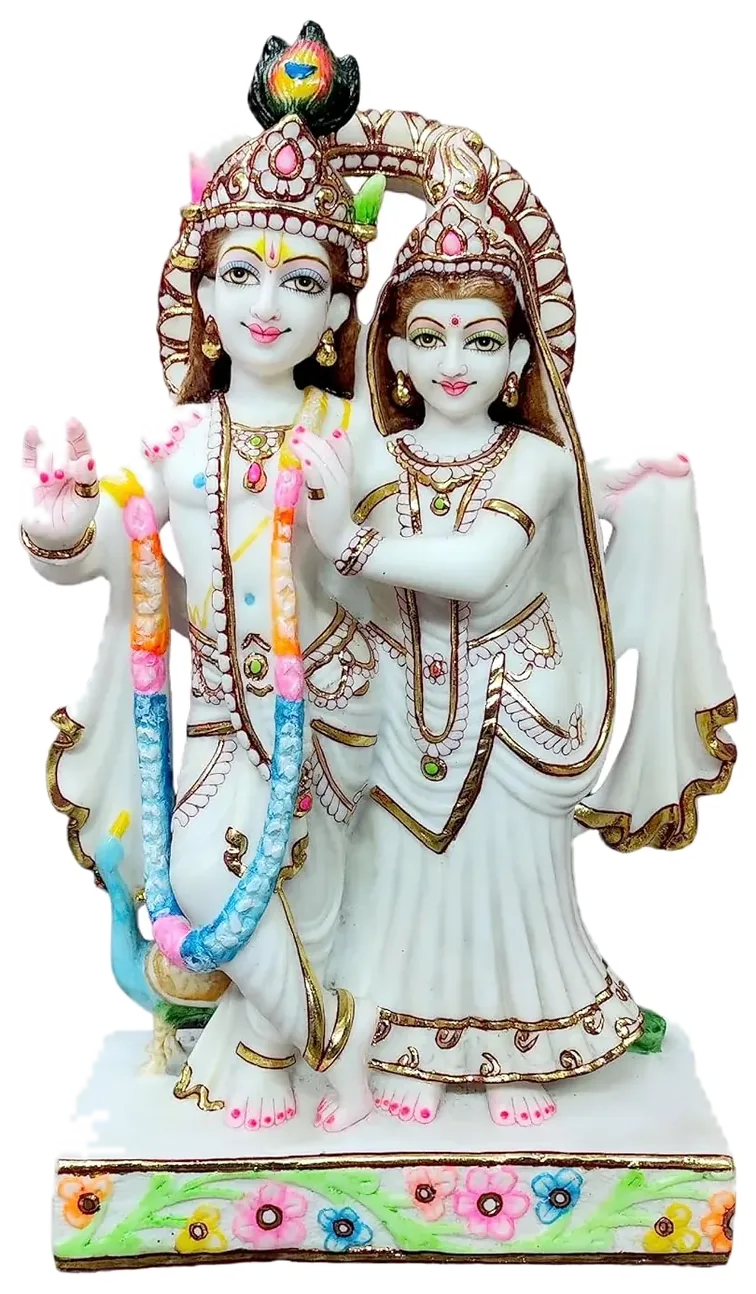
Radha Krishna marble statue, 15 inch
राधा कृष्ण संगमरमर मूर्ति, 15 इंच
₹8,000
A hand carved white marble Radha Krishna, fifteen inches, for a home shrine.
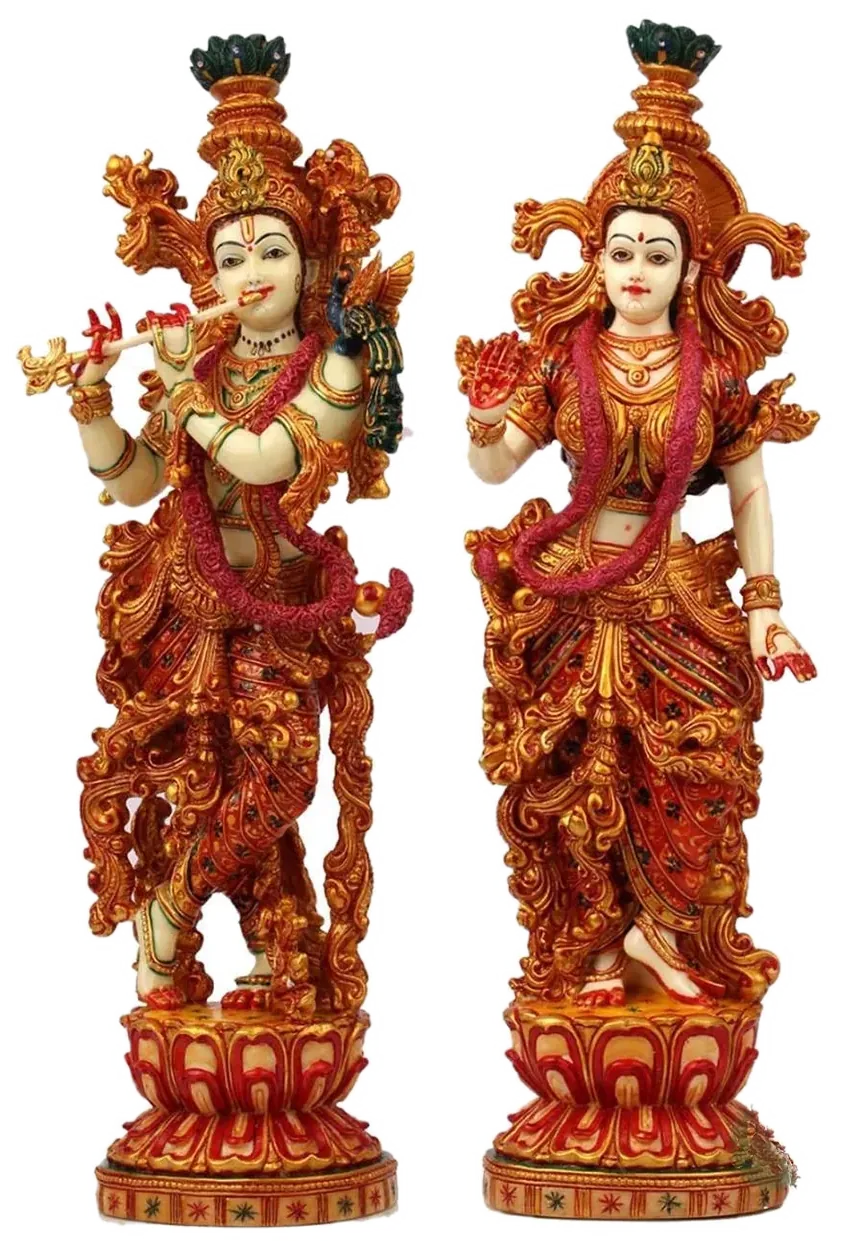
Radha Krishna statue, 15 inch
राधा कृष्ण मूर्ति, 15 इंच
₹14,999
A tall cold cast statue with marble dust and hand painted detail.
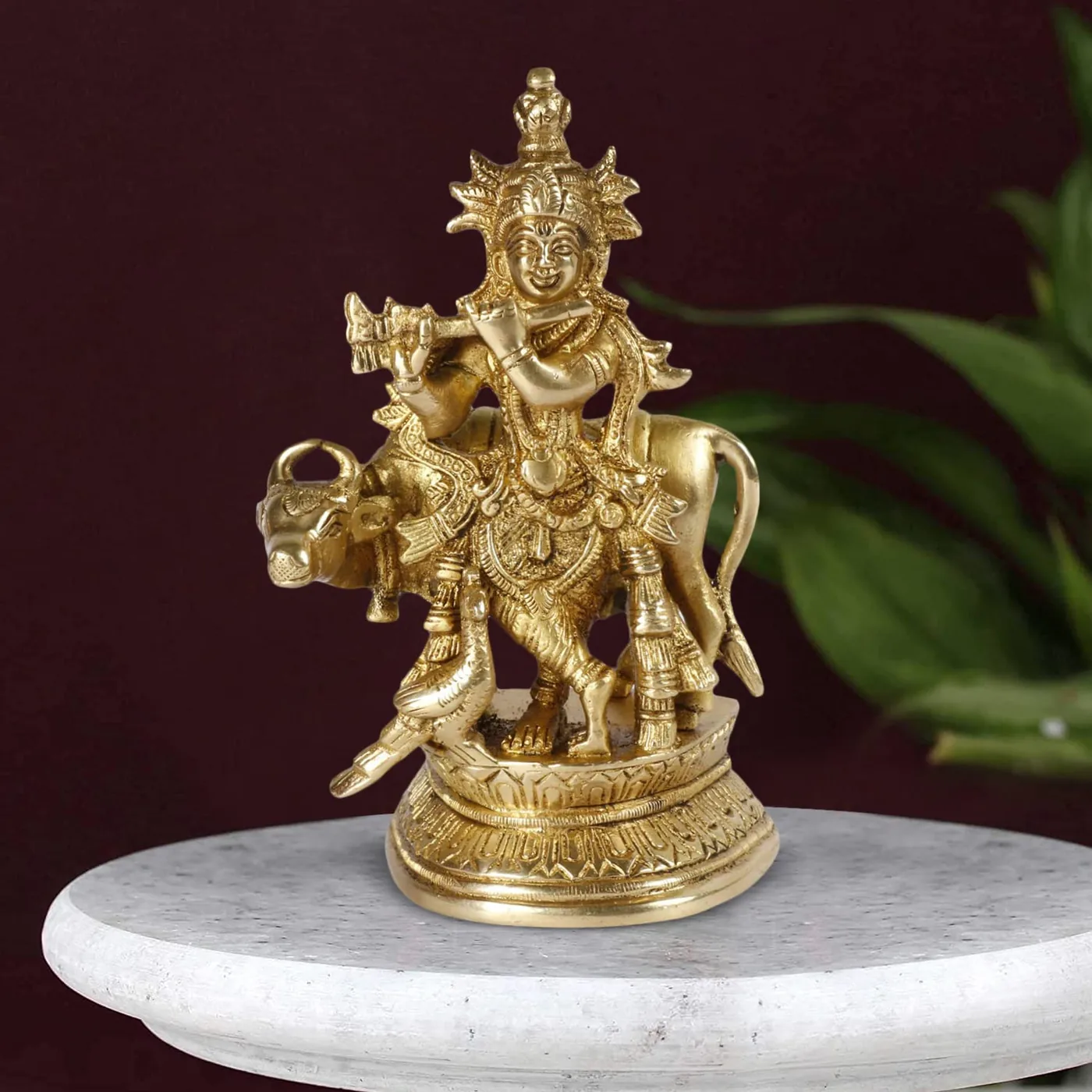
Krishna with cow, brass
गाय के साथ कृष्ण, पीतल
₹2,626
Solid brass, Krishna at the flute with a cow beside him, five and a half inches.