
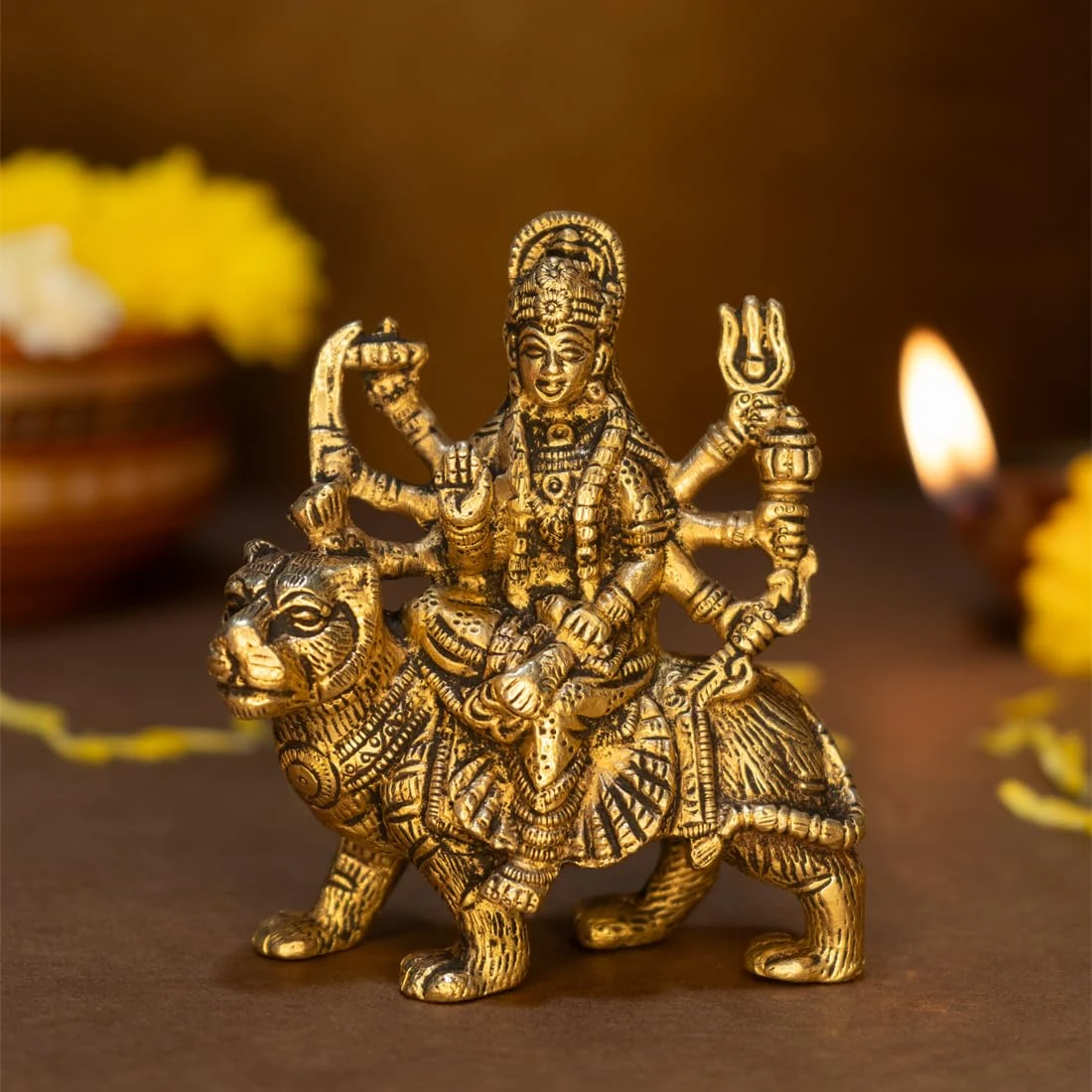
Brass Durga idol, 12.8 cm
पीतल दुर्गा मूर्ति, 12.8 सेमी
Durga mounted on the lion with her full complement of arms and weapons, cast in polished brass at about five inches tall and under four hundred grams.
- Height
- 12.8 cm
- Weight
- 390 g
- Material
- Brass
- Finish
- Polished
About this durga murti
The many armed depiction of Durga is not artistic exuberance; it has a specific story behind it. In the account from the Devi Mahatmya the gods, unable to deal with a particular demon themselves, each give her their own weapon, and the arms are there to hold them. So the trident is Shiva's, the discus Vishnu's, the thunderbolt Indra's and so on down the line. The image is a picture of combined power handed over.
The lion she rides carries the same logic: it is not decoration but vahana, and in her case it stands for the force that has been harnessed rather than suppressed. Castings vary enormously in how well the lion is rendered, and it is usually the first thing sacrificed in a cheap mould, which is worth knowing because from the front the lion is half the silhouette.
A many armed figure is the hardest thing to cast well at a small size. Each arm is a thin projecting element, each one holds a distinct object, and in a five inch mould they crowd each other. The difference between a good and a poor Durga casting is entirely in whether the arms are separate and the weapons identifiable, or whether they have merged into a fan behind the shoulders.
At three hundred and ninety grams and about five inches this is a light piece by brass standards, which is normal for a figure with this much open space in it: a many armed form has far less solid metal in it than a compact seated one of the same height. Weight is therefore a less useful quality test here than it is elsewhere, and the photographs matter more.
Durga belongs to Shakta practice and to the Navratri observance that a very large part of India keeps. What is done in Braj, and in the Radhavallabh line, rests on Shri Radha alone, and hers is the place at the heart of a Vrindavan household shrine. A Durga murti in such a home would be ordinary and would stand off to one side, and this page would rather say that plainly than leave it vague.
It is worth being plain about the language in this category. Listings for Durga murtis lean on gifting, positivity and auspicious placement, because those words sell. The murti itself is an honest object with a real story behind it, and it is better served by an accurate description of its casting than by any of that. Judge the arms and the lion; ignore the adjectives.
What to look for before buying
Count the arms and find the weapons. On a well made Durga each arm is separate and the thing it holds is identifiable: trident, discus, bow, sword. On a cheap casting the arms merge into a fan and the weapons become bumps. Zoom in and try to name three of them from the photograph. If you cannot, the mould is poor and no finish will improve it.
Look at the lion. The lion is half the silhouette from the front and the first thing rushed in a cheap mould. Check for a defined mane, visible legs and a face with features rather than a suggestion of one. A good Durga with a shapeless lion looks wrong on a shelf in a way that is difficult to ignore afterwards.
Do not judge this one by weight alone. Unlike a compact seated figure, a many armed form has a great deal of open space in it, so a lower weight does not indicate hollow casting here. Judge it on the sharpness of the arms and the lion instead, and ask the seller directly whether the piece is solid if it matters to you.
Keeping it, and where it sits
Use a soft brush rather than a cloth. This is the one murti in this shop where that is not optional: a cloth cannot get between a dozen arms and will simply push dust deeper into the gaps. A soft brush weekly keeps the piece looking sharp and avoids ever needing to wash it.
When it needs cleaning, work carefully around the arms and rinse thoroughly. Lemon and salt or tamarind, applied by hand, is the traditional method, but on a figure with this many crevices the rinse matters more than the paste: dried residue between the arms shows as a white crust and is worse than the tarnish was.
Dry it properly, and give it time. A many armed casting holds water in a dozen places where a cloth cannot reach, so after any washing leave it somewhere warm and airy for an hour rather than putting it straight back on the shelf. Water trapped between arms is exactly where green deposits form first.
Handle it by the base only. Every arm on this figure is a lever, and brass bends before it breaks, so an arm gripped while lifting will end up slightly out of line permanently. It is a small thing that is impossible to unsee once it has happened.
None of this is required. What Maharaj Ji actually asks for is set out on the teachings page, the sayings he repeats most are on the quotes page, and the stotras are free to download as PDFs. If you are planning to visit Vrindavan, read how to meet Maharaj Ji first.
Also worth reading: the photo gallery , and the teaching.
Questions about buying this
Why is Durga shown with many arms?
In the Devi Mahatmya each god gives her his own weapon to fight a demon they cannot defeat. The arms hold those weapons, so the image is one of combined power handed over.
What does the lion represent?
It is her vahana, and stands for force harnessed rather than suppressed. It is also half the silhouette, so it is worth checking how well it is cast.
How do I judge a many armed casting?
Look for arms that are separate rather than merged and weapons you can actually identify. Weight is a poor guide here because the form has a lot of open space.
How should a Durga murti be cleaned?
With a soft brush rather than a cloth, since a cloth cannot reach between the arms. Rinse and dry very thoroughly if it is ever washed.
Is Durga worshipped in Vaishnava homes?
Commonly, particularly at Navratri. Braj homes reserve the focus of the shrine for the divine pair and arrange other murtis around that.
Does the teaching require keeping any murti?
No. The practice makes no material demand, and the claims attached to murtis in listings are commerce rather than teaching.
Is this connected with Maharaj Ji or the ashram?
No. It is not supplied by, authorised by or endorsed by Maharaj Ji or Shri Hit Radha Keli Kunj. It is an ordinary devotional item sold by other people on Amazon, listed here because a devotee might want one.
Do you sell it?
No. The button on this page takes you to Amazon. Amazon takes the payment, ships the order and handles returns and warranty. We hold no stock, never see your payment details, and cannot change or cancel an order.
Is the price on this page current?
It is the price we last saw on Amazon, with the date beside it. Amazon changes prices whenever it likes, so treat the figure here as a guide and the price on the Amazon page as the real one.
Do you make money if I buy it?
Yes. As an Amazon Associate we earn from qualifying purchases. Your price is exactly the same whether you use our link or not; Amazon pays the commission out of its own margin, and that commission is what keeps this site free to read.
Do I need this to follow the teachings?
No. Maharaj Ji asks for the Radha naam and nothing else, with no initiation, no fee and no equipment. Anything on this page is convenience, never a requirement, and he is explicit about that in satsang.
Also for the home mandir
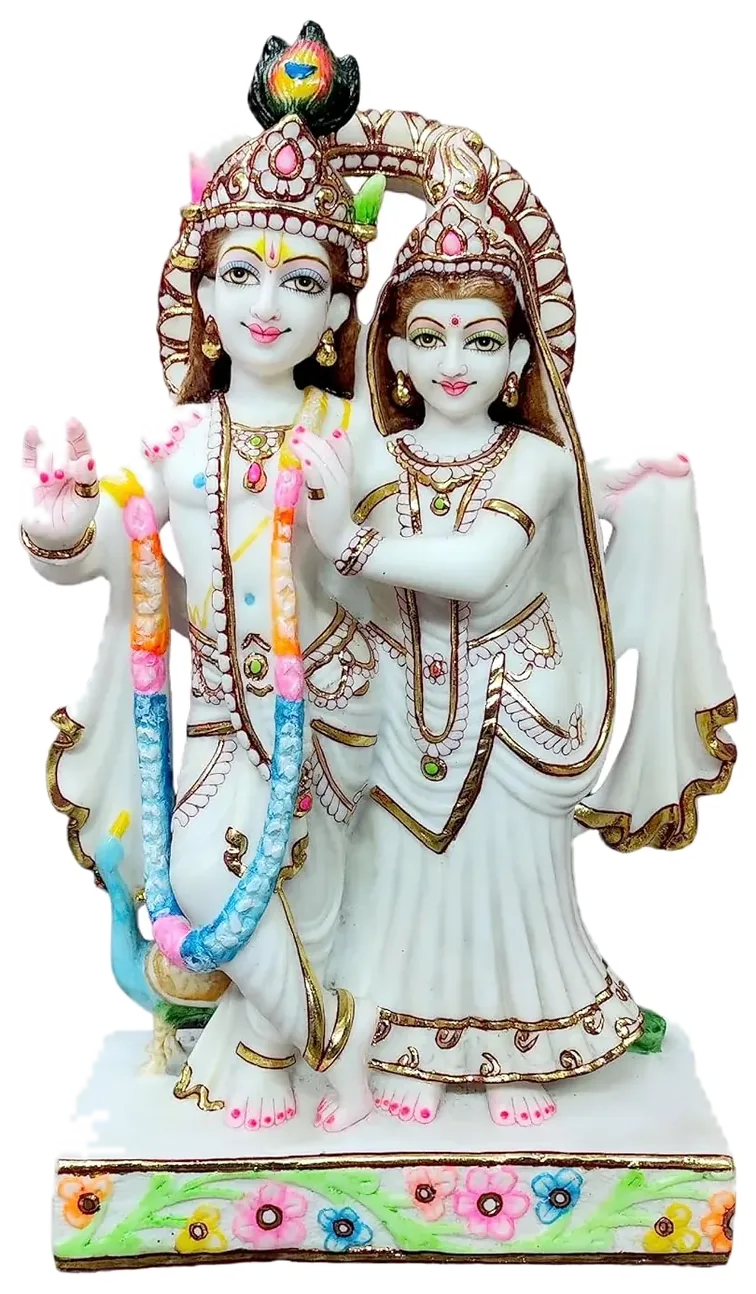
Radha Krishna marble statue, 15 inch
राधा कृष्ण संगमरमर मूर्ति, 15 इंच
₹8,000
A hand carved white marble Radha Krishna, fifteen inches, for a home shrine.
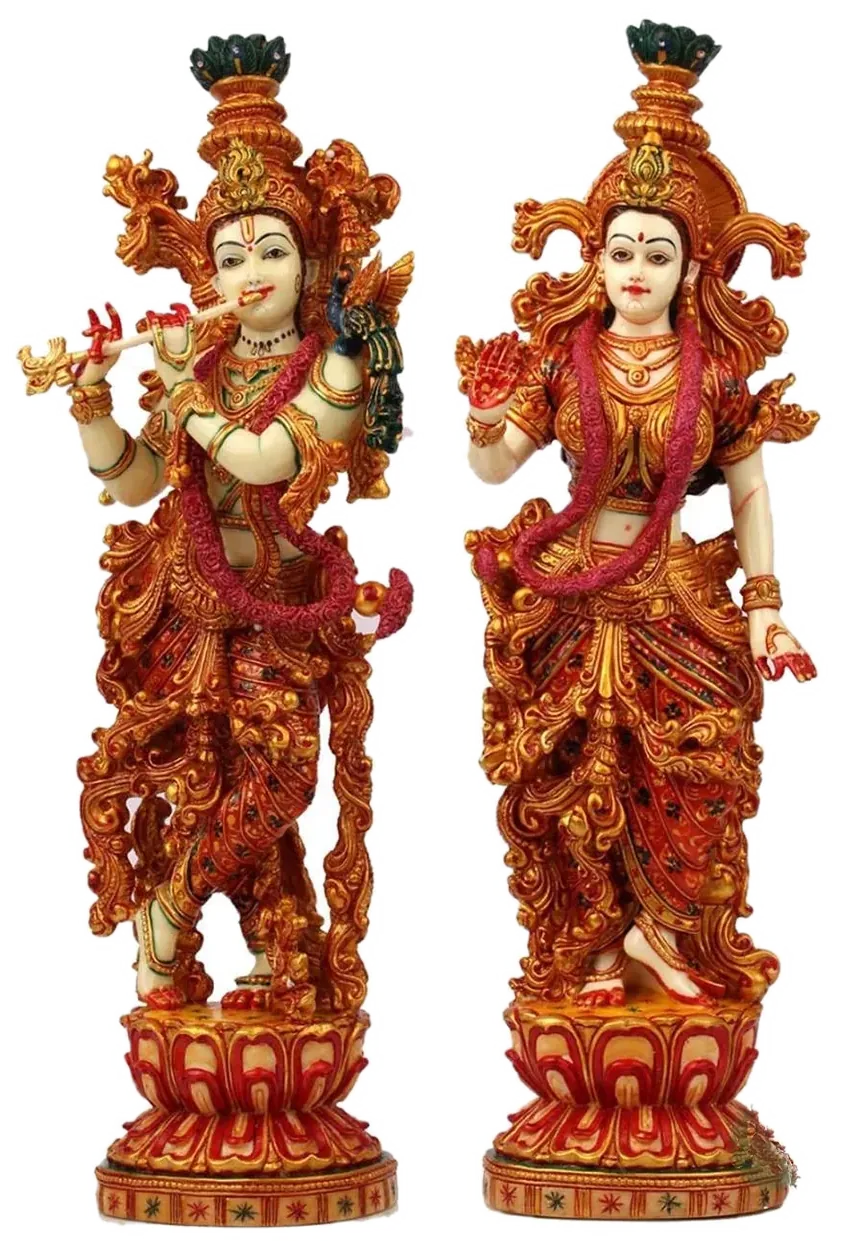
Radha Krishna statue, 15 inch
राधा कृष्ण मूर्ति, 15 इंच
₹14,999
A tall cold cast statue with marble dust and hand painted detail.
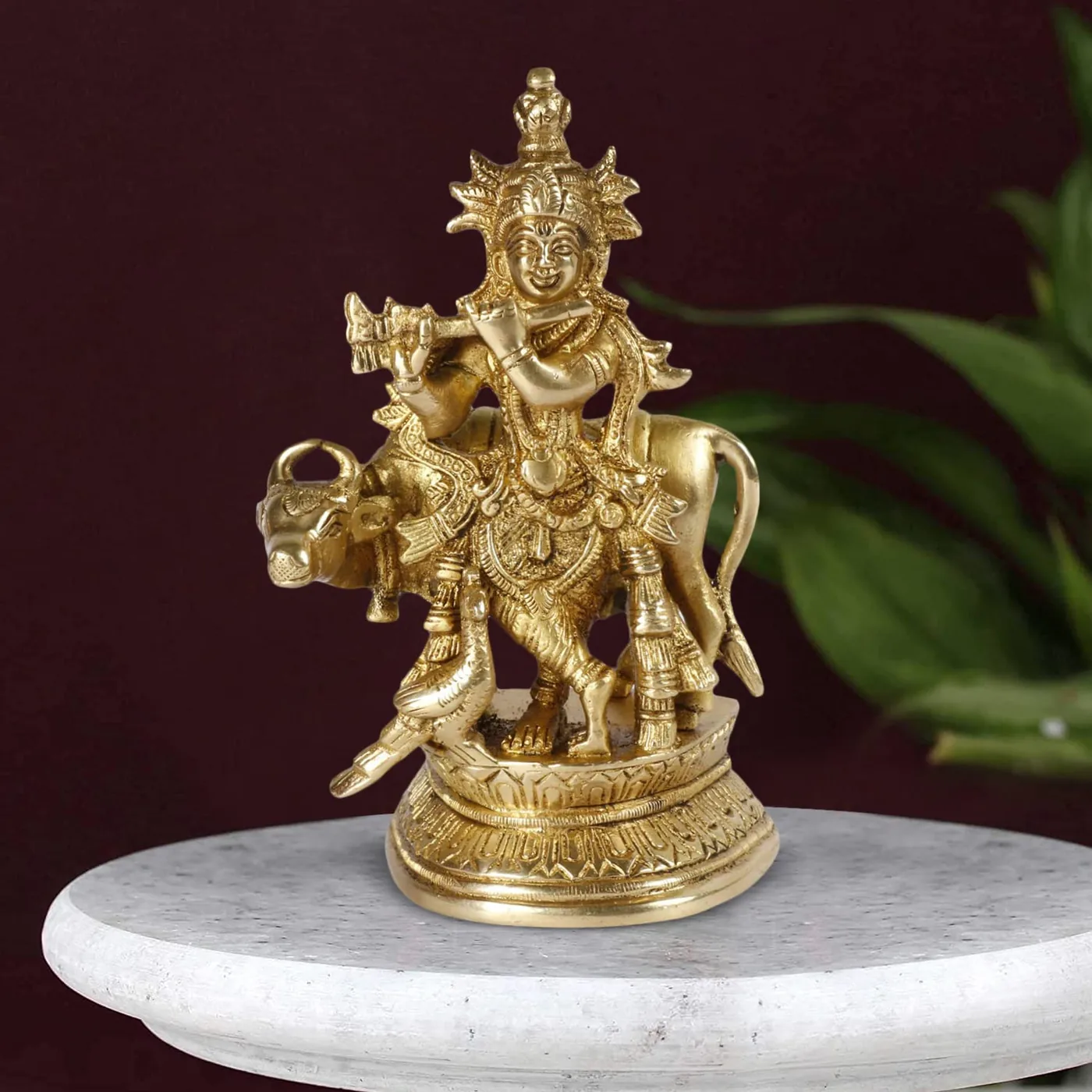
Krishna with cow, brass
गाय के साथ कृष्ण, पीतल
₹2,626
Solid brass, Krishna at the flute with a cow beside him, five and a half inches.