
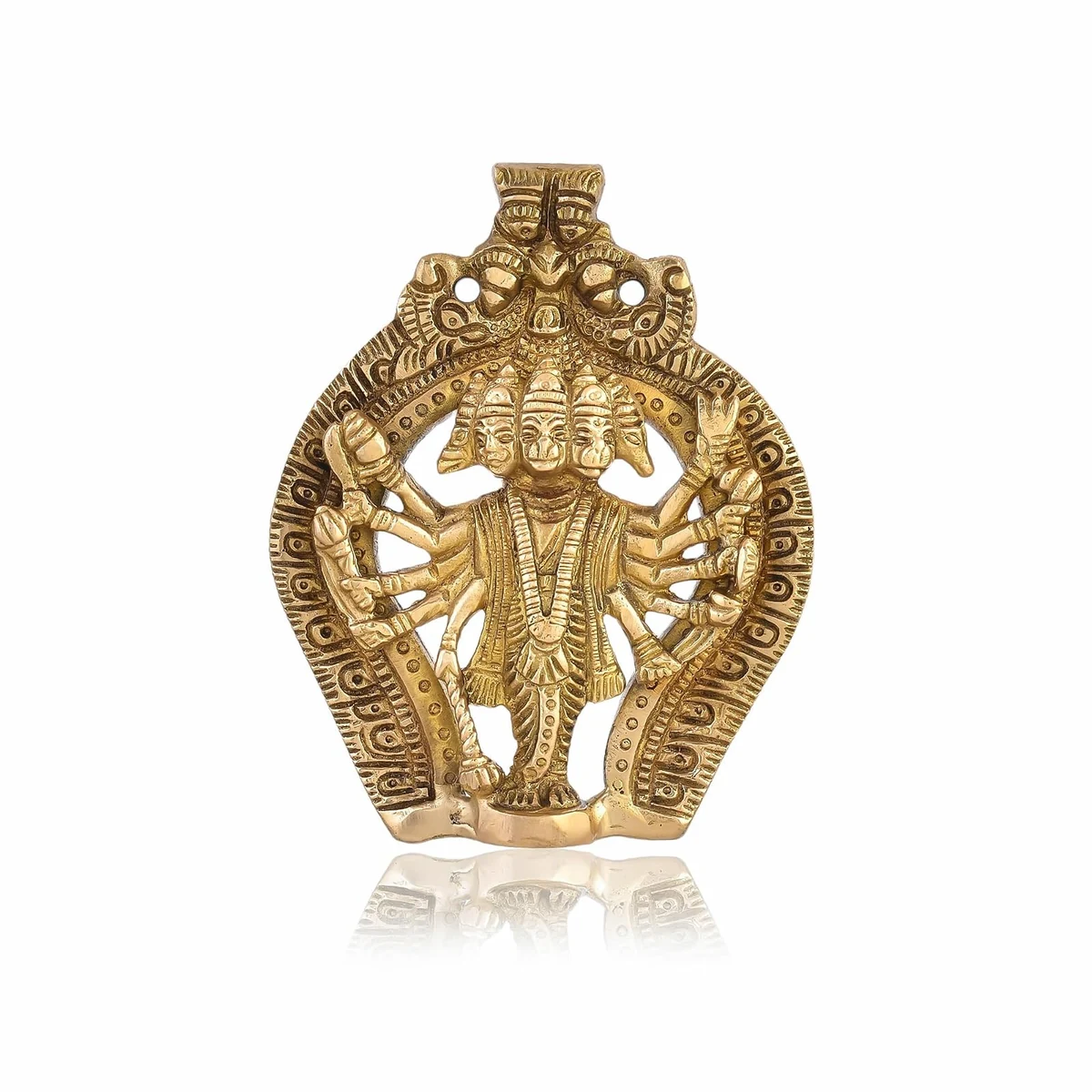
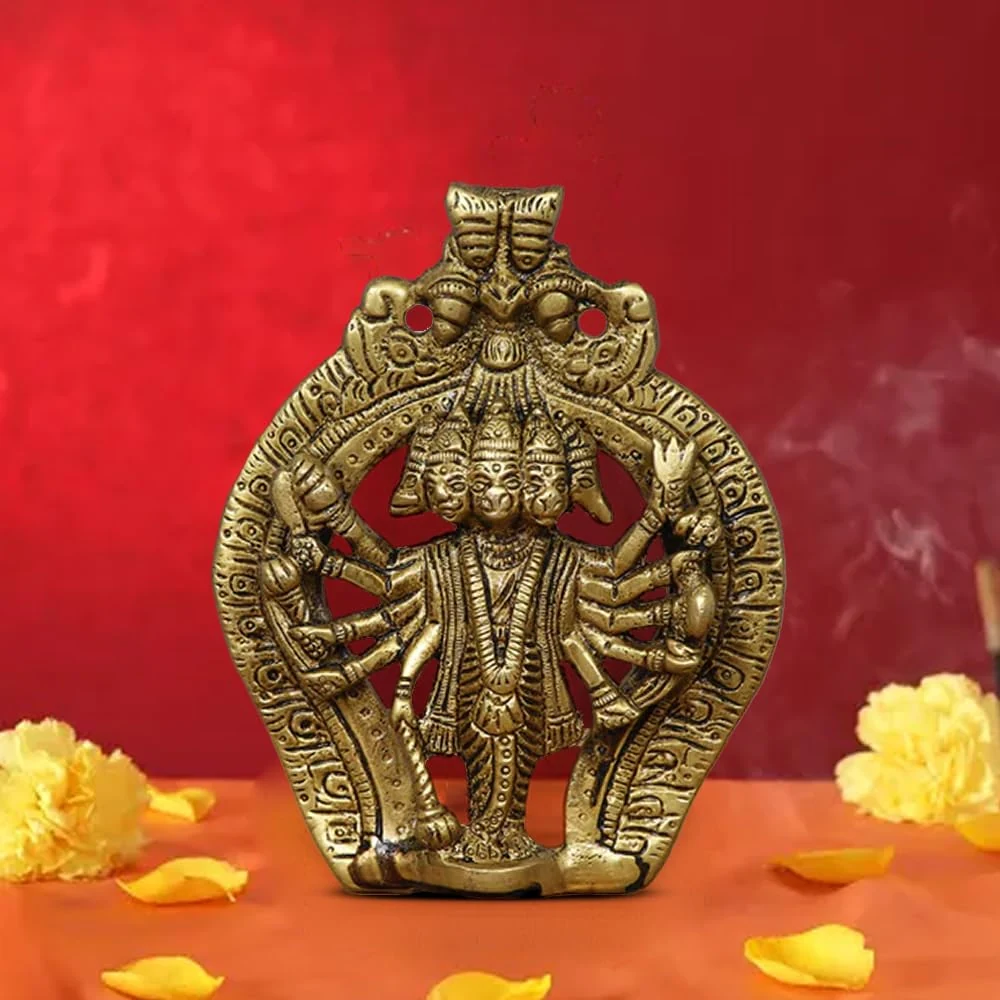
Panchmukhi Hanuman brass wall hanging
पंचमुखी हनुमान पीतल दीवार मूर्ति
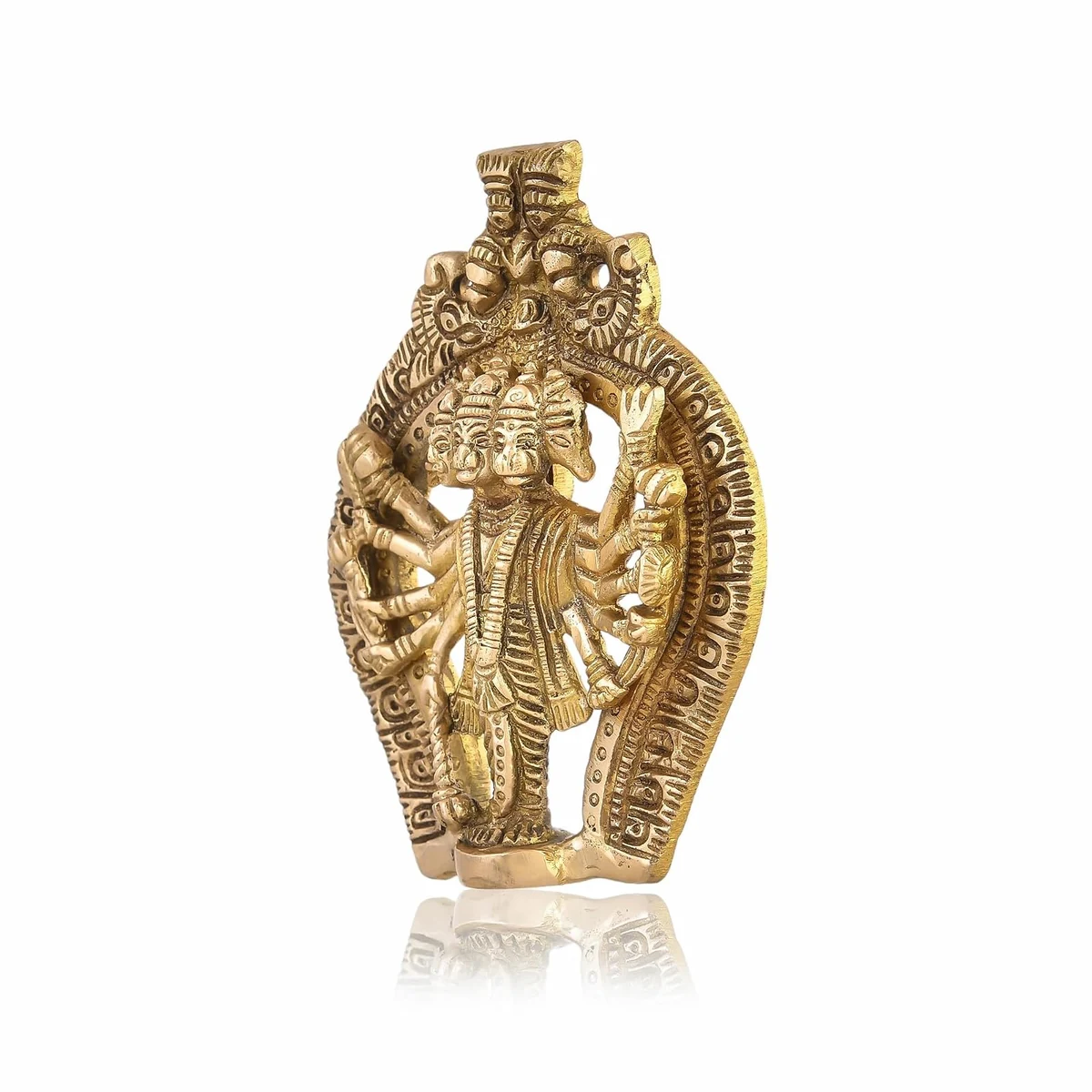
A flat cast brass panel rather than a standing figure: the five faced form worked in relief, under half an inch thick, meant to be hung on a wall or a mandir door.
- Height
- 4.7 inches
- Thickness
- About 0.5 inch
- Weight
- 330 to 380 g
- Form
- Relief panel, wall mounted
About this wall hanging
A relief panel is a different object from a standing murti and is used differently. It is cast flat, worked so that the figure stands out from a back plate, and it hangs rather than sits. That makes it the natural choice for a doorway, a wall above a mandir, an entrance hall, or any place where there is no shelf to spare but plenty of wall.
It also changes the daily routine, or removes most of it. A hanging panel is not bathed, not dressed and not turned; it is dusted where it hangs. For people who want the image present without adding to a morning that is already full, that is the point rather than a shortcoming. For people who want something to serve with water and cloth each day, a standing murti is the right purchase and this is not.
At under half an inch thick and around three hundred and fifty grams, this hangs from an ordinary picture hook in plaster without anything elaborate. It is worth checking how the piece is meant to be fixed, since brass panels are made in two ways: with a cast loop or hole at the top, or with nothing at all, in which case the buyer is expected to improvise. The photographs usually show it if you look at the top edge.
The five faced form is traditionally associated with protection from every direction, which is the reason it appears so often over a doorway. The story behind it has Hanuman taking five faces at once to extinguish five lamps burning in five directions, and the outward facing placement follows directly from that. It is one of the few images whose conventional placement follows so plainly from its origin.
Hanuman belongs comfortably in the Vaishnava traditions as the image of service completed, and Braj homes commonly keep him. On where a Vrindavan mandir places things there is no argument at all: Shri Radha and Shri Krishna occupy the middle, and whatever else a household keeps, on a shelf or on a wall, is positioned around them.
Choosing between a panel and a standing murti is really a question about how much daily routine you want. A panel asks almost nothing of you: it hangs, it is dusted, it is present. A standing murti invites a routine and rewards one. Households often end up with both for precisely that reason, and there is nothing inconsistent about it.
What to look for before buying
Find out how it hangs before you buy. Cast brass panels either have a hanging loop or hole worked into the back plate or they do not, and a listing rarely says which. Look at the top edge in the photographs. A panel with no fixing needs adhesive or a purpose made bracket, neither of which is ideal on a piece that weighs a third of a kilo, so it is worth confirming with the seller first.
Check the relief depth in a side view. The whole appeal of a relief is that the figure lifts off the plate. A shallow casting looks flat and lifeless on a wall, where there is no side lighting to help it. Ask for or look for an angled photograph rather than a straight on one, since a face on shot makes every relief look equally deep.
Look at how the back plate is finished. Wall pieces are the ones where manufacturers economise on the back, because nobody will see it. That matters less for looks than for the wall: a rough cast back with sharp edges will scuff paint and leave marks every time the panel shifts. A piece with a dressed back, or one you can put a felt pad on, will not.
Keeping it, and where it sits
Dust it in place with a dry brush rather than taking it down each time. A soft brush reaches into the relief where a cloth cannot, and leaving the panel on its hook avoids the repeated handling that wears the finish at the edges. Once a week takes under a minute.
Keep it off an outside wall that gets damp, and away from a kitchen. Brass in humid or greasy air develops a film that then sets, and a relief panel is unusually hard to clean properly because all the detail is in the undercuts. An interior wall in a dry room needs essentially no maintenance at all.
If it must be cleaned, take it down, use lemon and salt or tamarind sparingly with the fingers, rinse, and dry it completely before hanging it again. Water trapped between the back plate and a wall is how a brass panel leaves a permanent green mark on paint, and that mark is much harder to deal with than the tarnish was.
Put a small felt or rubber pad at the bottom corners when you hang it. It stops the panel swinging against the wall, keeps the back off the paint, and removes the slight rattle that otherwise happens every time a door closes nearby. It is a five rupee fix that makes the difference between a panel that marks a wall and one that does not.
None of this is required. What Maharaj Ji actually asks for is set out on the teachings page, the sayings he repeats most are on the quotes page, and the stotras are free to download as PDFs. If you are planning to visit Vrindavan, read how to meet Maharaj Ji first.
Also worth reading: photographs from Vrindavan , and about the ashram.
Questions about buying this
Is a wall hanging a proper murti?
It is an image in relief rather than a standing figure. Households keep both. What it cannot easily take is a daily routine of bathing and dressing, which needs a standing murti.
Where should a Panchmukhi Hanuman panel be hung?
Traditionally facing outward, often above a doorway or entrance, following from the form's association with protection in every direction.
How is it fixed to the wall?
Usually from a cast loop or hole in the back plate. Check the top edge in the photographs, since some panels have no fixing at all and need a bracket.
How heavy is it?
Between about 330 and 380 grams, light enough for an ordinary picture hook in plaster.
Will it mark the wall?
It can, if the back is rough or the wall is damp. Felt pads at the lower corners and a dry interior wall prevent both problems.
Is any image required by the teaching?
None is. The practice makes no claim on a wall, a shelf or a purse, and a house with bare walls lacks nothing.
Is this connected with Maharaj Ji or the ashram?
No. It is not supplied by, authorised by or endorsed by Maharaj Ji or Shri Hit Radha Keli Kunj. It is an ordinary devotional item sold by other people on Amazon, listed here because a devotee might want one.
Do you sell it?
No. The button on this page takes you to Amazon. Amazon takes the payment, ships the order and handles returns and warranty. We hold no stock, never see your payment details, and cannot change or cancel an order.
Is the price on this page current?
It is the price we last saw on Amazon, with the date beside it. Amazon changes prices whenever it likes, so treat the figure here as a guide and the price on the Amazon page as the real one.
Do you make money if I buy it?
Yes. As an Amazon Associate we earn from qualifying purchases. Your price is exactly the same whether you use our link or not; Amazon pays the commission out of its own margin, and that commission is what keeps this site free to read.
Do I need this to follow the teachings?
No. Maharaj Ji asks for the Radha naam and nothing else, with no initiation, no fee and no equipment. Anything on this page is convenience, never a requirement, and he is explicit about that in satsang.
Also for the wall
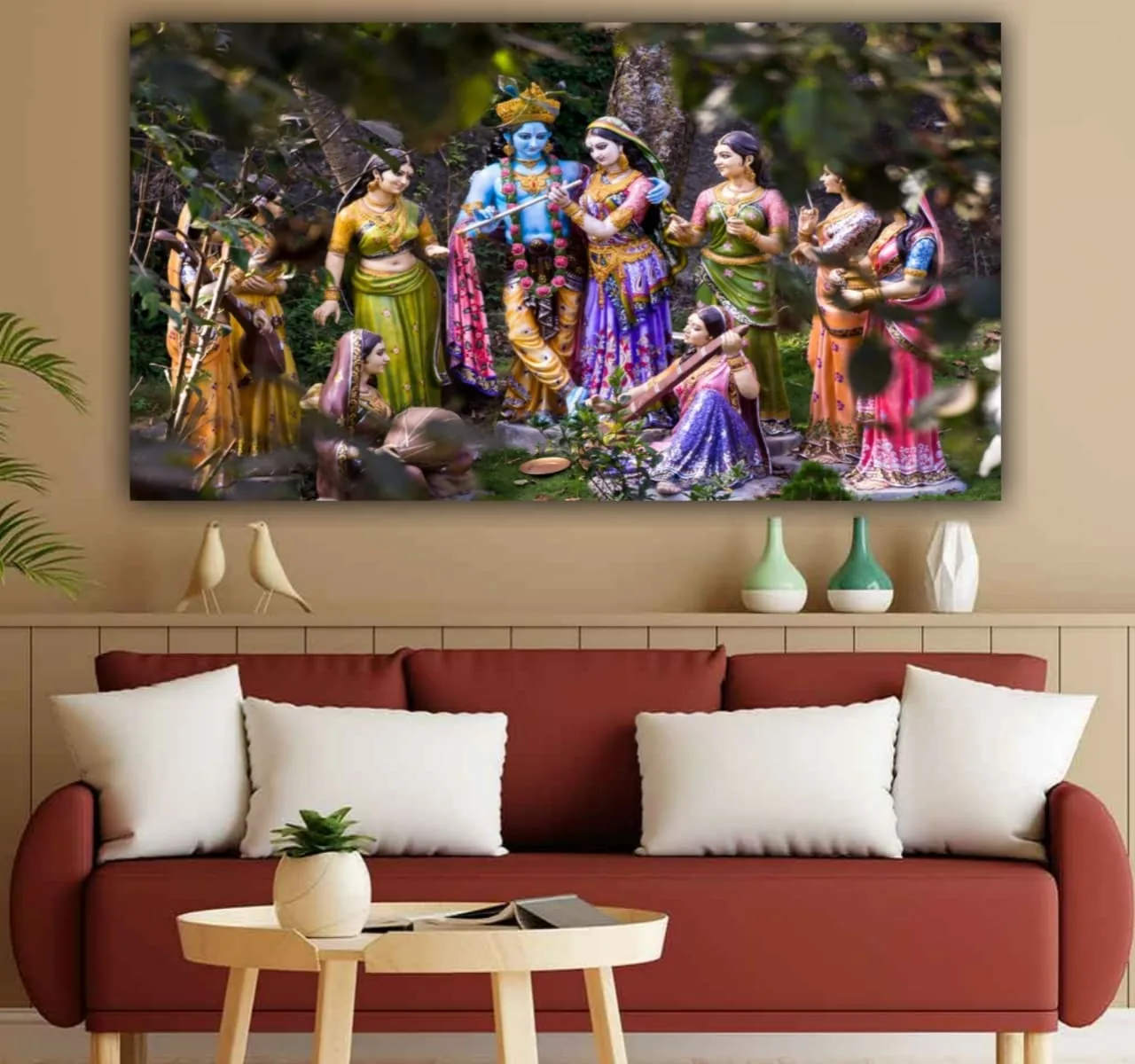
Radha Krishna canvas, 48 × 24 inch
राधा कृष्ण कैनवास, 48 × 24 इंच
₹3,697
A four foot framed canvas of Radha, Krishna and the gopis, ready to hang.

Radha Krishna wall art, five panels
राधा कृष्ण दीवार कला, पाँच पैनल
₹1,888
One image split across five laminated panels, four feet wide in total.
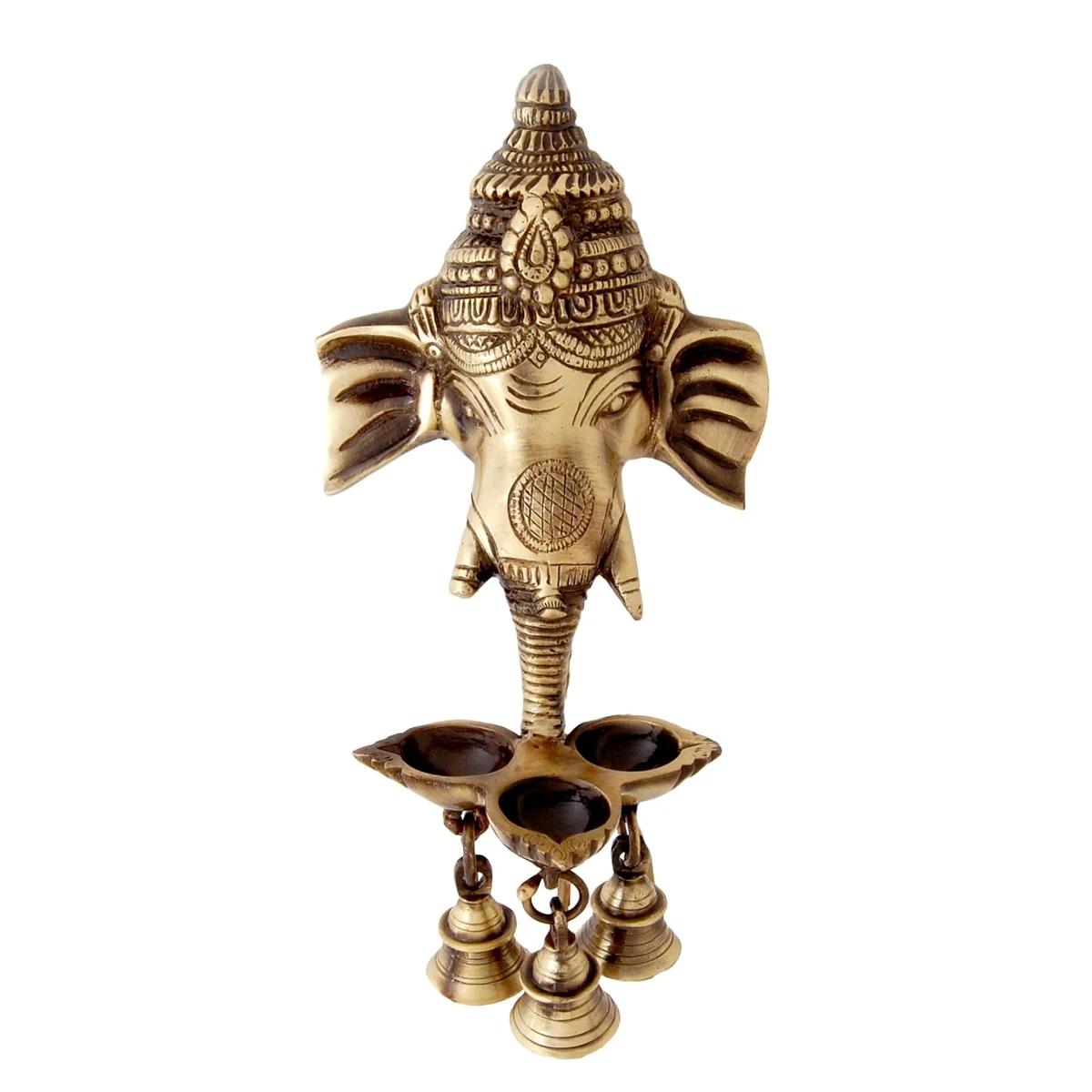
Brass Ganesha wall hanging diya with bells
पीतल गणेश दीवार दीया, घंटियों सहित
₹1,395
A Ganesha head above a row of oil lamps, with small bells hanging beneath.