
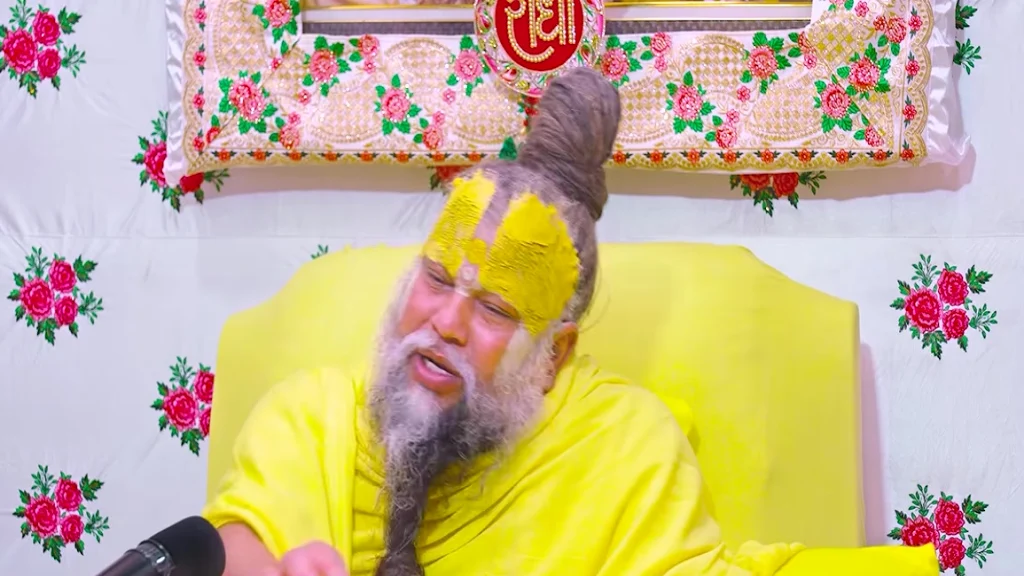
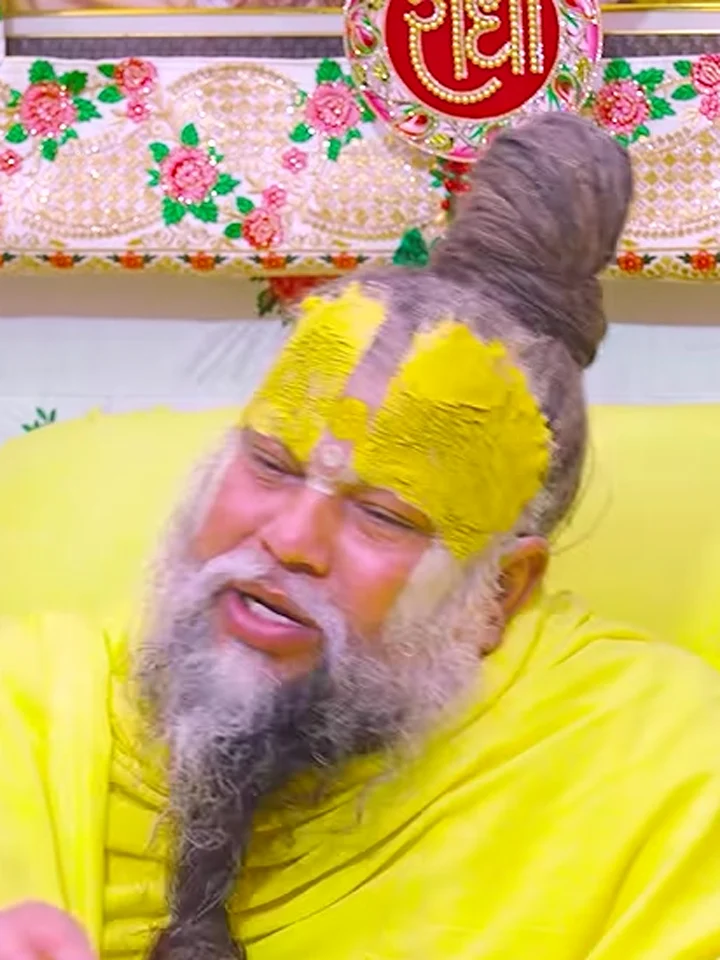
Hand at chin listening
ठोड़ी पर हाथ, सुनते हुए
Suffering is the distance between what happened and what you demanded.
दुख वहीं है जहाँ जो हुआ और जो तुमने माँगा, दोनों अलग हैं।
His diagnosis of nearly every complaint brought to satsang. Close that distance and the same events land differently, without anything outside you having changed at all.
Suffering, and the distance you can actually close
Almost every complaint brought to him at satsang, and they cover the full range from money to marriage to bereavement, he treats with the same diagnosis. The pain is not sitting in the event. It is sitting in the space between the event and what you had decided was owed to you, and that space is a quantity you have some influence over.
He is careful not to turn this into a denial of hardship, and it would be a serious misreading of him to do so. Some events are simply bad. A death is bad, a betrayal is bad, an illness is bad. He is not claiming otherwise and he does not tell grieving people that their loss is an illusion. He is making a narrower point about which part of the distress is available to be worked on.
The demand is the available part. Two people lose the same amount of money and one is destroyed while the other is not, and the difference is almost never in the sum. It is in what each had already decided the money meant, what it was supposed to secure, and how much of their picture of the coming ten years was resting on it. The event was identical. The demand was not.
He observes that most of these demands were never consciously made. Nobody sits down and decides that their worth depends on a promotion, or that their child must live in the same city. The expectation accumulates quietly and is only discovered at the moment it breaks, which is why the breaking feels so disproportionate to the event that caused it.
The work he prescribes is not resignation, and he distinguishes the two sharply. Resignation is deciding in advance that nothing is worth wanting, which is a way of not being alive. What he asks for is that you keep acting fully and hold the required outcome loosely, so that when it does not arrive the loss is a loss rather than a collapse.
What it asks of you is one honest question at the moment something goes wrong. Not why did this happen, which rarely produces anything useful, but what exactly had I decided was owed to me here. The answer is usually specific and usually surprising, and simply seeing it clearly closes a surprising amount of the distance without anything outside you having moved at all.
The rest of his most repeated sayings are on the quotes page, the teaching they belong to is set out on the teachings page, and the questions devotees bring him about anger, money, family and grief are answered on the questions answered page.
Questions about this photograph
What is Premanand Ji Maharaj doing in this photo?
Premanand Ji Maharaj hand at the chin, listening to a question.
What wallpaper sizes does this photo come in?
Two: 1024 × 576 for a desktop or laptop and 720 × 960 for a phone. Both are WebP, which every current phone and browser opens, and each is cropped from the face outward so nothing important sits under a clock or a status bar.
Where did this photograph come from?
It is a frame lifted from a publicly available satsang recording, chosen out of several thousand for sharpness and cropped so that no channel mark or on-screen text remains. If you hold rights in it, write to us and it comes down the same day.
Is this photo free to download and share?
Yes. There is no fee, no account and no email address to hand over. Share it for personal devotional use as much as you like. Please do not sell it, print it for sale, or attach it to anything asking people for money in his name.
How do I set it as my phone wallpaper?
Tap the phone download button, let the image open, then press and hold it and choose save. Open your gallery, find the picture and set it as wallpaper from there. On an iPhone use the share button and Save Image first.
Can I share it straight to WhatsApp or Instagram?
Yes. On a phone the share button opens your own share sheet with the picture attached, so it goes across as an image rather than as a link. On a desktop the same button offers WhatsApp, Facebook, X, Telegram and a copy-link option.