
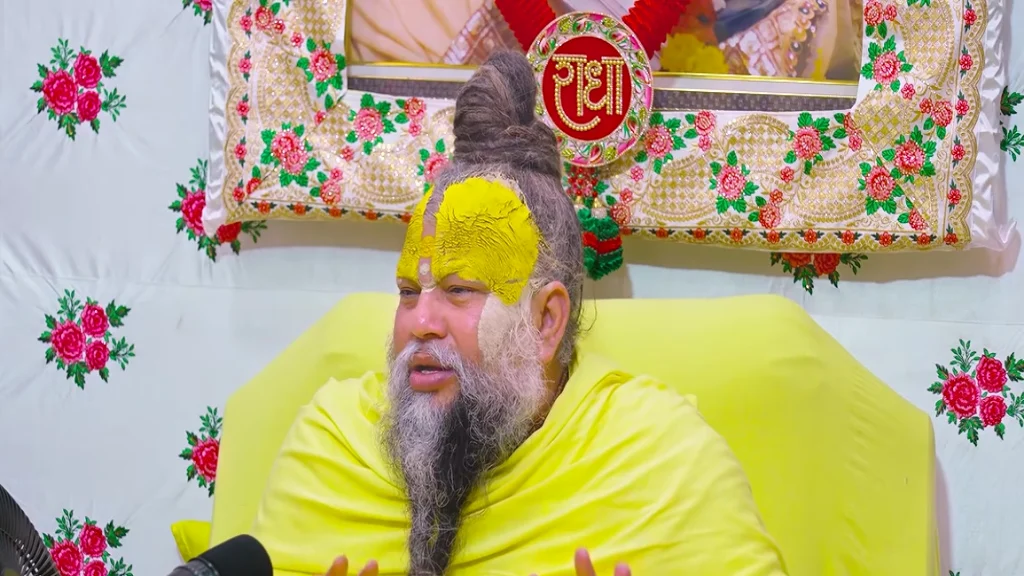
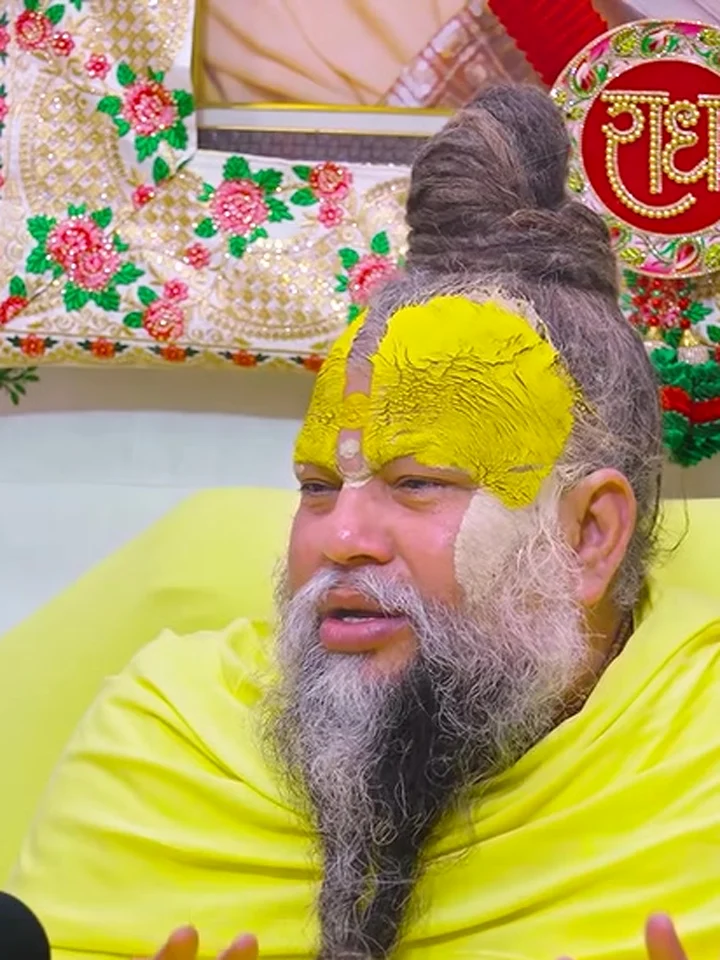
Gesturing during satsang
सत्संग में संकेत करते हुए
Difficulty does not mean you have taken a wrong turn.
कठिनाई का मतलब यह नहीं कि रास्ता गलत है।
He says this from years on the ghats at Varanasi with nothing arranged in advance. It is the answer he gives when a devotee reports that their sadhana has become hard, and he gives it without softening it.
Difficulty is not a signal that you took the wrong road
When a devotee reports that things have become harder since they started practising, they are usually asking a hidden question: has something gone wrong, or is this a sign that I should stop. He answers the hidden question rather than the surface one, and the answer is no. Hardship is not a verdict on the direction you chose.
He tends to reach for his own history at this point, and it is the reason the frames from the Varanasi years matter more than they look. A decade lived outdoors on the ghats, through winters, with a self-imposed rule that food would be taken only when offered without asking, is not a period anybody would describe as encouraging. Nobody was watching, and nothing about it felt like confirmation.
The reasoning is about what a signal can actually be. Ease is not a reliable indicator either, and people forget this. Plenty of comfortable stretches are simply comfortable, and plenty of miserable ones are simply the shape of the work at that moment. Reading fortune as feedback turns practice into superstition and leaves you consulting your circumstances instead of continuing.
He also names the specific way this belief does damage. A person who thinks difficulty means error will change course at the first hard patch, then change again at the next, and after some years will have collected a great many beginnings and no practice. The habit of restarting is itself the injury, and it is caused entirely by the interpretation rather than by the difficulty.
There is a limit he sets on this, and he sets it clearly. Refusing to read difficulty as a verdict is not the same as refusing to use judgement. If a course of action is harming your family, ruining your health or requiring dishonesty, that is information and should be acted on. What he rules out is treating ordinary hardship, the kind that accompanies anything sustained, as a message.
What it asks of you is to stop consulting the weather. Keep the practice at the size you set when things were easier, do not raise it to force a result and do not cut it because nothing is coming back, and let the hard stretch pass underneath a routine that does not move. Almost everything he says about sadhana comes back to that one instruction.
The rest of his most repeated sayings are on the quotes page, the teaching they belong to is set out on the teachings page, and the questions devotees bring him about anger, money, family and grief are answered on the questions answered page.
Questions about this photograph
What is Premanand Ji Maharaj doing in this photo?
Premanand Ji Maharaj gesturing with one hand during satsang.
What wallpaper sizes does this photo come in?
Two: 1024 × 576 for a desktop or laptop and 720 × 960 for a phone. Both are WebP, which every current phone and browser opens, and each is cropped from the face outward so nothing important sits under a clock or a status bar.
Where did this photograph come from?
It is a frame lifted from a publicly available satsang recording, chosen out of several thousand for sharpness and cropped so that no channel mark or on-screen text remains. If you hold rights in it, write to us and it comes down the same day.
Is this photo free to download and share?
Yes. There is no fee, no account and no email address to hand over. Share it for personal devotional use as much as you like. Please do not sell it, print it for sale, or attach it to anything asking people for money in his name.
How do I set it as my phone wallpaper?
Tap the phone download button, let the image open, then press and hold it and choose save. Open your gallery, find the picture and set it as wallpaper from there. On an iPhone use the share button and Save Image first.
Can I share it straight to WhatsApp or Instagram?
Yes. On a phone the share button opens your own share sheet with the picture attached, so it goes across as an image rather than as a link. On a desktop the same button offers WhatsApp, Facebook, X, Telegram and a copy-link option.