
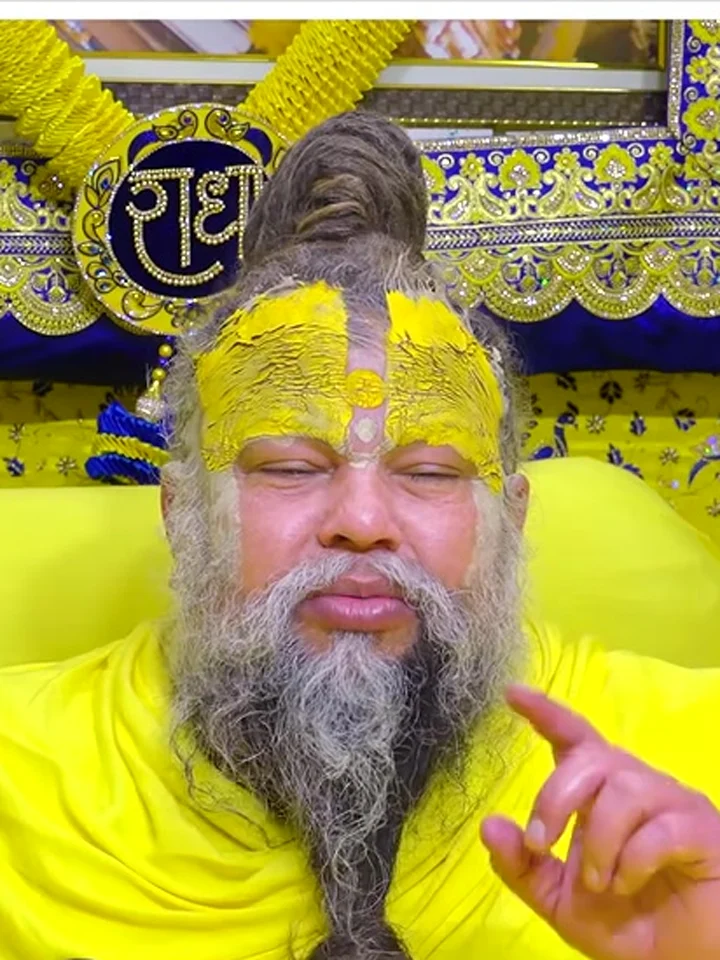
Eyes closed in bhav
भाव में नेत्र मूँदे हुए
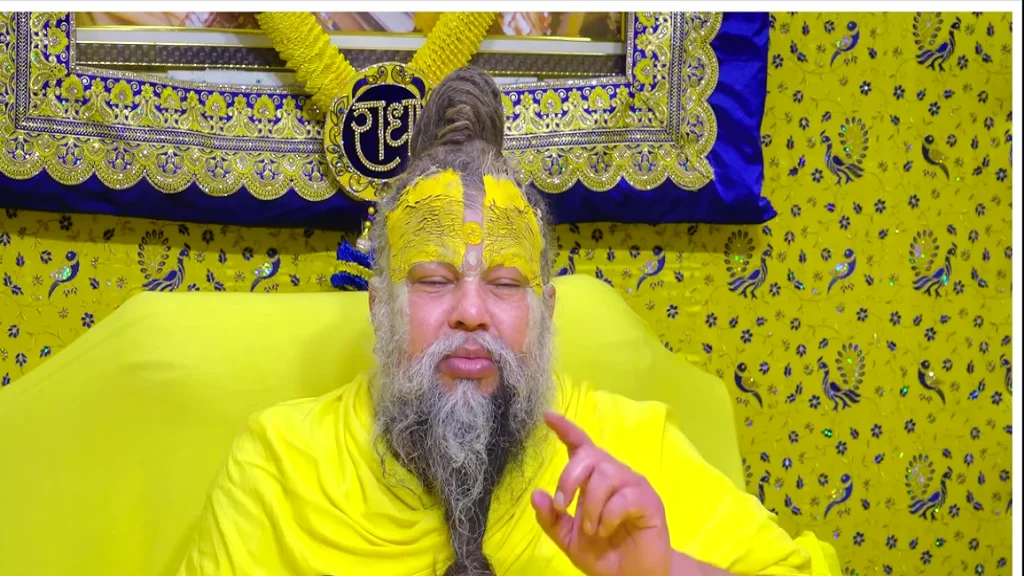
Do your own part fully and stop keeping accounts of the other person's.
अपना हिस्सा पूरा करो, दूसरे का हिसाब रखना छोड़ दो।
On a difficult marriage. Most of what is called a marriage problem is two people each waiting for the other to change first, and the one asking the question is the only one in the room.
Do your part fully and stop keeping the other person's accounts
This is the instruction he gives most often about difficult relationships, and it applies as readily to a marriage as to a brother, a business partner or an aging parent. Complete your own obligation properly, and stop running the ledger in which the other person's failures are recorded against it. The ledger is the thing doing the damage, not the relationship.
He points out how the accounting actually works, because most people have never looked at it directly. It is never balanced. Your own contributions are counted in full, including the ones nobody saw and the ones that cost you something. Theirs are counted at face value, without whatever it cost them, because you were not inside it. A record kept on those terms can only ever produce one result.
The consequence is that the ledger converts every ordinary interaction into evidence. A forgotten errand stops being a forgotten errand and becomes another entry in a case that has been building for years, and the response it receives is sized for the case rather than for the errand. Both people then experience the same conversation completely differently, which is why these arguments never resolve.
He is not asking anybody to accept mistreatment, and he draws the line explicitly. Where there is real harm, judgement applies and distance may be the right answer. What he is dismantling is the running tally inside an ongoing relationship you have already decided to stay in, because in that situation the tally has no function except to generate resentment at regular intervals.
There is a practical claim attached that devotees test and report back on. A person who genuinely stops keeping score usually finds the other side softening, not because anything was demanded of them but because they have stopped being met by an accumulated case. He does not promise this and is careful to say the point does not depend on it. Your own part is worth doing whether or not it is reciprocated.
What it asks of you is to notice when you are updating the record, which is usually in the gap after something small goes wrong. Do not complete the entry, do not review the earlier ones, and do not compose the summary you would deliver if it ever came to a full accounting. Put the name there instead, do your own part properly today, and let the rest go uncounted.
The rest of his most repeated sayings are on the quotes page, the teaching they belong to is set out on the teachings page, and the questions devotees bring him about anger, money, family and grief are answered on the questions answered page.
Questions about this photograph
What is Premanand Ji Maharaj doing in this photo?
Premanand Ji Maharaj eyes closed in bhav during satsang.
What wallpaper sizes does this photo come in?
Two: 1024 × 576 for a desktop or laptop and 720 × 960 for a phone. Both are WebP, which every current phone and browser opens, and each is cropped from the face outward so nothing important sits under a clock or a status bar.
Where did this photograph come from?
It is a frame lifted from a publicly available satsang recording, chosen out of several thousand for sharpness and cropped so that no channel mark or on-screen text remains. If you hold rights in it, write to us and it comes down the same day.
Is this photo free to download and share?
Yes. There is no fee, no account and no email address to hand over. Share it for personal devotional use as much as you like. Please do not sell it, print it for sale, or attach it to anything asking people for money in his name.
How do I set it as my phone wallpaper?
Tap the phone download button, let the image open, then press and hold it and choose save. Open your gallery, find the picture and set it as wallpaper from there. On an iPhone use the share button and Save Image first.
Can I share it straight to WhatsApp or Instagram?
Yes. On a phone the share button opens your own share sheet with the picture attached, so it goes across as an image rather than as a link. On a desktop the same button offers WhatsApp, Facebook, X, Telegram and a copy-link option.