
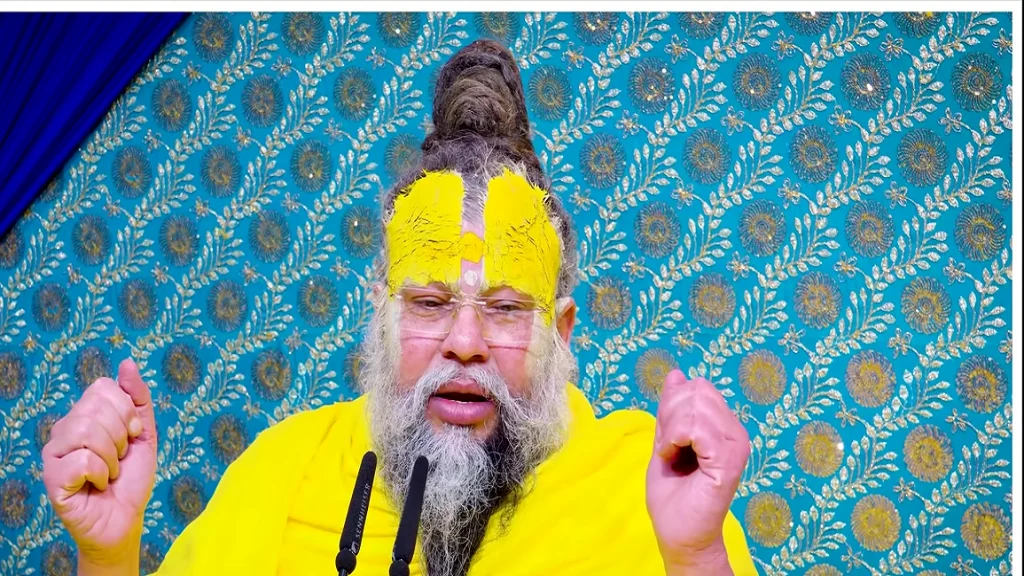
Both fists raised
दोनों मुट्ठियाँ उठाए हुए
The relationship does not end when the body does.
शरीर के जाने से रिश्ता नहीं जाता।
On grief. He does not rush it and does not tell people to stop crying. What he offers is that the naam is something you can still do on their behalf.
The relationship does not end when the body does
He speaks to the bereaved often and does not do it in the way people expect. There is very little consolation of the usual sort, no assurances about a better place, and no attempt to explain why the death happened or what it was for. He treats grief as something to be carried rather than as a problem with a solution, and devotees generally find the absence of explanation a relief.
What he does say is that the connection is not cancelled by the cremation. In his framing a relationship was never only an arrangement between two bodies, and the part of it that consisted of love, obligation and attention continues to exist on your side whether or not there is anybody to receive it. He does not build this into a doctrine about the afterlife, and he does not offer details he cannot support.
The practical consequence he draws is about what to do with the love that has nowhere to go, which is the specific misery of the early months. It does not have to be extinguished, and trying to extinguish it is what makes people harder rather than better. It can be carried, and the naam is offered as the thing to carry it in, which is why bereaved devotees are told to chant rather than to move on.
He blocks the obvious misuse of this firmly. Continuing the relationship does not mean seeking contact, arranging rituals to reach the person, or paying anyone who claims they can. Nothing of that kind is available at this ashram and anyone selling it is exploiting a grieving family. Nor does it mean refusing to live: the widow who stops eating properly and stops seeing people has not honoured anybody.
He is also patient about time in a way that people around the bereaved often are not. Grief is allowed to take as long as it takes, and he does not set a point at which someone should be finished. What he asks is that the practice keep running through it, at a small size if that is all that is possible, because the hours it protects are exactly the hours that are hardest.
What it asks of you is not to resolve the loss. Keep the routine you had, or set a very small one if you had none, and take the name during the parts of the day when the absence is loudest. You are not being asked to stop missing them, or to understand it, or to be at peace with it by any particular month.
The rest of his most repeated sayings are on the quotes page, the teaching they belong to is set out on the teachings page, and the questions devotees bring him about anger, money, family and grief are answered on the questions answered page.
Questions about this photograph
What is Premanand Ji Maharaj doing in this photo?
Premanand Ji Maharaj both fists raised while making a point during satsang.
What wallpaper sizes does this photo come in?
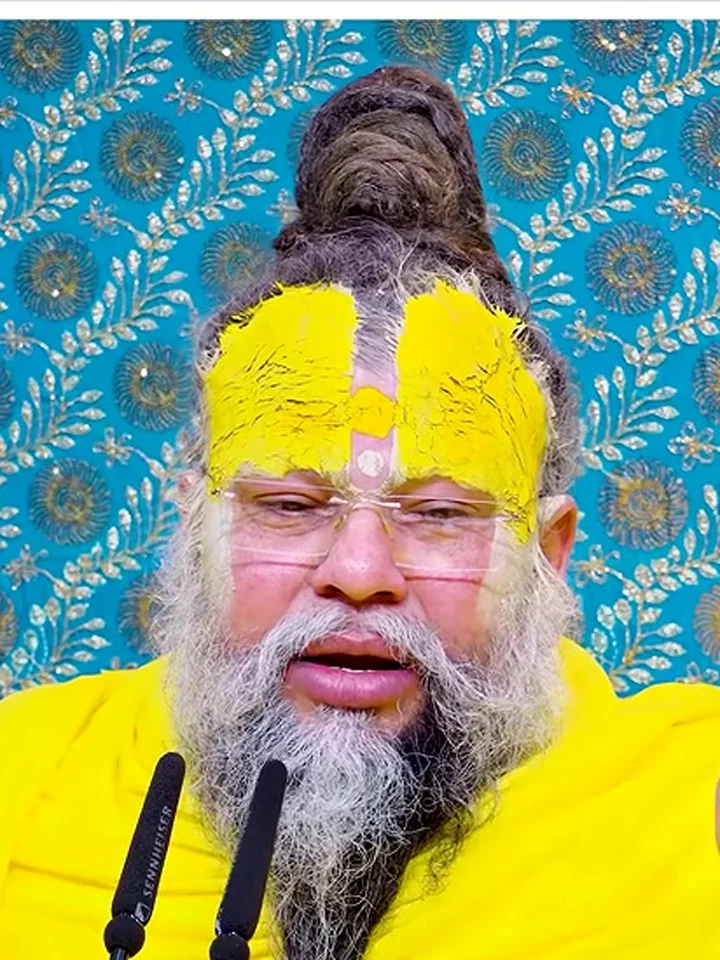
Two: 1024 × 576 for a desktop or laptop and 720 × 960 for a phone. Both are WebP, which every current phone and browser opens, and each is cropped from the face outward so nothing important sits under a clock or a status bar.
Where did this photograph come from?
It is a frame lifted from a publicly available satsang recording, chosen out of several thousand for sharpness and cropped so that no channel mark or on-screen text remains. If you hold rights in it, write to us and it comes down the same day.
Is this photo free to download and share?
Yes. There is no fee, no account and no email address to hand over. Share it for personal devotional use as much as you like. Please do not sell it, print it for sale, or attach it to anything asking people for money in his name.
How do I set it as my phone wallpaper?
Tap the phone download button, let the image open, then press and hold it and choose save. Open your gallery, find the picture and set it as wallpaper from there. On an iPhone use the share button and Save Image first.
Can I share it straight to WhatsApp or Instagram?
Yes. On a phone the share button opens your own share sheet with the picture attached, so it goes across as an image rather than as a link. On a desktop the same button offers WhatsApp, Facebook, X, Telegram and a copy-link option.